Category Archives: Florida

Flamingo – Everglades National Park

“Progress came and took it’s toll – and in the name of flood control,

They made their plans and they drained the land – now the glades are going dry.”

John Anderson – Seminole Wind

Driving around the urban and agricultural areas of southeast Florida, it didn’t take long to realize that most of the land we were on was once part of the Everglades.  All of the farmland west of Miami was once part of the river of grass.  Even Miami International Airport was once home to gators, anhingas and sawgrass.  The maze of canals diverting the water coming out of Lake Okeechobee is staggering.  The Everglades we see today are but a small percentage of what existed prior to the 20th century….and the fresh water entering the current version of the glades is for the most part controlled by man.  Couple that with rising sea levels and salinity, it is easy to see that this fragile ecosystem is truly endangered.  Perhaps not ‘dry’, in the literal sense of the word, but certainly different from what it once was.

On the one hand, visiting the park left me with a sense of uneasiness for treading on the remaining portion of the Everglades.  But if you remember what I said about my preconceived notions regarding the ‘swamp’, I realize just how important it is for us to see this place firsthand.  On our trip into the lower glades to Flamingo on Sunday, it quickly became apparent that our visit to Shark Valley was merely an introduction to the novel that the Everglades truly is.

Entering the eastern side of the park from the city of Homestead, we stopped at the Coe Visitor Center.  Information on everything the National Park Service offers regarding the park is available there.  From Coe, we stopped at the Royal Palm Visitor Center.  This location is more about the attached trails than being a ‘visitor’ center, per se.
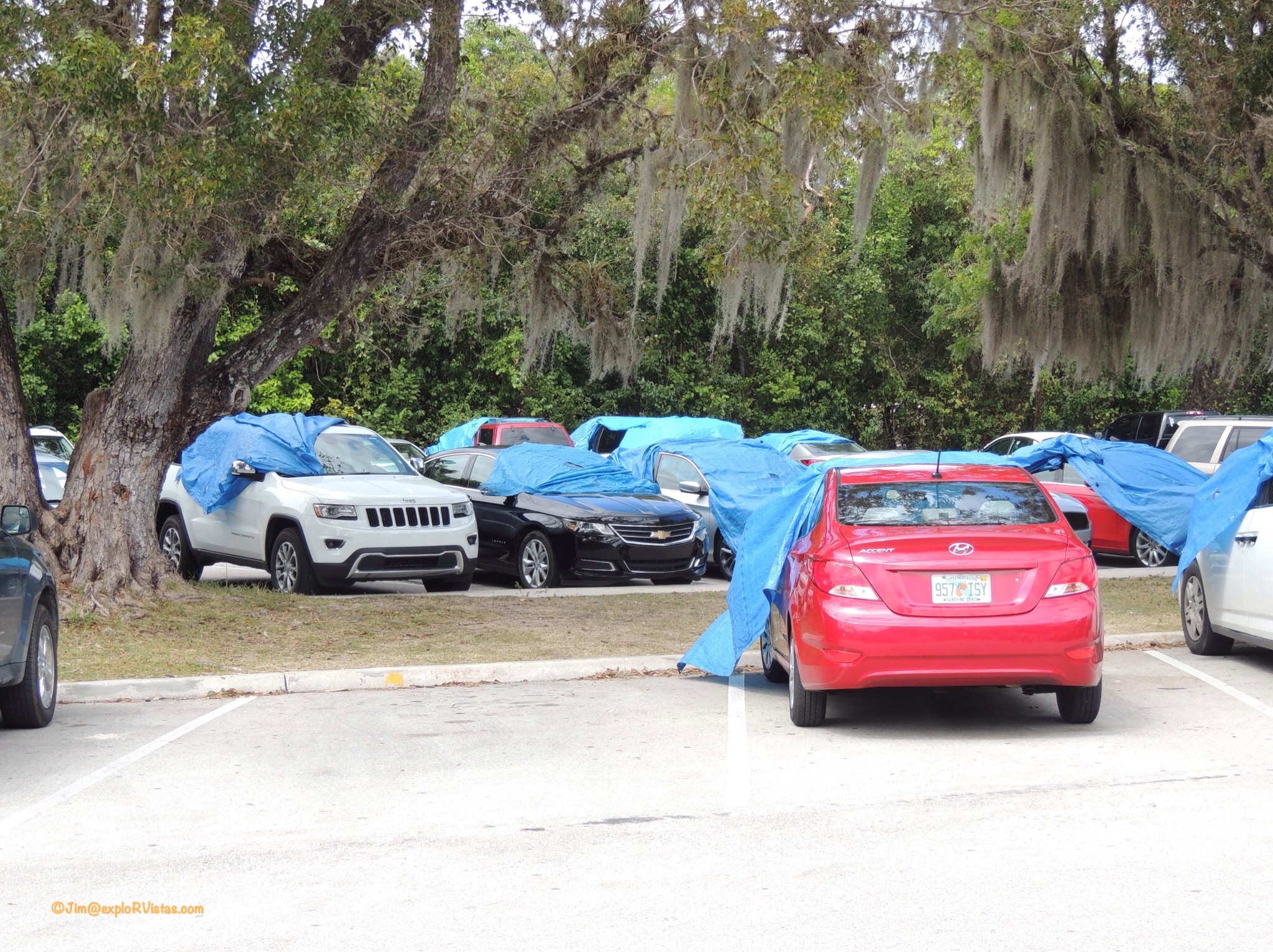
  
The first thing you notice are all these blue tarps on the cars.  It turns out that the vultures in the area have developed a taste for rubber windshield seals and wipers.

  
I pulled this photo from the web.  While we didn’t see any vultures munching on cars while we were there, we didn’t want to chance it.  We tarped the Ford.  ðŸ™‚

The first of two paths we explored was the Anhinga Trail.

  
This beauty was poised along the side, smiling for the camera.  One interesting thing we found out about alligators is that while their bite can exert a tremendous amount of force, their muscles that open their jaws are quite weak.  Good to know if you ever find yourself in a wrestling match with one.  ðŸ™‚


These bromeliad airplants were nestled in the branches of one of the trees along the trail. They are not attached to the tree; they merely use it for support.
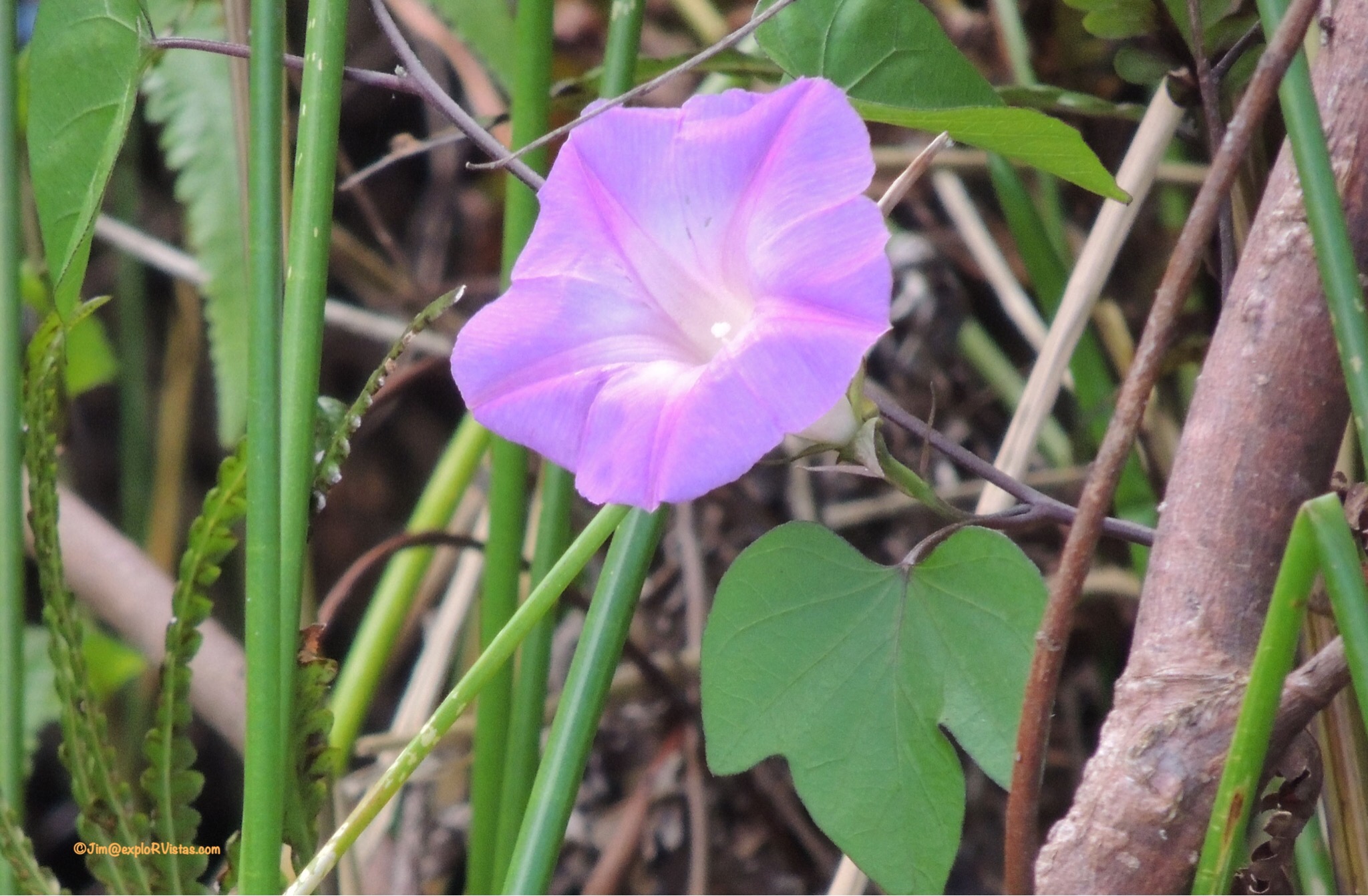
  

Further down the path, I spotted this Morning Glory.


This Red-bellied turtle was checking out the tourists.
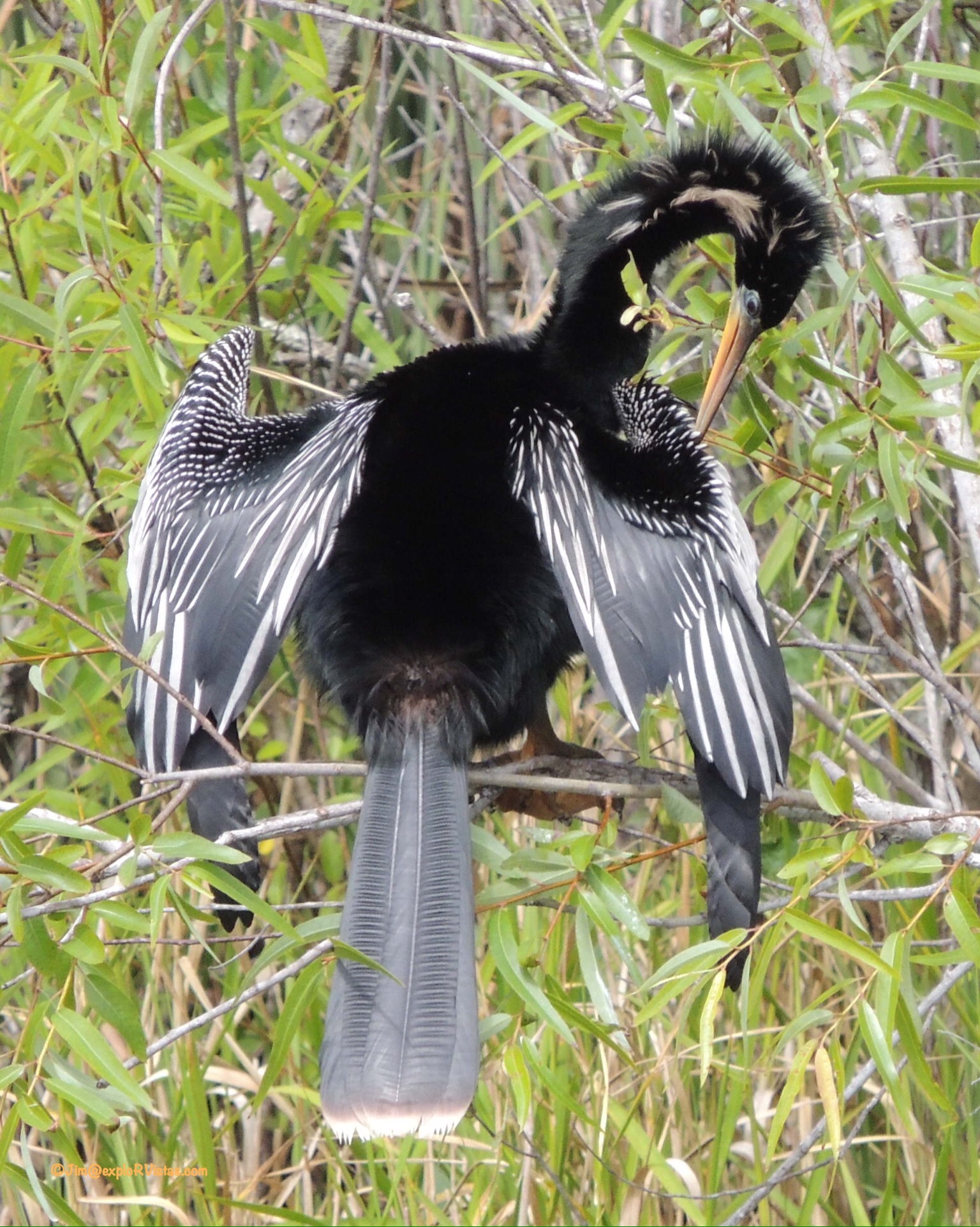
  

There were several Anhingas along the path.  This one was drying off after a morning swim.


A couple of birders we met identified this as an Eastern Phoebe.

The other trail in this area is the Gumbo-Limbo trail.
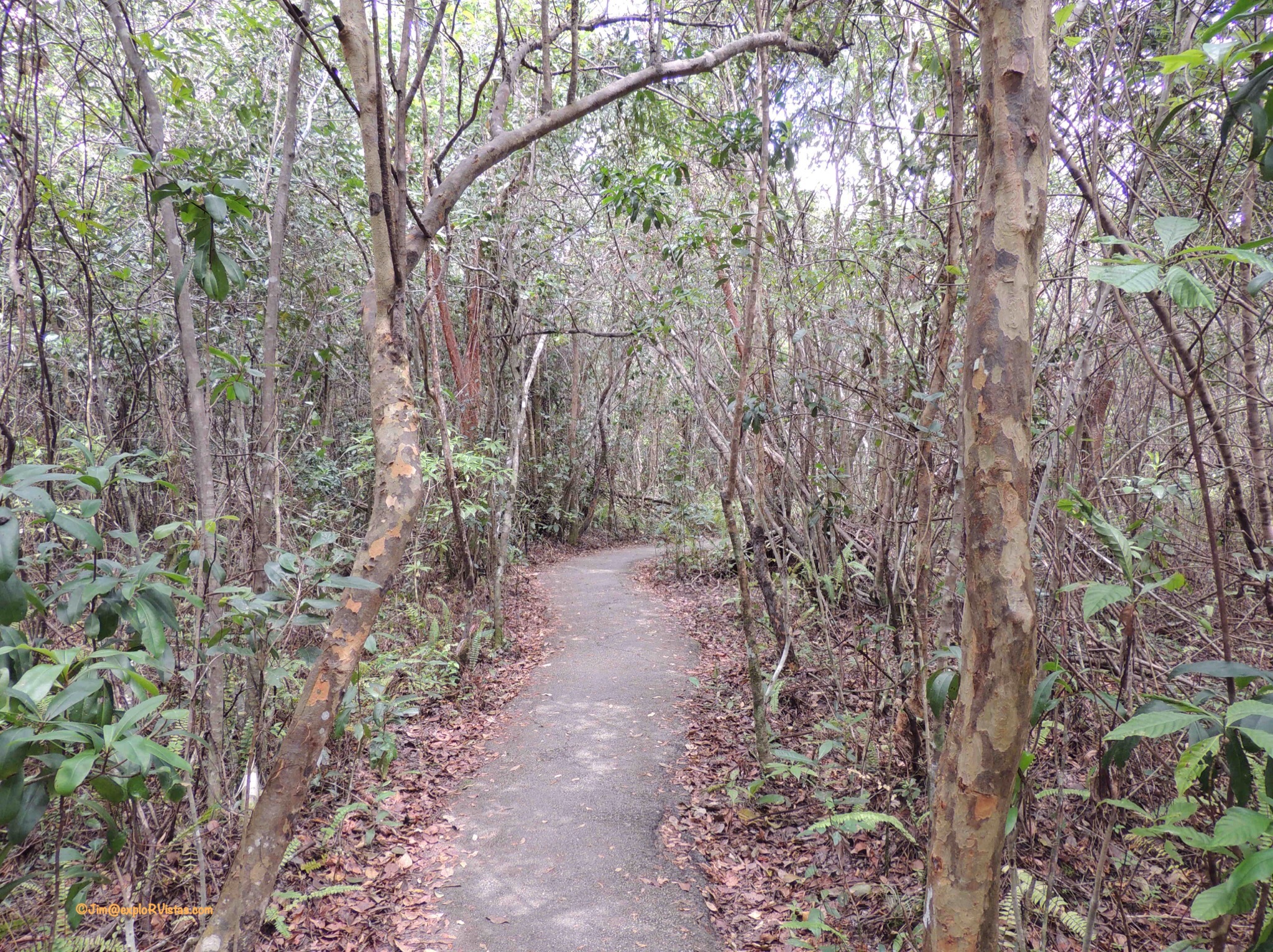
  

This stand of trees was decimated by Hurricane Andrew’s 150 mile per hour winds in 1994.  It has since rebounded nicely.
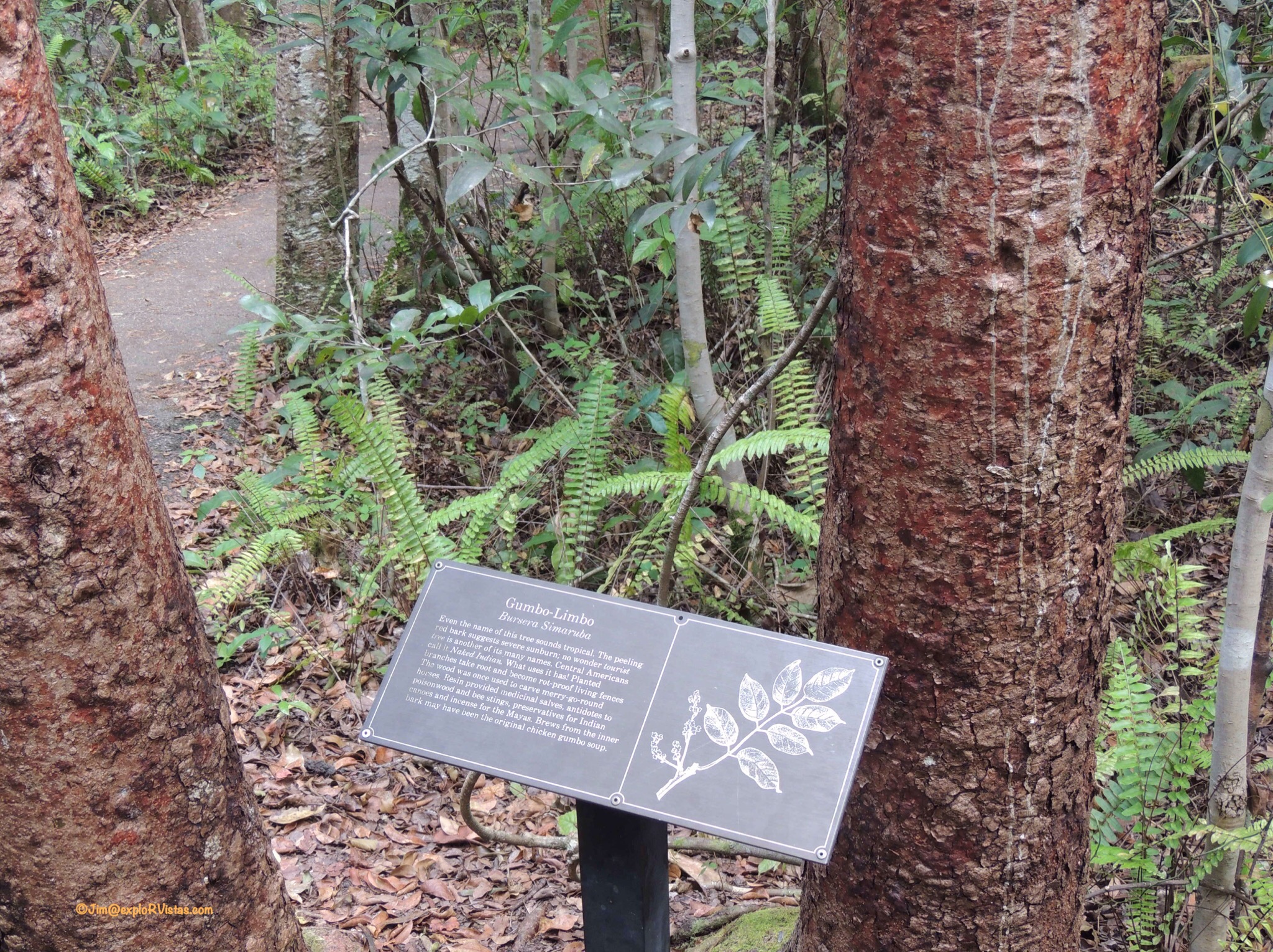
  

The path is named for the Gumbo-Limbo trees that grow here.  This unique tree is often referred to as the Tourist tree, as it sports a sunburned appearance.  It was used for a variety of purposes, from carousel horses to medicinal salves.

From Royal Palm, we drove 35 miles straight out to Flamingo.

   
This is where the river of grass meets Florida Bay.  There were thousands of birds on the tidal flats.


We spotted these American White Pelicans amongst the bunch.  These are some of the largest birds in North America, similar in size to Trumpeter Swans and California Condors.
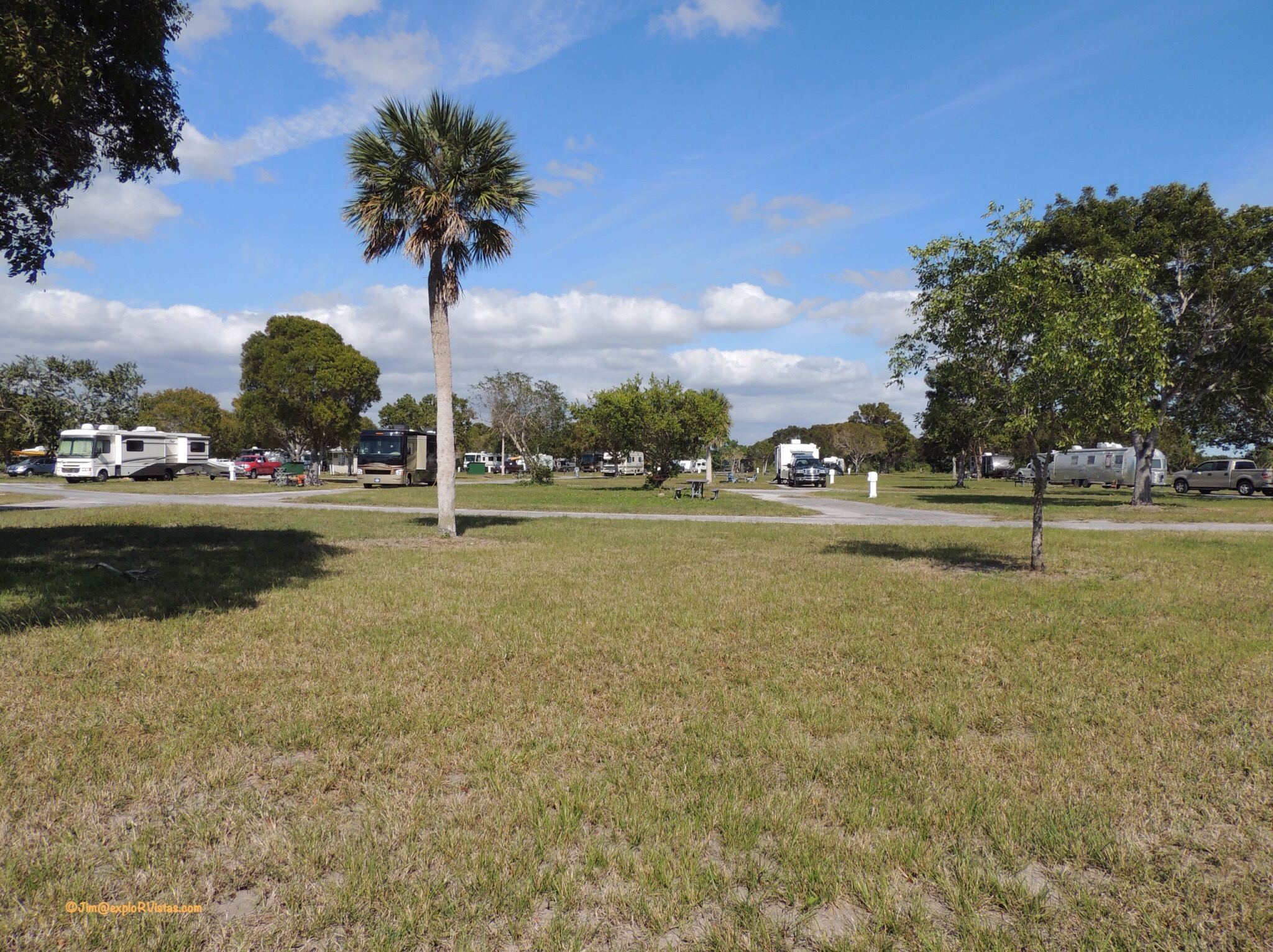


There are several camping options available at Flamingo, including this nice trailer loop.  There is also a small visitor center.


This is a Swallow-tail Kite.  Tough photo to take, as they move really fast!

From Flamingo, we worked our way back, stopping at most of the overlooks and trails along the way.  We were hoping to see some Roseate Spoonbills…which we did not…but we did see plenty of other birds!
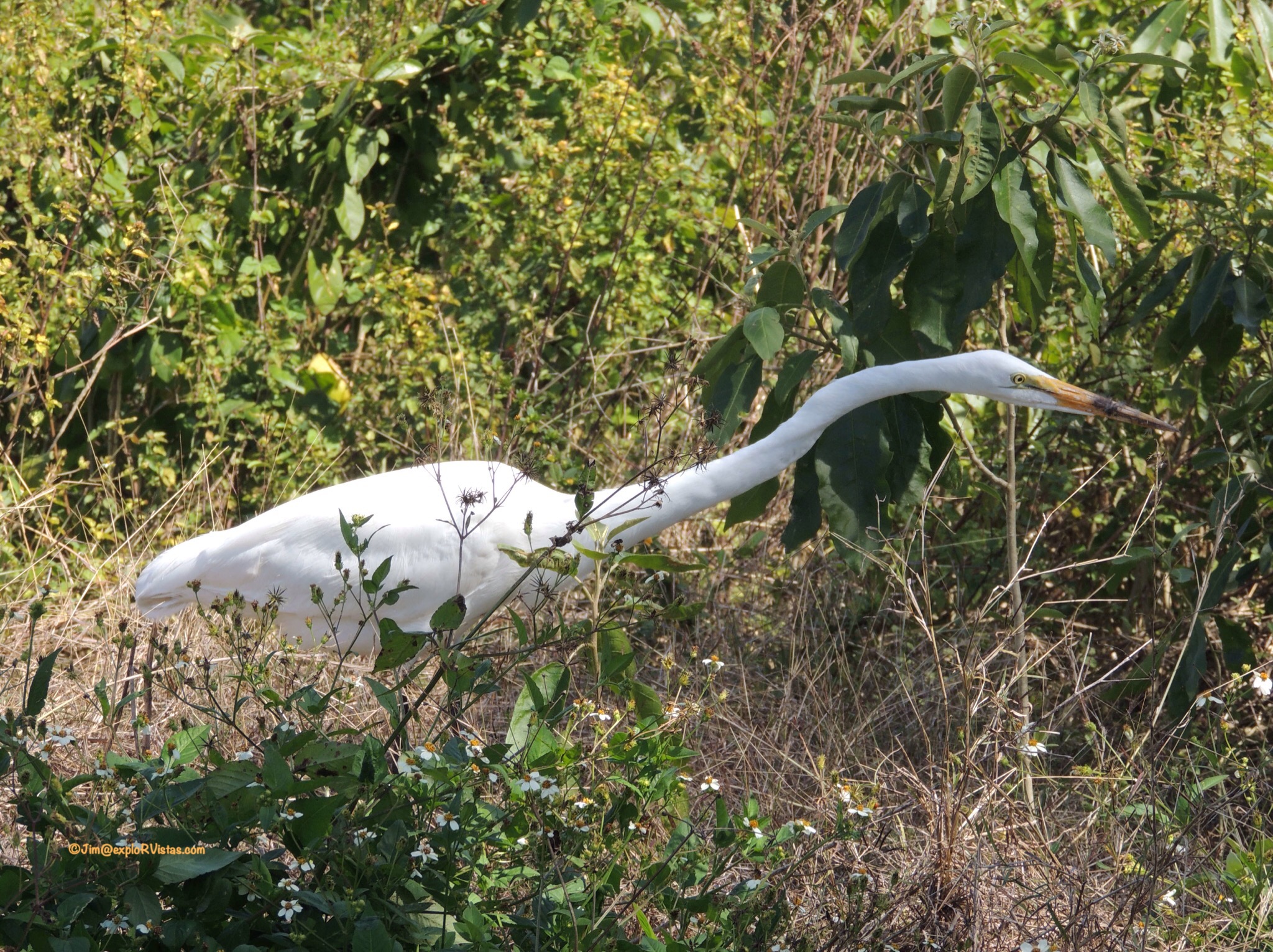
  

A Great White Egret, looking for something in the tall grass.
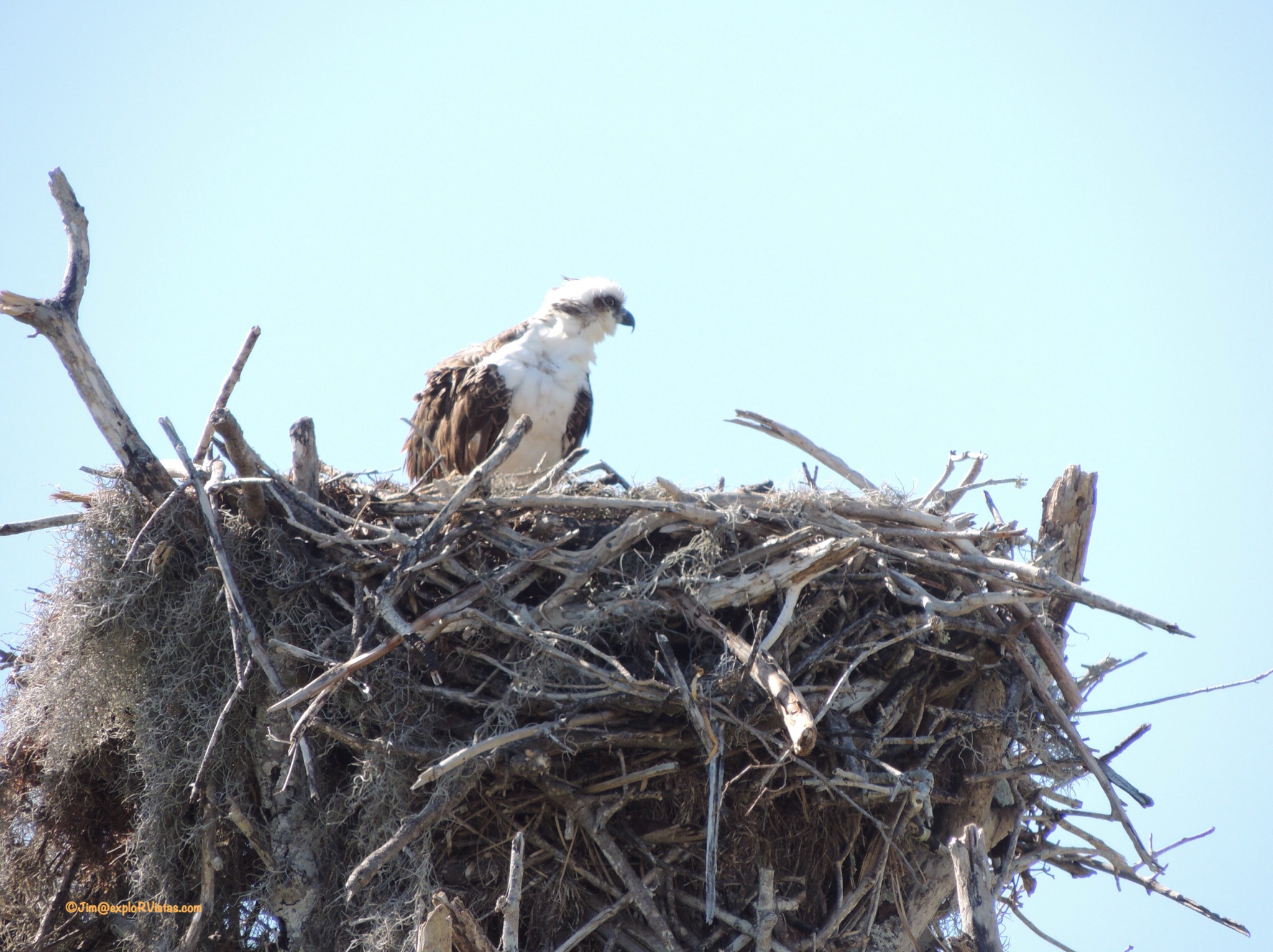
  

An Osprey hanging out in it’s nest.


I’m fairly sure this is a Raven and not a Crow. Definitely not a Patriot, Ram, Bronco … and certainly not a Lion.
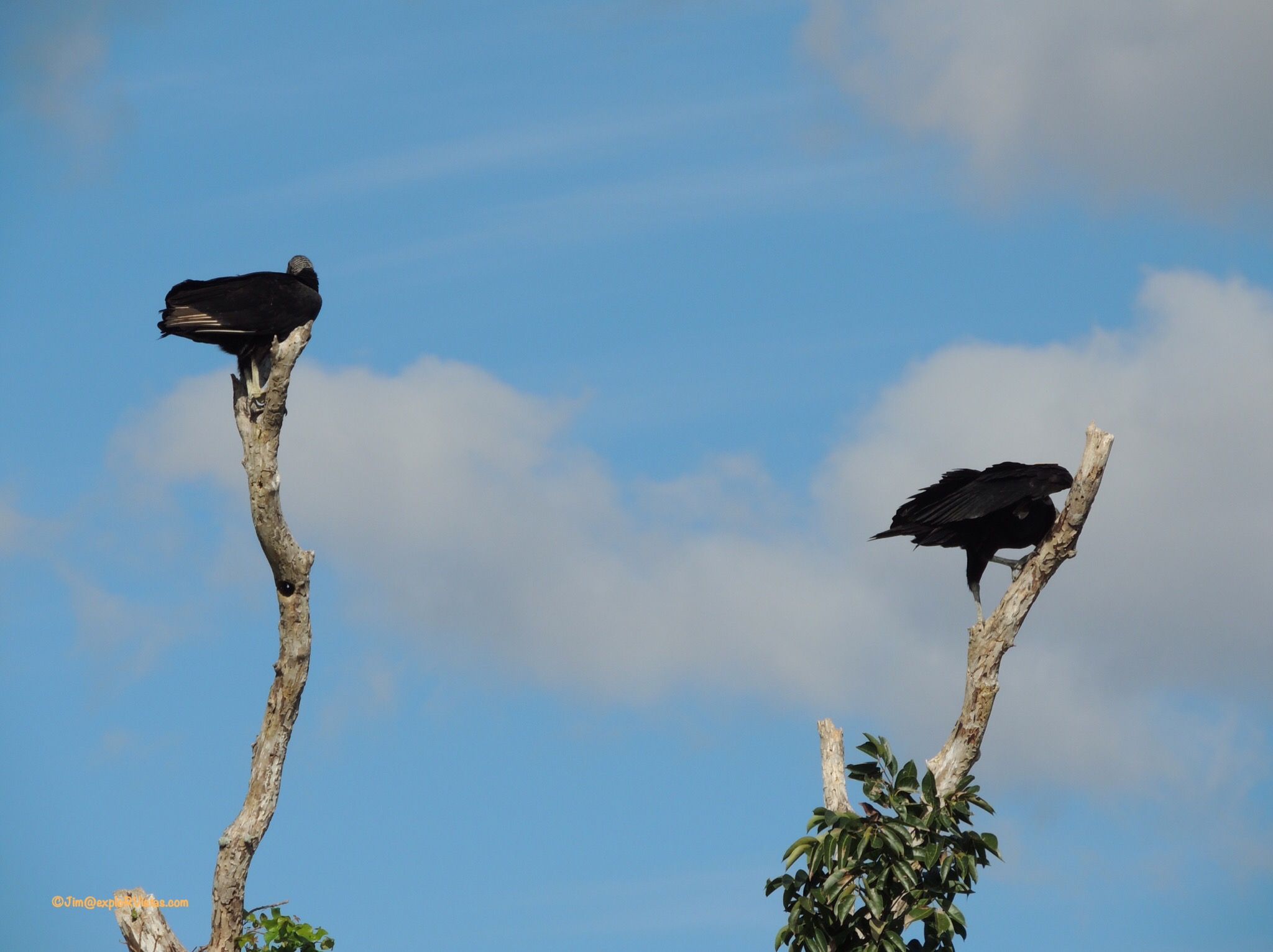
  

A couple of Florida Vultures hanging around in the trees.

  A Great Egret in flight.

A big highlight of the day was Pay-Hay-Okee overlook.


The unusual name of this place means ‘grass river’…and what better place than this to view the endless miles of sawgrass.  I had difficulty photographing a blade of this unique plant, but here is an image from the web. 
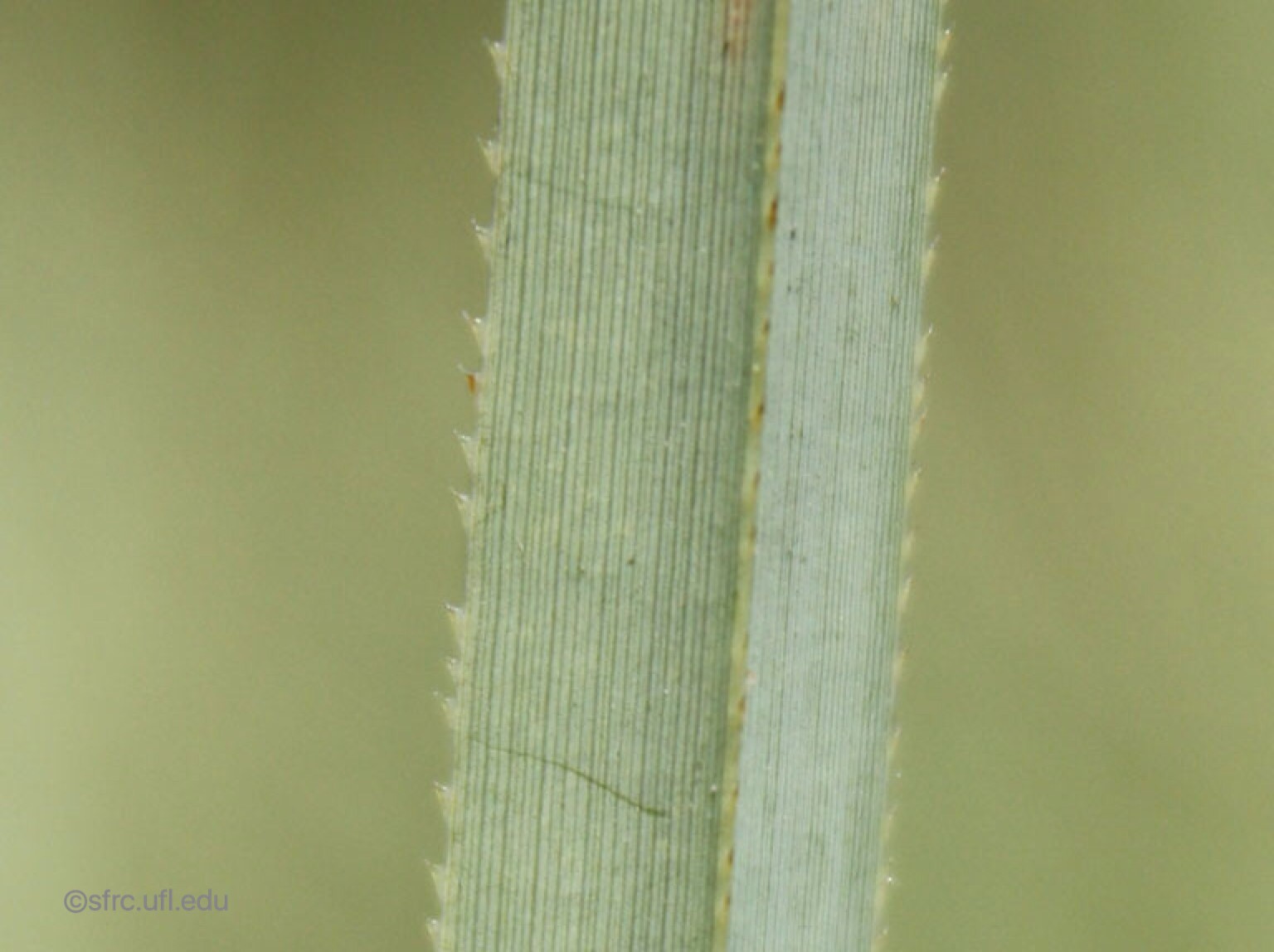
 

It is triangular in structure, with upwards-facing serrations along it’s edges. Moisture is gathered in these serrations, thus feeding the plant.  Be careful…they are sharp!

As we walked down the ramp from the overlook, we heard an owl down in a thicket next to the structure.


We peered in and found this Barred Owl.


We showed it to other visitors on the deck, and everyone was really quiet and respectful of the bird’s space.

If you have never been to the Everglades, we hope you are able to see this fragile ecosystem in the near future.  The diversity of species here is astounding.  It’s amazing the Everglades still exist, with all that mankind has thrown at them in the past century.  Efforts are being made to restore a portion of the historic flow… but there are huge politics in play, so the outcome remains to be seen. We certainly hope the restoration happens.

——————————————–

Search and shop Amazon through our exploRVistas link here
explorRVistas is a participant in the Amazon Services LLC Associates Program, an affiliate advertising program designed to provide a means for sites to earn advertising fees by advertising and linking to Amazon .com. Shopping here doesn’t add anything to your cost, but it does help support this blog. Thank you for considering shopping through exploRVistas!
Shark Valley – Everglades National Park

NOTICE: November 2017:  Shark Valley is currently closed, due to high water from Hurricane Irma.  To see a current status, check this link.

Before we came to South Florida, we had the preconceived notion that Everglades National Park was a hot, mosquito infested swamp…somewhere that we would find difficult to visit.  Well, we were pleasantly surprised this last Friday when we visited Shark Valley, the northern portion of Everglades National Park.  As luck would have it, a cold front had swept through the area on Thursday and brought the region low humidity and temperatures in the high 60’s. Insects were few and far between. Perfect weather to go for a 14.7 mile bike ride into the heart of the glades!

The name ‘Shark Valley’ is somewhat deceiving.  There are no sharks in the freshwater of the Everglades; the name comes from the Shark River Slough, the large body of slow moving water coming down out of Lake Okeechobee.  The valley is all of 10 feet deeper than the Atlantic and Gulf ridges to the east and west.  The Everglades are not swampland, but rather a shallow river of clear, fresh water flowing over a limestone base from north to south.  While they were once much larger…extensive portions were drained and developed…they still are massive.  They are also quite diverse in their fauna, ranging from sawgrass to tall pine trees.  Surprisingly, there were very few palm trees.

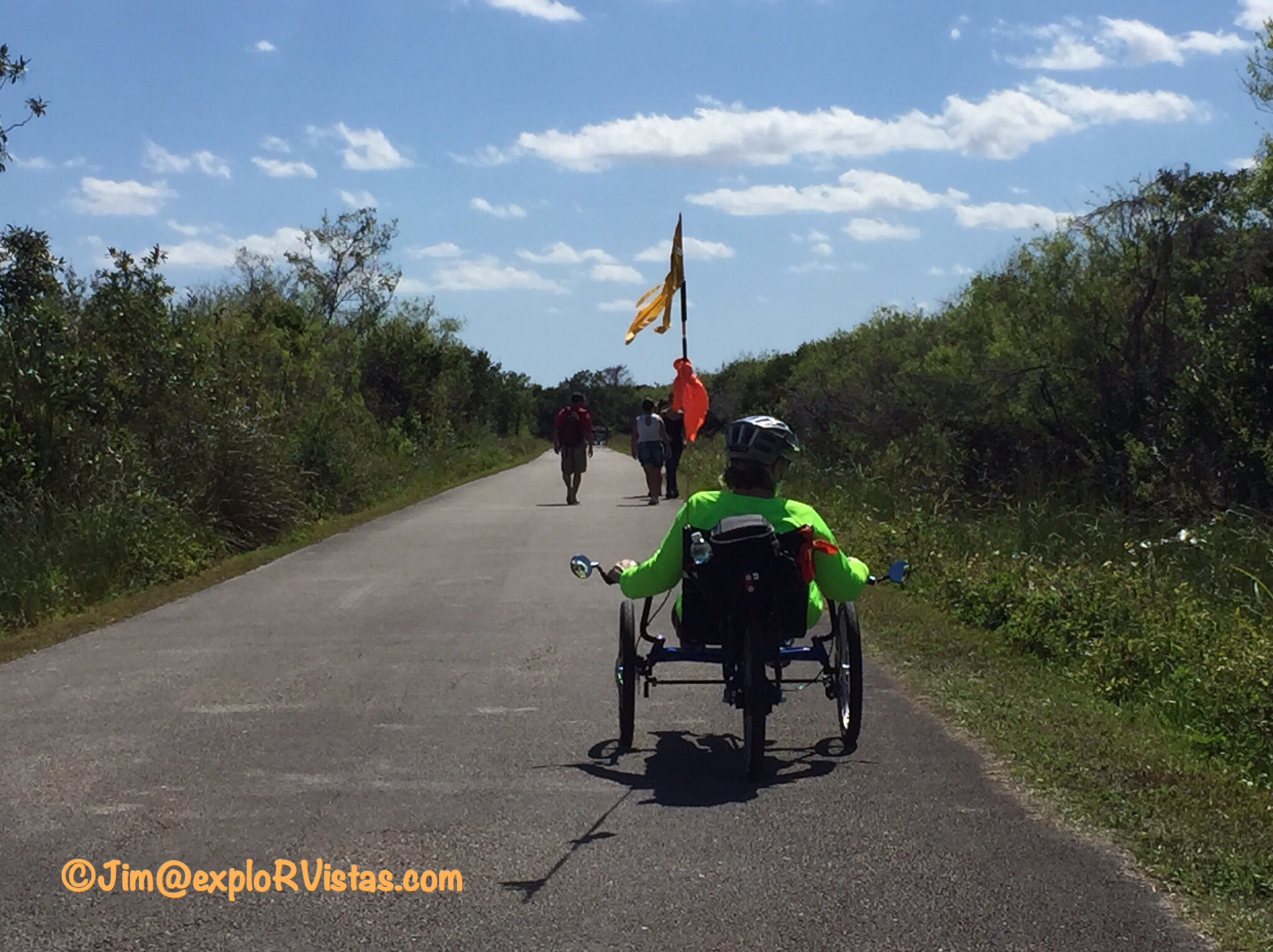
The National Park Service operates a tram along the Shark Valley Tram Trail….a 15 mile asphalt loop road that runs south from US-41 into the middle of the park.  They also rent bicycles and allow walkers on the trail.  We decided to take advantage of the great weather and check it out with our TerraTrikes!  It is advised to arrive early, as we got there just after noon and were subject to a half hour ‘one car in/one car out’ wait.

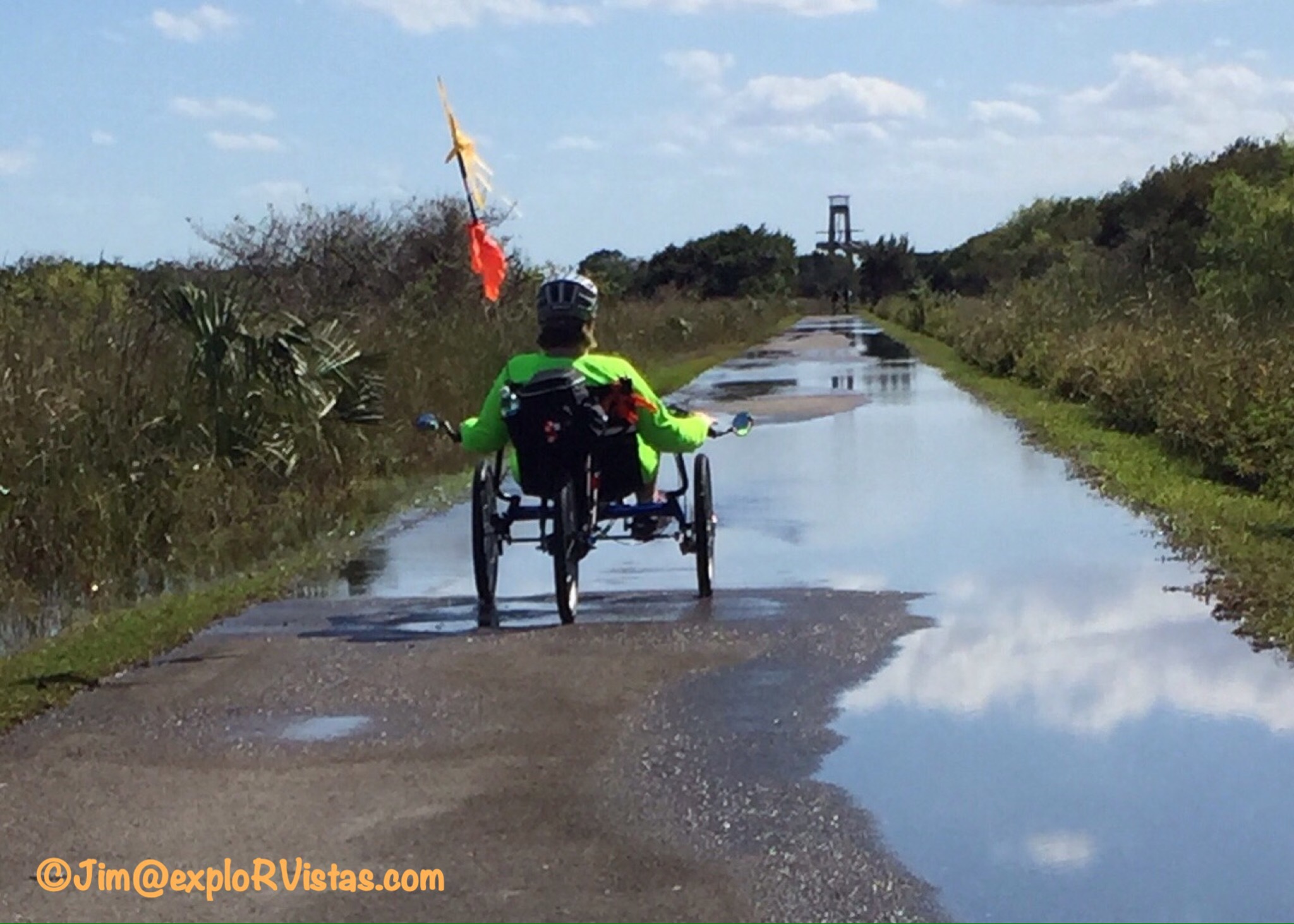
Diana took the lead and kept an eye out for alligators.  It’s one thing to be standing up and looking down at them, but we were a lot closer to their level with our recumbents!

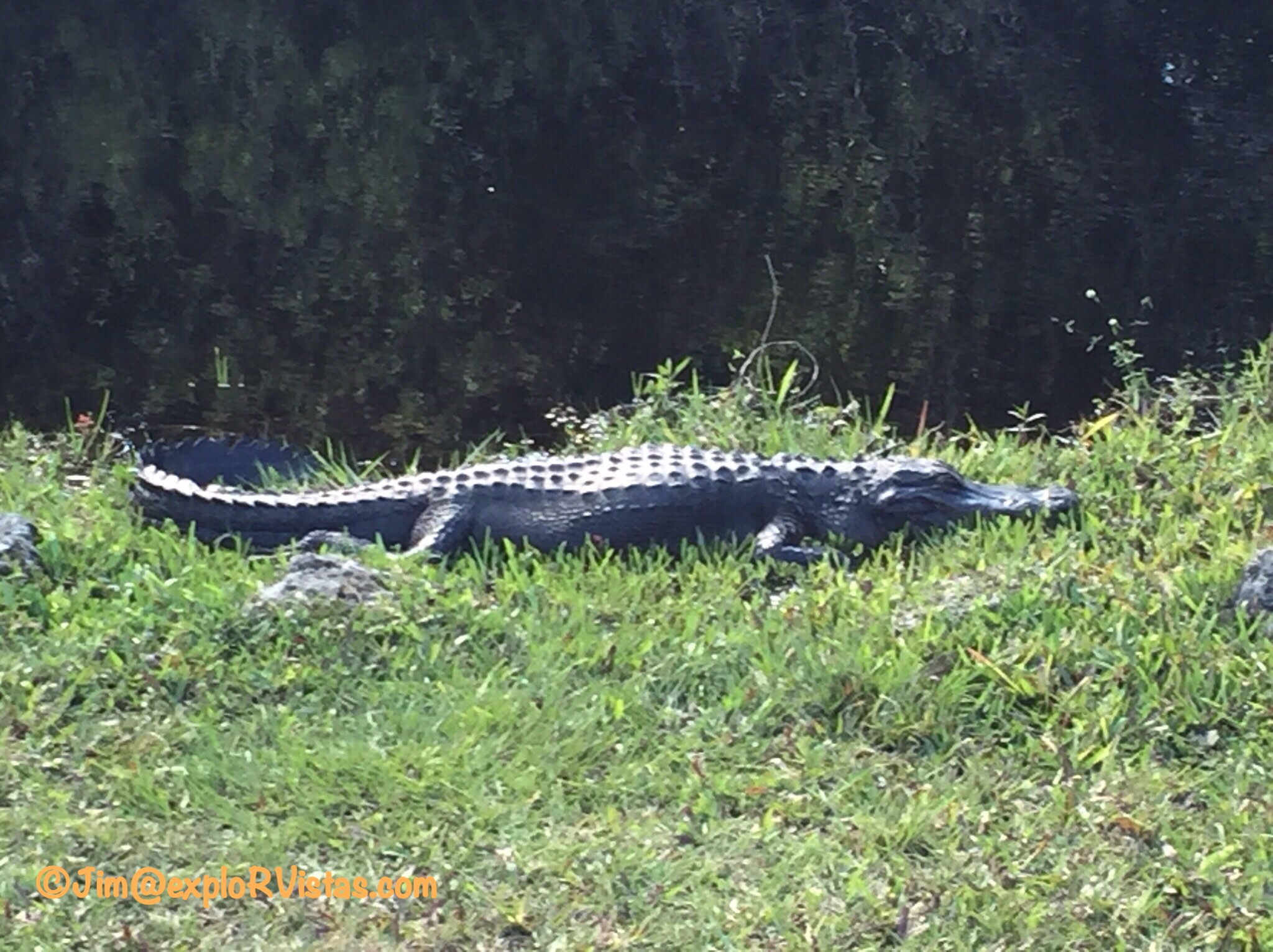
It wasn’t long before we saw the first one.  A ranger told us to never pass between their head and the water, as that is their escape.  He didn’t need to tell us twice.  ðŸ™‚

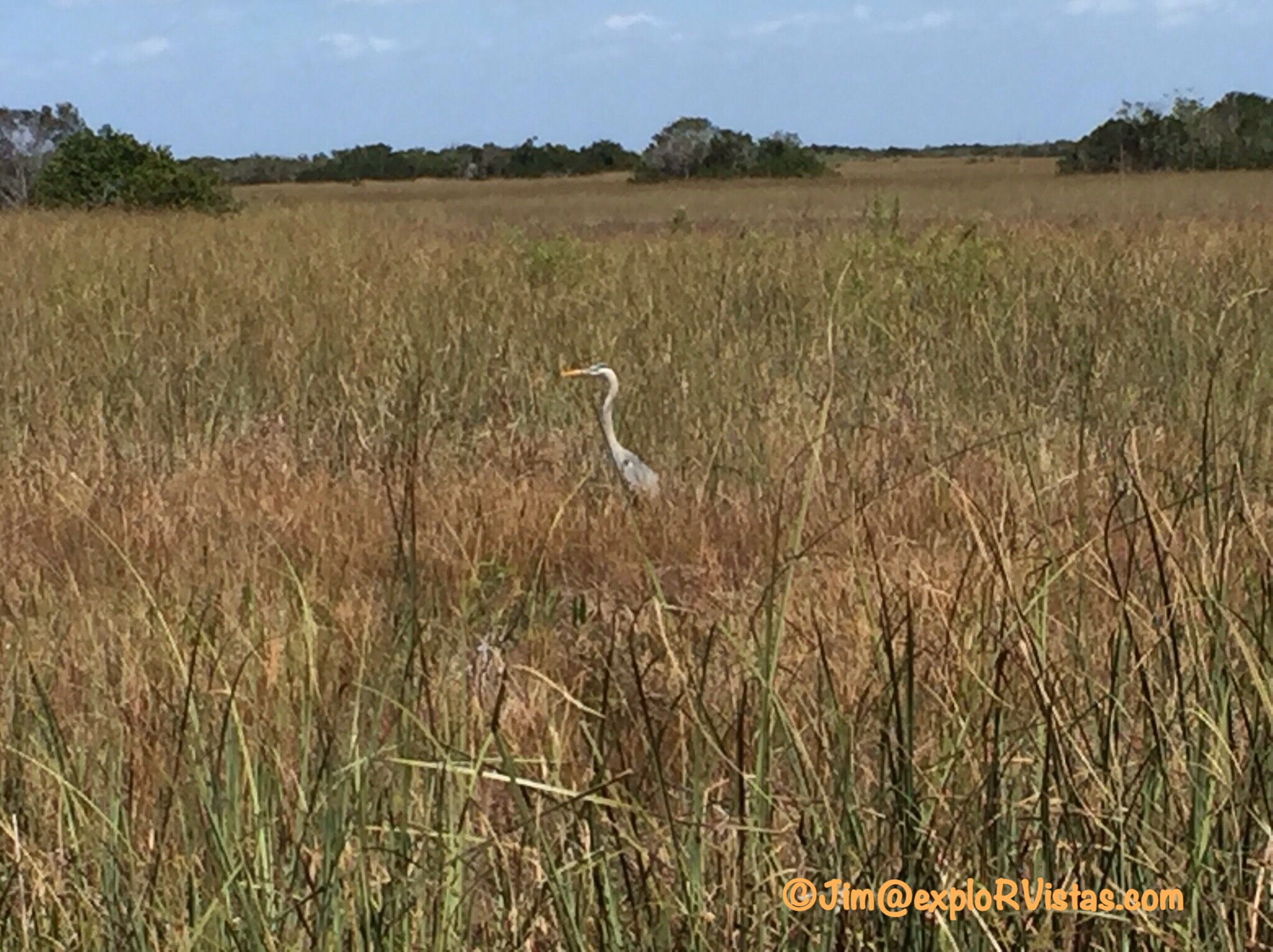
We quickly started seeing other wildlife, such as this Great Blue Heron.  What appears to be grasslands from ground level is actually mostly water, which can be easily seen from the air.

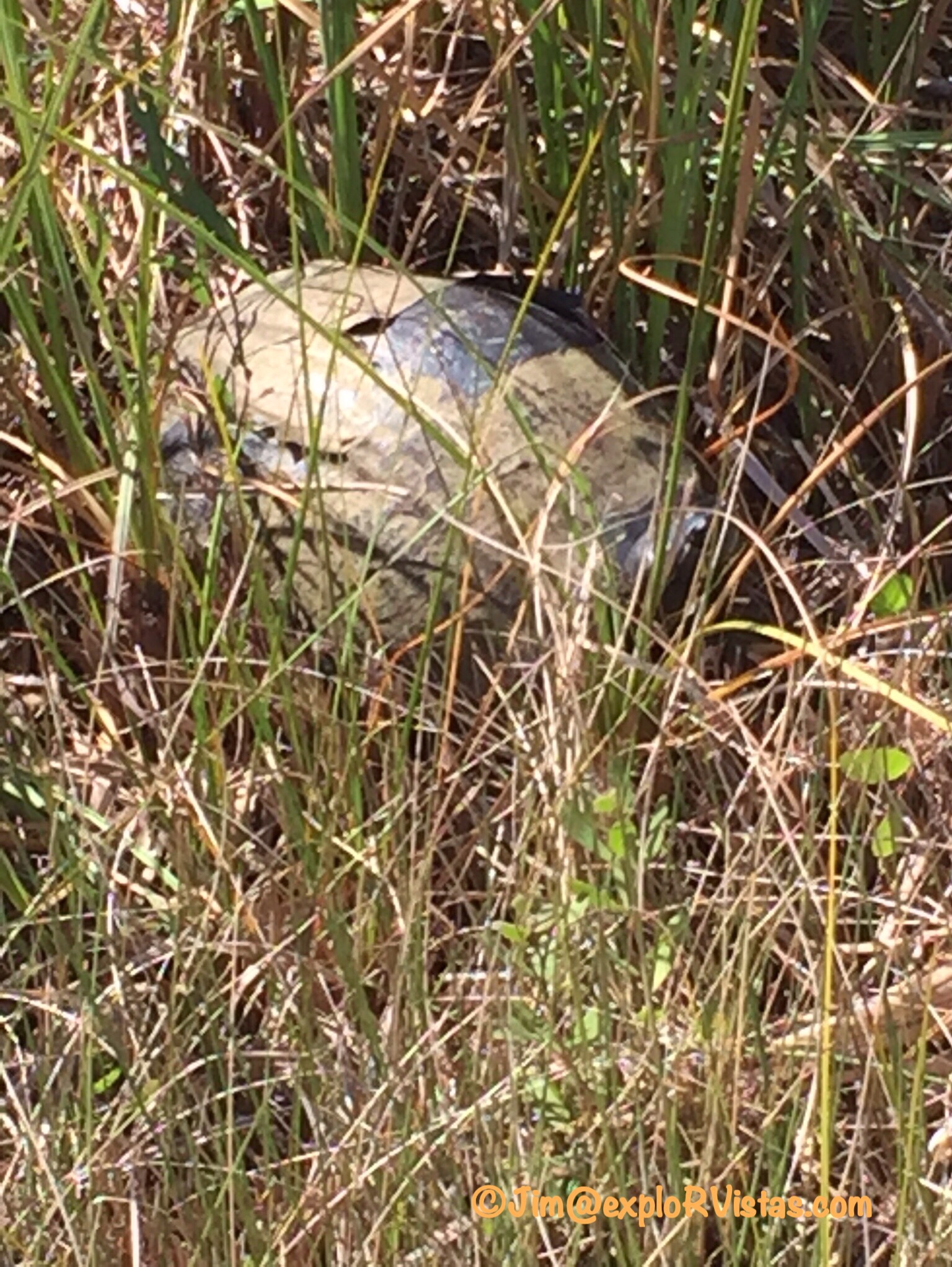
We spotted this tortoise along the side of the trail.

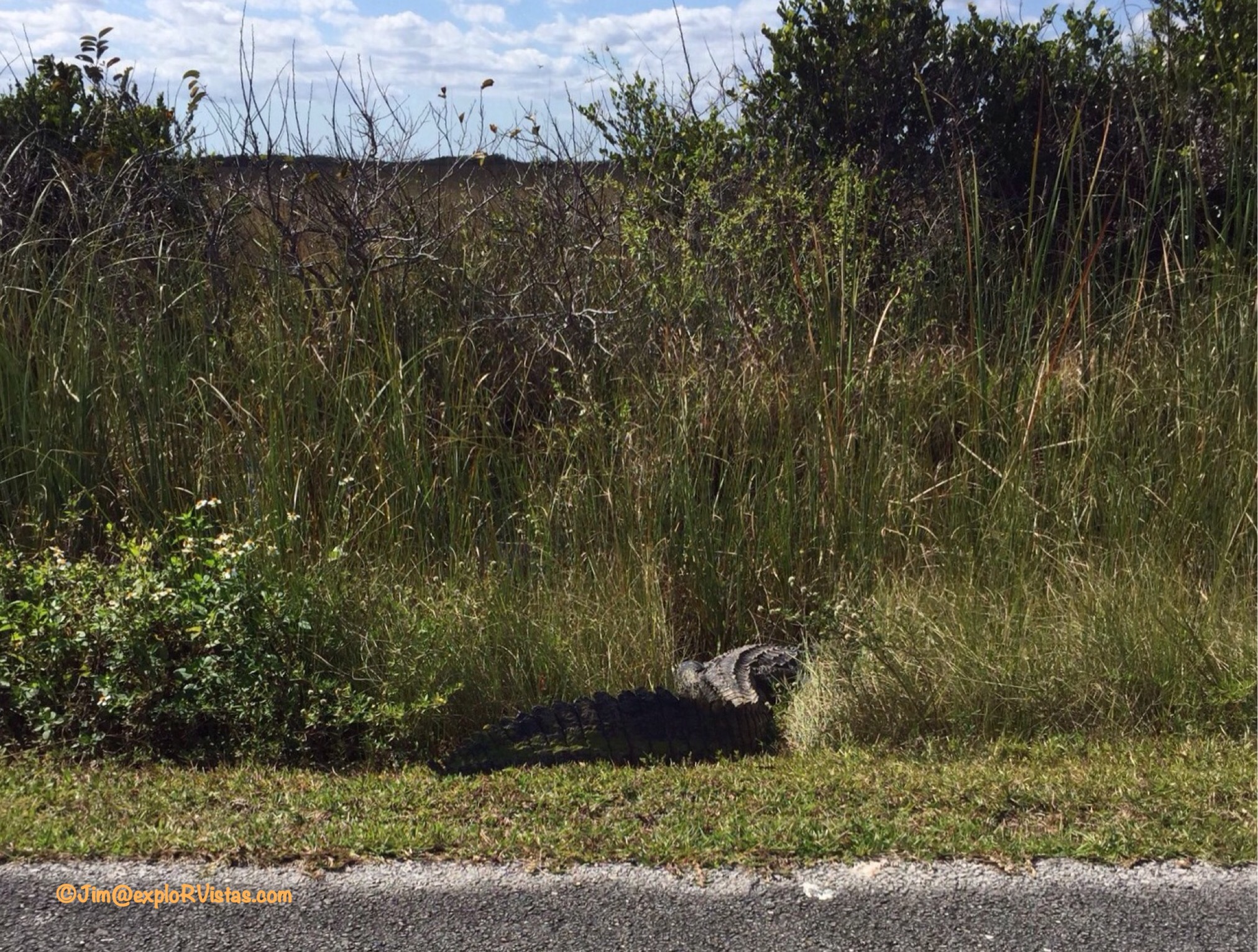
Yet another gator laying in the grass.  At one point, I stopped to view a turtle, so Diana stopped and began pushing her trike back with her feet.  Her gears made a clicking sound that evidently scared a gator that was hiding in some tall grass, just out of our view.  It jumped into the water with a huge splash. That really got our heart rates going!

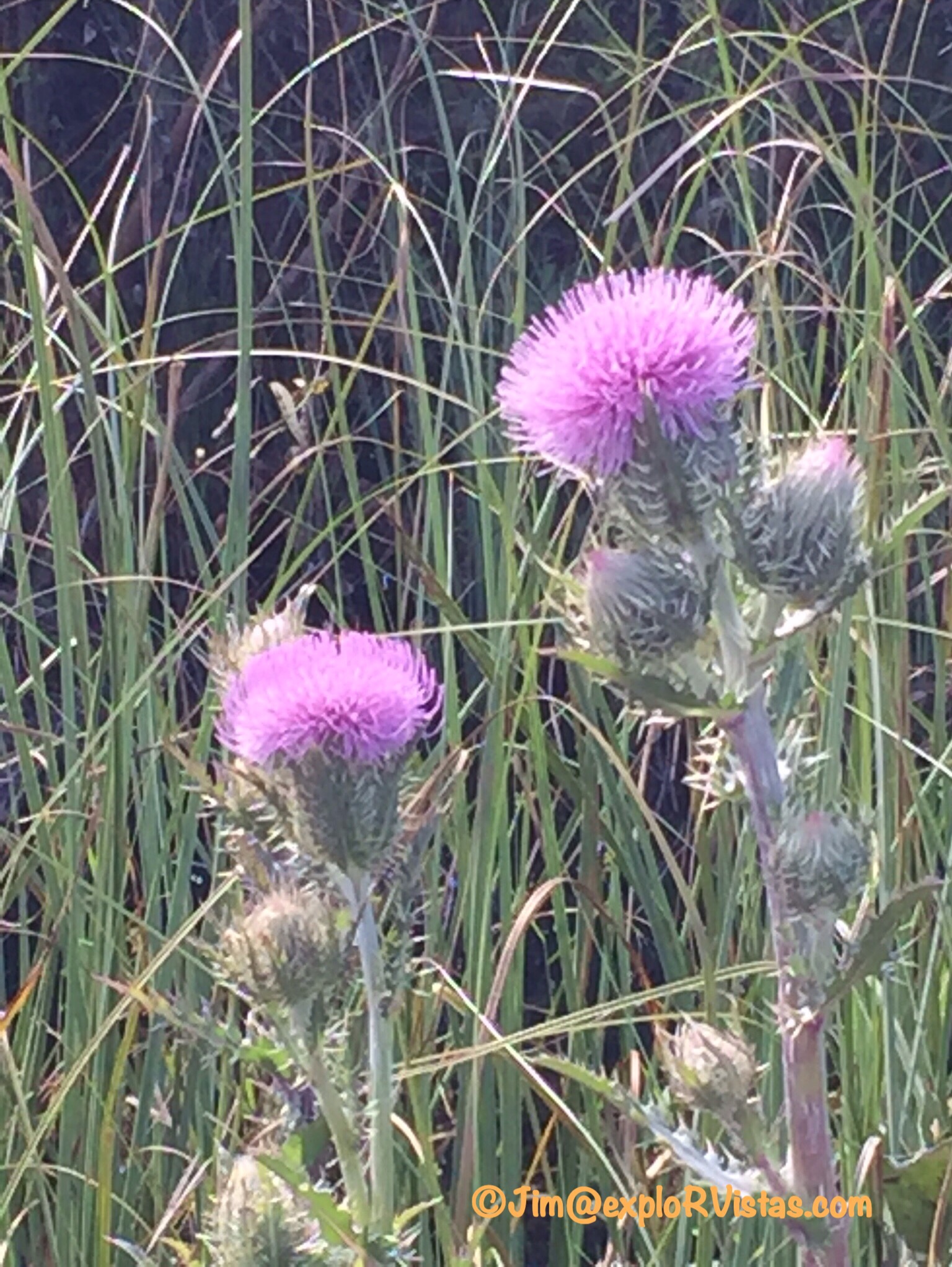
Diana spotted this colorful Bull thistle.  We saw several wildflowers in bloom throughout the trip.

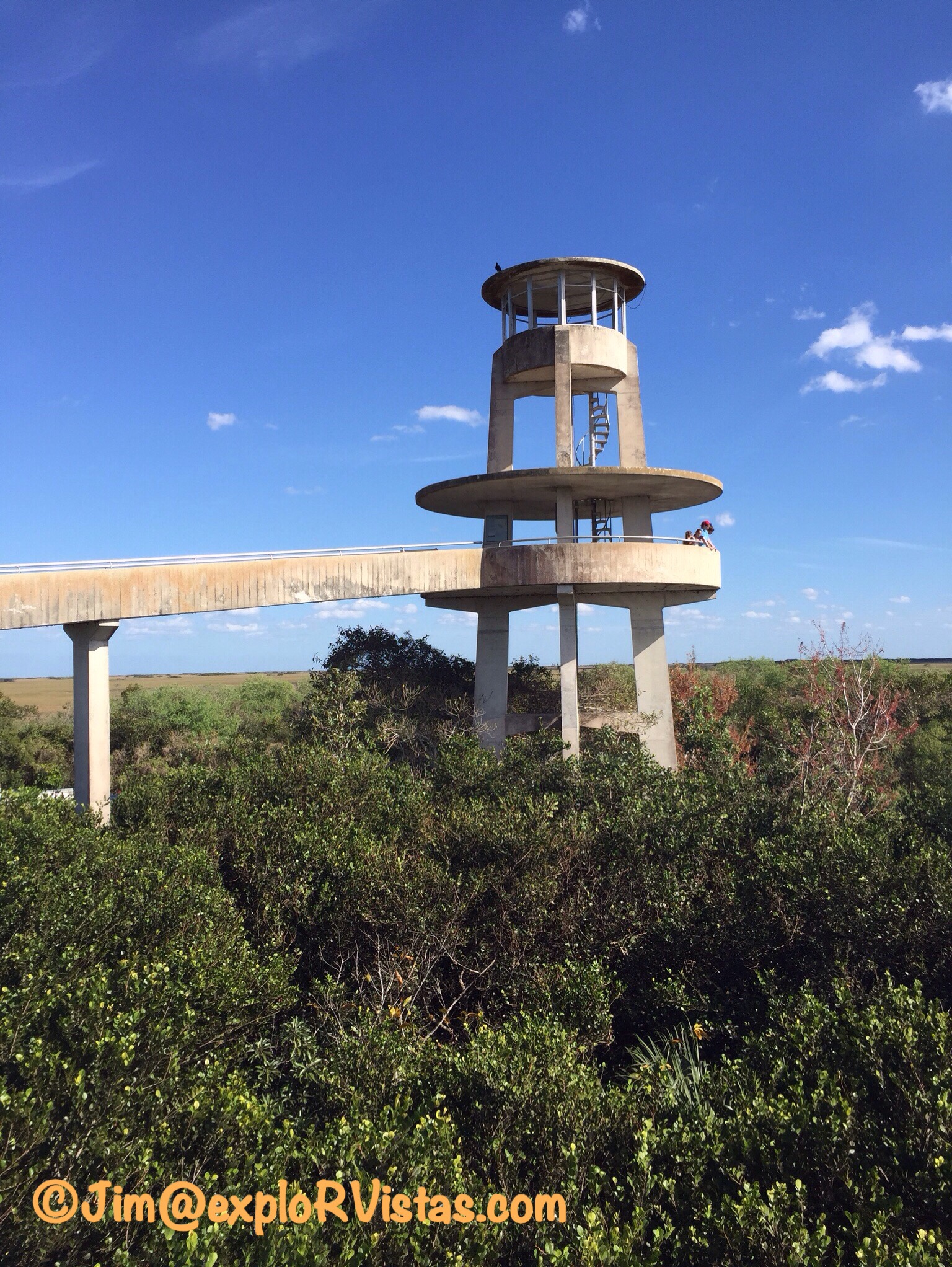
Near the southern end of the trail, an observation tower rises above the Everglades.

As we approached, we had to go through a fair amount of water over the path.  This runoff was actually flowing across the road, as this part of Florida has had a lot of rain this year.

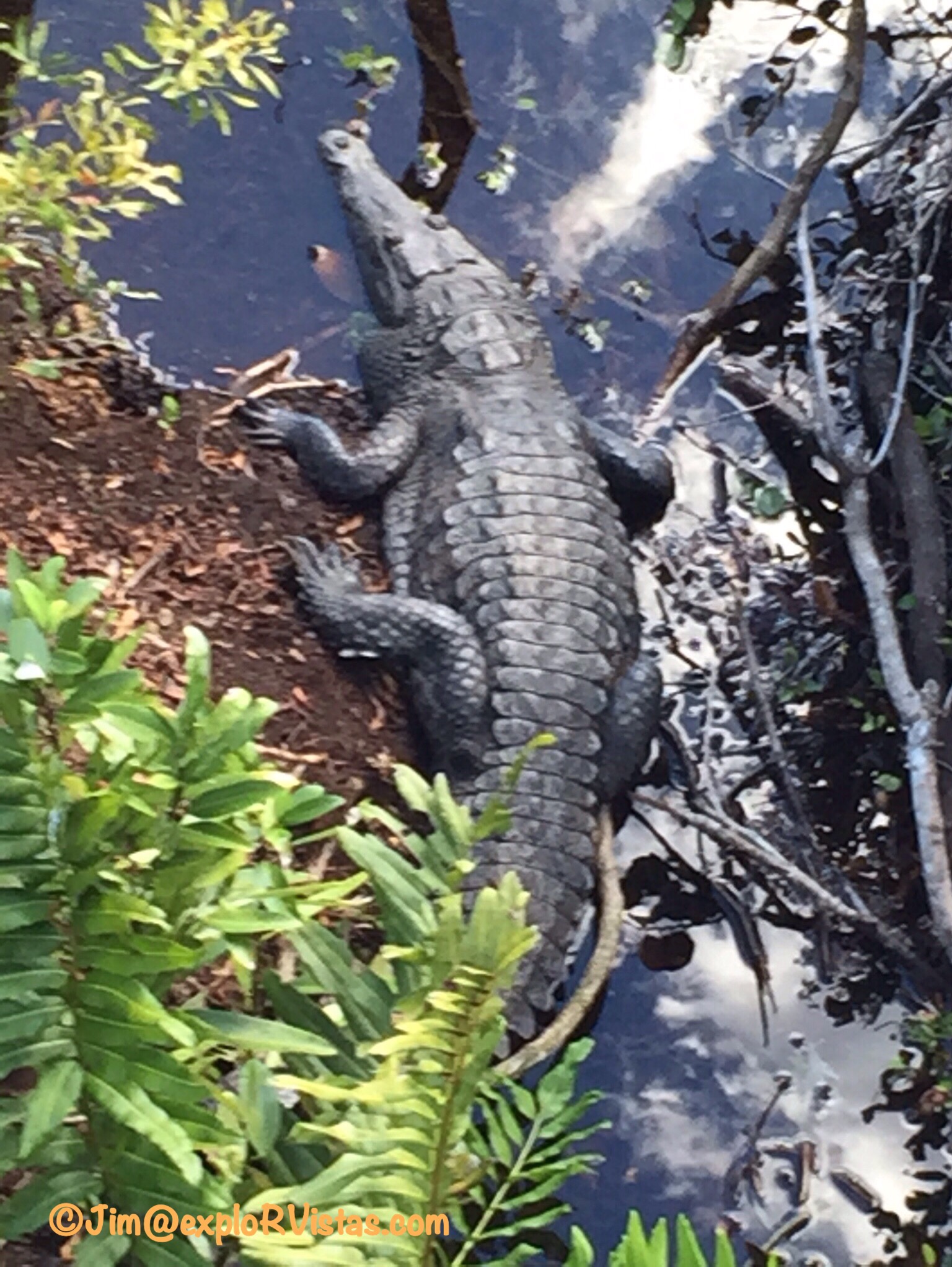
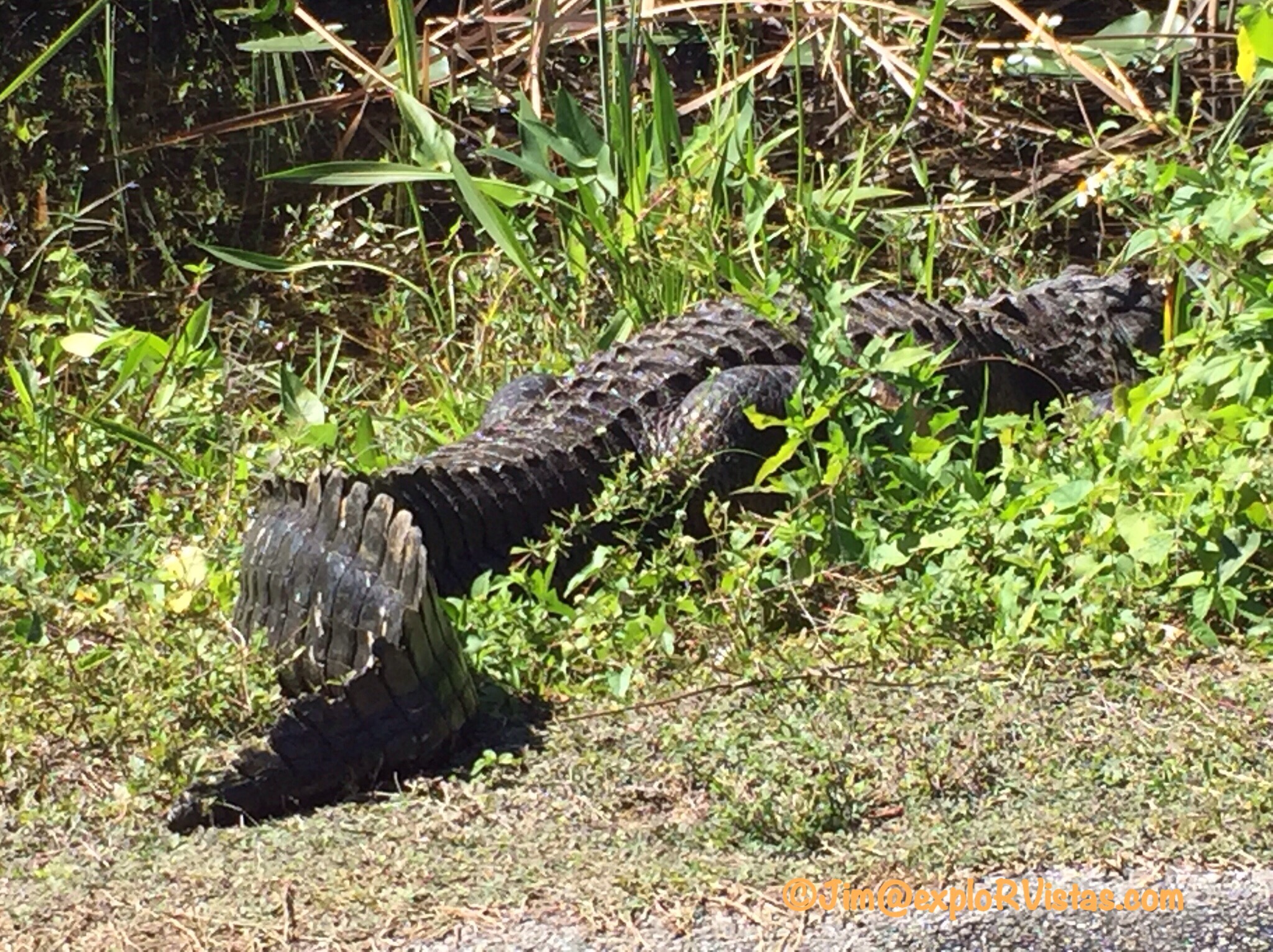
While parking the trikes, we noticed this big alligator sizing up all of the tourists.  :). Actually, only one person has been attacked by a gator in Shark Valley since it opened in the 1940’s…a young Brazilian boy who fell off his bike into the canal near the visitor’s center.  His mother jumped in and rescued him by prying the reptile’s mouth open.  While that was an unfortunate accident, we are continually amazed at how some people tempt fate by posing with creatures like this.

As we started up the tower, we noticed this American Crocodile.  Notice the narrower snout.  Alligators have a much wider spread between their nostrils. The Florida Everglades are the only place in the world where crocodiles and alligators co-exist in the same habitat.  We were lucky to see this one, as they are endangered and it is rare to see them in the wild.

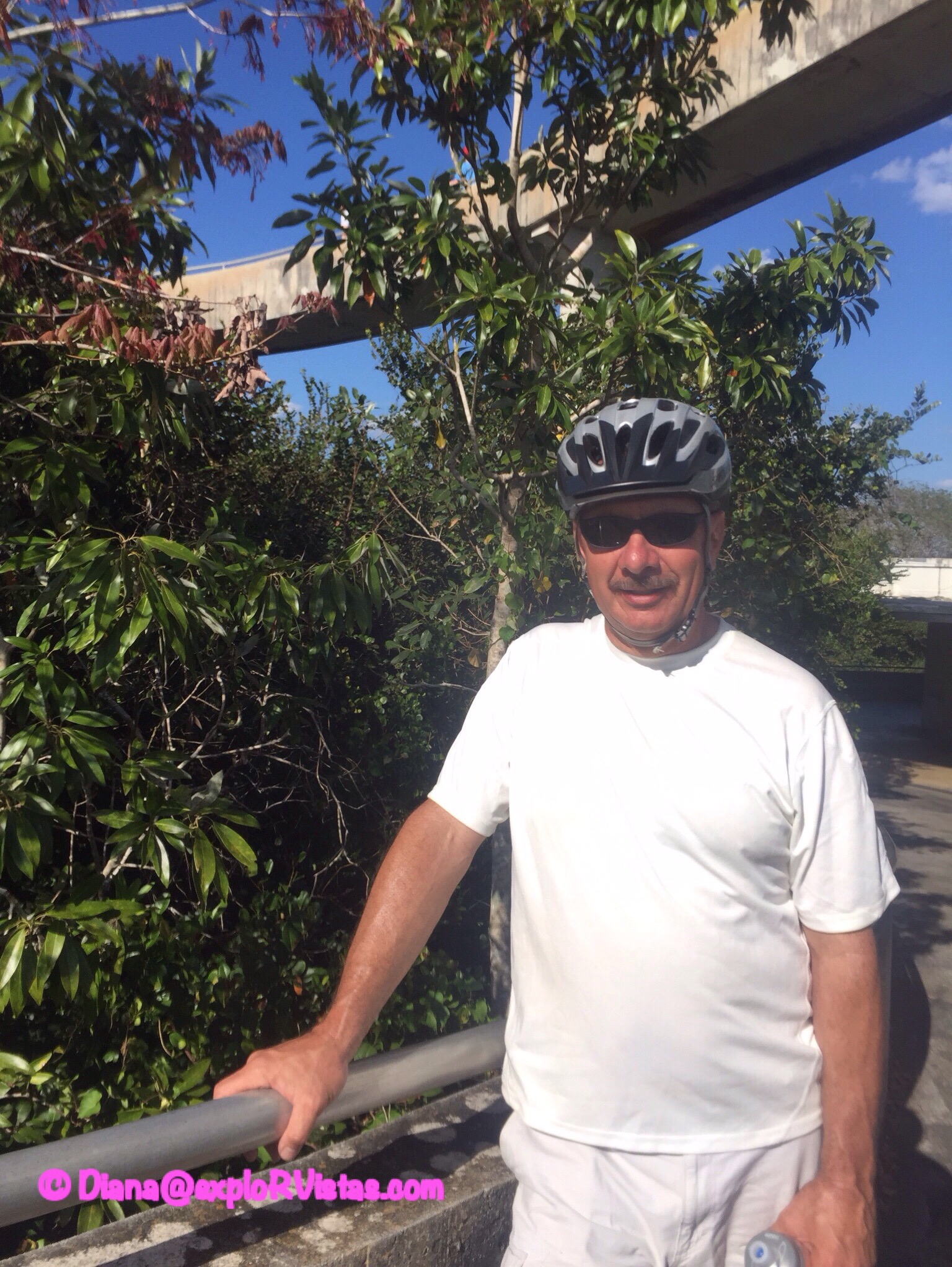
Here I am near the base of the tower.

The concrete structure rises above the valley and gives a great view of the surrounding landscape.  The upper portion is closed off, most likely for safety reasons.

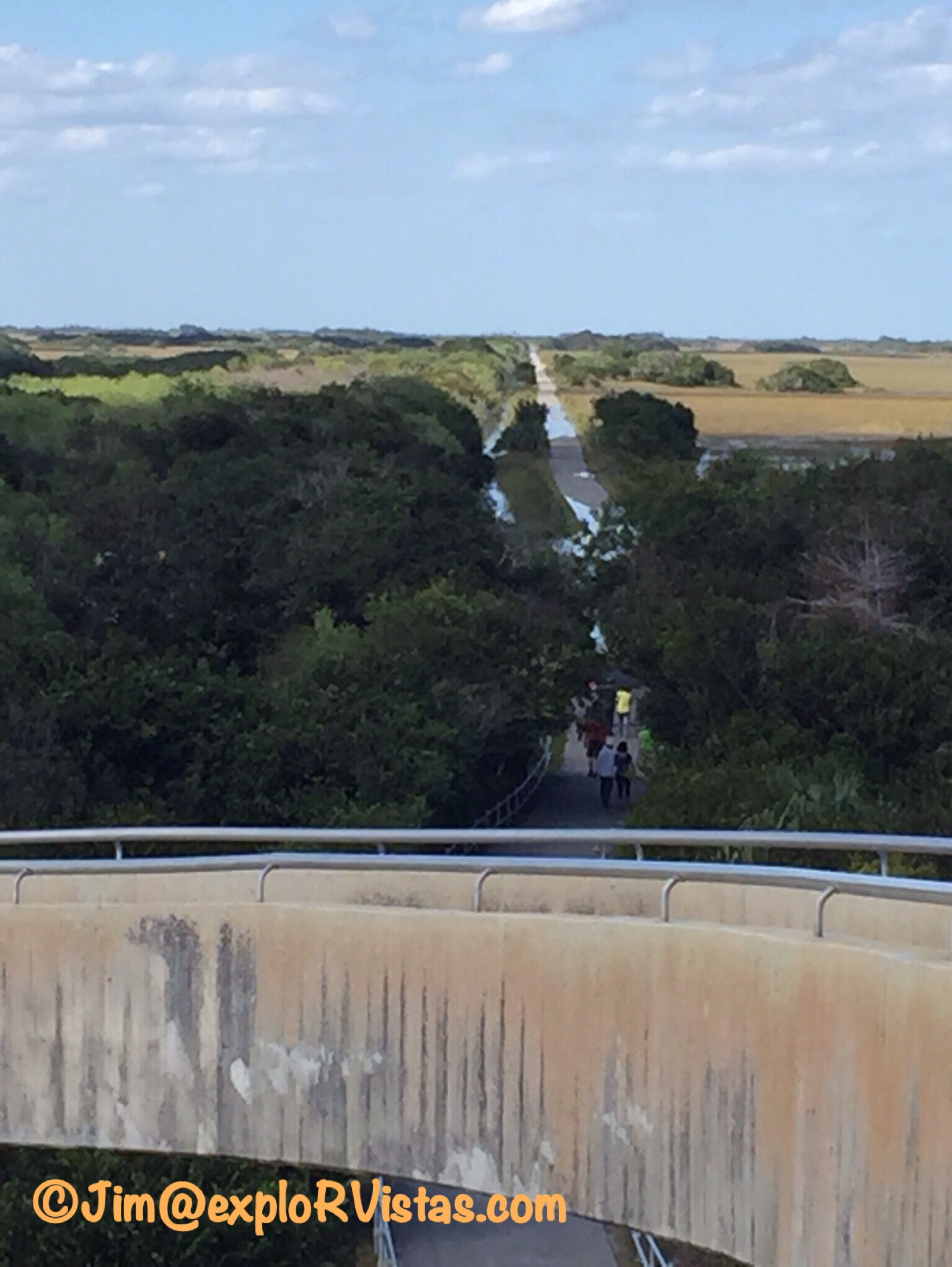
Looking back north, you are able to see the road we had just biked on.


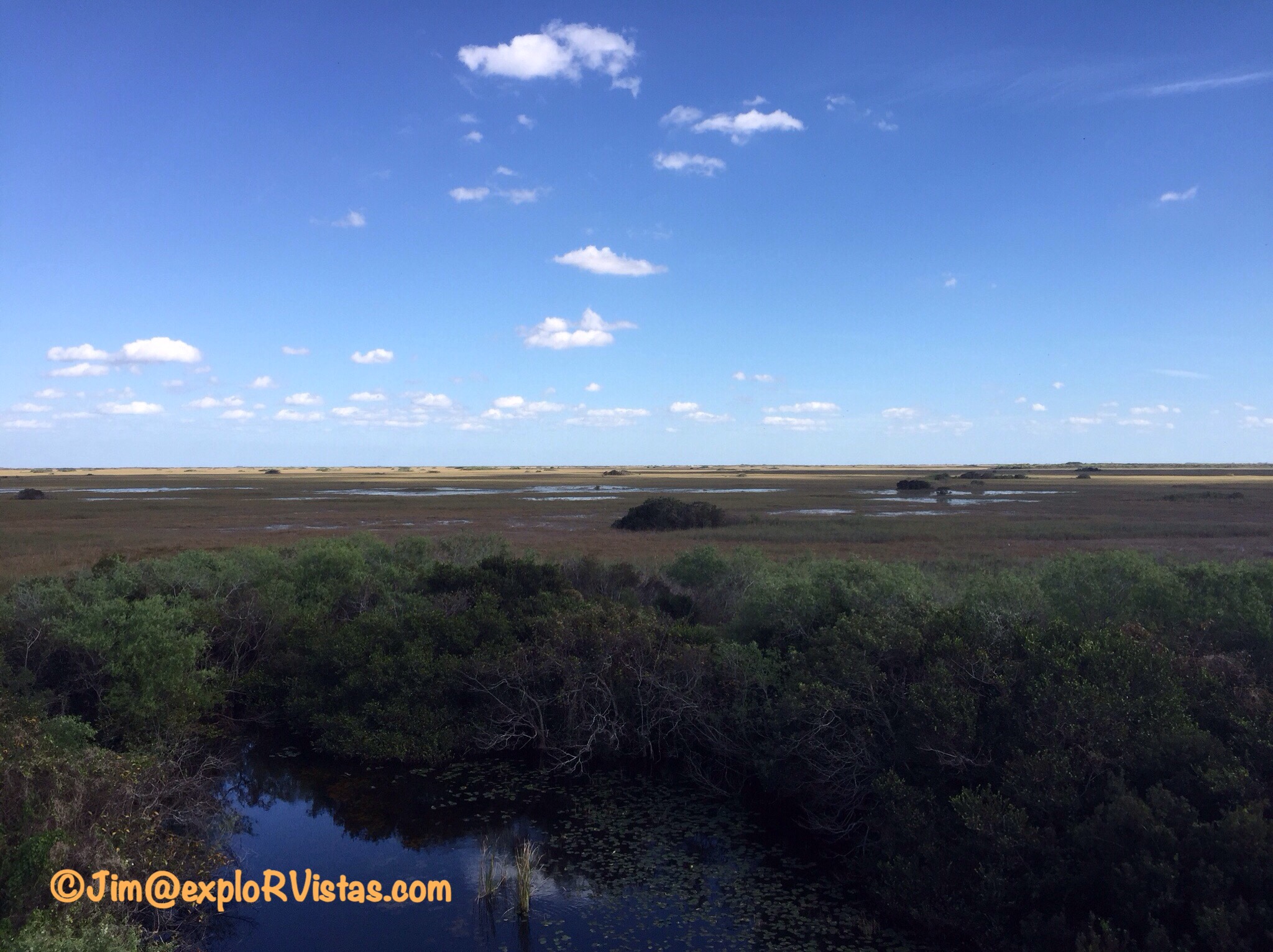
To the east, south and west, there is wilderness as far as the eye can see!  While most national parks showcase stunning geographical features, Everglades National Park was the first to be established to protect and display the vast ecosystem. It is the third largest park in the Lower 48, behind Yellowstone and Death Valley.

After we were done at the tower, we returned on the curvier eastern side of the loop road.

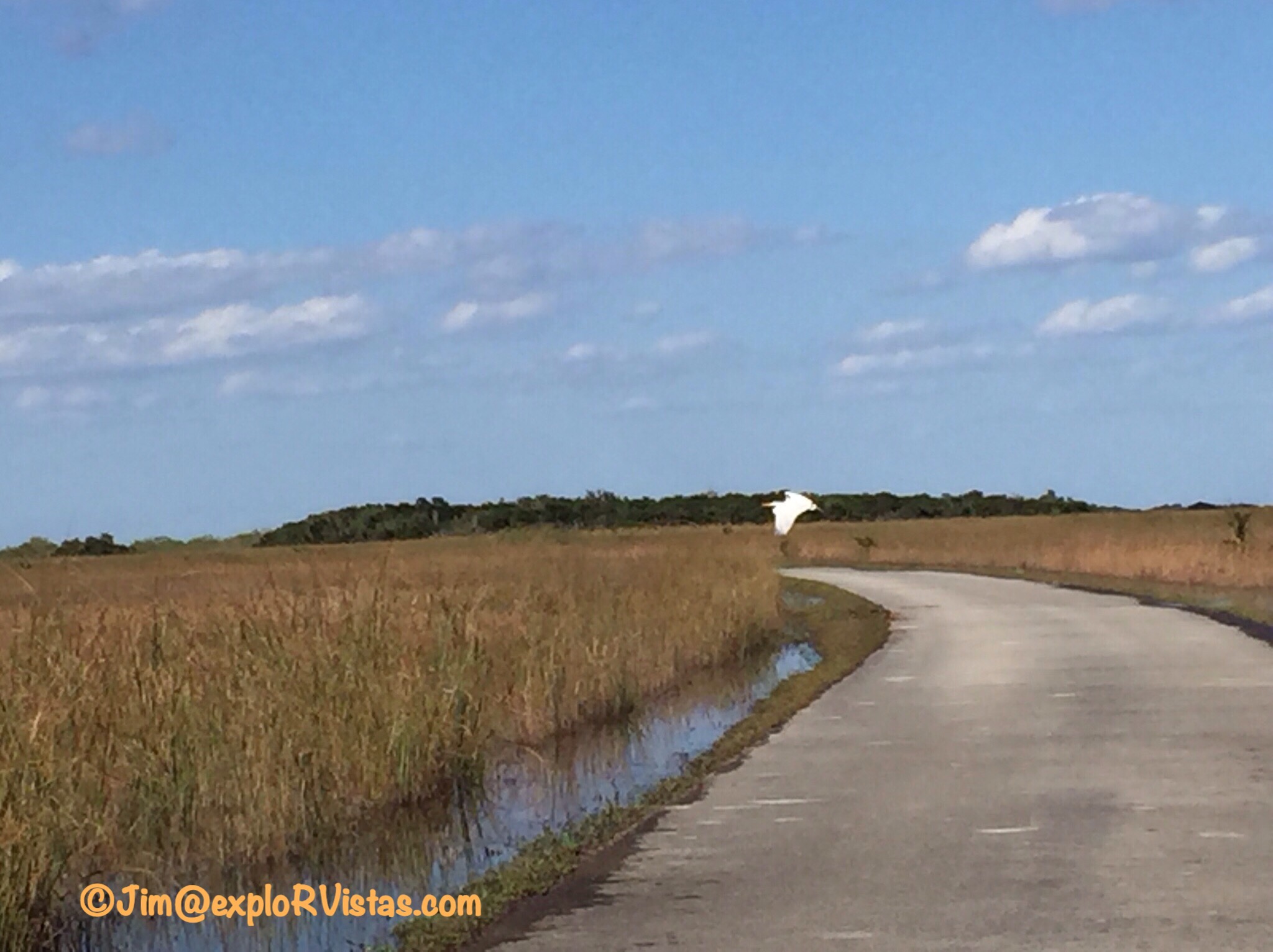
It wasn’t too long before this Great White Egret flew in front of us.

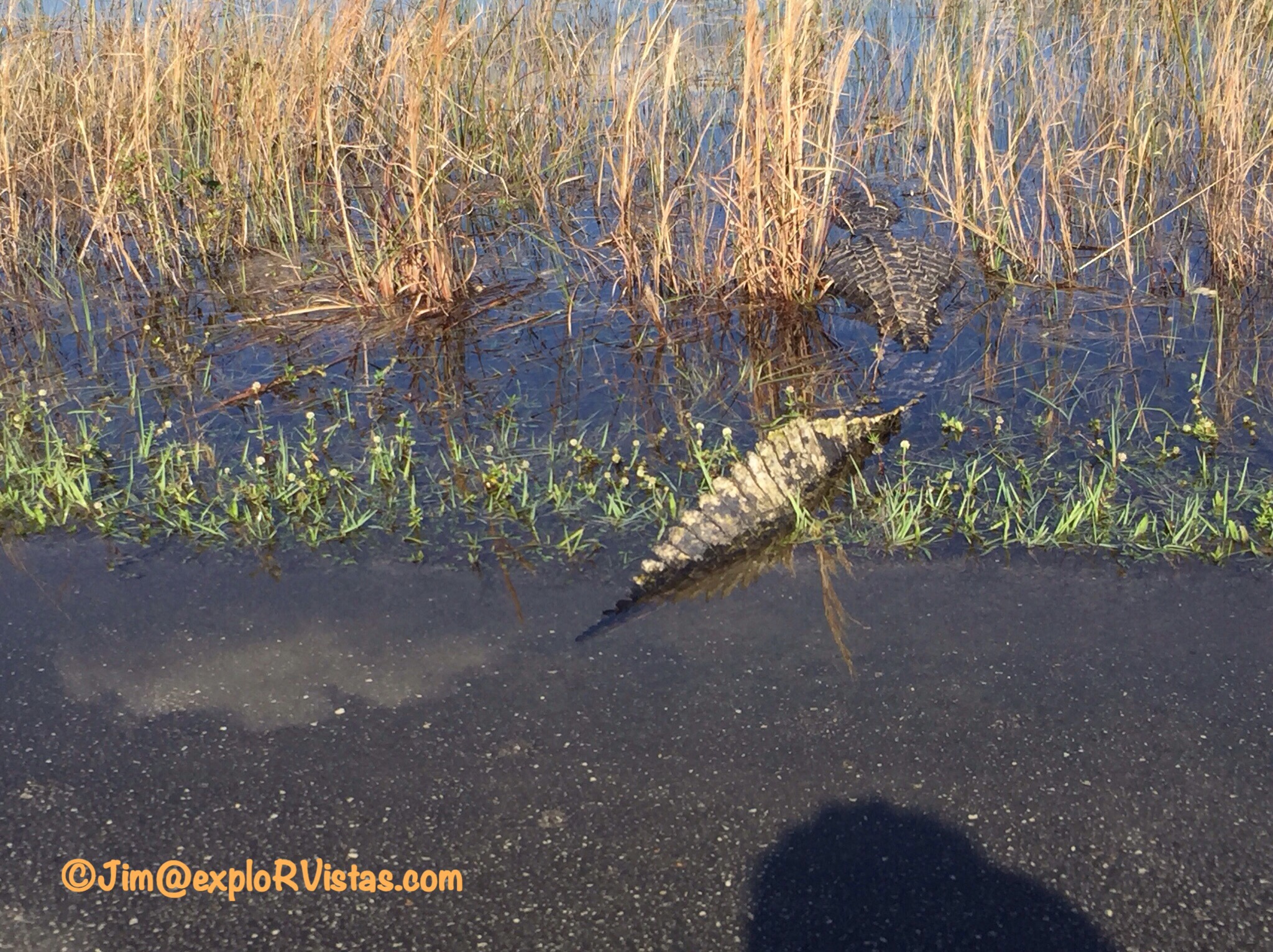
We passed this partially submerged gator.

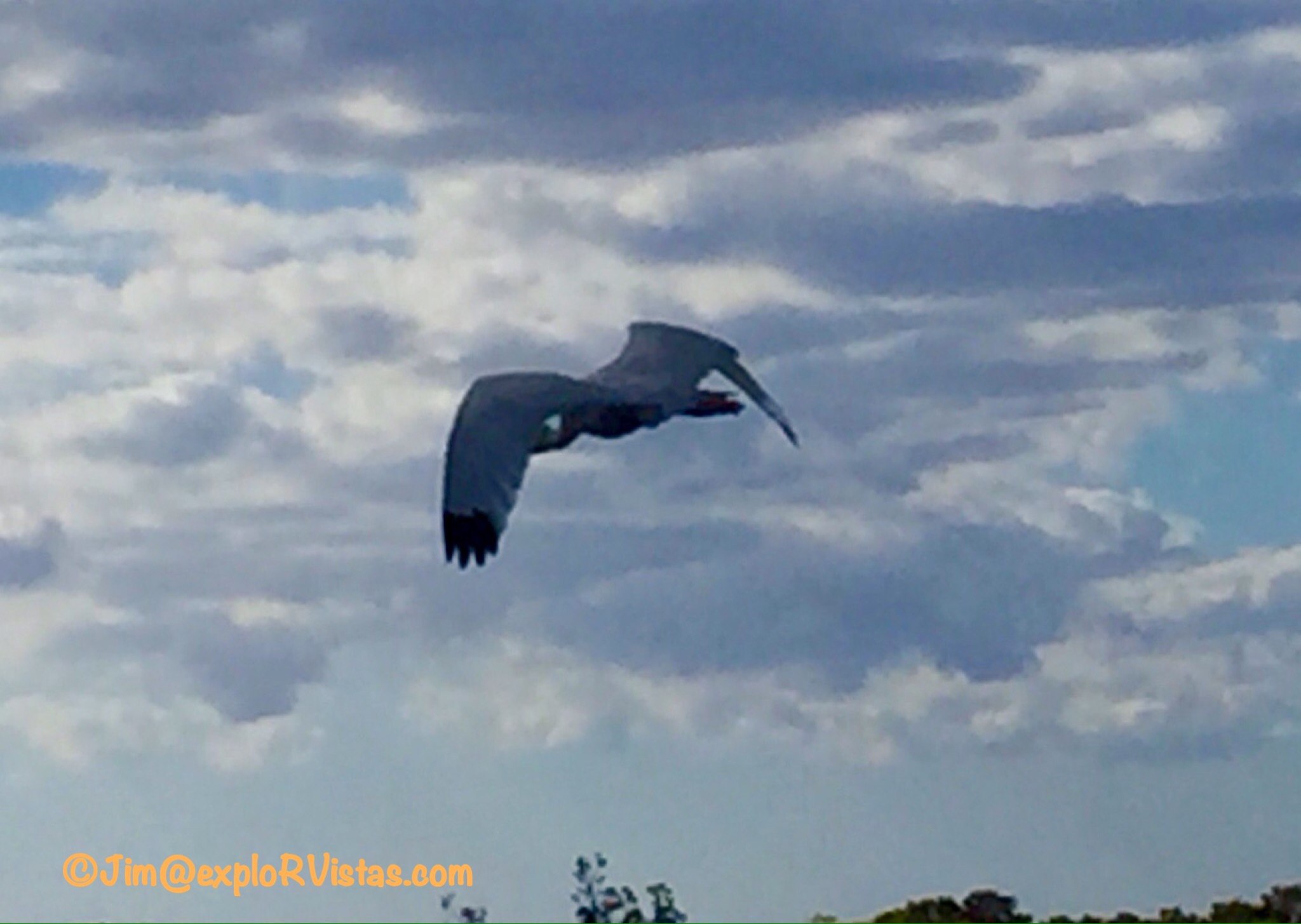
Here is a White Ibis in flight.

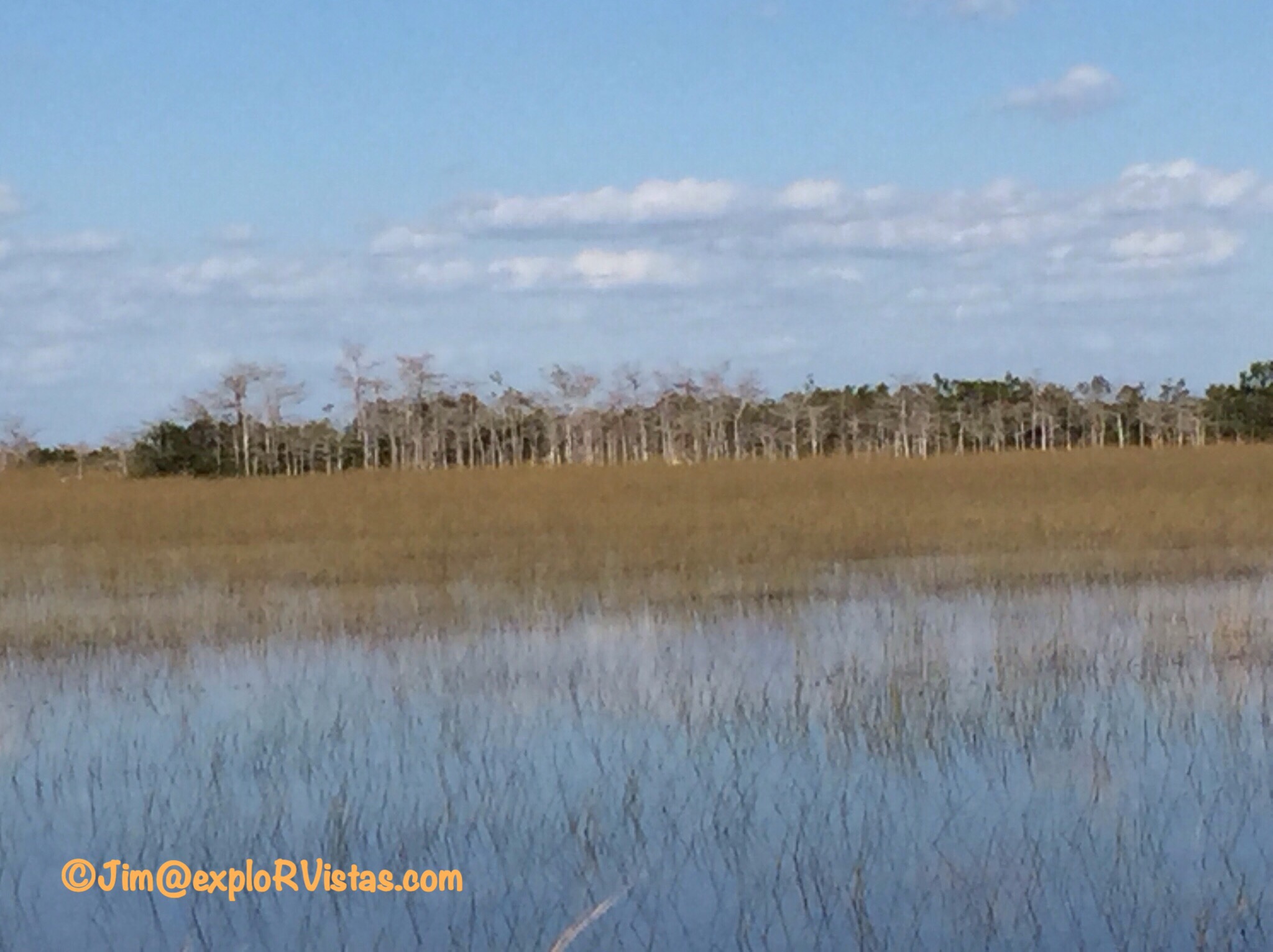
We also saw plenty of hammocks, which appeared to be islands in the glades.  What we found out was that they are actually deeper water than the surrounding landscape.  When the Everglades dry up in the hot summer, these deeper areas are able to support tree growth.  A change of mere inches can cut short the life of a tree, as has happened to the trees in the foreground.

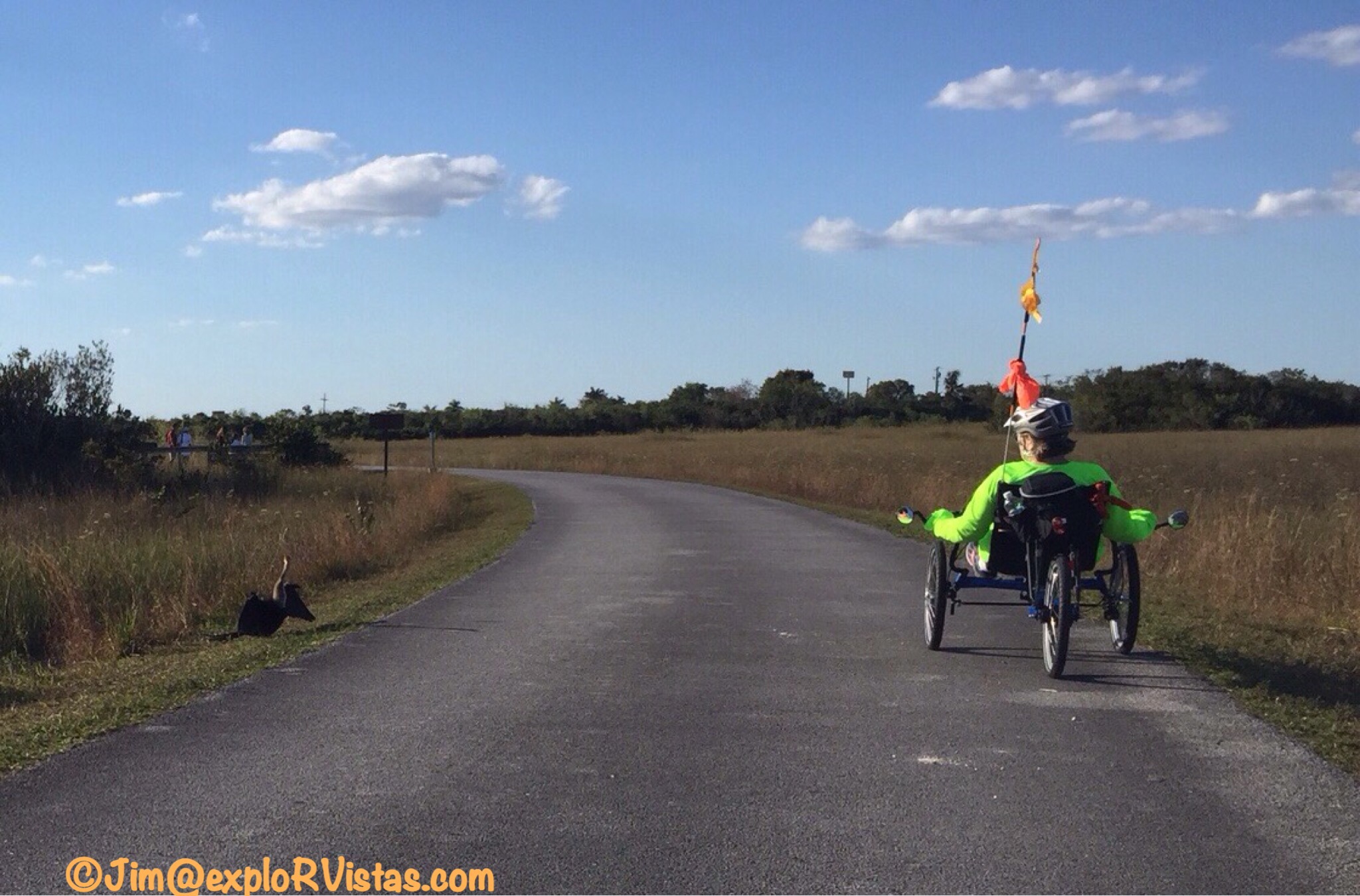
As we neared the end of the trail, this Anhinga stood by the side of the road, drying its wings.  He didn’t move at all as we slowly passed by.

If you ever get a chance to visit Shark Valley, be sure to do so.  It’s a great way to spend a day!

Summer Crush Vineyard and Winery

cropped-image4.jpeg

UPDATE:  Endless Summer’s name has been changed to Summer Crush Vineyard and Winery.  Same owners, new name.  www.summercrushwine.com. 

Our first night out from Melbourne Beach was a quick 43 miles south to Endless Summer Vineyard and Winery, on the west side of Fort Pierce. This winery is part of the Harvest Hosts program, of which we are members.  As participants, various farm markets, wineries and even a few museums allow us to stay overnight in our RV in exchange for patronizing their business.

We pulled in on Sunday about 1 PM, right when their Sunday Wine Down music event was about to start.  Bad timing on our part, but the owner’s son Allen was very courteous and showed us to our spot. This photo was taken Monday morning and doesn’t show the cars that were arriving for the event, as we were pulling in with our 5th wheel.

What a nice place to park! There are no hookups (common with most Harvest Hosts), so we had to conserve our water and power, which we did just fine with. We do not have a generator or solar panels, but rely on the equipment that comes standard with most RV’s. We cook with our propane stove, use the propane setting on the refrigerator and water heater, and use the 12 volt lights that are powered by the battery. (If you do this, disconnect your power plug from your tow vehicle, so you don’t drain the truck battery.) We also supplement with battery powered lanterns and candles. We do not have TV, but entertain ourselves with our iPads, books, board games, etc. We have plenty of water to take showers and wash dishes for a two night stay.

After setting up, we quickly changed clothes and went over to the event.

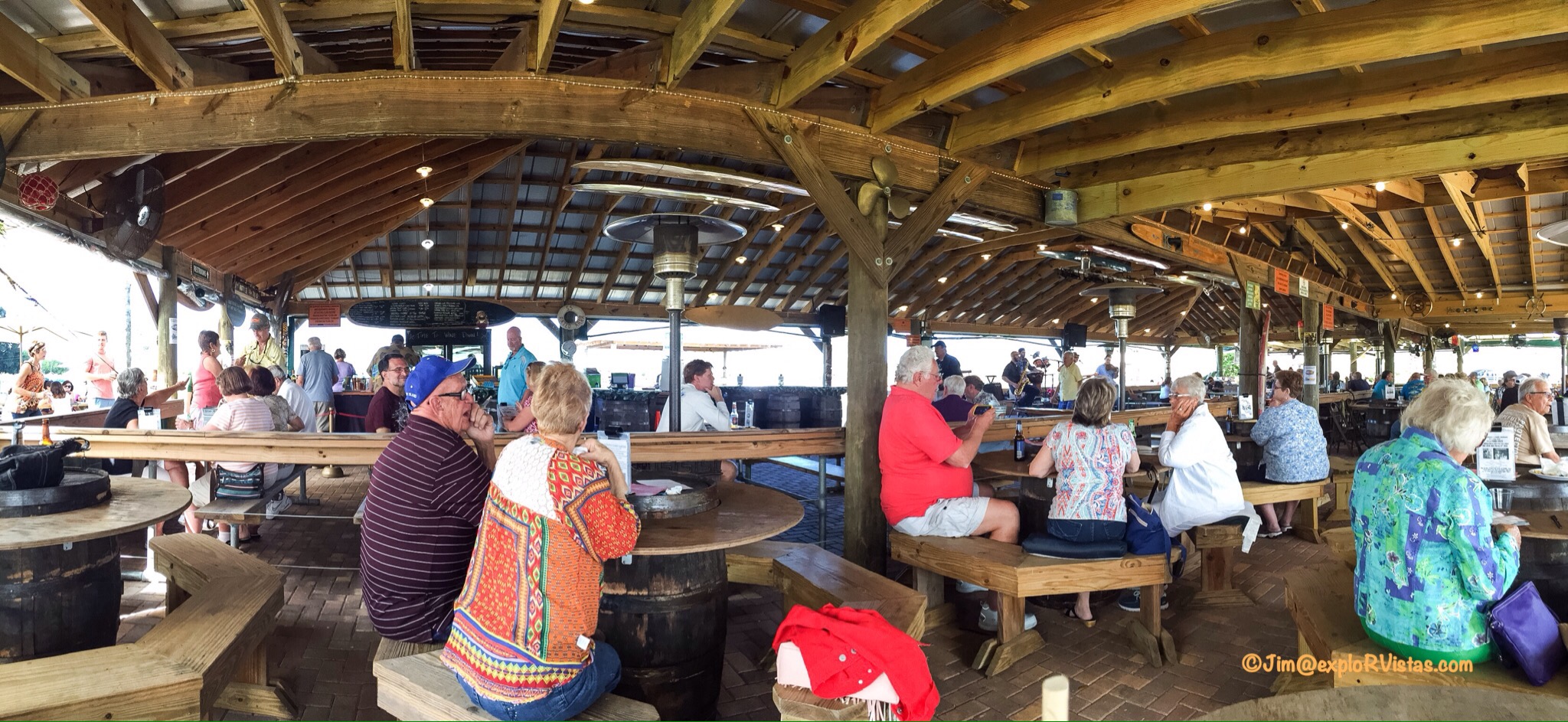
Endless Summer started out as a landscape nursery in the 1970’s.  When the housing market dried up in 2008, Gary and Susan Roberts decided to pursue growing and making muscadine wine on a portion of their property.  And to take it one step further, they decided to celebrate Gary’s love of surfing and incorporate the nearby beach culture into their facility…instead of going upscale.  In other words…a reflection of who they are and what they enjoy. That was a brilliant move!  The landscape business, Gary Roberts Nursery and Landscape, has rebounded and is doing very well also under their other son Bud’s guidance.

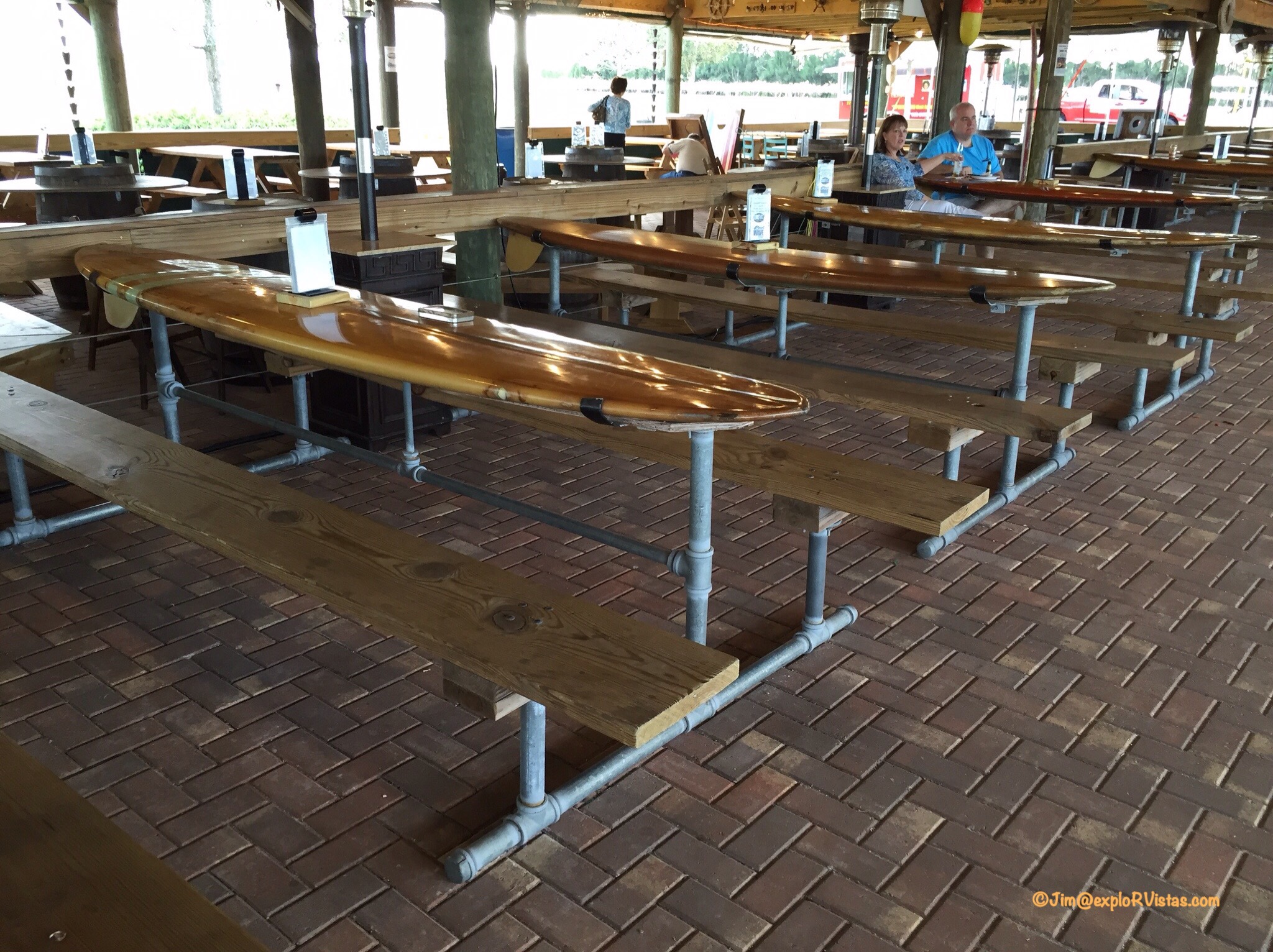
They built a large pavilion, which incorporates Gary’s collection of classic surfboards.  (We took this photo after the show.) The events held here every Sunday have become such a hit, they’ve put two additions onto the facility.  A third addition is planned in the near future. Each Sunday highlights a different local charity. We were happy to support Girls on the Run by buying raffle tickets for some nice prizes.

Adjacent to the pavilion is the tasting room.  Here is Briana modeling a bottle of Webejammin, a semi-sweet white muscadine table wine.  All of their wines sport fun names and colorful labels like this. They sell spots at their tasting bar every half hour, and the person pouring explains each wine to the entire group all at once.  Briana was very entertaining!

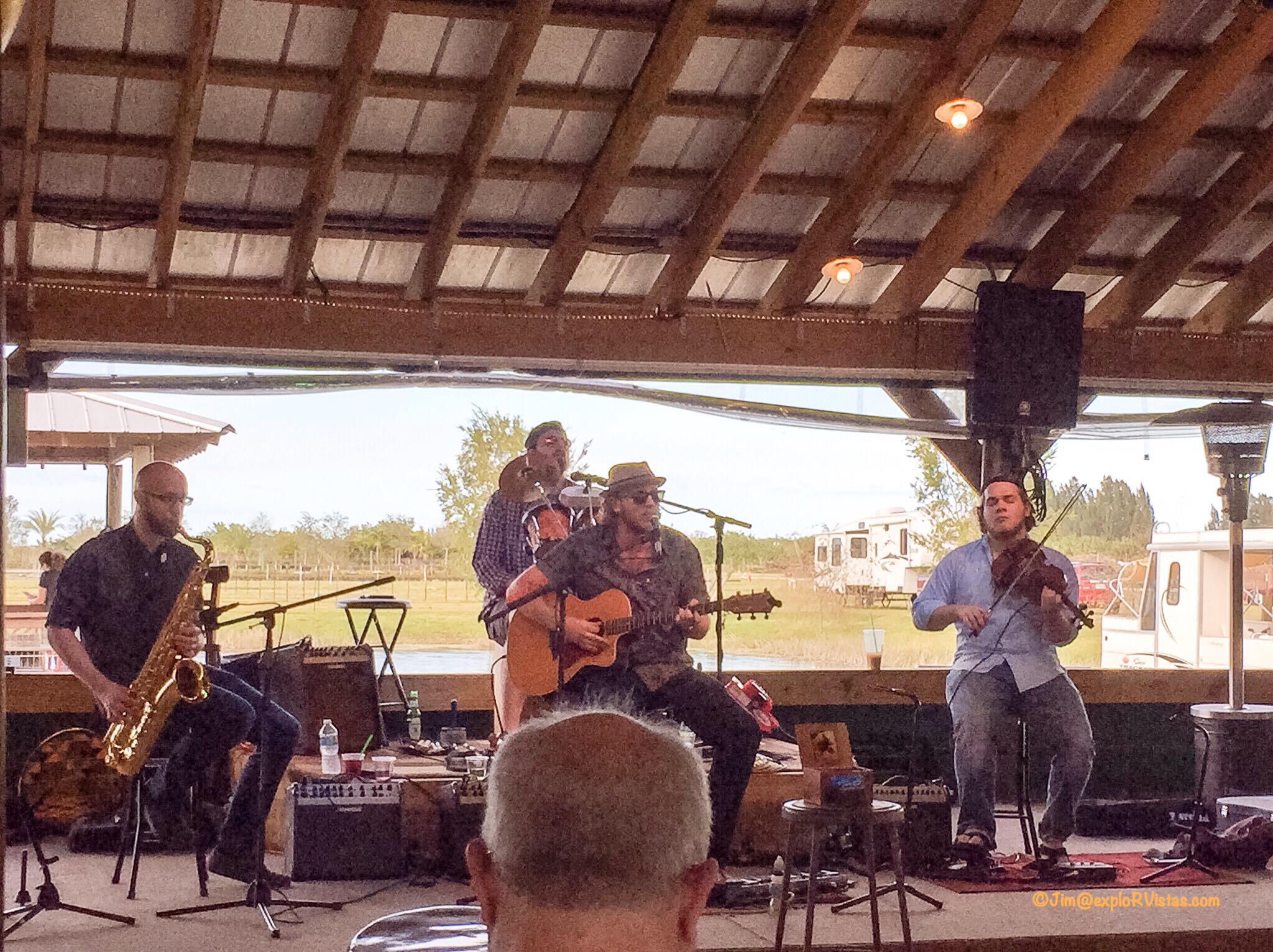
Back out at the pavilion, Ryan Owens was heating things up.  The group recently added a sax player to the trio of guitar, fiddle and bongos.They were fantastic!  Each Sunday Wine Down event features a different band.

A few folks were sitting out on the dock in the pond….

….while others were playing Jenga on the lawn.

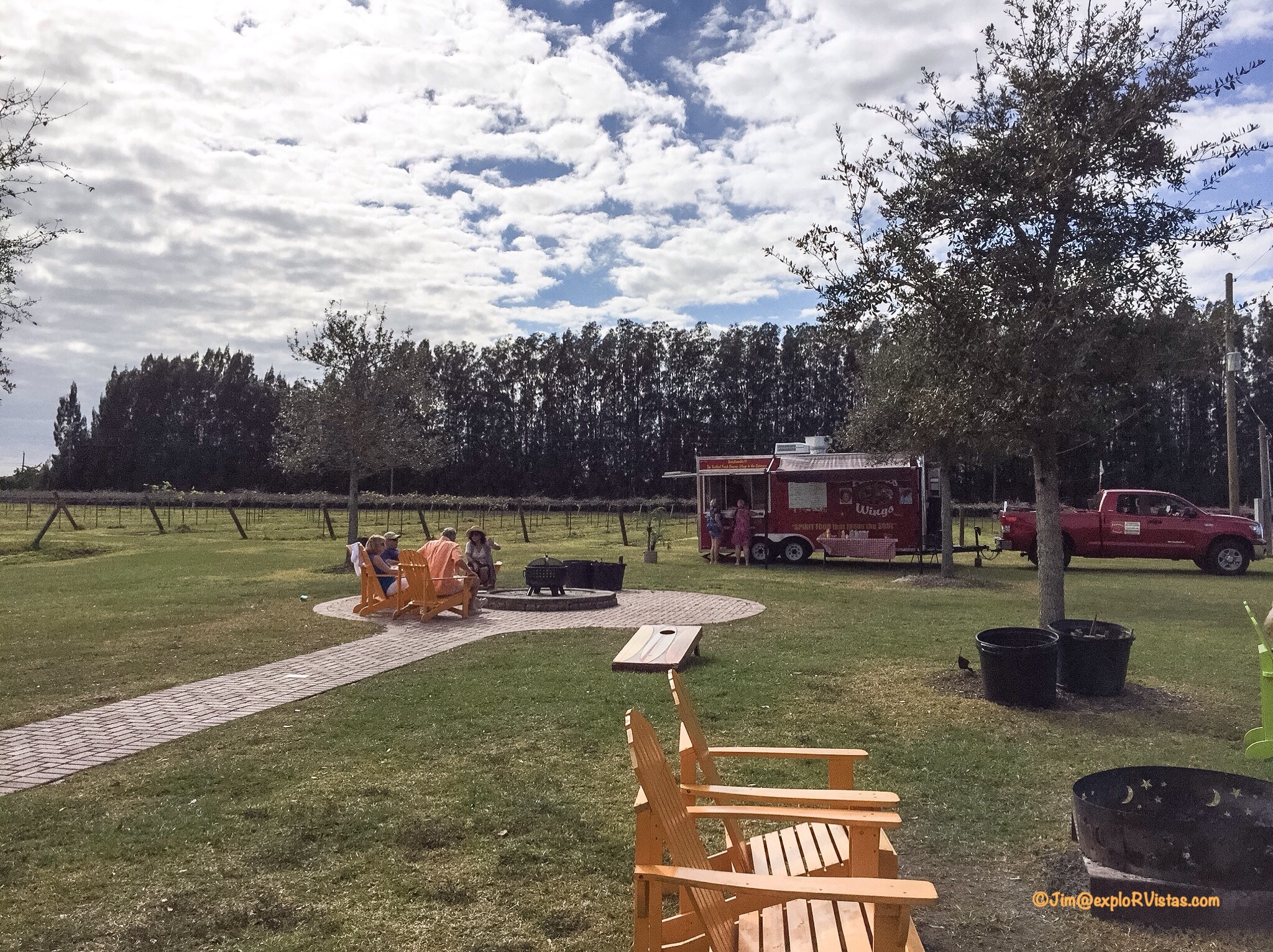
There were  two different food vendors at the event.  This one featured chicken wings.

Diana spotted the motorcycle parking, complete with kick stand pads.  Nice touch!  The property also has a Frisbee golf course incorporated into it.

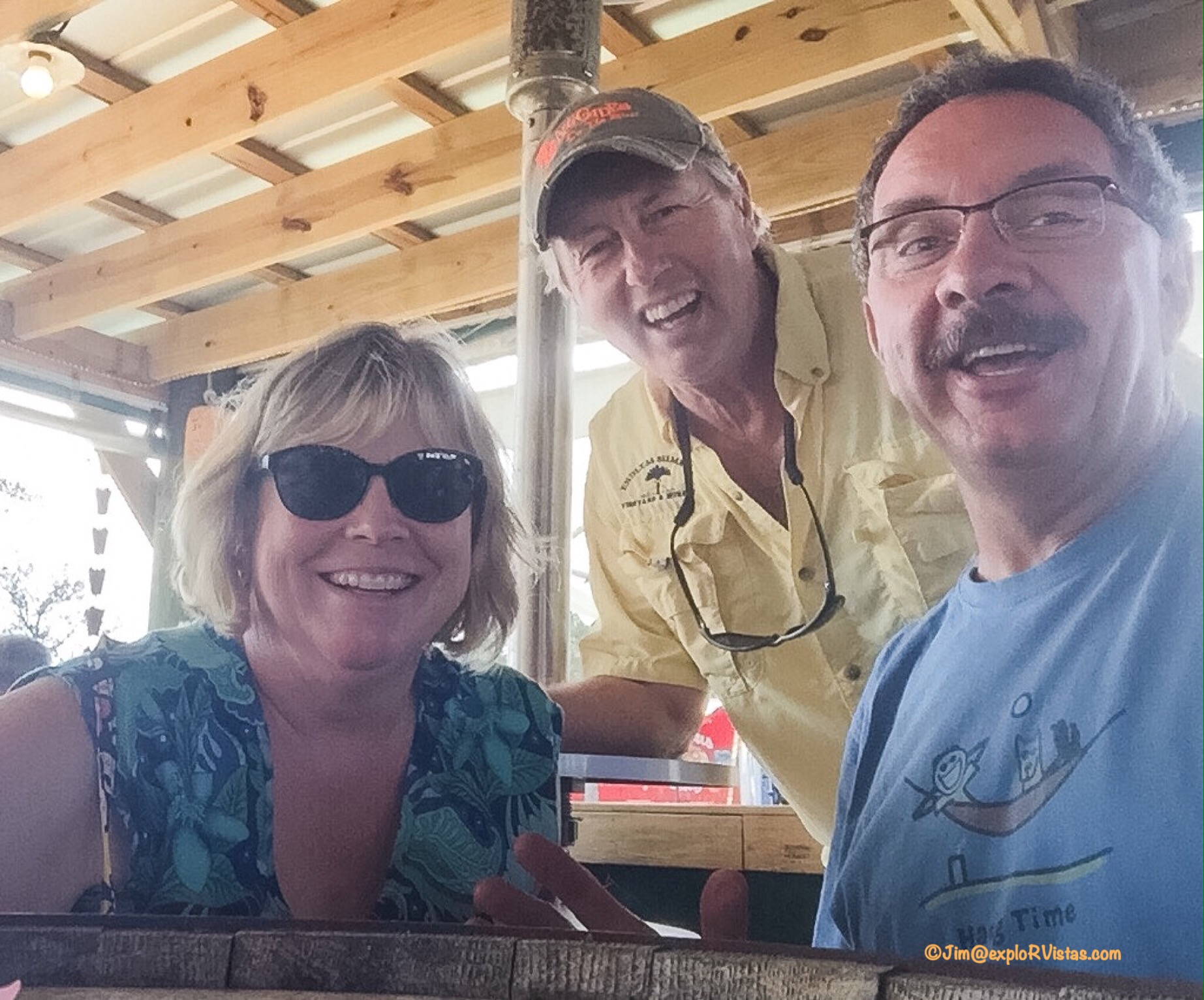
Here’s Gary photo bombing our selfie!  He and his wife are super hosts, and they have carved themselves a unique niche with their business.  We wish them all the best, and we will certainly be back in the future!  If you are ever near Fort Pierce, make it a point to check out Endless Summer….especially if it is a Sunday.  You will be glad you did!

St. Augustine

In northeast Florida lies the oldest continually occupied settlement in the United States, St. Augustine.  Founded in 1565 by Spain, this charming place has amassed a fair amount of history in the past 450 years.  Diana and I decided to check out this interesting community on February 10.

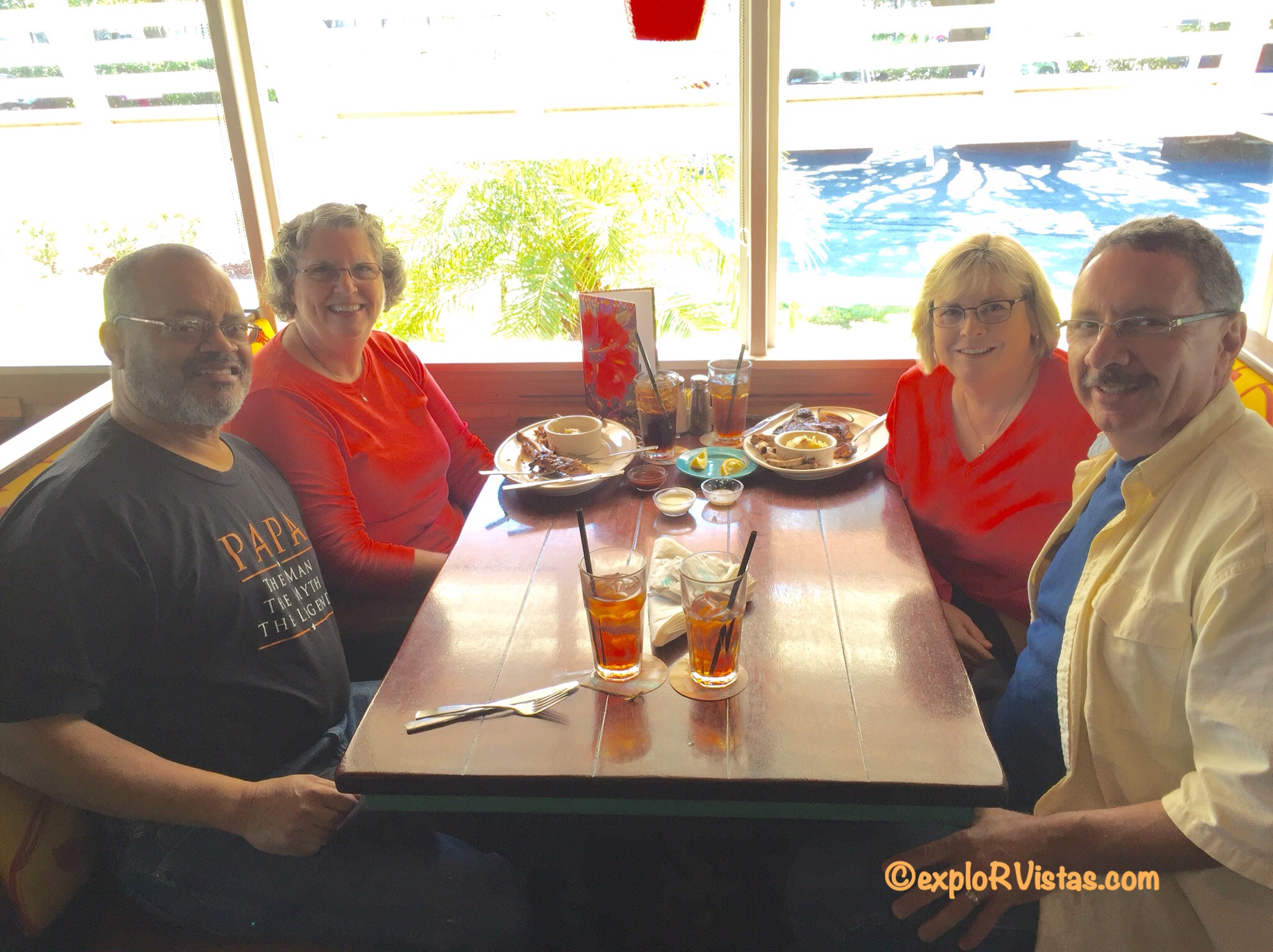
We had dinner at Harry’s Seafood, a suggestion that our friends Rod and Mary had given us. The food was good and we enjoyed the New Orleans ambiance.

The restaurant is directly across the street from the waterfront.


They have a charming outdoor patio with heaters; had it been a touch warmer, we would have eaten out there.

We spent the night at the Doubletree by Hilton, which we found to be a very nice hotel.  The staff went out of their way to be helpful, and our room was immaculate.  A special shout-out to our breakfast server Bill, who was very attentive and friendly.

After breakfast, we crossed the street and visited the Shrine of Our Lady of La Leche.  This 208 foot cross, the tallest in the world, marks the spot where Christianity was first proclaimed in what is now the United States.  The museum was interesting and the grounds were pretty.

The centerpiece of St. Augustine is the Spanish fort, Castillo de San Marcos.  The first version of the current masonry fort was constructed over 23 years, between 1672 and 1695.  There were many additions and improvements since then.  The key to the success of this fort is the unique masonry used in its construction; a locally quarried conglomerate known as coquina.  Translated in Spanish, the name means ‘small shells’….and that is exactly what it is….blocks of small sea shells bonded together over millienia.

Just using what they had on hand, the Spanish didn’t find out until the fort came under siege by the British in 1740 just how good the coquina was.  For two months, the British showered the fort with cannonballs, only to have them bounce off the walls.  It turns out the air pockets in the coquina acted like shock absorbers, and the cannon fire only resulted in small dents in the surface.  Eventually the British were trapped by Spanish reinforcements sent up from Havana, resulting in the Brits burning their ships and retreating to Carolina on foot.

This is an interpretive talk being given by a National Park ranger, explaining coquina’s superior properties to us.  On the wall behind her, what appears to be a second story is actually the upper window of each room. Every one of the chambers are constructed with arched ceilings, which support the weight of the deck and cannons above.

This photo shows the arched ceilings.  The legendary Seminole chief Osceola was held in this room in 1837, prior to being sent to Fort Moultrie in South Carolina where he died of what is believed to have been malaria.

The view of the harbor from the upper deck is breathtaking, to say the least!

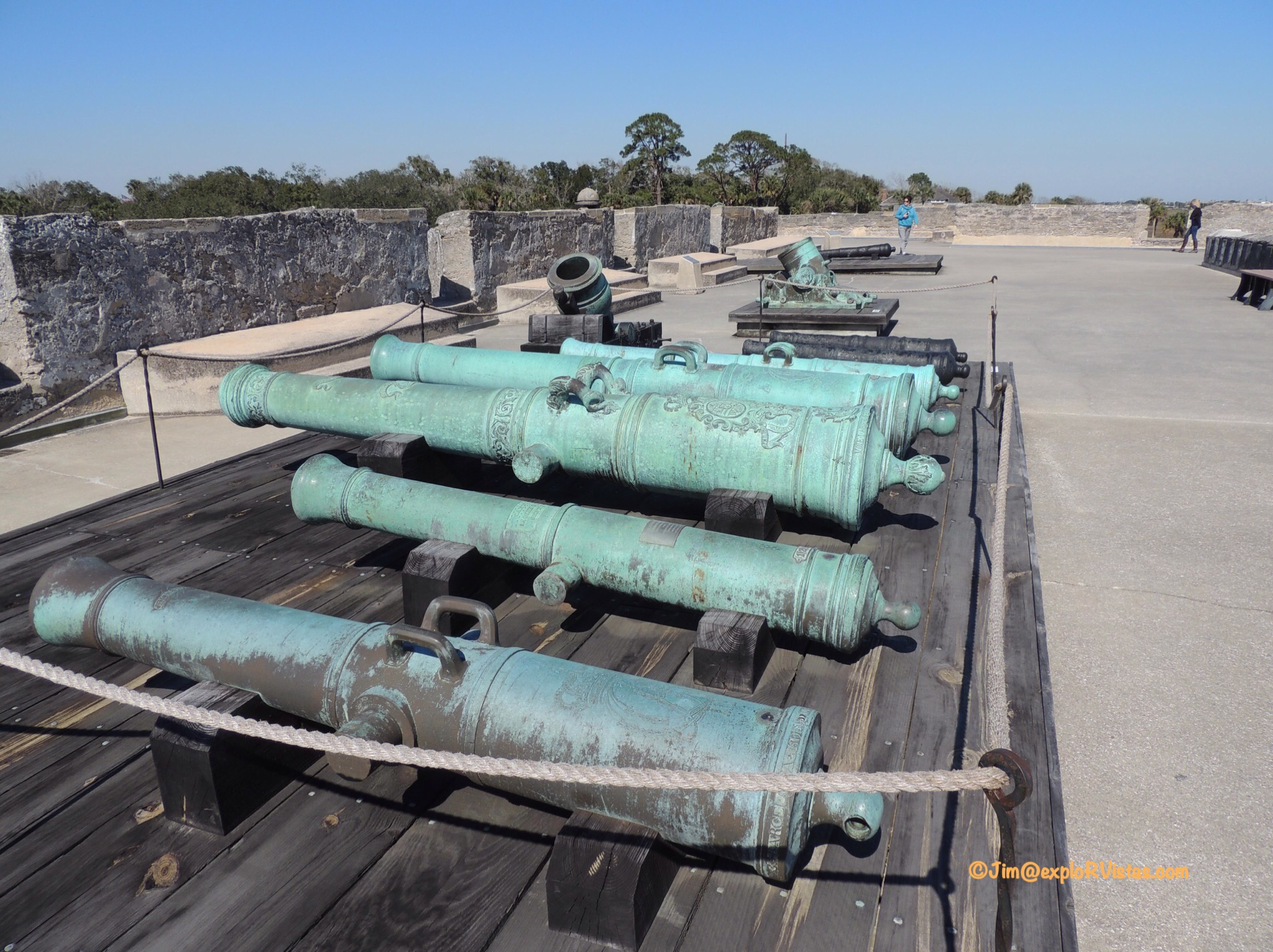
Here is a selection of several of the different types of cannons used over the years by the various occupying armies.  The fort changed hands six times:  Spain (1672-1763), Great Britian (1763-1784), Spain (1784-1821), United States of America (1821-1861), Confederate States of America (1861-1862), and finally the United States of America (1862 – present).

We thoroughly enjoyed exploring the fort, and we will surely visit again in the future.

After the fort, we walked up St. George Street. There are many restaurants and shops along this pedestrian only road.  At the southern end, we visited the Cathedral Basilica of St Augustine.

This building is an amazing example of Mediterranean archtecture.

The interior was gorgeous with its Spanish influence.


I especially liked the way the stained glass windows were framed.  ðŸ™‚

There are many more places we didn’t have time to visit.  We will be sure to check them out when we return to the area. With that being said, we are heading out from Melbourne Beach. We will be more mobile and less stationary for the next two months. Stay tuned as we reveal our destinations as we go!

Lovers Key

On Tuesday, we headed back across the state to Lovers Key to visit my sister Judy and her husband Dale.  They came down from Michigan for a mid-winter break.  It was not only great to see them, it also was nice to see the Bonita/Naples area again!


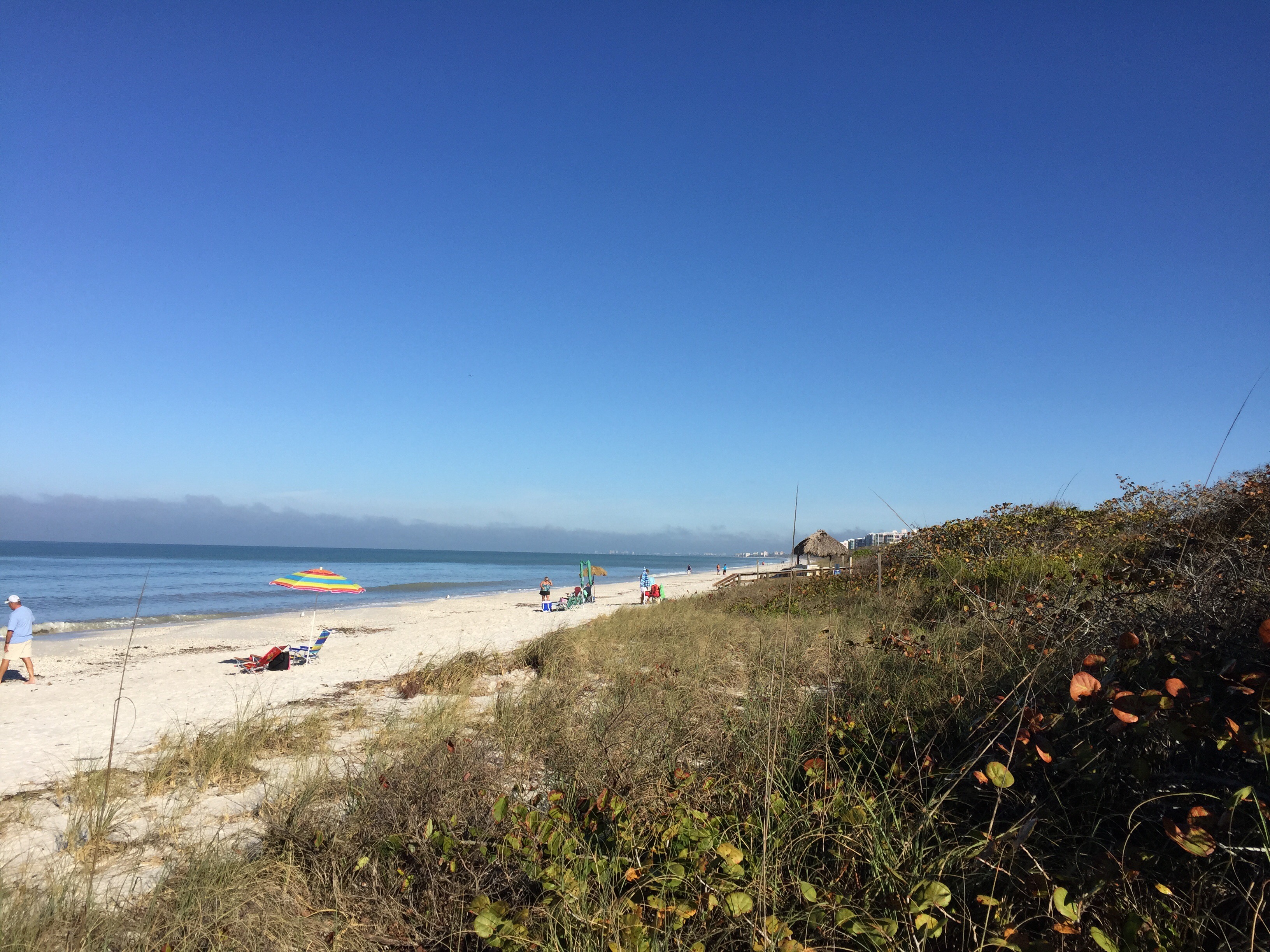
On Wednesday morning, we went for a stroll on Barefoot Beach in Bonita Springs.


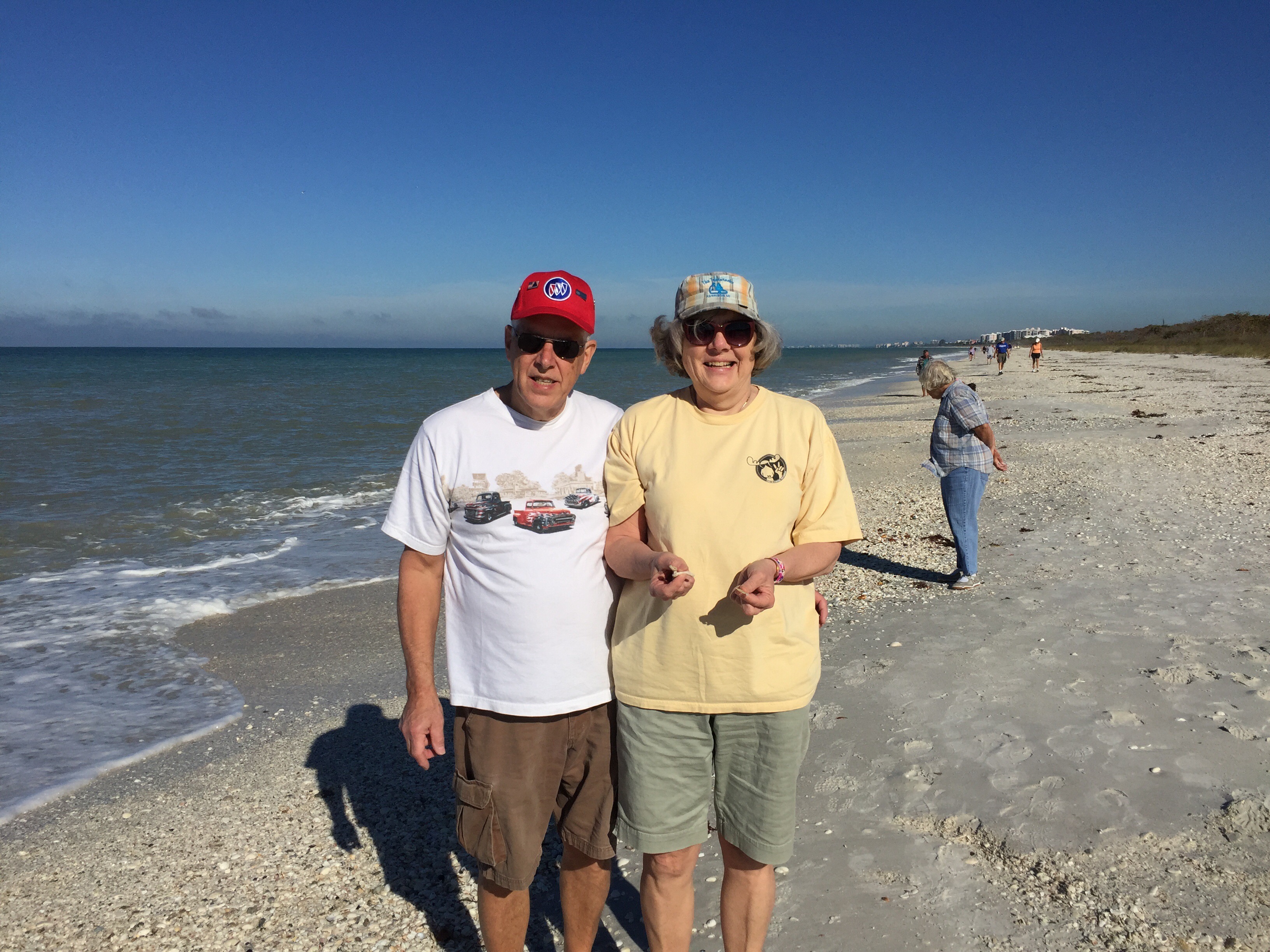
Here’s Dale and Judy searching for shells.  The quality of the sea shells is outstanding in southwest Florida, and we were not disappointed Wednesday morning.  ðŸ™‚


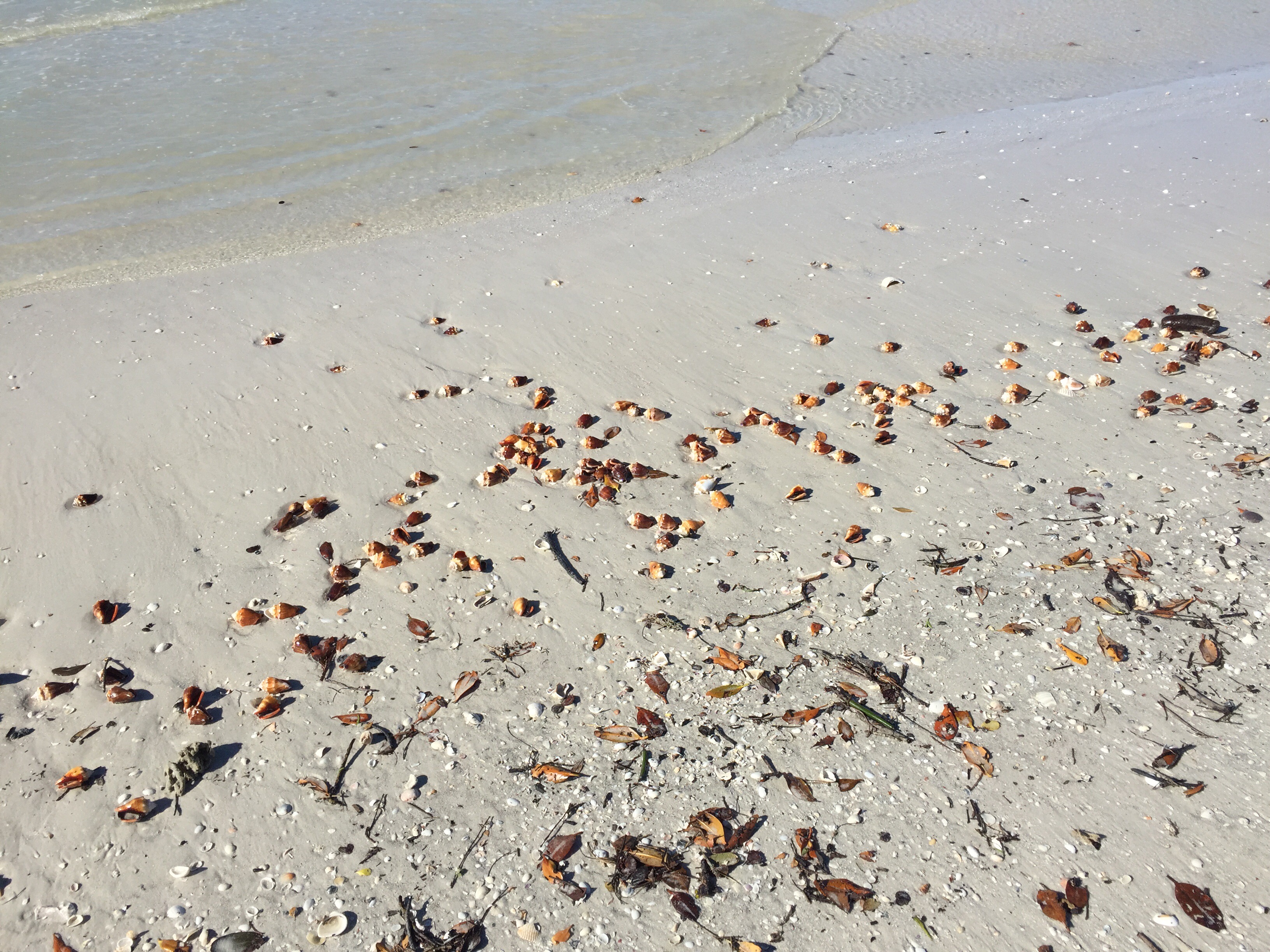
There were hundreds of intact conch shells.  Of all the years we’ve been on Florida beaches, this was the best shelling we had ever seen!


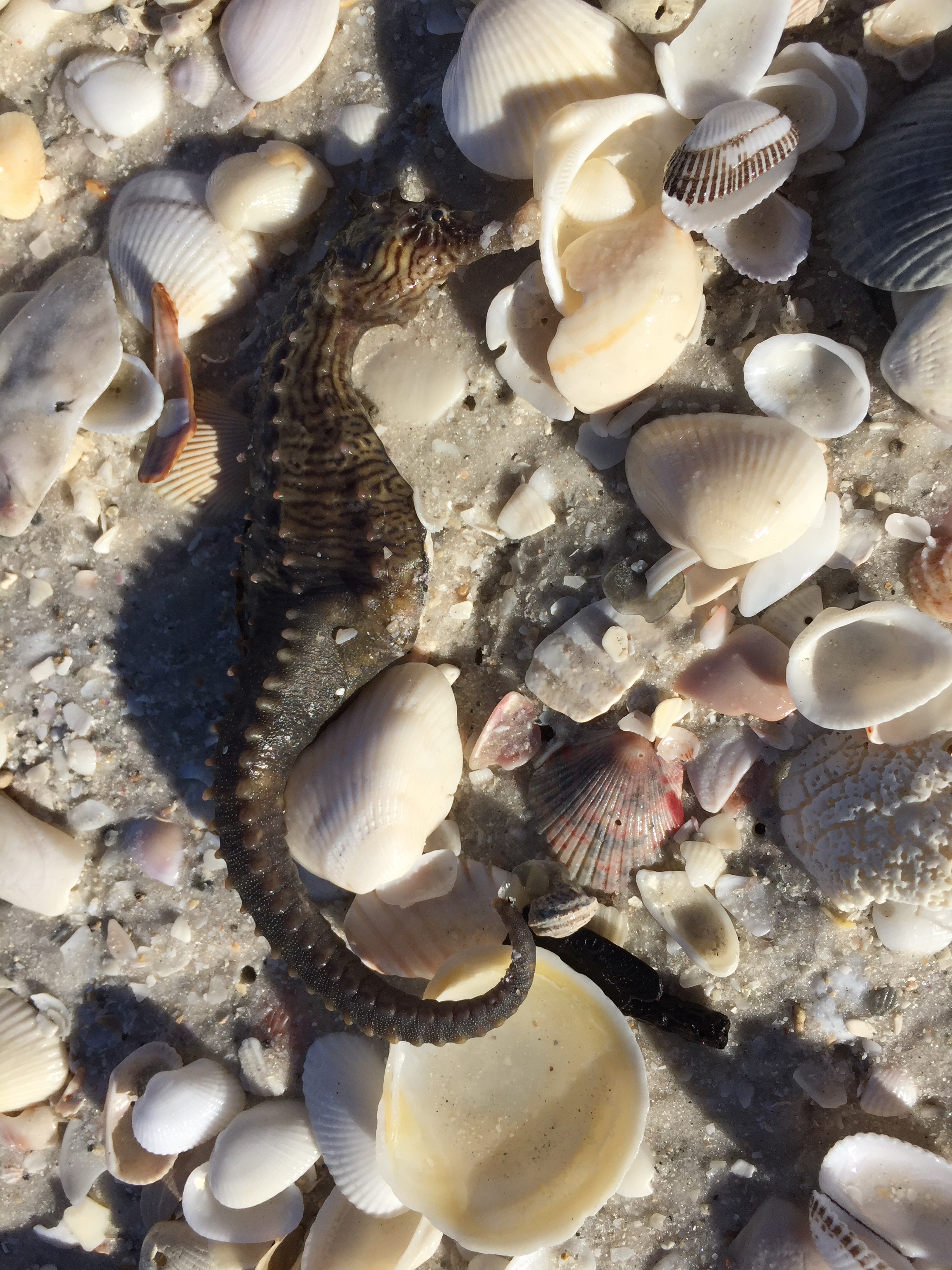
Dale found this sea horse that was still alive, so he took it out into the surf to give it a chance at survival.


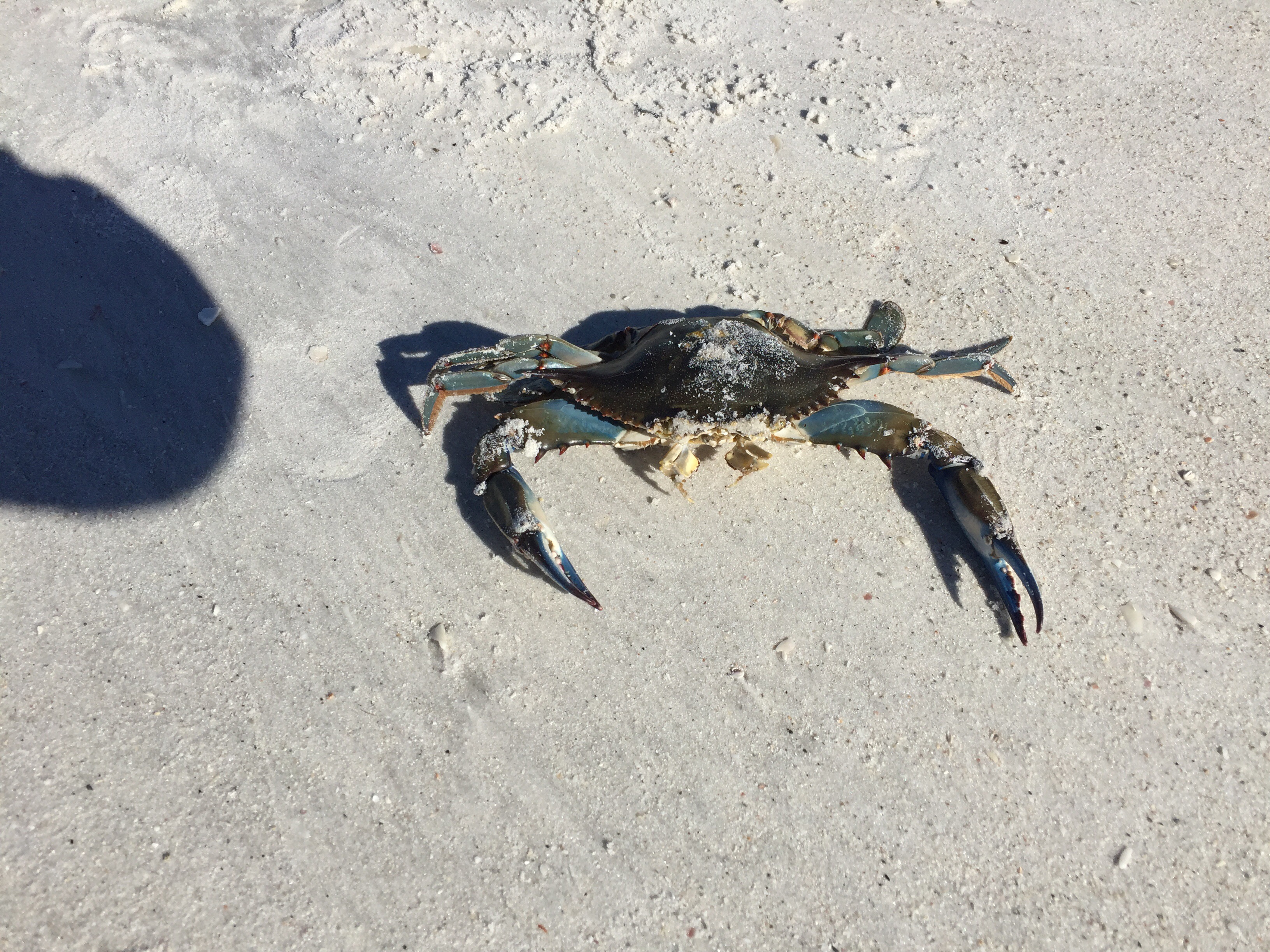
We also saw this dead blue crab.  I certainly wouldn’t want one of these grabbing my toe!


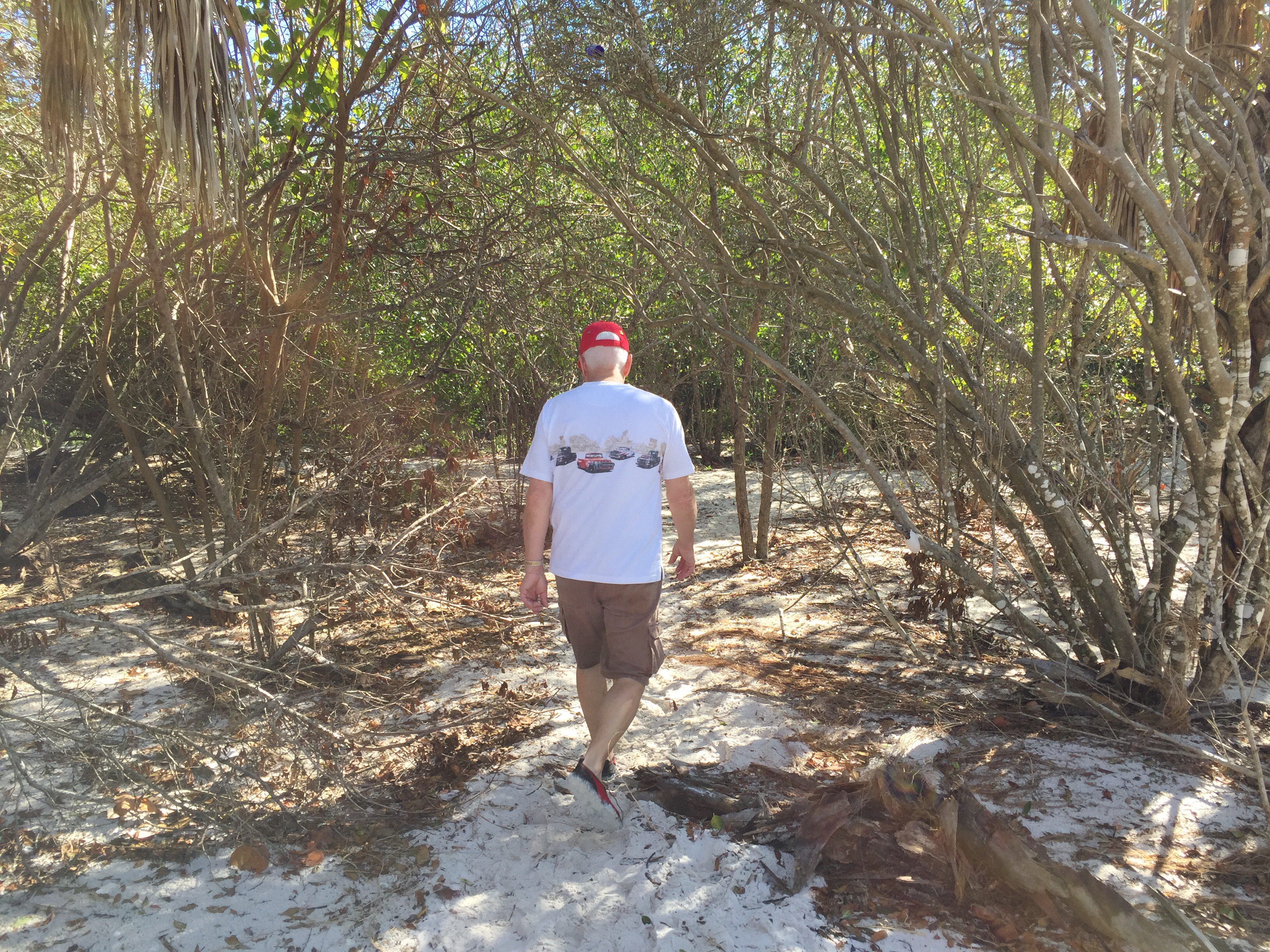
We walked a mile down the beach and returned to the parking lot along a nature path through the mangroves.


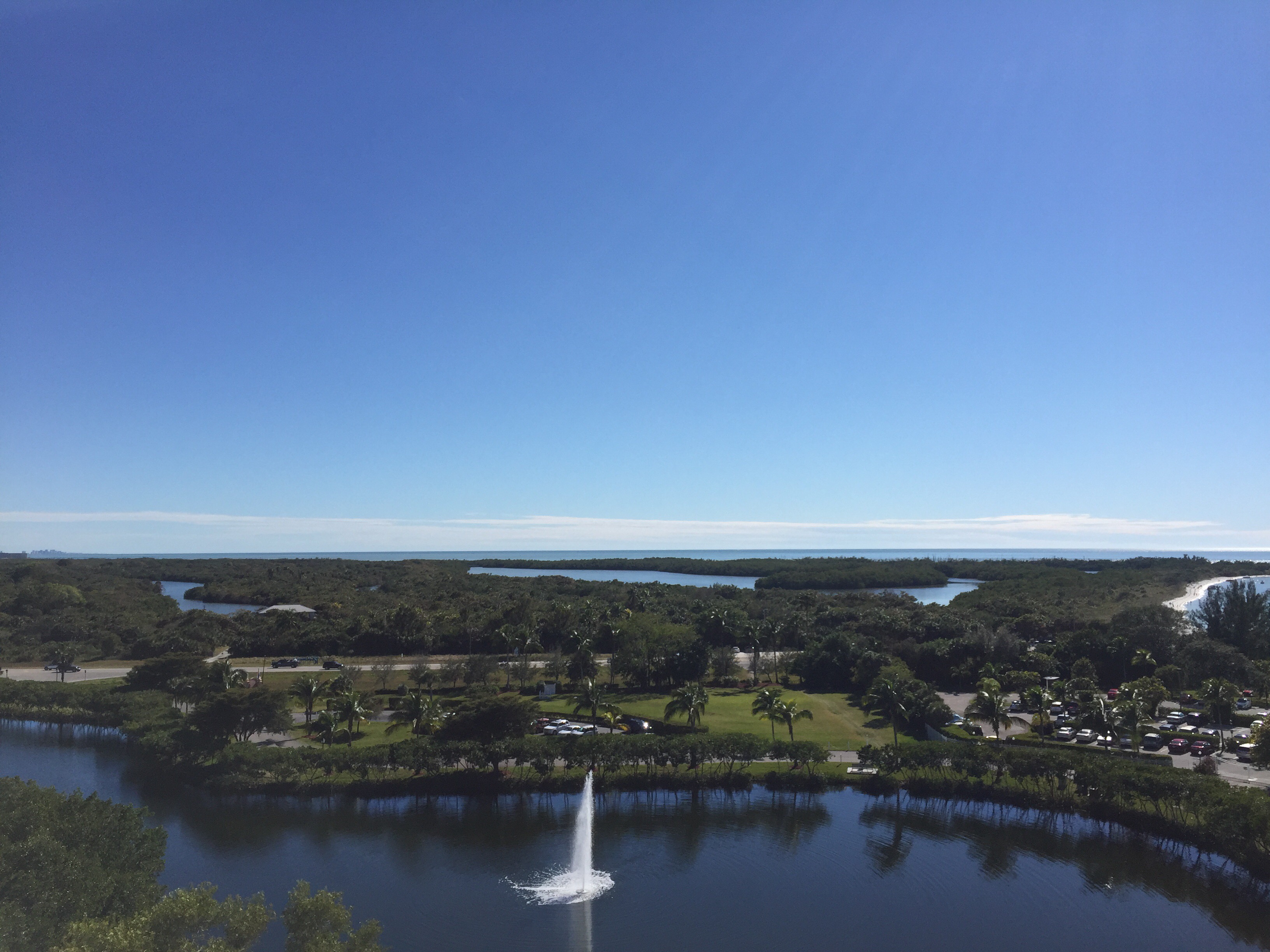
Afterwards, we returned to their condo and hung out at the pool for the afternoon.  We had yet to get any pool time since being down in Florida, so it was a special treat for us.  :).  Check out the view from their balcony!  This is looking south towards Naples.


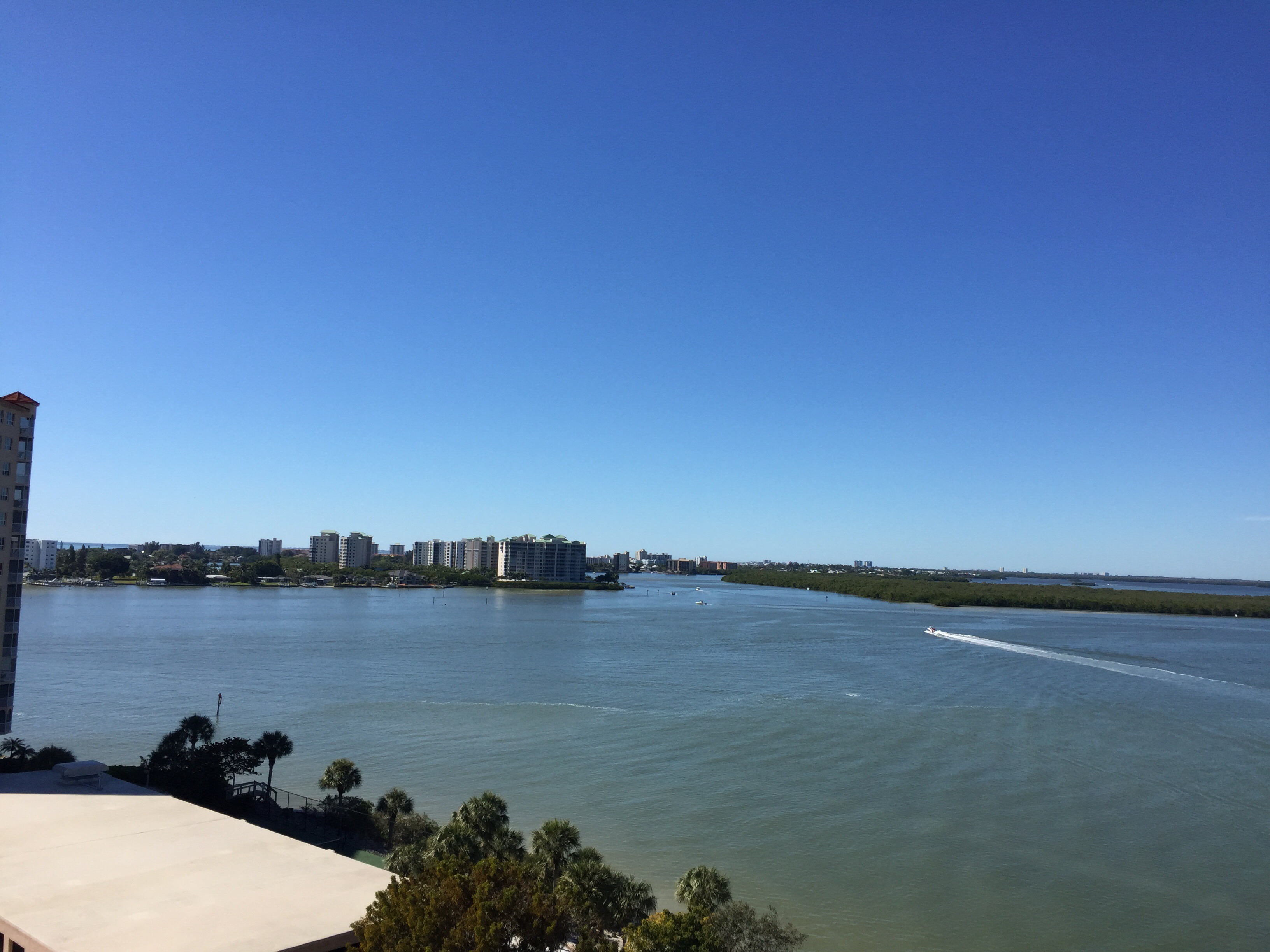
This is looking north towards Fort Myers Beach.  We saw dolphins swimming in Estero Bay and even had an osprey fly by with a large fish in its’ talons.

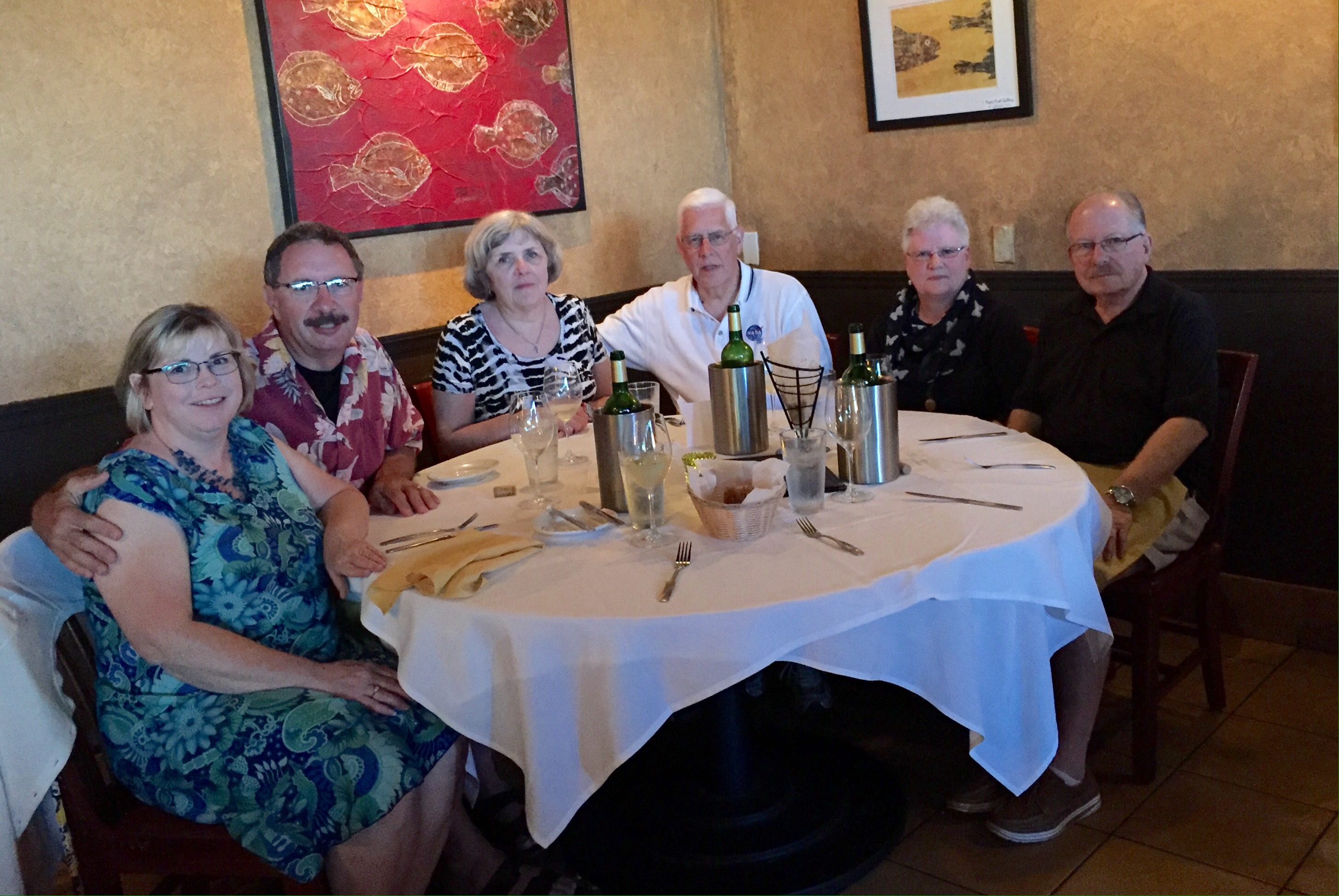
On Wednesday evening, we went to a local restaurant called A Table Apart in Bonita Springs.  Dale’s cousin Marilyn and her husband Bill joined us.  They are also staying for a few weeks at Lovers Key Resort.


We had a wonderful time!  A Table Apart is a restaurant that we can highly recommend.  Our server was outstanding and the food was out of this world.  ðŸ™‚

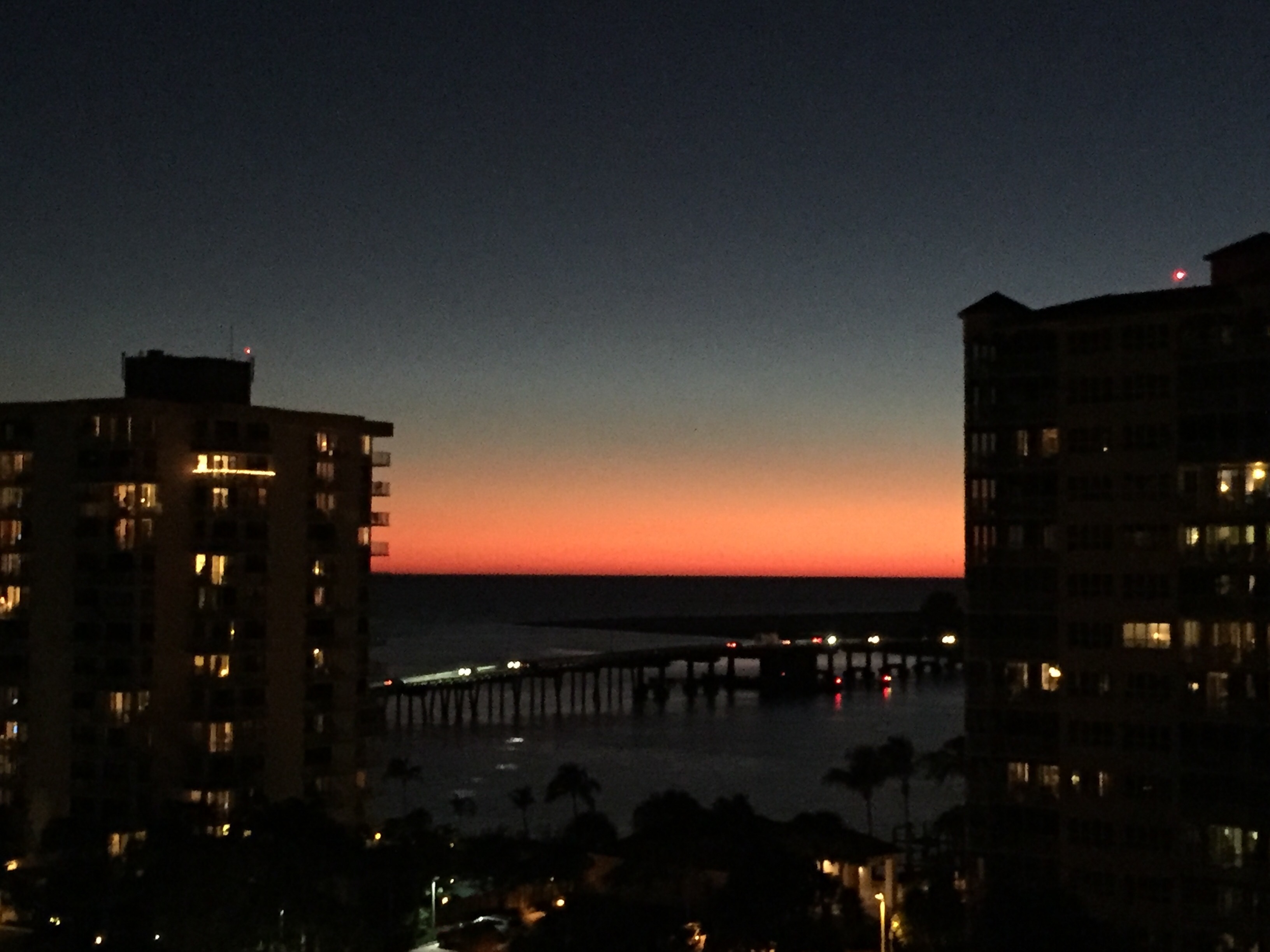
Aferwards, we caught the tail end of a sunset from Dale and Judy’s balcony.


A perfect end to a perfect day.  ðŸ™‚

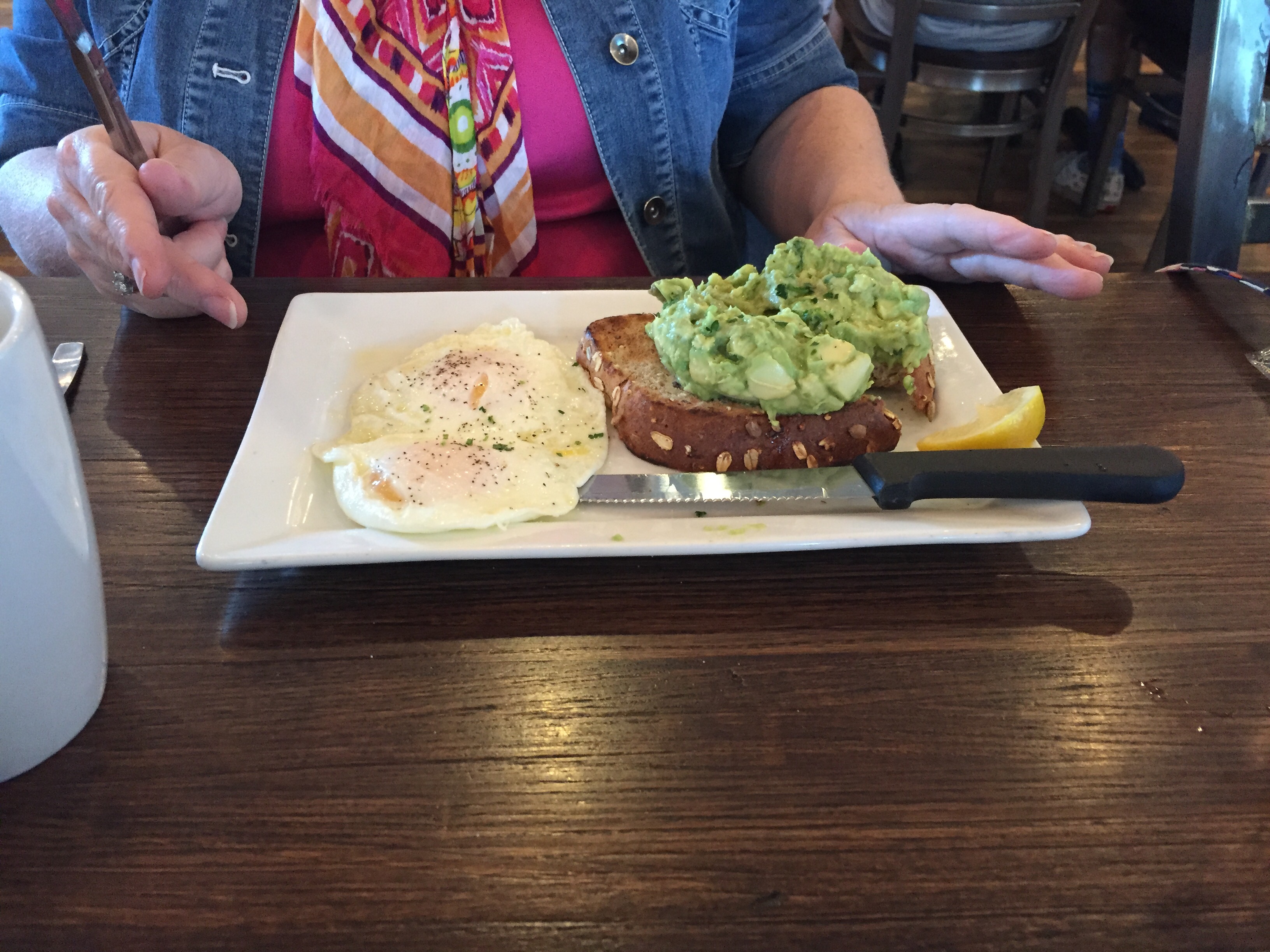
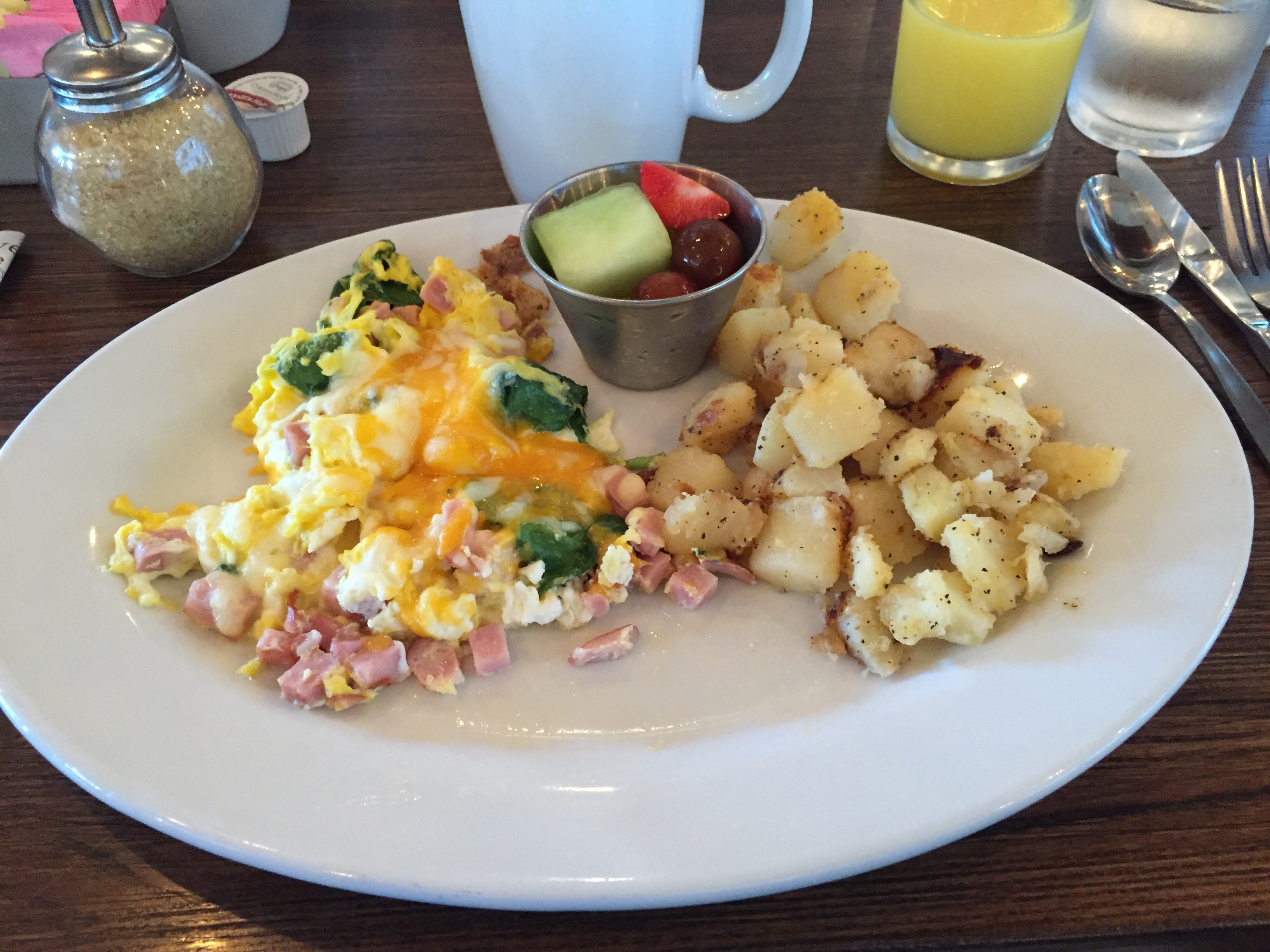
Thursday morning after we headed out, we stopped for breakfast north of Bonita Springs at First Watch.  This is a growing national chain of breakfast/lunch restaurants that we first discovered in the Naples area a few years ago.  


Diana likes avacados, and her breakfast didn’t disappoint!

  
My breakfast scramble was fresh and delicious also!

What a nice couple of days in southwest Florida. Thanks, Judy and Dale!

Lake Okeechobee and Honeybells

On Wednesday, we headed over to Placida, Florida to spend a few days with Diana’s cousin and his wife.  Placida is on the Gulf side of Florida, so our journey was going to take us completely across the peninsula.  We took State Route 70 out of Fort Pierce and headed west through the state’s agricultural land.  Not too far out of town, we stopped at Ace High Farms fruit stand to pick up some oranges and grapefruit.
  

Ace High is a sixth generation family farm.  Their citrus was freshly picked and it really showed, as it looked fabulous.  The first thing we spotted were a few bags of Honeybells, which we knew nothing about.  After questioning the owner, we purchased a bag along with two Ruby Red grapefruit.  When we arrived at Placida, Diana’s cousin and his wife looked at the bag and said “Those aren’t oranges….those are HONEYBELLS!!!”  In no time, we were each peeling the skin off of our fruit, juice flying everywhere.  My, oh my….they were delicious!


They are a fairly uncommon variety of tangelo, and they are listed as only being available in January.  We were right at the tail end of the season. According to one grower, Honeybells are so rare, only one in 5000 people have ever tasted them.  So if you have, consider yourself a rare bird!  ðŸ˜‰

After our visit, we headed back on the same route.  There aren’t a lot of choices for roads in that region of the state.  It is almost completely level, and I am fairly sure that none of it exceeds 20 feet above sea level.  There are a lot of cattle, some sod farms, a lot of citrus groves and palm tree nurseries.  Canals criss-cross the land every so often, and the soil is rich and black.


It was a pleasant trip both ways, as it was a different sort of agriculture than we were used to seeing. At one point, I imagined myself in Midwest…until I saw a palm tree.  ðŸ™‚

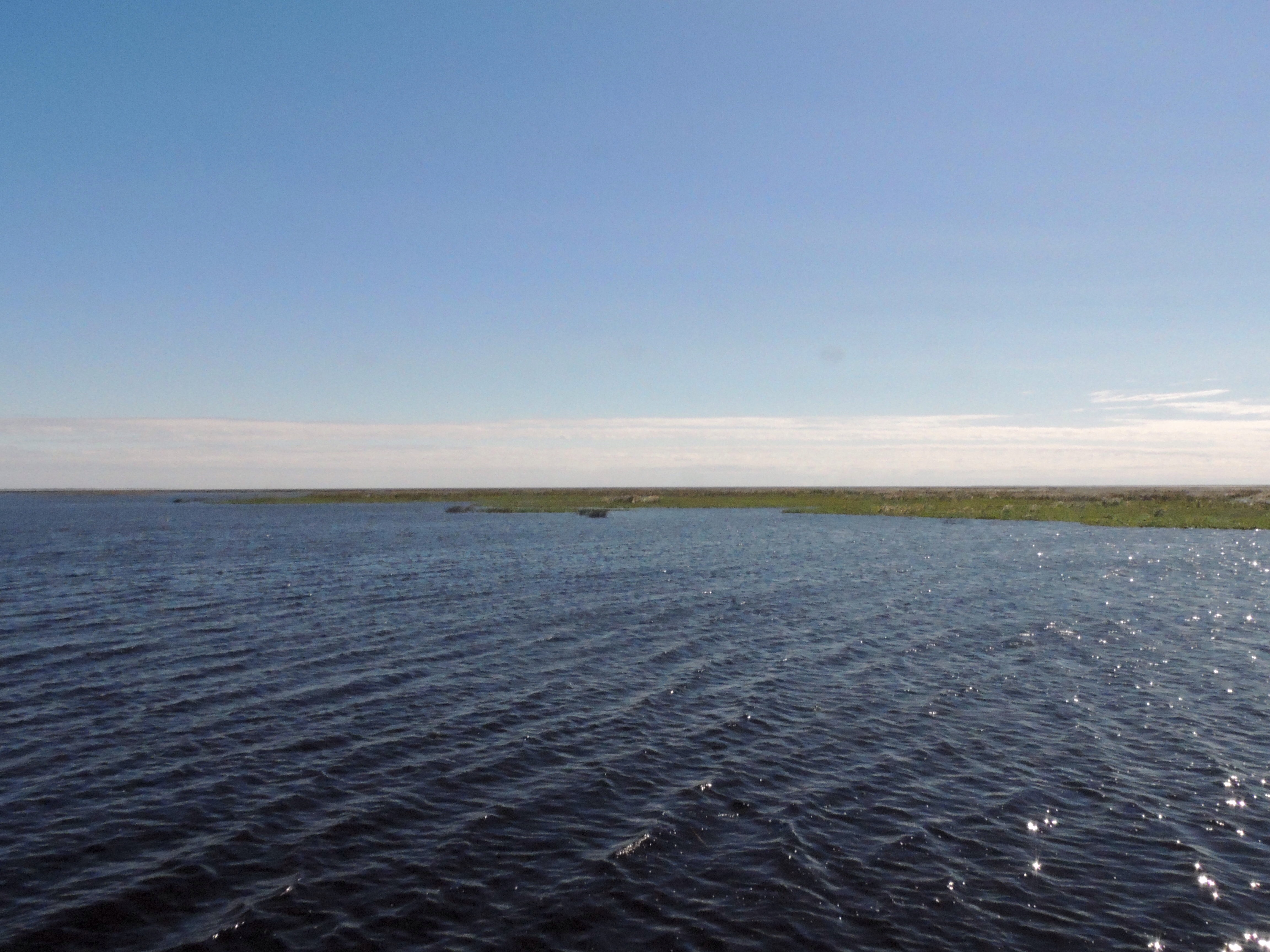
When we pulled into the city of Okeechobee, we decided to drive to the southern end of town and see Lake Okeechobee.  This is the nation’s third largest fresh water lake completely within the U.S. border (Lake Michigan is #1) and it is the largest that sits within one state in the Lower 48.  With that being said, the entire lake only averages over a little more than 8 feet deep, with its maximum depth just a touch over 12 feet deep.  Historically, it is a natural lake that takes in water from the Kissimmee River from the north and flows southward into the Everglades.  The key word being historically.  This is Army Corps of Engineers territory.  After a hurricane in 1928 sent a storm surge over the natural peat dam at the south end of the lake and killed 2500 people, the U.S. government stepped in. President-elect Herbert Hoover toured the devastation and after consulting the Army Corps of Engineers, proposed a dike around the lake.


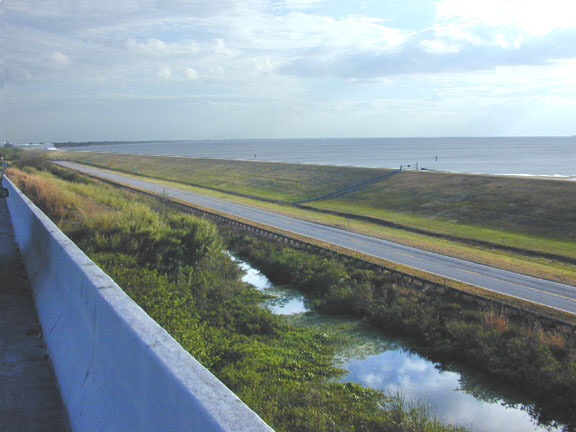
By 1961, the current 30 foot high dike that encircles the lake was completed, basically turning it into a reservoir.  The former president was on hand for the dedication, as the project was named after him.


While a lot of good has come from this dike…namely, safety from the lake’s fickle level…so has a lot of not so good.  In 2008, a drought exposed large portions of the lake bottom, allowing the Corps to scrape 35,000 truck loads of polluted mud and dispose of it.  Problem was, it was so contaminated by arsenic, it created a huge disposal problem. That muck wasn’t there before the dike.  Currently, the water level is too high (due to El Niño), and the Corps is concerned about the dike eroding. The cure is to send the water into the canals and into the ocean and gulf, resulting in the fresh water damaging the salt water aquatic creatures and plants.  It is also creating algae blooms in the ocean and gulf, otherwise known as Red Tide.  As is usually the case, the more that mankind interferes with nature the more things are disrupted.  What most impressed me was the sheer size of the project.  I had no idea how large of an area this affected.

One thing we noticed is there is a National Scenic Trail on the top of the dike.  The portion we saw was asphalt, and it had plenty of folks using it.  It looks like a great place for a bike ride!  We will keep that in mind for the future.


There was also this fishing pier where we crossed the dike, along with a nice restroom building and picnic tables. We had our picnic lunch while enjoying the views.


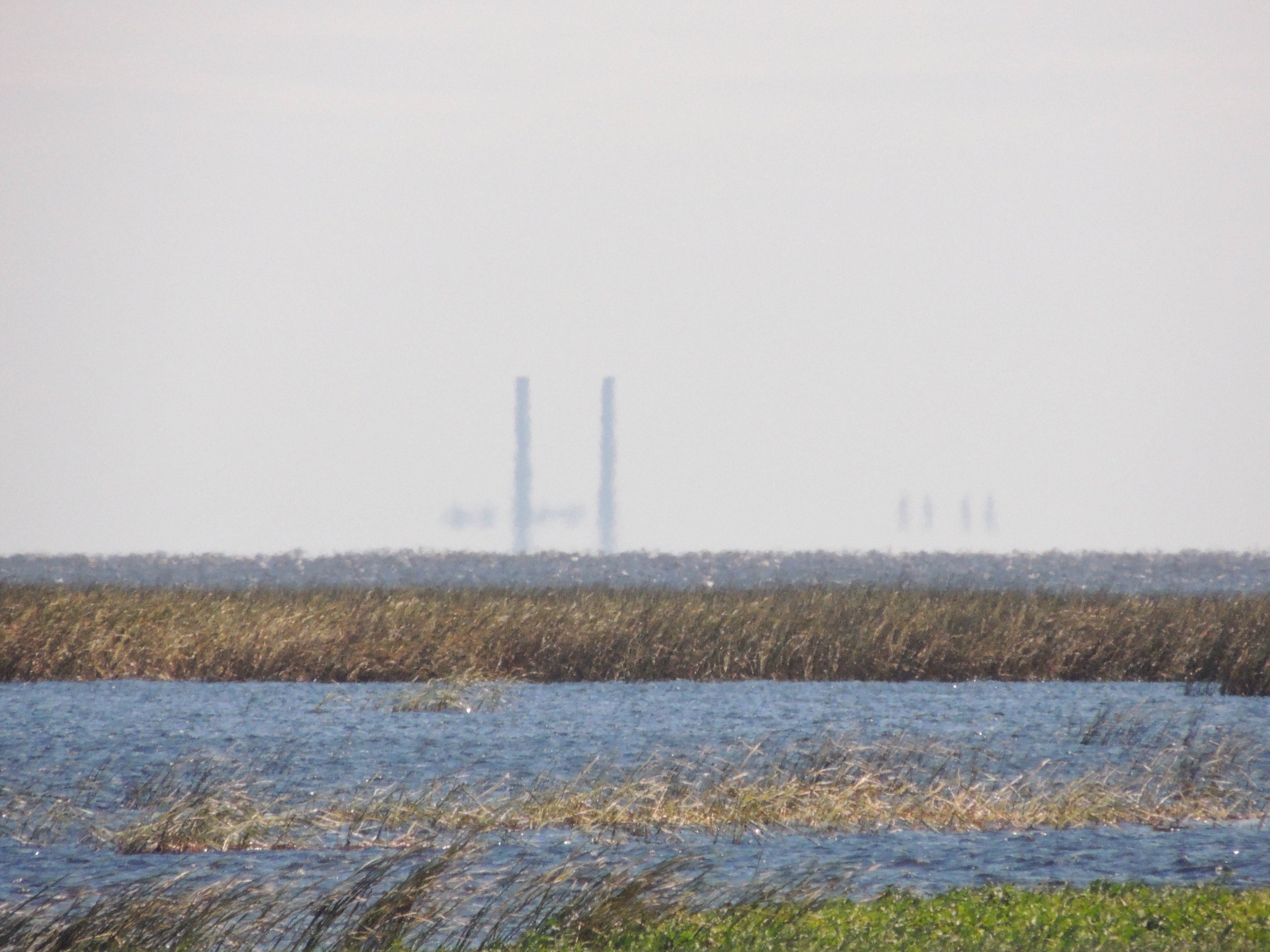
From the pier, I was able to zoom in on the smokestacks of the power plant 15 miles to the southeast.  To the right of that, the lake extends another 20 miles to the south.


Lake Okeechobee is definitely a huge body of water!

After we left Okeechobee, we stopped back by at Ace High. We were fortunate to be able to get another bag of Honeybells. Diana’s cousins are great hosts and have a lovely place for entertaining. They prefer not having their picture posted on the web, so we are honoring their wish for privacy. They were very close to Diana’s parents, so it was nice sharing old memories and making new ones. What a nice way to spend a few days!

Navigating the Fulltime RV Waters Along the Rio-de-Ays

Spending a month on the Indian River has allowed us to learn quite a bit…including how it was that the river’s name came about.  More on that later….

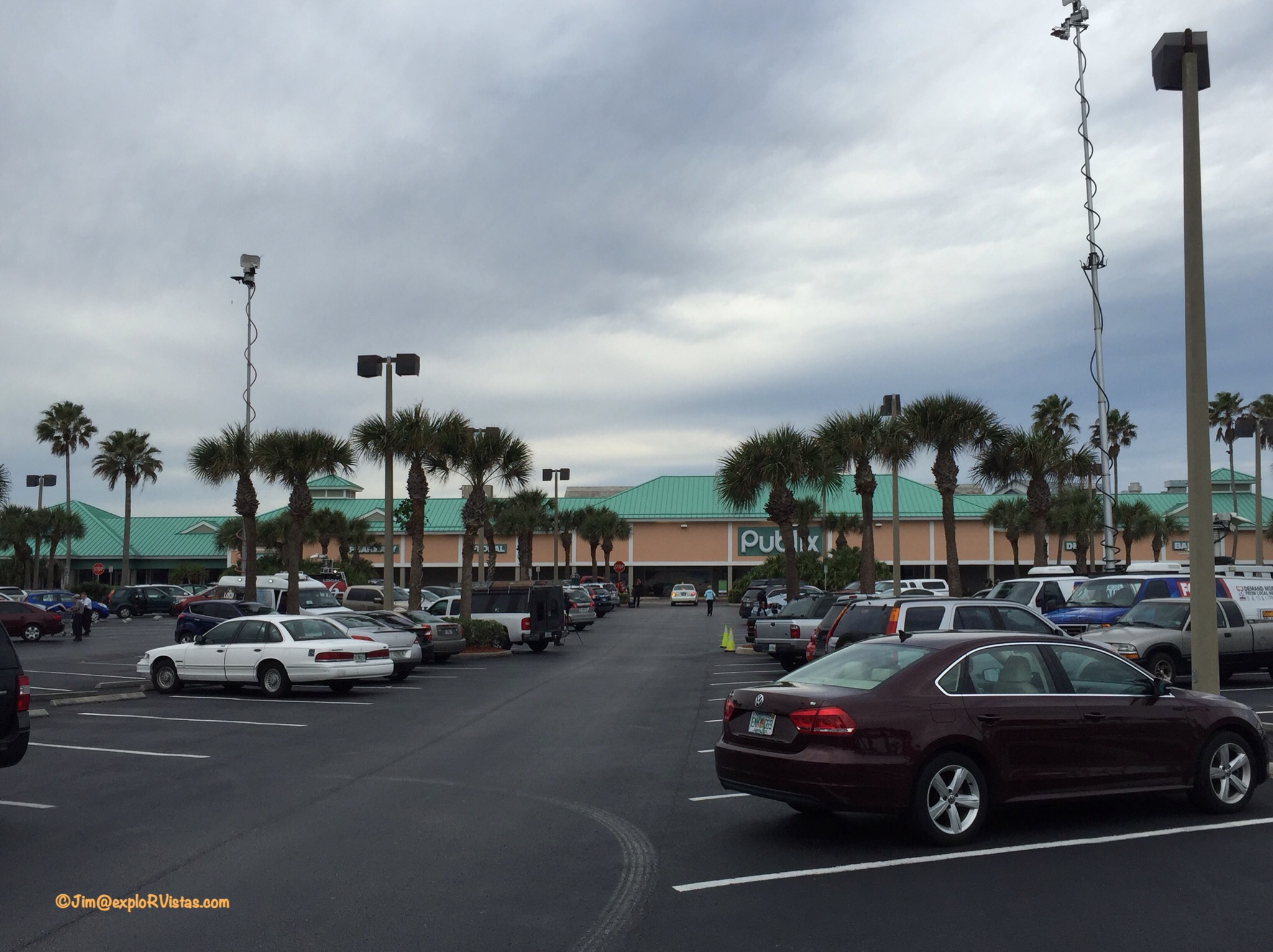
Part of being a fulltime RVer is having to be able to deal with not having your tried and true services you are used to from back home.  While ‘experiencing new things’ is what we are hoping to accomplish on the road, there are some things we need and want that require us to think outside the box.  First and foremost is food.  That can be divided into two categories: groceries and restaurants.  In the grocery column, we had a great selection of supermarkets in Grand Rapids.  Out on the barrier island, our one and only large supermarket that is convenient to us is Publix.  That is a good thing, as Publix is a first rate chain.


In fact, our Publix store gained national attention when it sold one of the three winning Powerball tickets in the recent big  jackpot.  While we weren’t the winners, we did find it amusing to see all the satellite trucks in the parking lot that day.  All of the major networks and news organizations were there.  ðŸ™‚

One thing we are enjoying here are a few specialty markets.  Our friends Rod and Mary pointed us in the direction of these gems.  The first (and most convenient) is the Melbourne Beach Supermarket.  While not truly what would we would call a ‘supermarket’ in the traditional chain store sense, this mom and pop store is a culinary dream come true.


If you like wine…which we do…this is your place!  There are three aisles devoted to it, along with weekend wine tasting.  ðŸ™‚


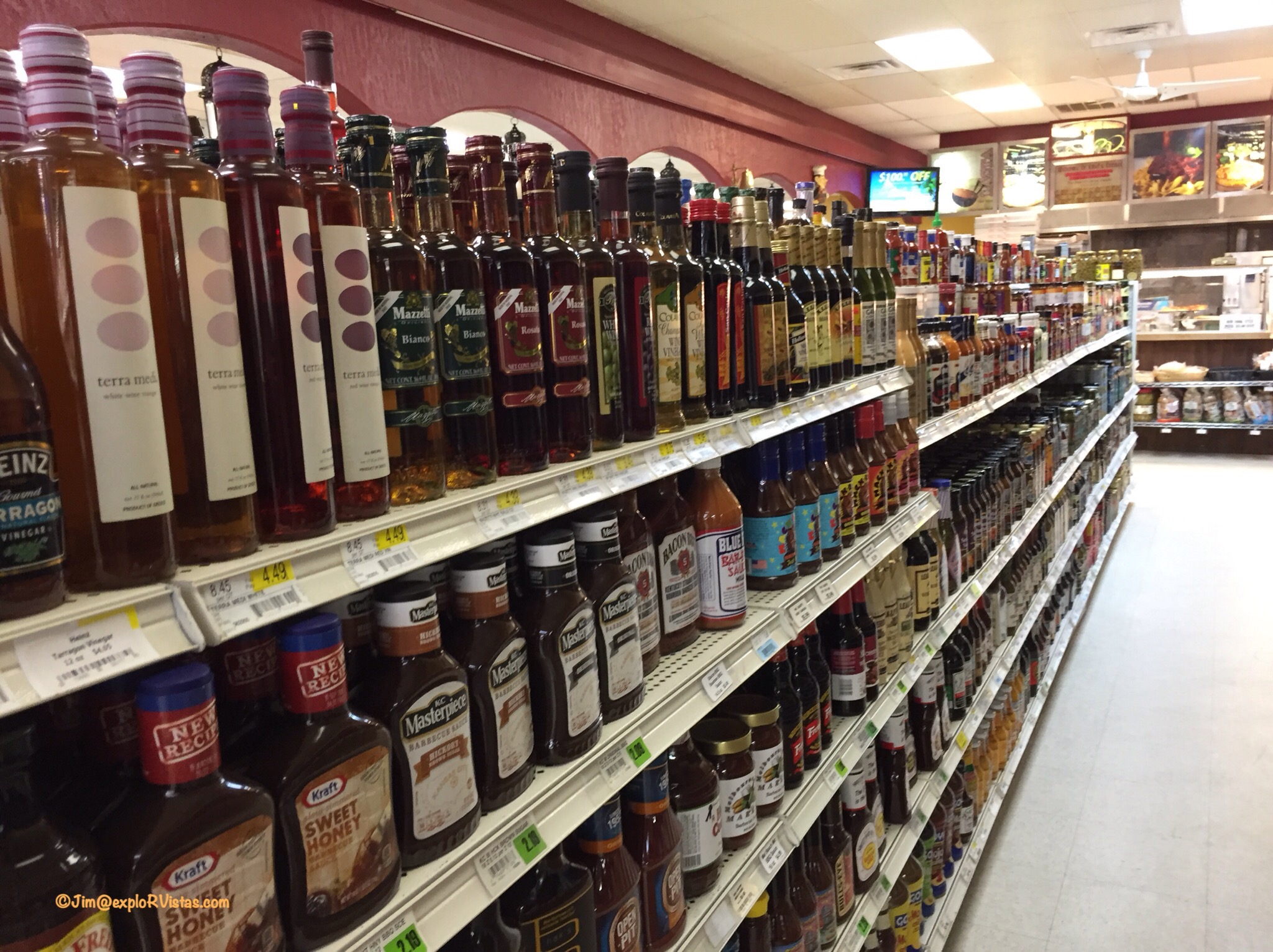
While their selection of common dry goods is limited, their choices for specialty items like spices, oils and seasonings is outstanding!


They have a wide selection of olives; more than we have ever seen in one place.


There is also a great selection of meats and seafood available, including a weekly special that is unbelievable.  Two weeks ago, we purchased whole boneless, skinless, fresh chicken breasts for $1.59 a pound.  They were delishhhhh…

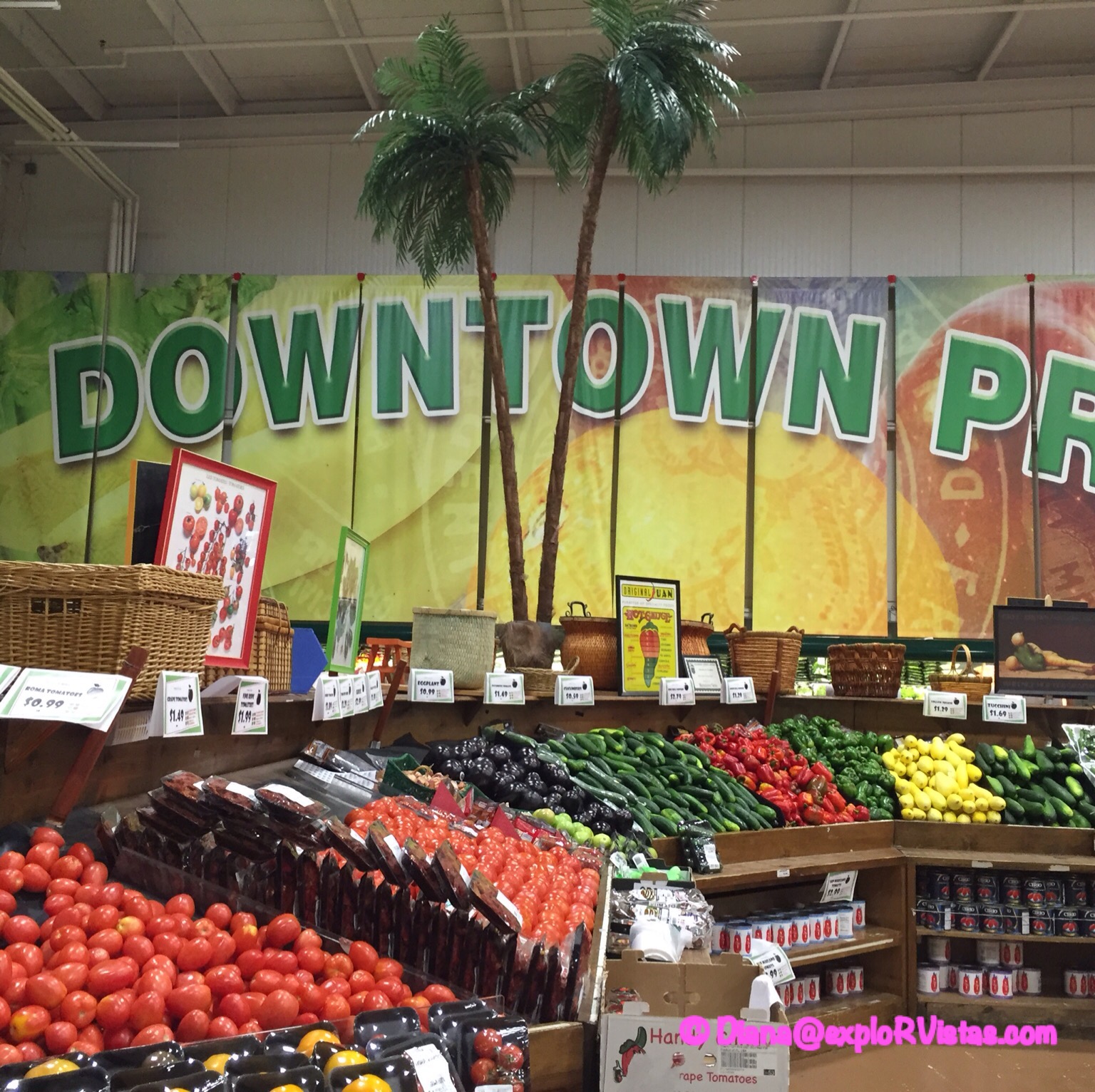
The other place Mary and Rod pointed us to is Downtown Produce. This market is located in West Melbourne, so it is more of a destination than a convenient store for us.


And while they do have a lot of fresh produce, that is certainly not their only focus.


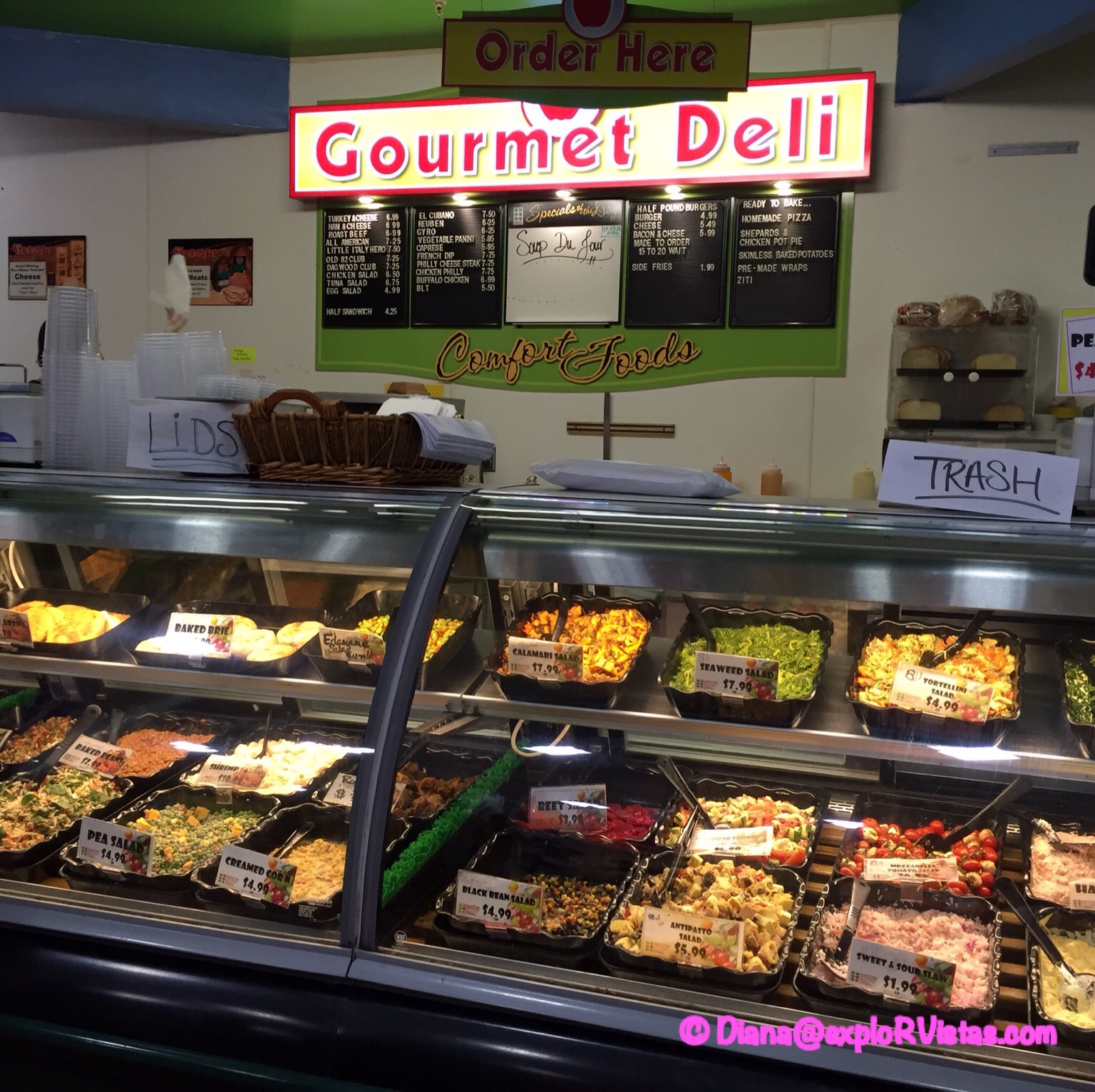
They have a well stocked deli.  The day we were there, we saw a couple of firemen who stopped in to grab lunch, and there were several other service workers in the lot, so we assume they were dong the same. 


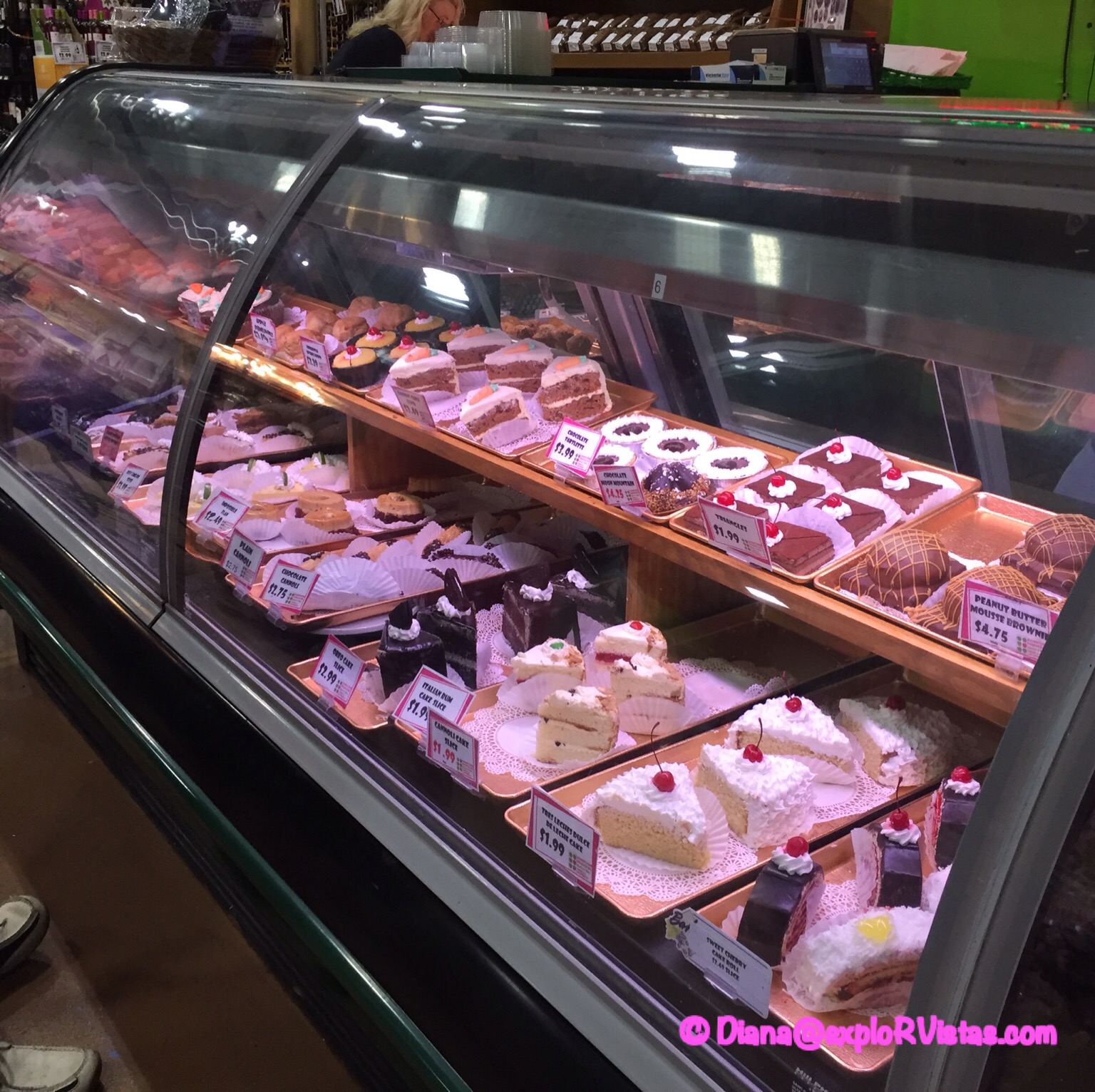
 A slice of cake, perhaps?


Or maybe a pastry?


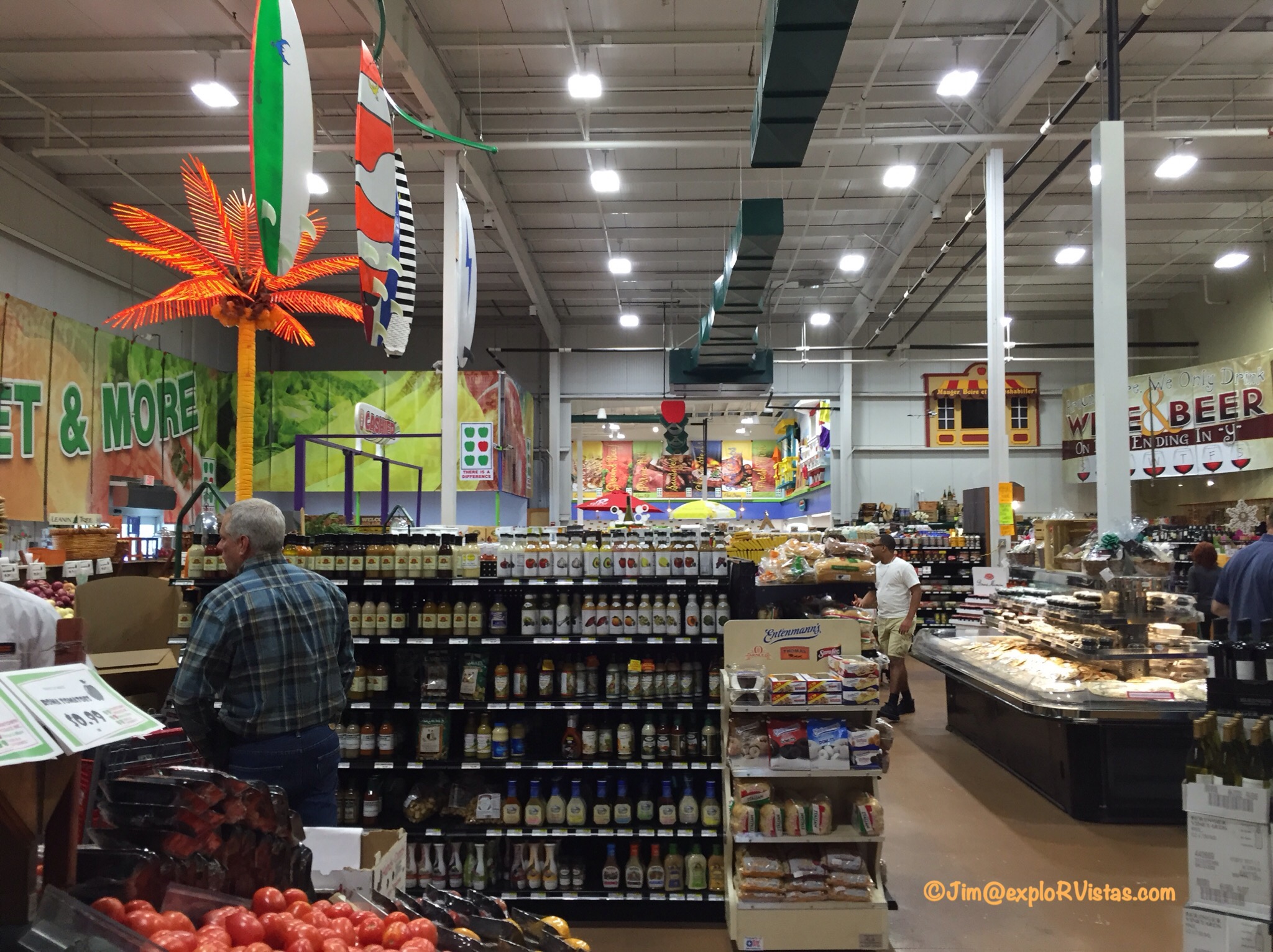
They also had an extensive wine and beer selection, along with one of the better gluten free aisles we’ve come across.  Truly a delightful place.

With my food allergy, we tend to cook at home a lot.  But with eating out being a social experience, I’m usually able to find something at most every restaurant.  It’s not a big deal at all.  The reason I even bring it up is because of the delightful place we found in Melbourne called The Bald Strawberry.  It is a dedicated gluten free restaurant, complete with allergen free alcoholic beverages.


This may sound odd, but they make their sandwiches and pizzas on gluten free waffles.  They are yummy!  It is a family run eatery that seems to have a loyal following.

While we are on the subject of restaurants, we learned that friends from Michigan, Terry and Diane, were going to be in Orlando this week.  Diane and Diana used to teach together…and there was another friend (and Diane’s sister-in-law) named Diane who taught with them, just to confuse things.  ðŸ™‚


Both Terry and Diane are recently retired, and they are here to share a Harry Potter weekend at Univesal Studios with their grandchildren. We met in Orlando at Bahama Breeze for lunch.  Before we left Michigan back in December, we met for breakfast in Byron Center.  We decided to aim for dinner in Vegas sometime in the future.  ðŸ™‚

Another challenge for fulltime RVers is finding health care.  Dentistry has come up with a solution to this with the nationwide chain Aspen Dental.  We’ve yet to try them, but we know others who have with decent results.  Prescriptions are easily handled for us through Walgreens and CVS, and we know many people who use Walmart. We have yet to come up with a nationwide system of medical doctors (an opportunity exists!) but Diana came up with a solution for being away from our chiropractors back in Michigan.


The Joint is a nationwide chain of chiropractic offices that do not require appointments or X-rays.  They do not take insurance, but offer very low prices.  We found the Melbourne office to be very professional and modern, and the doctors were outstanding. They are open seven days a week.  We each received a barcoded key tag that allows us to go to any clinic in the country without filling out new paperwork.  Check them out at thejoint.com.

So, back to how the Indian River got its name.  Diana was talking with her cousin Duane the other day about the lack of traffic on A1A on our barrier island, as compared to Gulf Boulevard on Estero Island at Fort Myers Beach on the other side of the state.  After she got off the phone she asked me, “What is the name of our barrier island?”  That little question led to a very interesting internet search.  It turns out that this island had been inhabited by an ancient tribe of natives for the 4000 years prior to Juan Ponce de Leon stepping ashore here on his expedition from Puerto Rico in 1513. The tribe was named Ays (pronounced Ah-ees) by the Spanish, although it is believed that Ays was the name of the chief.  It turns out the Ays and the Spanish didn’t gel, and the natives were eventually wiped out by the conquistadors….but not before Juan Ponce himself was the recipient of one of their poison arrows, eventually claiming his life.  Fast forward to the 21st century.  With the celebration of the 500th anniversary of Ponce de Leon’s landing coming up in 2013, a local resident was pushing to have the yet unnamed barrier island hold the moniker Ponce de Leon Island.  When it came up to a vote in Cocoa Beach, one councilman asked the gentleman if he had given any consideration to the Ays people who preceded the Spanish.  He said he had, looked to both sides and said, “I don’t see any Indians standing here asking you for anything.” The councilman retorted “That’s because the Spanish killed them all.”  Thus began a contentious period, resulting in the island’s communities and the U.S. Board of Geographic Names stepping away and leaving the island without a name.  In the process of researching all of this, I discovered the origin of the name ‘Indian River’.  When the Spanish mapped the area, they named the water on the west side of the island ‘Rio de Ays’.  Roughly translated, it’s the River of the Ays Indians…or Indian River.

So next time someone sends you a box of Indian River citrus, you will know the history of the name.  ðŸ™‚


McKee Botanical Garden

Quite often, we hear people say “If you want to see OLD Florida, you have to see…”   Old Florida is really ‘pre-Disney’ Florida; a time when attractions like Weeki Wachee, Silver Springs and Cypress Gardens were the place to be.  Interstate highways didn’t exist, and the Sunshine State was about as laid back as a Jimmy Buffett song.

Well, as luck would have it, we stumbled on a bit of Old Florida last week: McKee Botanical Garden in Vero Beach.


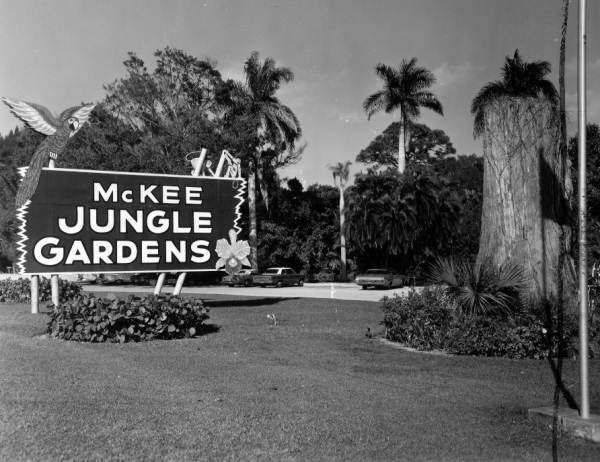
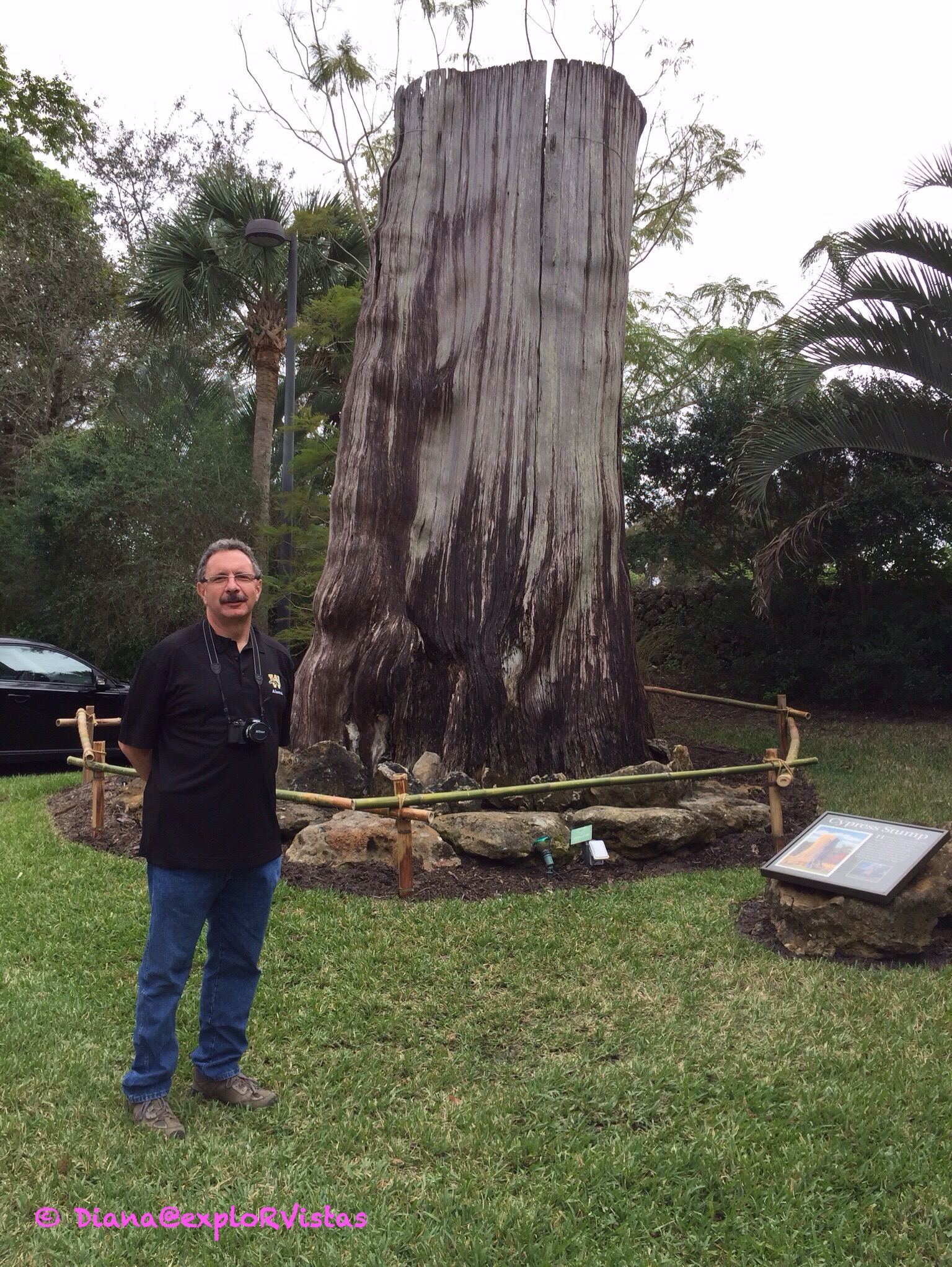
Back in 1932, two gentlemen named Waldo Sexton and Arthur McKee developed 80 acres into what was then known as McKee Jungle Gardens. A giant 2000 year old cypress stump was brought in from West Florida to mark the entrance on US-1.


Many native and unusual tropical plants were brought in, along with monkeys, an alligator and a black bear.  A graceful stone bridge was constructed over this pond, home to an exotic collection of lily pads.  In its heyday during the 1940’s, McKee Jungle Gardens was attracting 100,000 visitors a year. But with the opening of the Magic Kingdom at Walt Disney World in 1971, the beginning of the end for the gardens was in place.  By 1976, McKee Jungle Gardens was closed, and the land was sold to a condo developer.  Most of the land was developed into condos and a golf course, but the 18 acres fronting US-1 sat dormant.  The next 18 years saw vandals and homeless individuals on the property, and the gardens became overgrown.  In 1994, the Indian River Land Trust purchased the property and set out on a campaign to raise funds and restore the remaining land to its former grandeur.  In 2001, the McKee Botanical Garden opened its doors.

Our membership with the Frederik Meijer Gardens in Michigan is what initially attracted us here.  That membership includes a reciprocal agreement with similar gardens and museums across the U.S.  We also saw that landscape artist Patrick Dougherty was going to be there.  We first saw his Stickwork structures on CBS Sunday Morning, and we missed out on seeing him in Niles, Michigan when we were near there.  We couldn’t let that happen twice.


Out in the parking lot along US-1, the cypress stump is still there…


…as is the stone bridge inside the garden.


Upon entering through the arched trellis, this green space opens up.  We followed around to the right to view the Stickwork installation.


There beneath the Royal Palms, three domed structures were taking shape.
  

High up on the scaffolding, Patrick Dougherty and a volunteer were weaving willow saplings together to form the structure.  Once completed, the buildings will open to roam through, and they also become a haven for birds. He does nine of these installations a year throughout the world, and he has been doing it for thirty years! Each installation lasts an average of two years before deteriorating.

After checking out Mr. Dougherty’s work, we ventured out on the trails to see what else McKee had to offer. 


Here is an American Waterlily that we found to be interesting.  There were several varieties on the various ponds around the park.

One thing we thought they could have done a better job of doing was labeling the flora. So not knowing what these are, we are just going to let you chime in on the next five photos.  Edits in italics as answers come in.  Thank you Betsy for suggesting the plant identification app on our phones!  We settled on Like That Garden, which is a huge help!


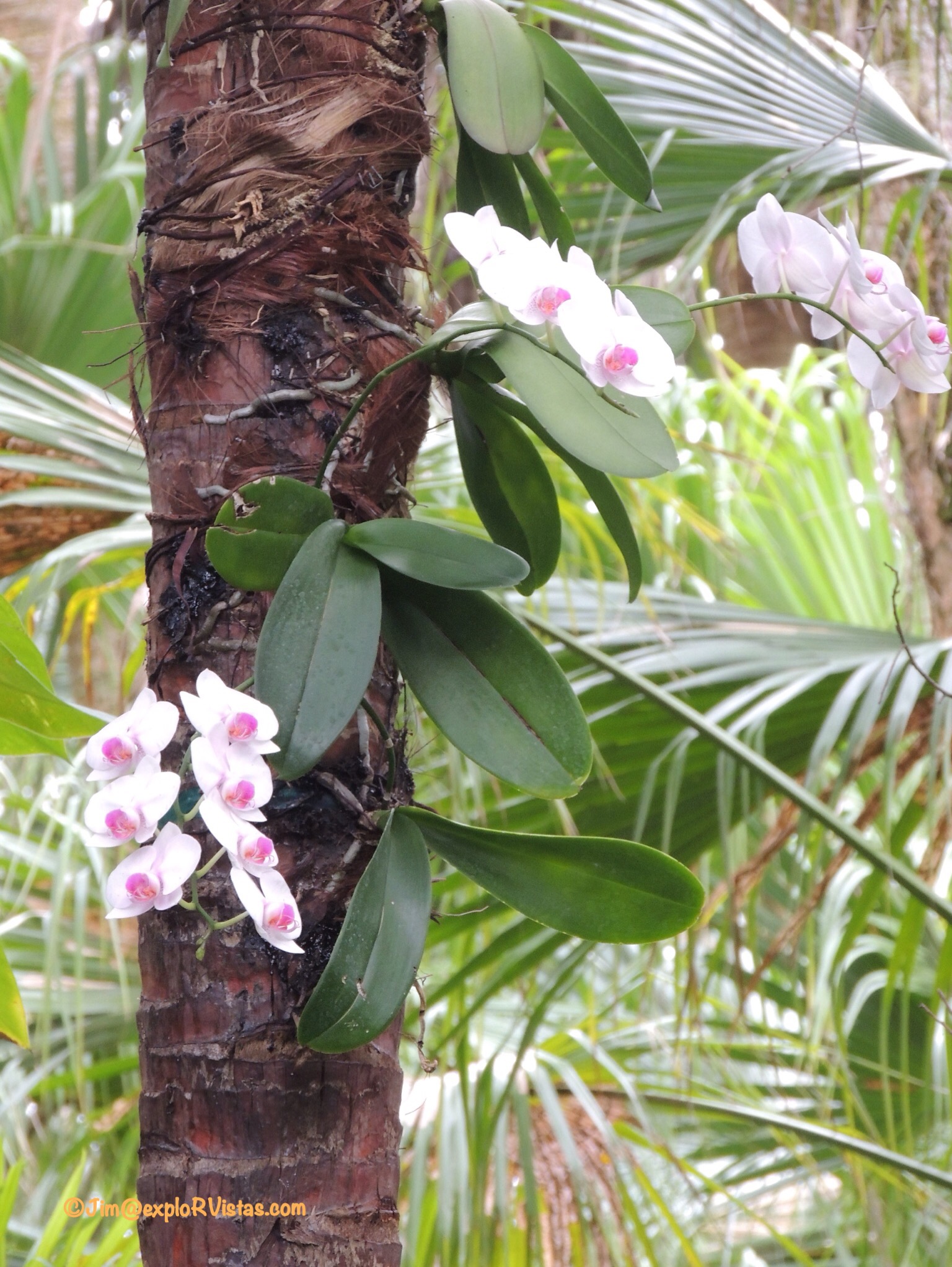
#1. Any idea?  It appears to be an orchid.


#2. How about this? Joan from FOSJ maybe this and the next photo was a bromeliad.  We are still trying to confirm.


#3. Any guesses?


#4. Care to fathom a guess? Kelly from bkamericanodyssey identified this as a banana tree.  We confirmed that with our app that Betsy suggested.  Official name : Plantains or Wild Banana Tree.


#5. Perhaps an orchid?  Bonnie from HappiLeeRVing identified this as a Moth Orchid.


This pavilion was interesting in that it is constructed entirely of bamboo, and is unique in the fact it is the first engineered bamboo building in the U.S. to have been issued a building  permit.  That occurred in 2002.


There were several stands of bamboo in the gardens.  


They also had interspersed a number of sculptures throughout the grounds.  We overheard someone mention that she thought this didn’t fit in it’s surroundings.  Your thoughts?


The Hall of Giants was constructed to house this 35′ Mahogany table, which was billed as the world’s largest from a single piece of wood.  This building and table are both original features from McKee Jungle Gardens.  Many events have been held here over the years.  They had a video playing of an old MovieTone feature that promoted McKee Jungle Gardens from the 1930’s. It was amusing to see how they advertised back then.  ðŸ™‚


Off the one end of the Hall of Giants is this huge Spanish kitchen.  Talk about a great place for a cookout!

So, despite the fact we had trouble identifying a good portion of the flora, we enjoyed our afternoon touring this little slice of history.  And we can be safe to say that if you want to see Old Florida..you have to see McKee!

Kennedy Space Center

If you ever want to see me turn into a little kid, drive right past all the Orlando theme parks and take me to Cape Canaveral, home of the Kennedy Space Center.  This is where the Supermen of my youth lived, climbing on top of giant rockets and heading off into space.  Both Diana and I had been here several times in the past, both as children and also as a couple.  While it was always exciting to see, the business of space travel was never presented very well back then.  That has all changed, now that NASA has allowed a private company to run the visitor center.  It’s like a theme park, only the rockets on display are the real deal!

The first thing visitors see coming into the center is the rocket garden.  Several rockets are displayed that were the early hardware used to get the Mercury and Gemini astronauts into space.  Across the back is a Saturn 1B that was similar to the one that took Apollo 7 into Earth orbit.  It is the smaller cousin to the Saturn V rockets that went to the moon.

They had a Saturn V first stage F1 engine on display.  Remember this engine; I’ll talk more about it later.

A highlight in the rocket garden for me was this gantry.  This is the actual catwalk that the Apollo 11 astronauts walked across on their way to their space capsule.  Those were their last steps on earth before they stepped out onto the moon. At that time, it was 300 feet above the ground as part of the launch pad.

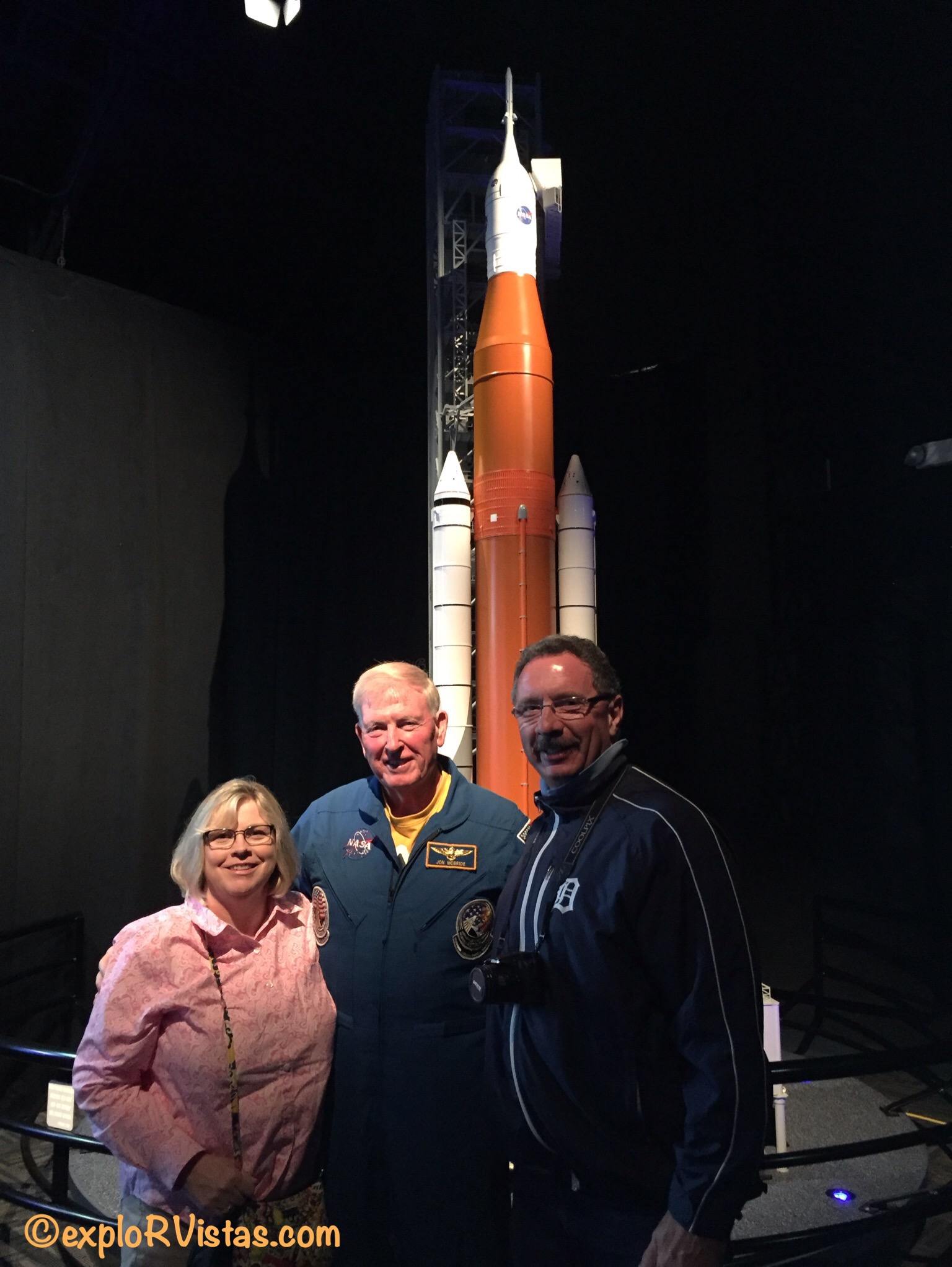
From there, we headed over to the Astronaut Encounter.  The astronaut there that day was Jon McBride, who actually piloted the Space Shuttle Challenger on an earlier mission before it exploded in January of 1986.

He gave a very interesting presentation, and we got to shake his hand and pose for a picture afterwards.  As you can well imagine, I was pretty excited at this point!  The rocket in the background is a model of the Orion, the vehicle that will take astronauts to Mars.

From there, we boarded a bus and headed out towards the launch pads.

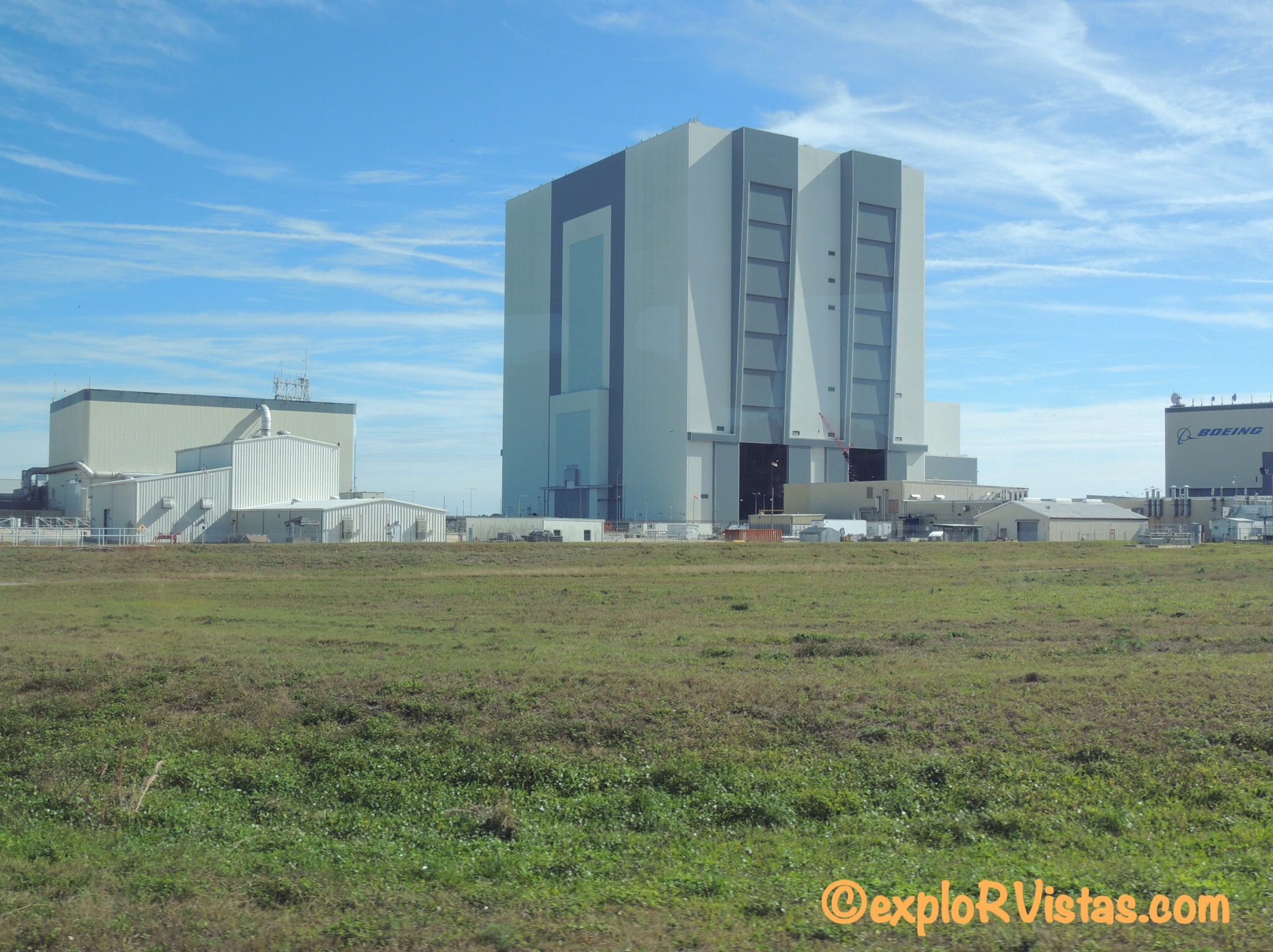
One of the first things we saw was the Vehicle Assembly Building.  This is where the Saturn rockets and the shuttles were assembled and readied for launch.  This is the largest single story building in the world.  It actually is big enough that it creates its own weather inside, forming rain clouds near the ceiling on humid days. Those are giant doors on the side that allow the rockets to be moved out. I remember my dad marveling at the fact that it takes 45 minutes to open them.

This is a shuttle platform, sitting on top of a crawler transporter.  NASA has two of these transporters, both being built in 1965.  Each one weighs 6 million pounds and gets 127 gallons per mile of diesel fuel.  It definitely will pull our fifth wheel.  Let’s just say that, with that kind of fuel consumption, we won’t be using one of these for our next tow vehicle!

This is an older NASA photo of the Space Shuttle Atlantis riding to the launch pad on the back of a crawler.  When they get to the slanted pad, the one side of the transporter raises up to compensate for the angle.  The reason the pad is raised is because the ground is basically at sea level here.  Each pad has a flame pit for the exhaust from the rocket to be channeled away as the vehicle lifts off.  At the point of ignition, the entire contents of the water tower in the background is sprayed into the pit to deaden the noise…which is otherwise strong enough to stop a human heart at close range.

They also drove us past this tower that was being constructed on a mobile launching platform that was being converted from the shuttle days.  This will be used for Orion.  One of the other launch pads was being used by SpaceX, a private company that launches satellites and supply ships to the space station.

Once we were done riding around the launch pads, the driver dropped us off at the Saturn V Center.  This building holds an actual Saturn V rocket displayed in a horizontal position.

This is Apollo 18.  It never flew, as Congress ended the Apollo program three flights early.  Remember that F-1 engine I showed you earlier?  Here are five of them, mounted into position and ready to go.  When one of these rockets lifted off, these engines would lift the vehicle to an altitude of 42 miles in 2-1/2 minutes, accelerating it to a speed of over 6000 miles per hour.  Divide those numbers and that’s an acceleration of 40 miles per second!

This is the other end of that first stage of the rocket.  Once it did its job, it would fall into the Atlantic Ocean.  Then the second stage would take over with its five smaller engines, followed by the third stage with its single engine.

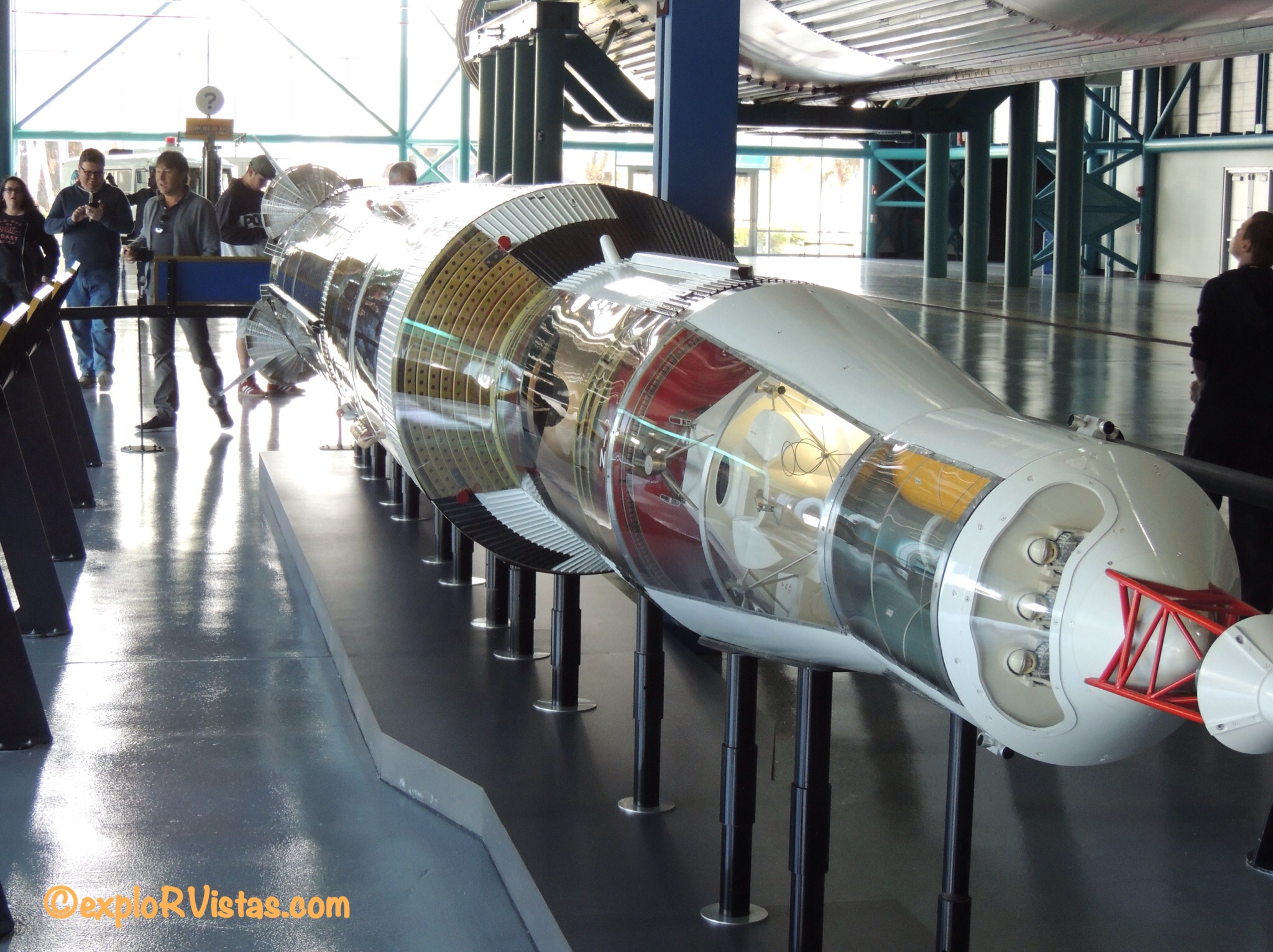
This cutaway model showed how the entire rocket fit together and worked as a single unit.

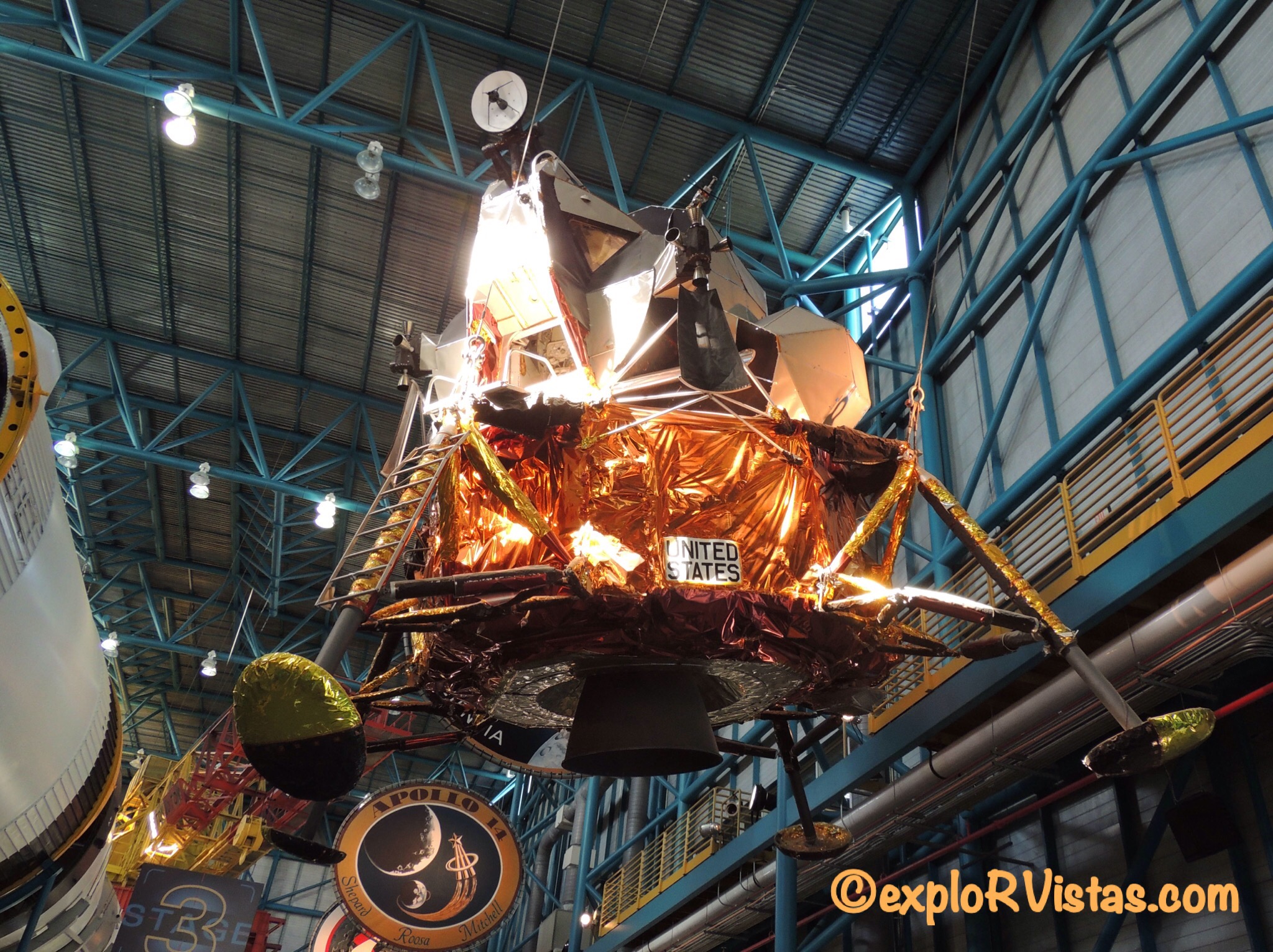
This was supposed to have been the Lunar Module from Apollo 15.  NASA decided to send along a lunar rover (car) on that mission after this was already built.  This unit didn’t have room on it to store the rover, so it became a museum piece.  It is interesting to note that the ladder on the lander is not strong enough to support an adult human on Earth.  On the Moon, a human weighs 1/6th of what they weigh on Earth, so it works just fine there.

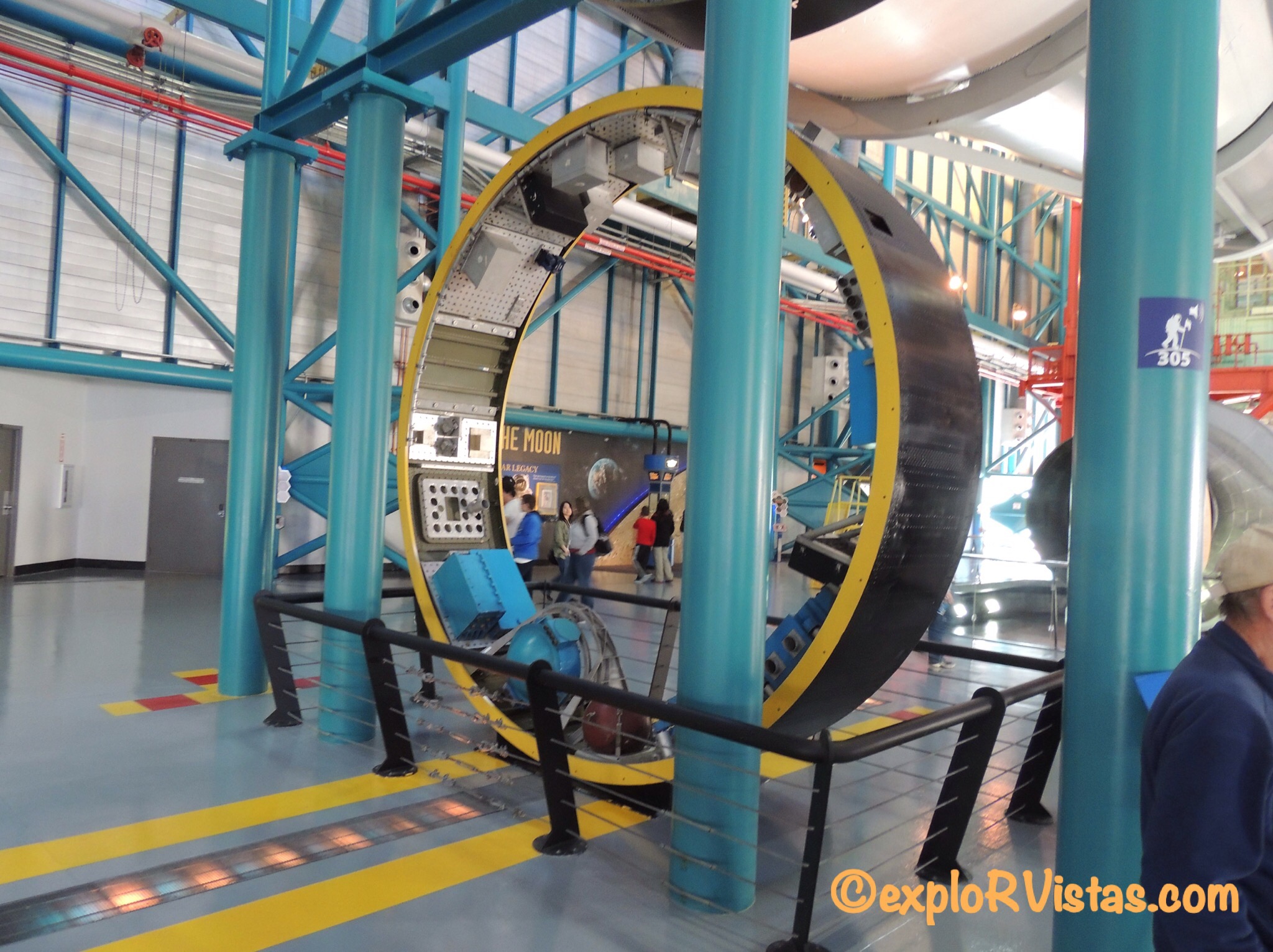
This three foot wide ring was interesting.  It was positioned on top of the third stage and it contained the instruments and computers that guided the rocket from launch to a point that the spacecraft seperated from the third stage, beyond Earth orbit.  The fact we found interesting was that today’s cell phones are more powerful than the computers contained in that ring.

The Saturn V Center also contained a number of artifacts from the Apollo program.  Space suits, hardware and other items are well represented.

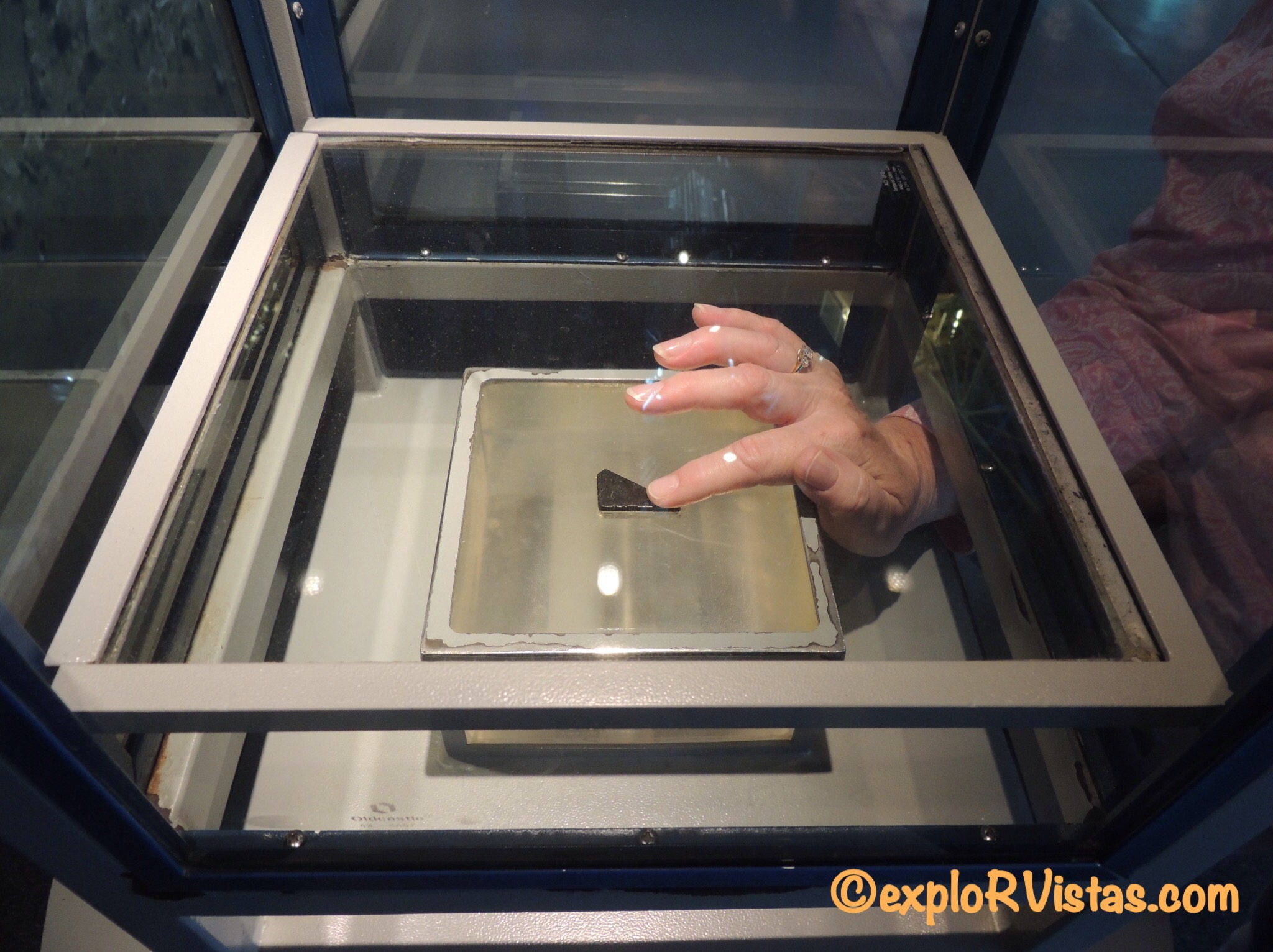
Here, Diana is able to touch a piece of moon rock.

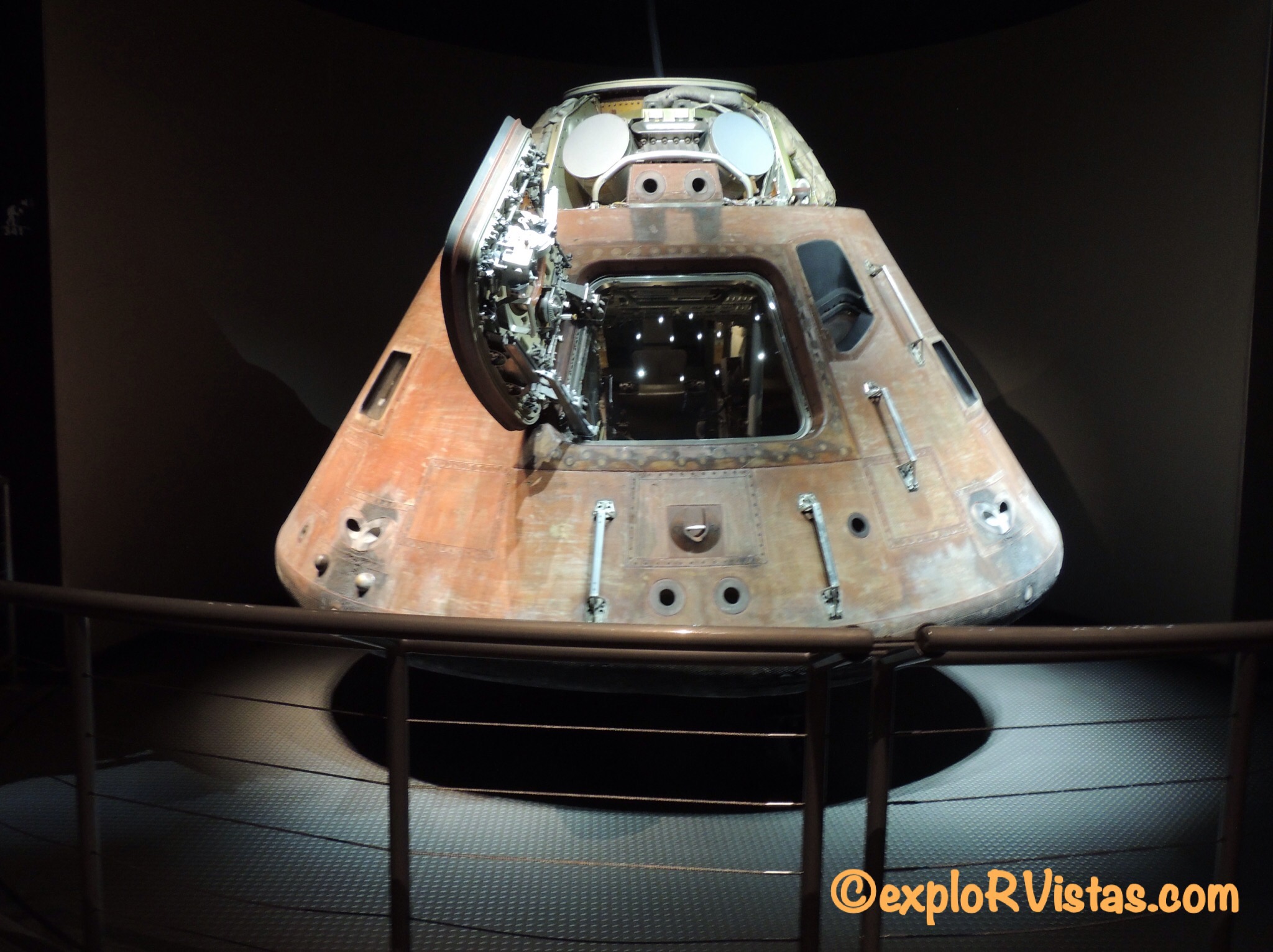
Here is the Command Module from Apollo 14.  This was the capsule that Alan Shepard and his crew rode in to and from the Moon.  It is interesting to note that, of 363 feet of Saturn V rocket at launch, this 11 foot tall spacecraft was all that returned at splashdown.

Once we finished our tour of the Saturn V Center, we toured the Space Shuttle Atlantis building back at the main visitor center complex.

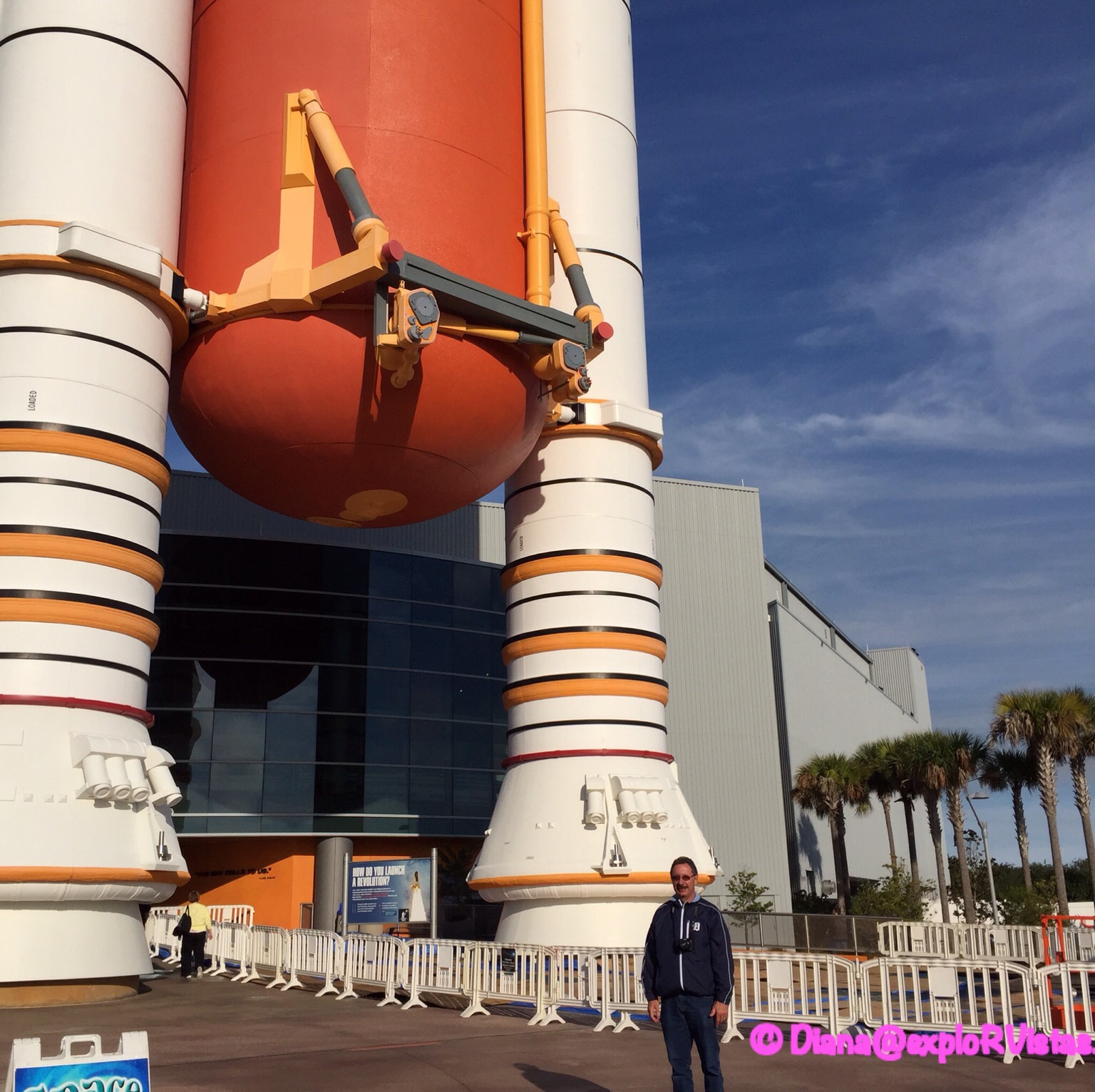
Here I am beneath a mockup of a main fuel tank and two solid rocket boosters used to launch a shuttle.

Once inside the facility, you get to see Atlantis, the last shuttle to fly into space.

The ship is displayed as it would appear in Earth orbit with its payload bay doors open and its robotic arm extended.  All of the cracked tiles and smudges from repeated missions into space were left to show visitors what this ship went through.

This really is the ultimate RV. 🙂  We were impressed by the sheer size of it!  The building was arranged so you could view it from multiple points on different levels. We saw the shuttle Columbia twice. We saw it land piggyback on a 747 at Kelly Air Force Base Nov. 21, 1982. We also saw Columbia launch in Florida on April 4, 1997. These were both fantastic experiences, but it didn’t allow for the close up view that we enjoyed at this display.

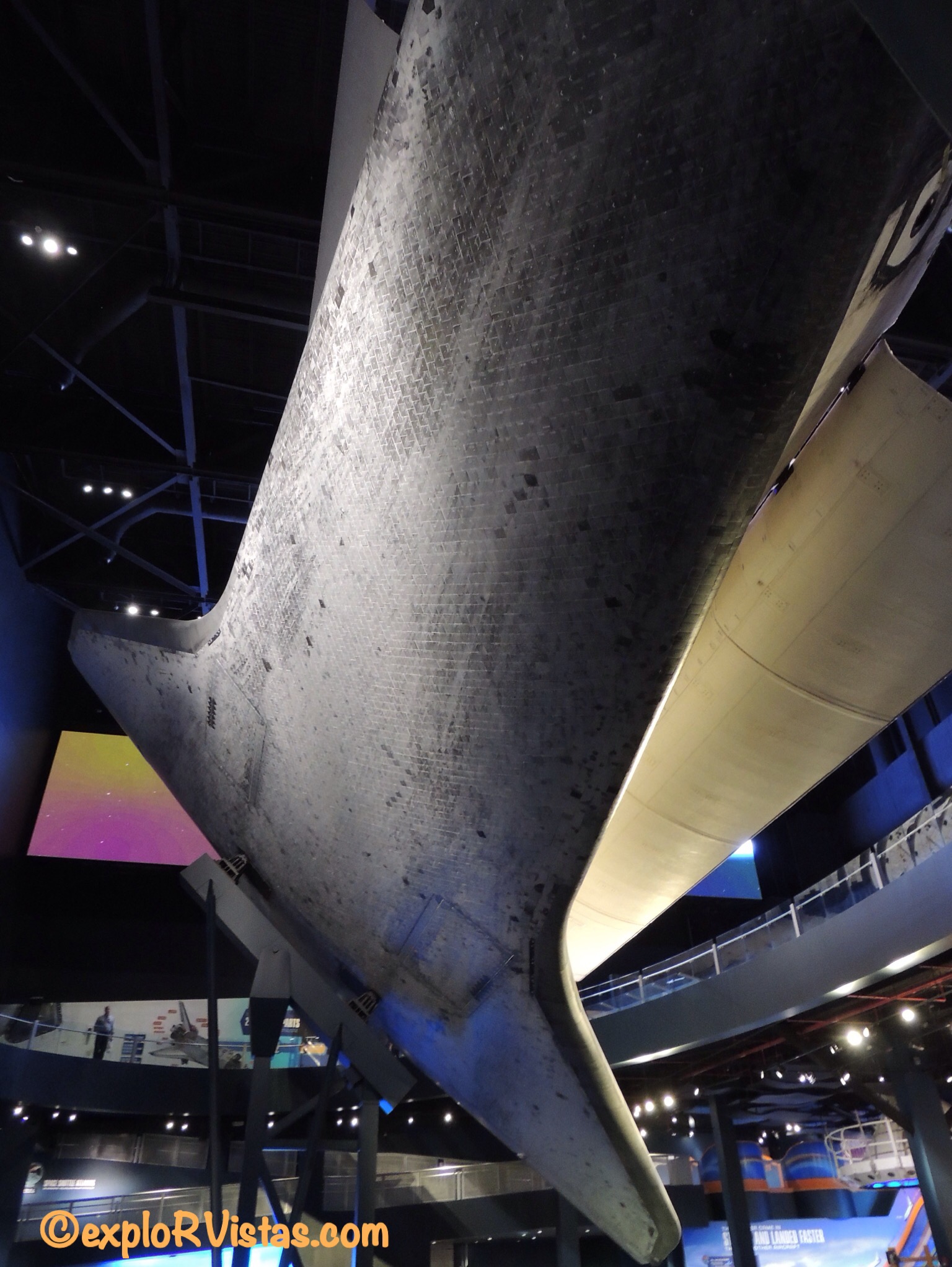
Here is the underside of the orbiter.  33 missions over 26 years and 125 million miles, and it still looks great.  If it were a car on its last mission, it would have qualified for antique vehicle license plates!

This is the upper portion of a shuttle main engine.  While Diana and I were looking at this and trying to make sense of it, a docent came up and asked us if she could answer any questions.  It turns out she had worked on the computer systems for these engines for twenty years.  Her intelligence was astounding, yet she explained the “spaghetti” we were looking at in a way that made reasonable sense.  The cell phone reference came up again when she mentioned that our iPhones had more capability than the engine’s computer.  I mentioned to her that smart phones are a result of the efforts of the space program, to which she agreed.

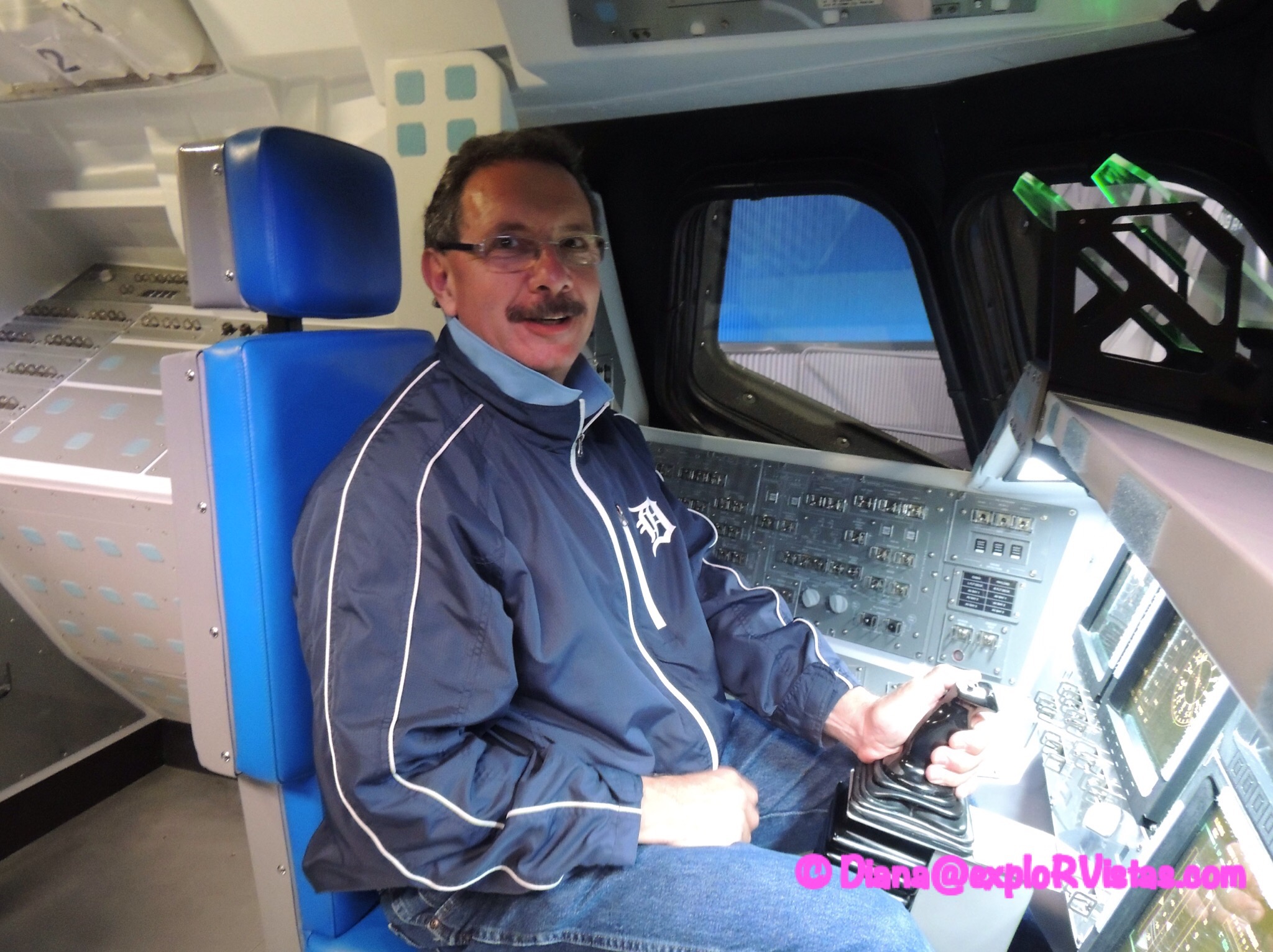
There was also a mockup of the shuttle cockpit.  Yes, I’m sure I could fly this thing.  ðŸ˜‰

There also is a simulator that allows you to experience what it feels like to be launched in a shuttle. We opted to save that for another time.

Near the nose of Atlantis was a display that honored the 14 men and women who lost their lives in the Challenger and Columbia accidents.  Each display had personal artifacts from each astronaut.

Here is Christa McAuliffe’s display. January 28, 1986 was a hard day for me, as Diana was an educator.  Watching interviews with Christa prior to the mission, I personally saw the same determined and positive traits in her that I see in my wife. Diana will tell you that I looked at the TV during one of those interviews and said “If you let anything happen to her, NASA… I will never forgive you.”  To be honest, it took me a long time to forgive them. I eventually did, as I knew that Christa McAuliffe and the other sixteen American astronauts who gave their lives in the pursuit of space exploration would have wanted the space program to continue.

If you are in central Florida and have the time, be sure to visit the Kennedy Space Center.  Plan on getting there early, as it will consume your entire day.  Take your time and appreciate mankind’s greatest adventure. These people explored the ultimate vistas in some of the greatest RV’s ever built!


A Sea Turtle Paradise

“When one tugs at a single thing in nature, he finds it attached to the rest of the world.”

John Muir


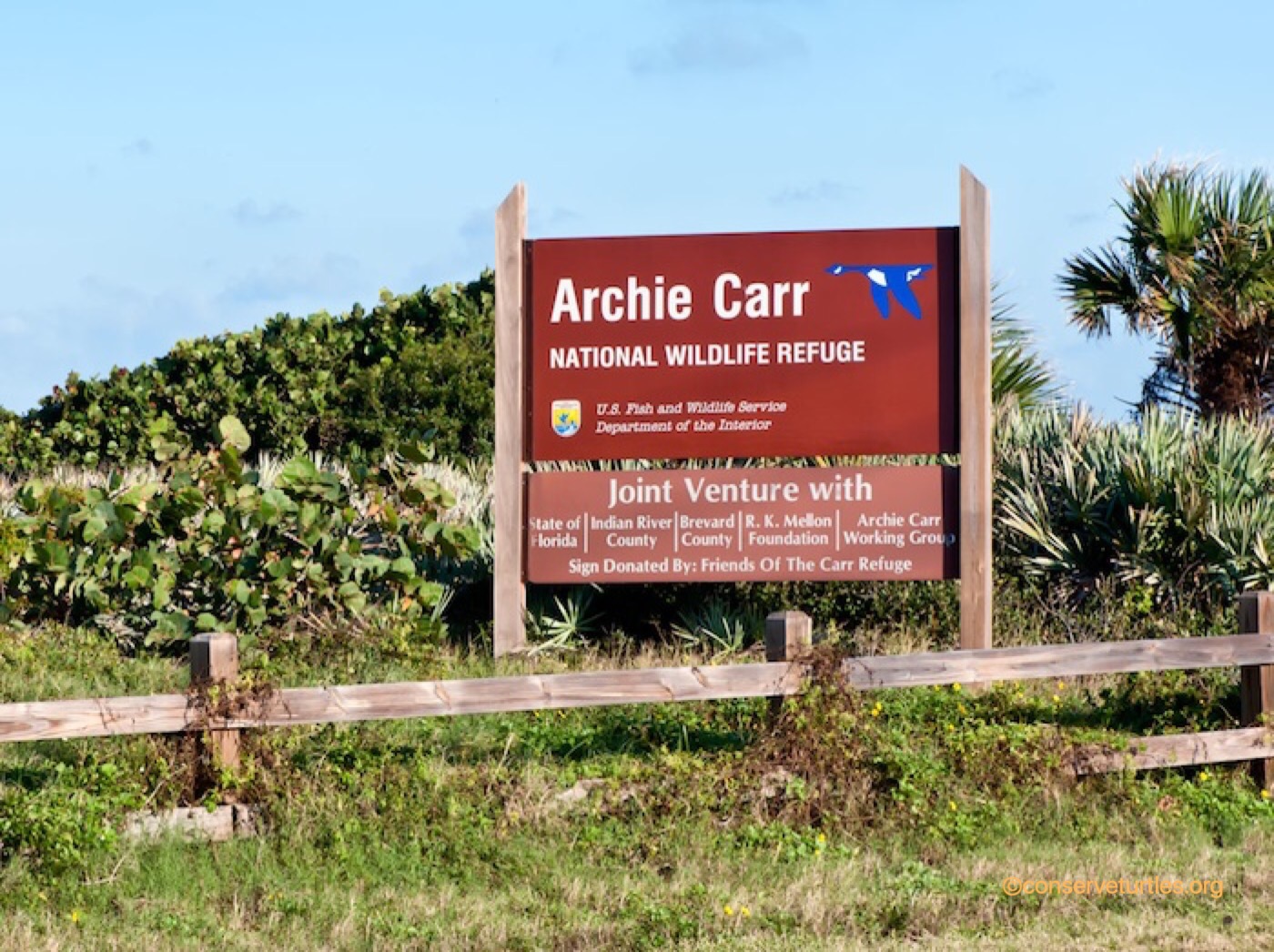
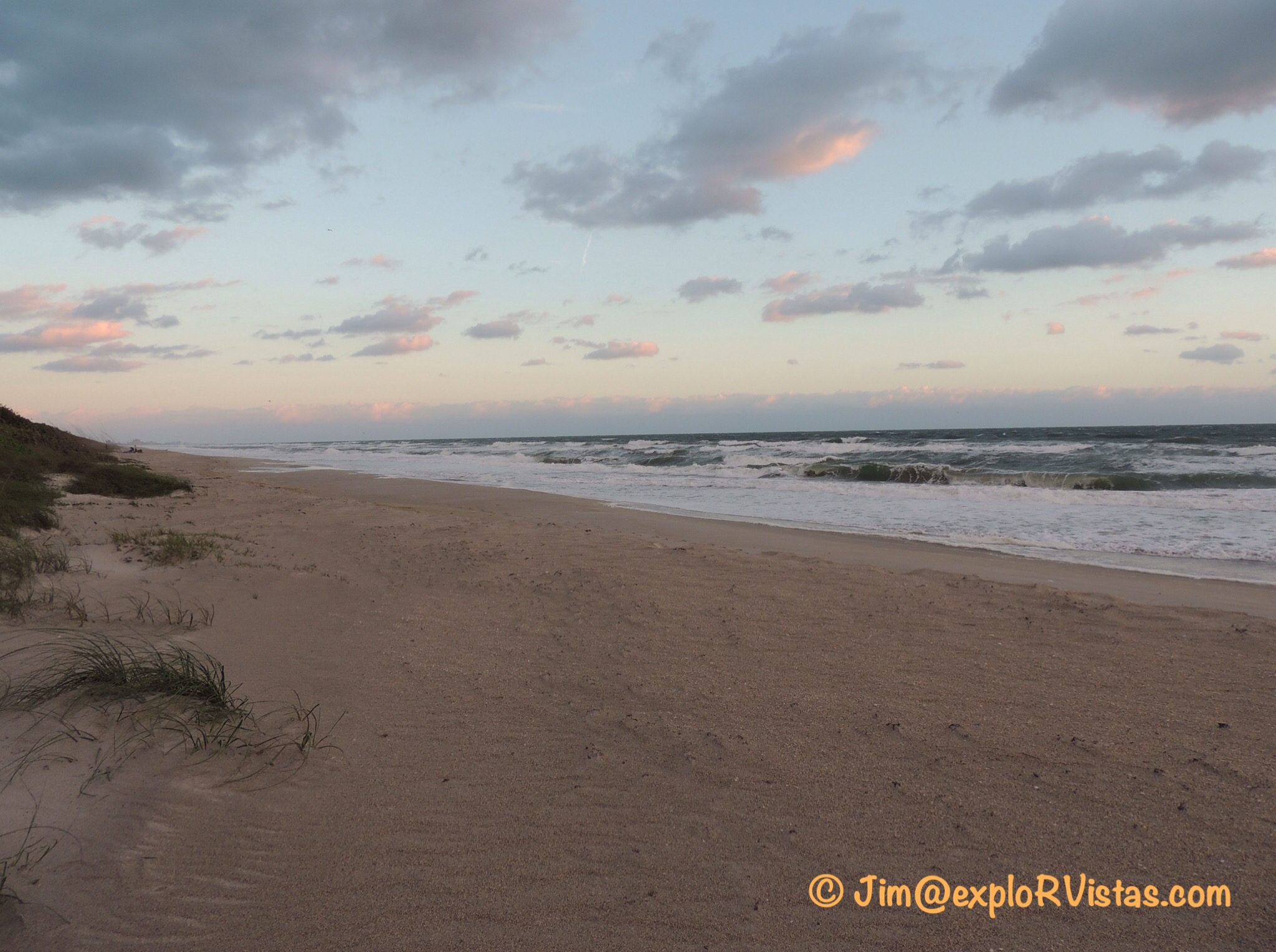
Immediately south of where we are staying in Melbourne Beach and stretching 20.5 miles south, is the Archie Carr National Wildlife Refuge.  To the normal visitor (like us), this beach could be mistaken for any number of other beaches in Florida.


Miles of endless sand with the ocean pounding the shore.  Homes, condos and businesses behind the dune.  But it’s what happens here beginning in March and continuing through summer that makes this stretch of beach unique…for it is here that 25 to 35% of the loggerhead and green sea turtles in the US nest.  Approximately 15,000 to 20,000 turtles build their nests here annually, returning to the place of their own birth after journeys of thousands of miles through the ocean.  That averages out to a nest about every 6 feet!  Peak season is June through August. 


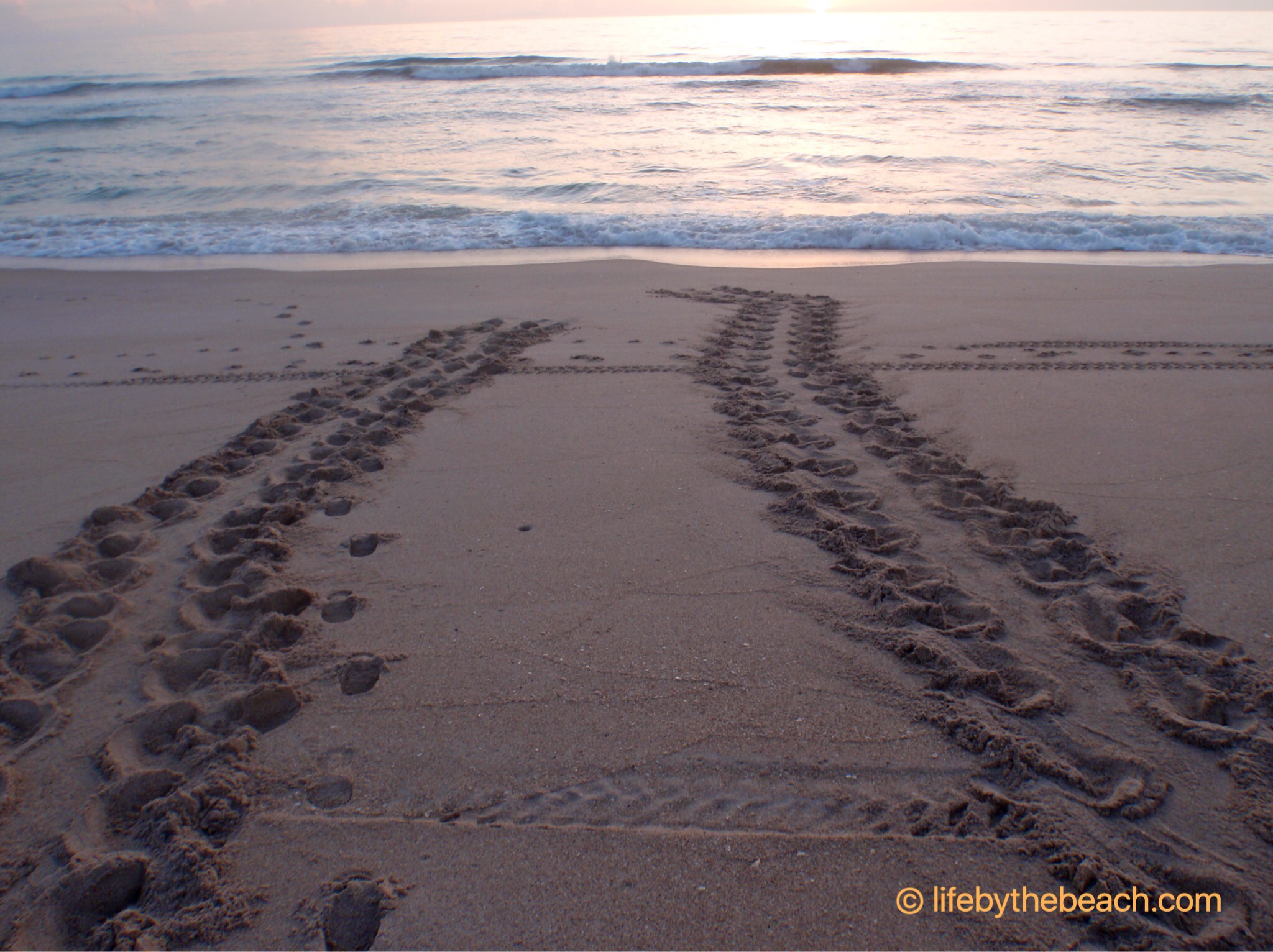
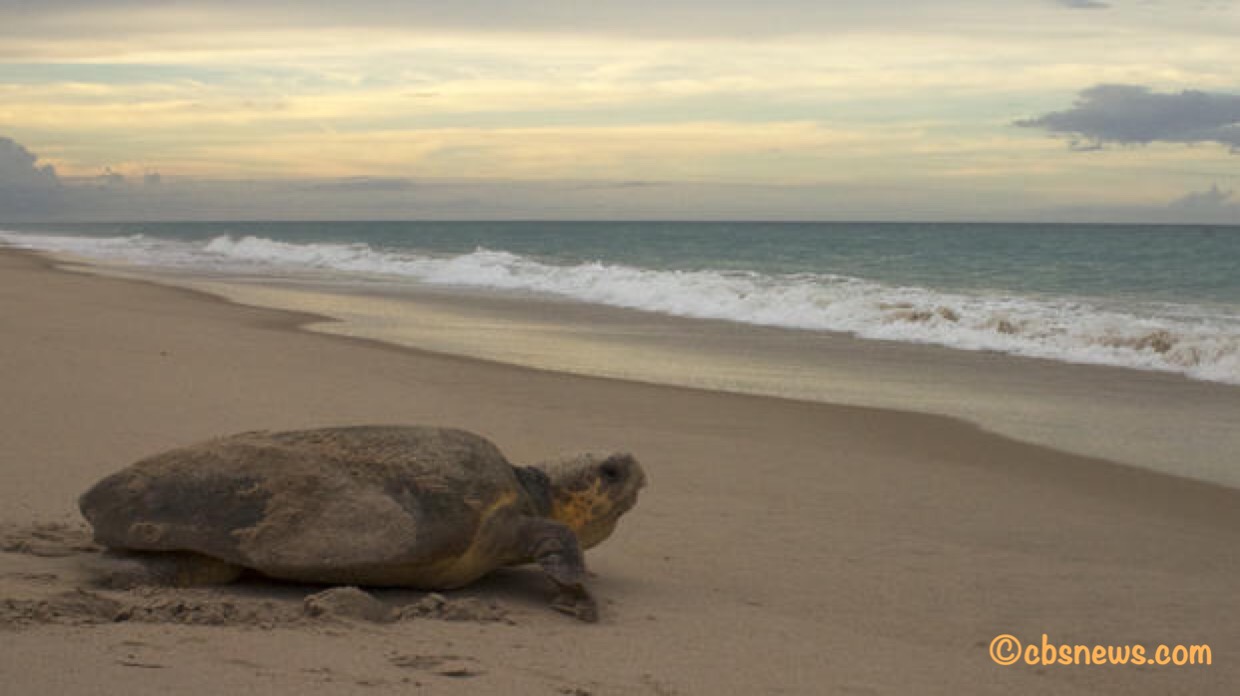
When these giant sea reptiles get to land, their graceful sea movements become a major struggle to get to the top of the beach.  The tracks they leave behind appear to be something a tractor or 4 wheel ATV might make.

  
They dig their nests and lay their eggs, then head back out into the ocean.  


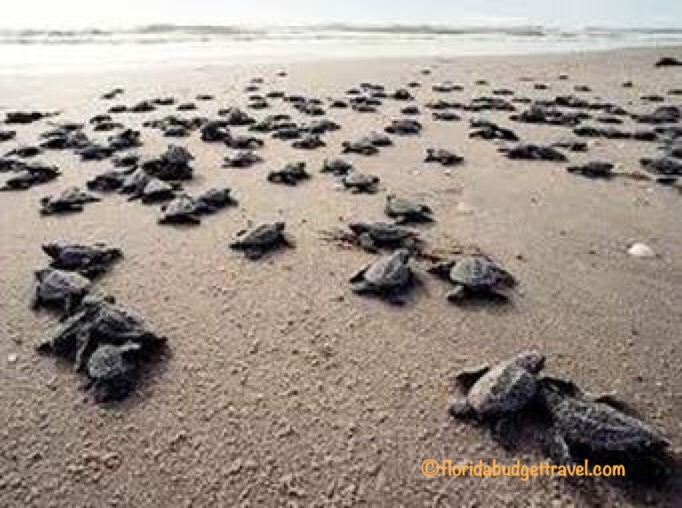
Approximately 2 months later, the baby turtles hatch and crawl across the beach and out to sea. Hatchlings make bite-sized meals for birds and crabs, and many do not make it. The survivors swim out to the Gulf Stream and live their first years in floating seaweed as it circulates around the Atlantic, traveling thousands of miles in the process.  As juveniles, many live in the lagoons and intercostal waterways behind the barrier islands.  Once they mate in their mid-twenties, the females make their way to their home beach to complete the cycle. Scientists are still researching how long sea turtles live, but it is generally believed that they can reach at least 80-100 years old.


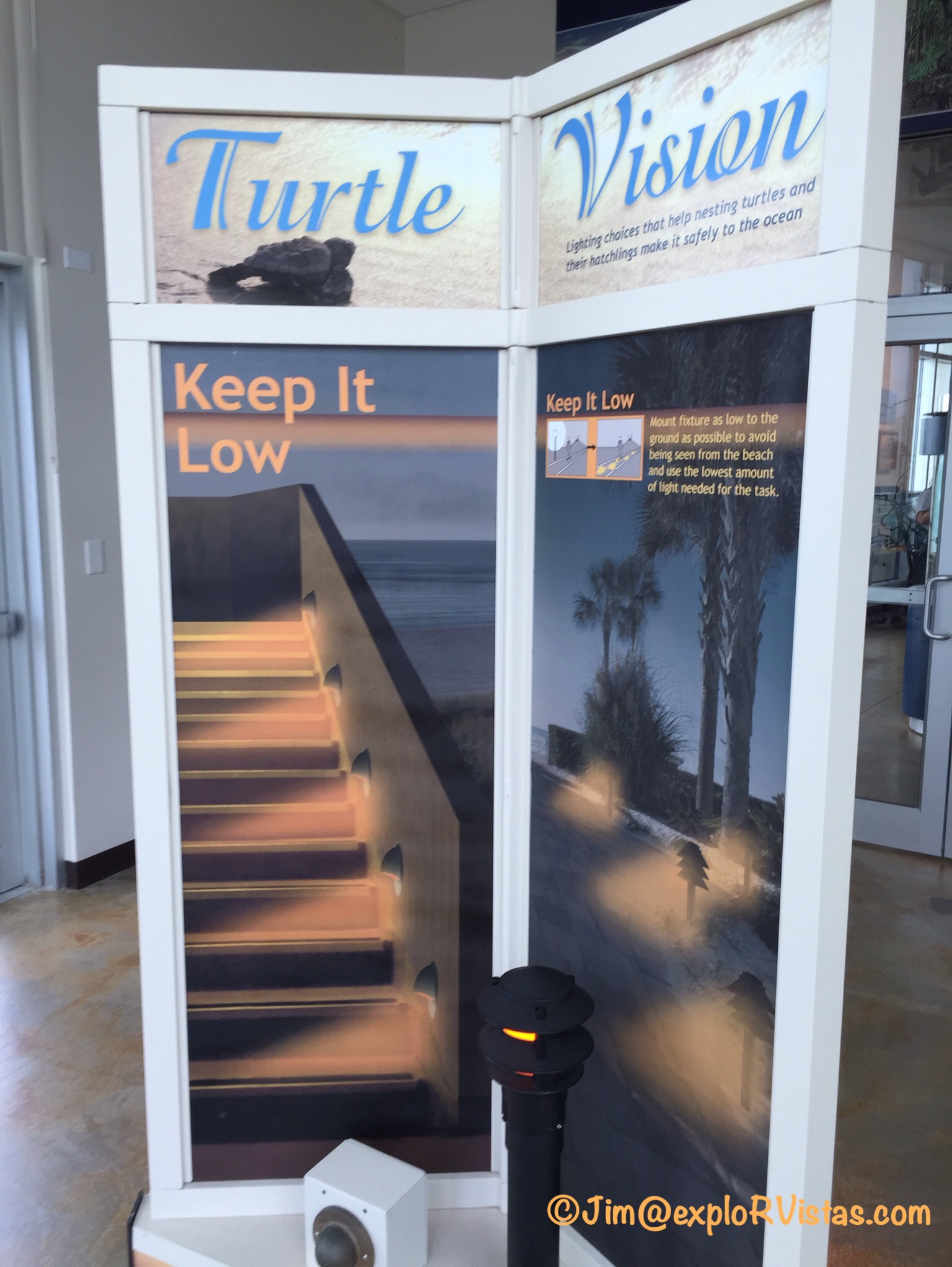
One of the issues that comes into play is the artificial light from homes and businesses.  The unique feature of this sanctuary is that it isn’t just vacant land; it is a patchwork of private and public acreage. The refuge encourages private landowners to use soft indirect lighting, preferably in amber and red, so as to not confuse the turtles. The reptiles rely on the moonlight off the ocean to guide their way at night. The refuge also works with the public to educate them on how to coexist with turtles, so as to not disturb them during the nesting process.

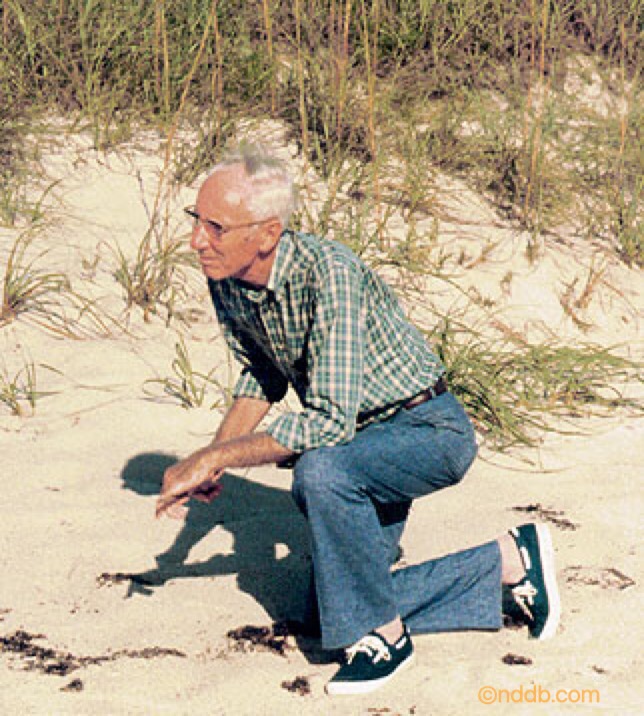
Before we go any further, a little history about Dr. Archie Carr.


Dr. Carr (1909-1987) was a professor of zoology at the University of Florida.  Over his lifetime, he became one of the leading experts on sea turtles.  While most of his conservation efforts involving turtles took place in Tortuguero National Park in Costa Rica, his work was noted worldwide. As a result, the refuge in Florida was named after him.


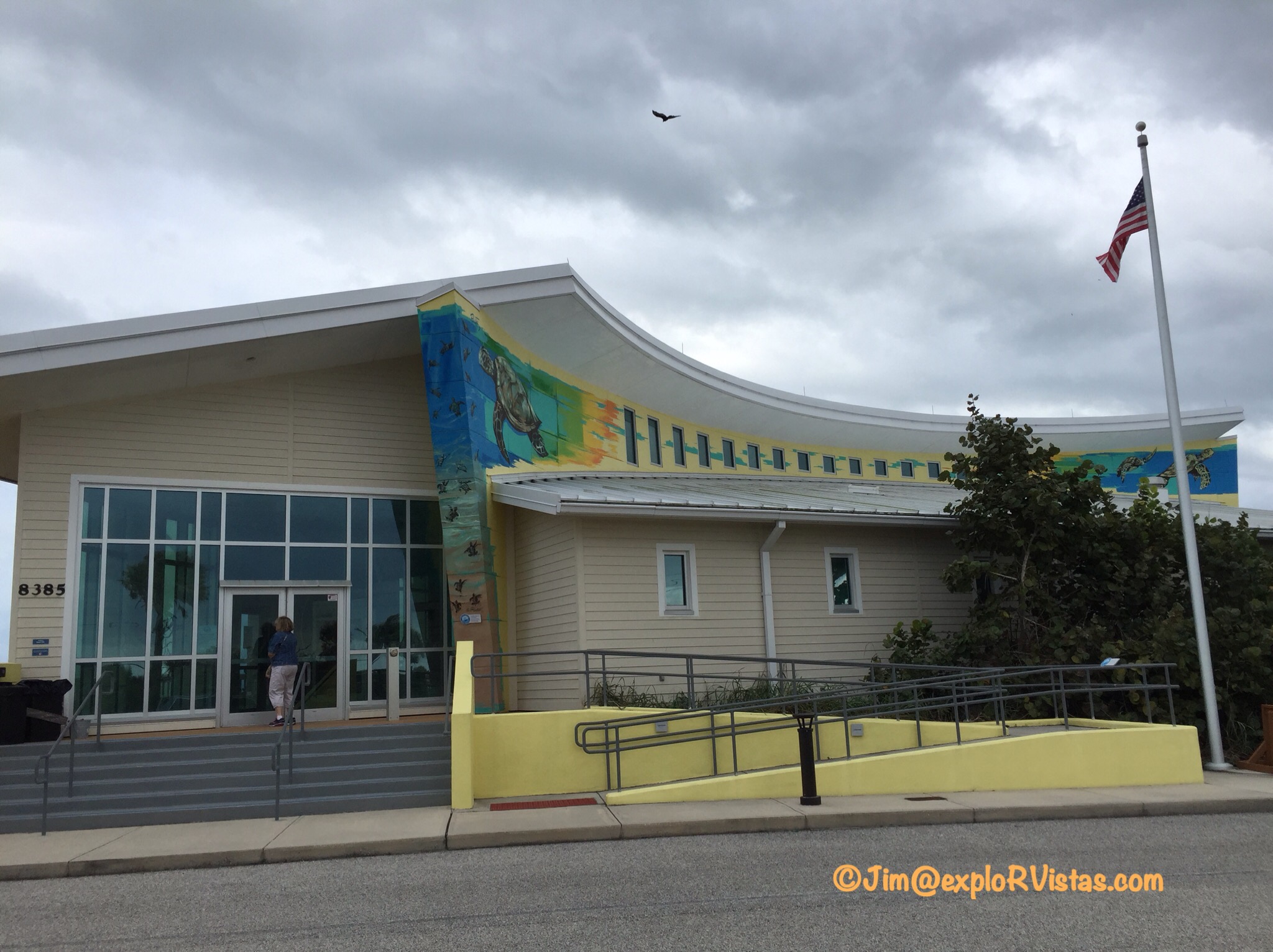
A few miles north of the Sebastian Inlet is the Barrier Island Sanctuary Visitor Center.  Inside are many informative displays about the refuge, as well as a nice theater with several videos regarding the sanctuary.  The center is totally free to visit, although donations are gladly accepted.

The one display that grabbed my attention had to do with the comeback of the green turtles on this stretch of beach, as a result of the conservationist’s efforts.  In three decades, the quantity of nests has increased 100 fold.  That is truly amazing!  With all of the modern, man-made disturbances pulling them towards extinction, it is wonderful to see mankind being able to help reverse that.

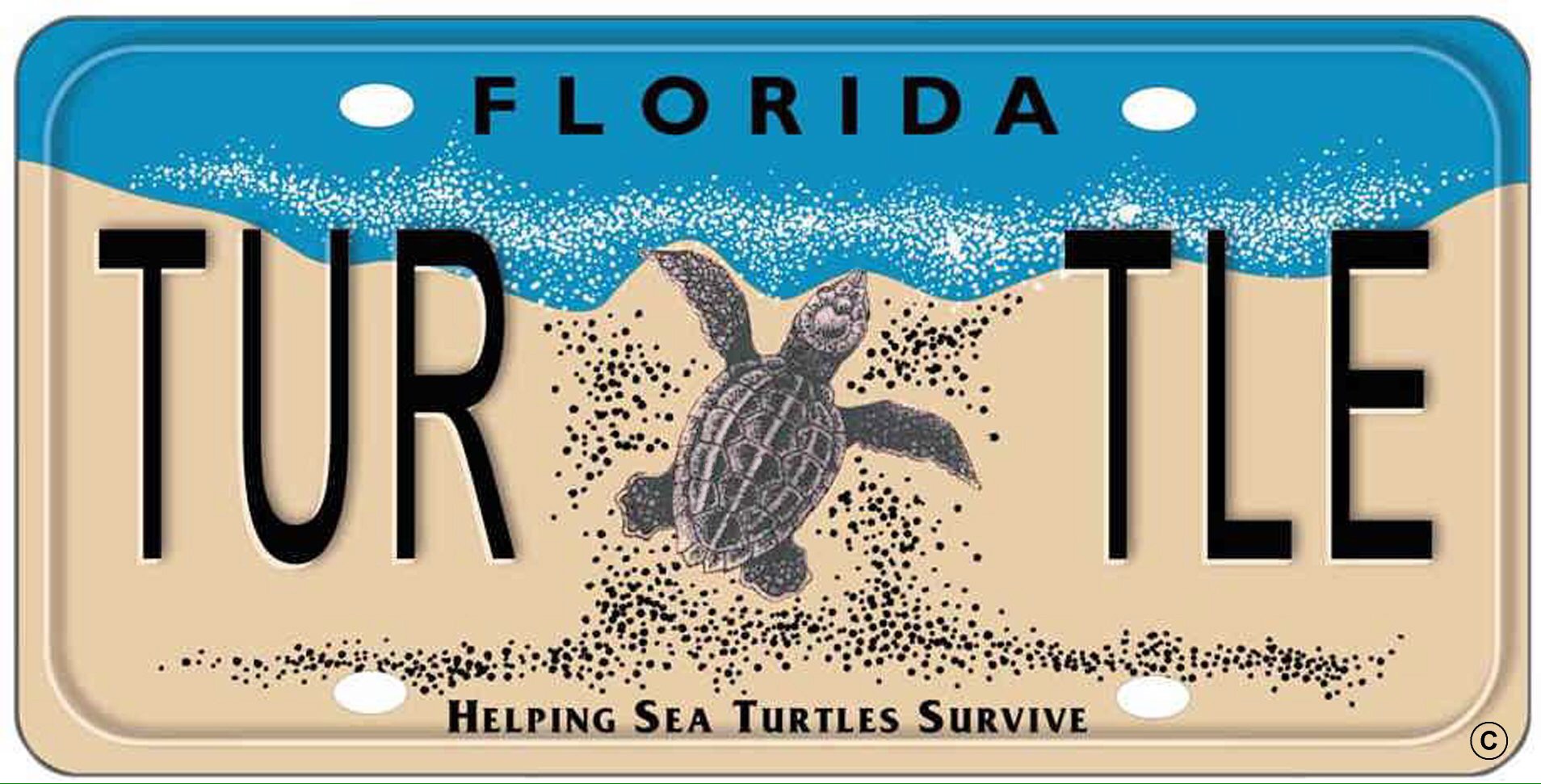
So if you find yourself in this area, take the time to learn more about sea turtles.  If you are here in late spring and early summer, take a guided turtle walk to witness these giants first hand.  Or if you are a Florida resident, buy a sea turtle license plate.  The proceeds go towards sea turtle conservation.