All posts by exploRVistas

We are full time RVers on a mission to find America's story. We feel that by moving our house to a location and living among the locals for a bit, we allow ourselves the opportunity to understand that area's people. Our motto is "Don't just see it...BE it"©

A Surprise Along the Lewis and Clark Trail

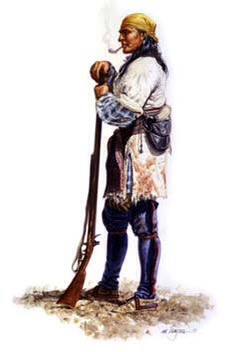
When Lewis and Clark first formed the Corps of Discovery, it consisted of 59 people and one dog.  Most were military men, but some were civilians.  Of those, Sacajawea, her husband Charbonneau, and their baby Jean Baptiste are probably the best known. Another who has often been written about was an interpreter and fur trapper named George Drouillard.
© lewisandclarkinkentucky.org

Drouillard was considered to be one of the most valuable members of the expedition, as he excelled at trading with the natives, was able to recover stolen horses, was a skilled hunter and knew his way around in the wild.  He was extremely hard working and loyal. Having been born to a Shawnee mother, he knew the ways of the natives as the Corps travelled through the west. At the end of the journey, Meriweter Lewis reported to Thomas Jefferson that, “If it was not for George Drouillard, the Expedition would have never survived.”

While I was reading Stephen Ambrose’s Undaunted Courage this past spring, the line “Born north of present day Detroit, Michigan…” caught my eye.  A number of years ago, I researched my father’s side of our family.  I had heard some history from my dad about how Peche Island, a small piece of land on the Canadian side of the Detroit River, was “swindled” away from our family by Hiram Walker, and that his great grandma had put a curse on the island.  Dad vehemently refused to have any Hiram Walker bottles in his liquor cabinet, so I was fairly sure there was some teeth to the story.  In searching “Peche Island” on Google, there was a very interesting article in the Walkerville Times called The Curse of Peche Island, in which my great-great grandmother, Rosalie Drouillard LaForest, had cursed to Walker’s men who forced her off that nothing would ever come of the island….and to her word, nothing ever did. There have been several attempts to develop the island, and they have all have failed.

So there was that name; Rosalie Drouillard LaForest, born north of present day Detroit, Michigan.  I pondered the connection while reading Ambrose’s account and wondered, is it possible that I’m related to George Drouillard?  Well, one thing the French-Canadiens and the Catholic Church do well; they keep great birth, death and marriage records.  Couple that with the excellent genealogy sites available on the web, I was pretty sure I’d be able to follow it back and find out.  I tabled the search, as we were concentrating on traveling across the country.

When we were staying at Lewis and Clark Caverns this past week, I read how Lewis, Clark, Charbonneau, Drouillard, and Sargeant Gass had hiked over the very land we were camped on. The tabled search came back to my mind, so I dug into it.  I knew George was born in 1773; this was going to go back a ways.  As follows:

James Belisle (me)

Rene Belisle (my dad)

Mamie LaForest Belisle (my grandma)

Alfred LaForest (my great grandpa)

Rosalie Drouillard LaForest (my great-great grandma)

Francois Drouillard (my third great grandpa)

Alexis Drouillard (my fourth great grandpa)

Francois Drouillard (my fifth great grandpa)

Jean Baptiste Drouillard (my sixth great grandpa)

Well, Jean Baptiste had another son named Pierre, who had a son named George Pierre Drouillard.  In his genealogy listing, it states that he was an interpreter on the Lewis and Clark expedition.  Well, dang….from what I can gather on the web, George is my first cousin, six times removed! 

I was actually able to trace back to a seventh great grandfather, Simon Drouillard, a French soldier who had served under Antoine de la Mothe Cadillac, founder of Detroit.  Simon was attacked and killed by the Iroquois in 1733 near Detroit.  His son and my sixth great grandfather, Jean Baptiste, was killed in the French and Indian War at Pittsburgh in 1755. He was the first family member on my grandma’s side to actually settle in Detroit, back in 1749.

Before we pulled out from Lewis and Clark Caverns, we headed into the hamlet of Three Forks.  Our destination, just west of town, was a fishing access on the Jefferson River called Drouillard.  It was here that my cousin met his early demise at the hands of the Blackfeet Indians in 1810.
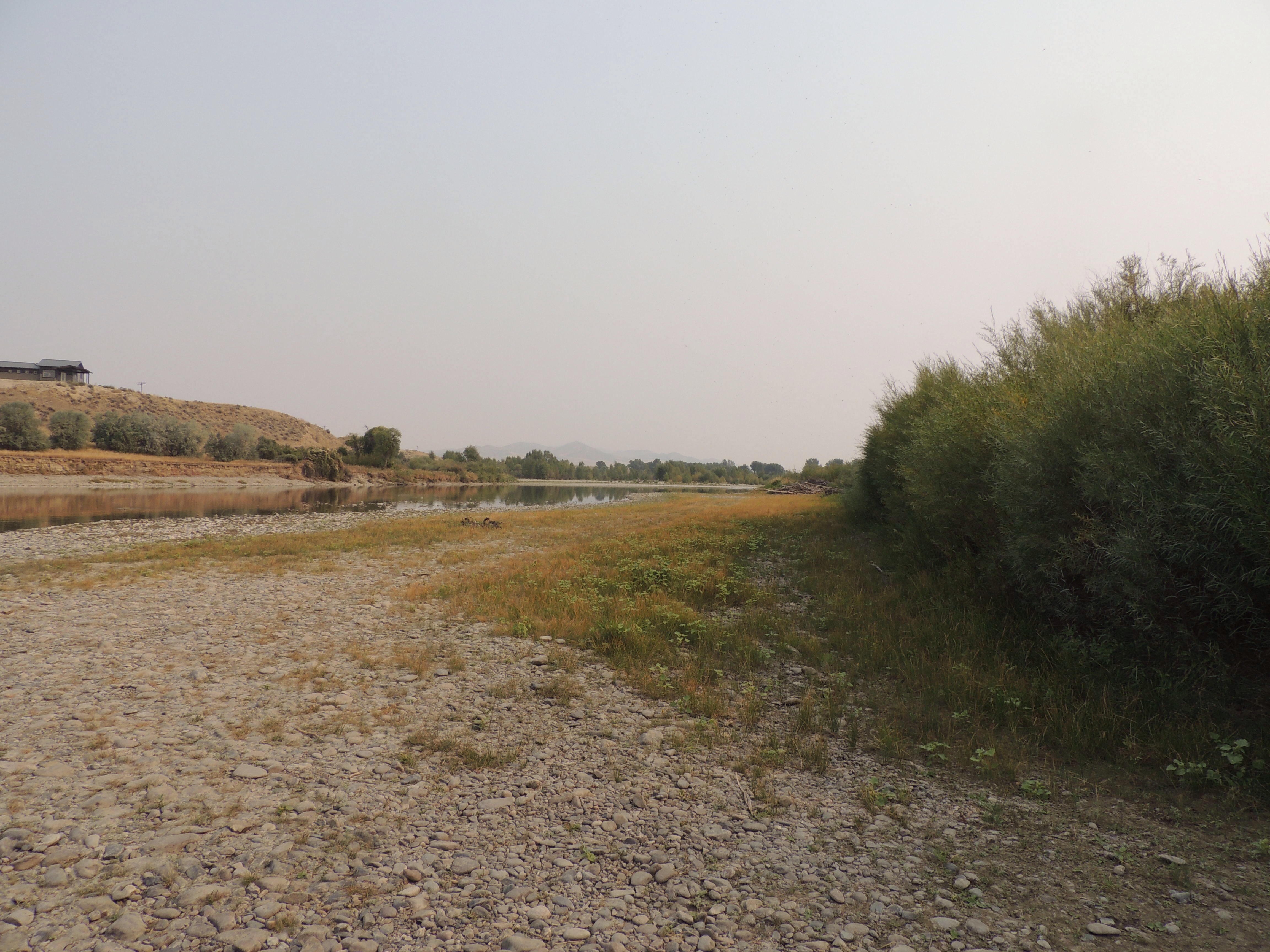
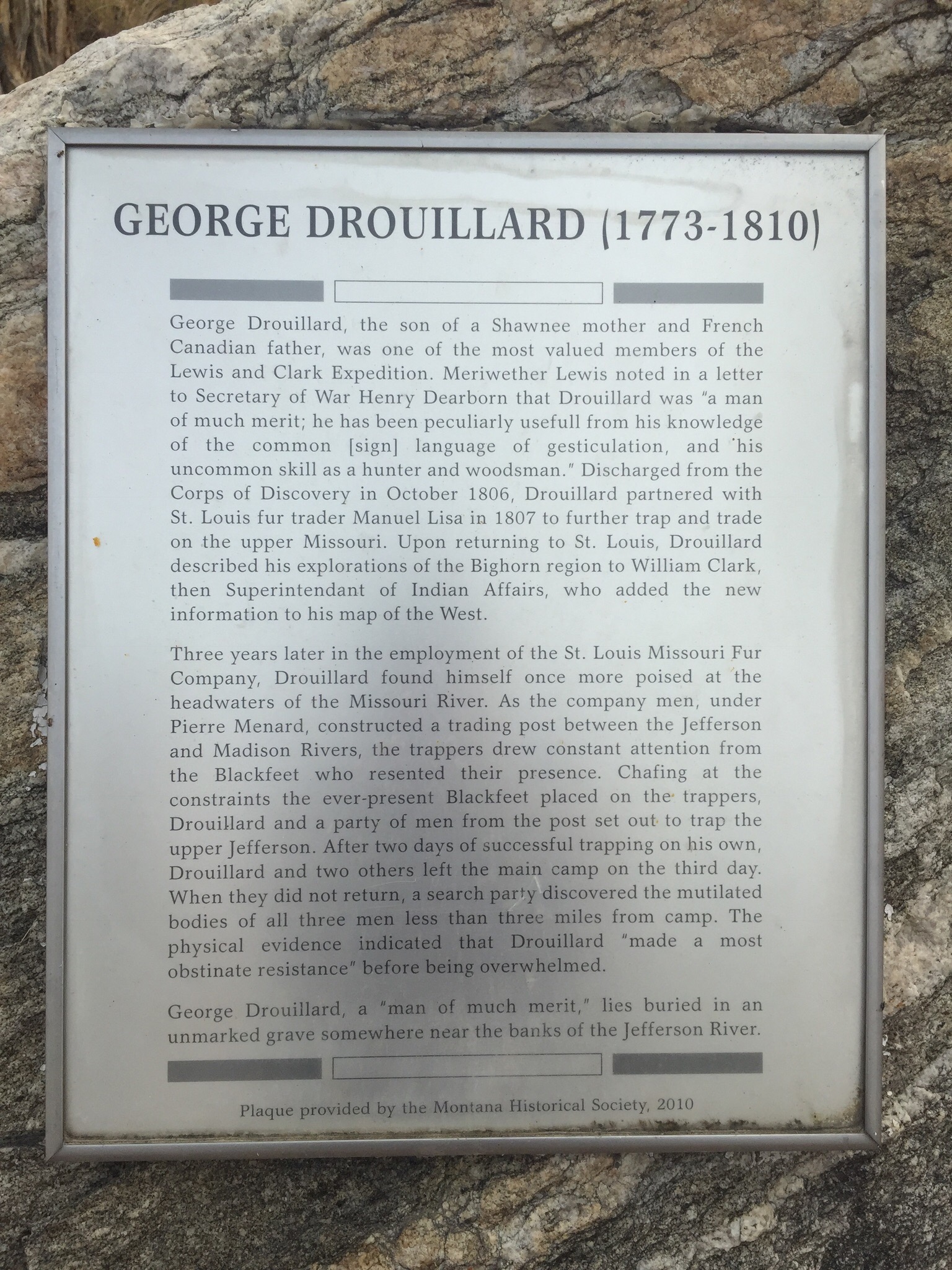
George and two other companions were ambushed while they were checking their traps along this stretch of the Jefferson.  He was working for the St. Louis Missouri Fur Company at the time.  He had been warned about going out without a larger group of men, but he felt he was too much an Indian himself to be caught. According to one account, the two men with him were lanced… but Drouillard met a much more gruesome fate.  When a search party found them later, George had been hacked to pieces.  Perhaps this was in response to a killing of two Blackfeet by him and Meriwether Lewis four years earlier, after the Indians had stolen their horses.  No one knows for sure, but his death sent a message that the Blackfeet didn’t want white men trapping fur in their territory.  George Drouillard was buried in an unmarked grave on the river bank.
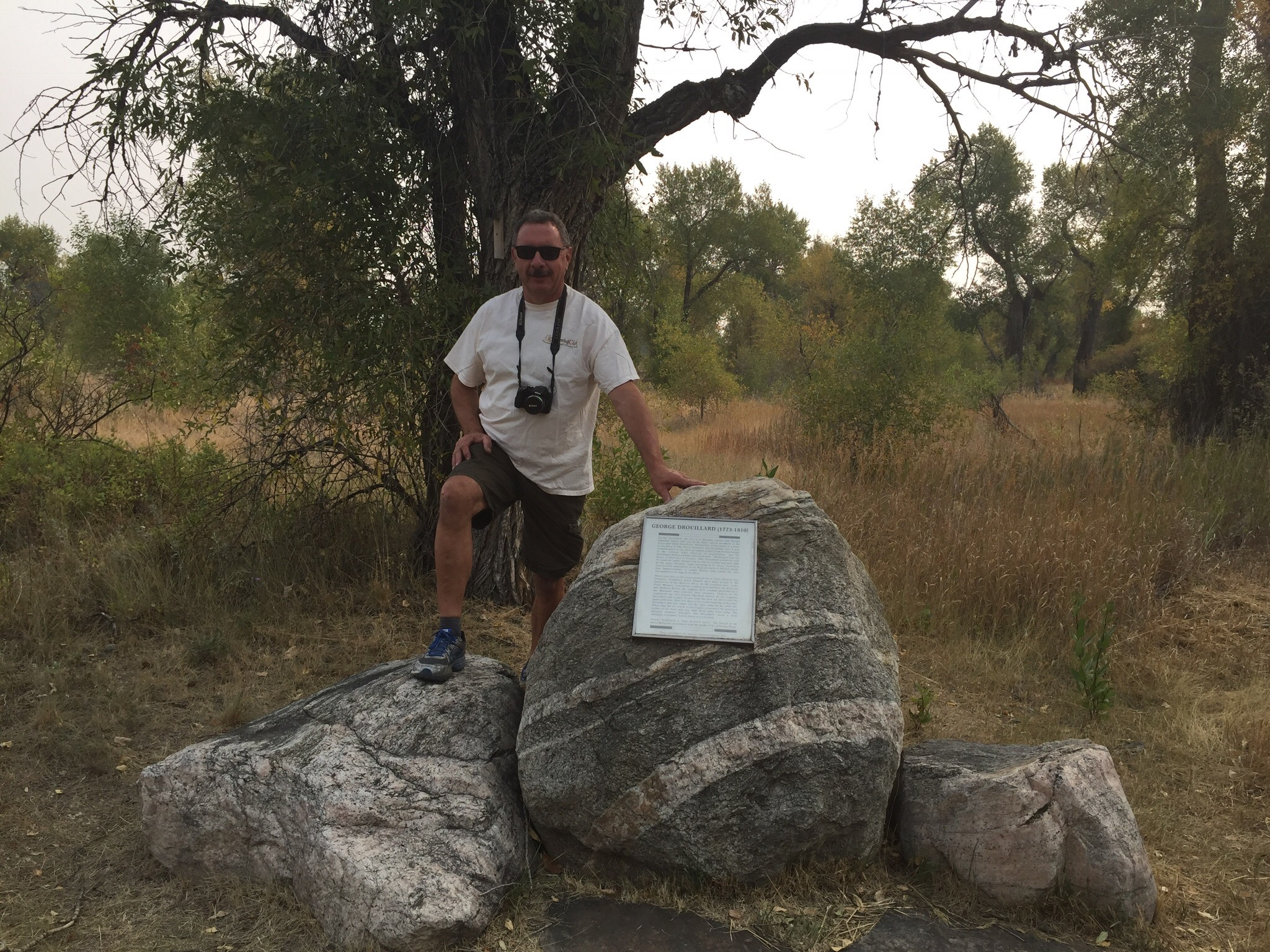
A small memorial marks the approximate location where he met his fate.  
We paid our respects and headed to the other side of Three Forks to find the headwaters of the Missouri River, which we will touch on in another post. 

It was really interesting for a history buff like myself to find this bit of information.  I’m definitely going to journey back along the other branches of my family tree to see what I can find.  What connections are in your past?  We would love to hear about them.  Who knows…maybe we are cousins!

———-

A biography of George Drouillard and other interesting searches on our exploRVistas Amazon link can be found HERE.
———-

explorRVistas is a participant in the Amazon Services LLC Associates Program, an affiliate advertising program designed to provide a means for sites to earn advertising fees by advertising and linking to Amazon .com. Shopping through our link does not add anything to your cost, but it does help support this blog. Thank you for shopping through exploRVistas!
Happy Trails! Until We Meet Again, Oregon!

Labor Day officially ends our time in Oregon, as our work volunteering for the state parks is complete.  This summer has exceeded our wildest dreams!  Coming in, we weren’t totally sure what to expect…we just knew it would be new and challenging.  When we finished up as interpretive hosts at Heceta Head Lighthouse at the end of June, we headed east to Prineville Reservoir State Park and our two month stint as interpretive hosts here.  We knew that they had an amplitheater, a big telescope, a lake, and that they were in a high desert climate.  Looking at Google Maps failed to reveal the topography, but it did show a whole lot of brown. We had heard from others that the town of Prineville didn’t have much to offer, and that was going to be our anchor for food, gas, and the like.  Redmond and Bend were farther away, but still close enough to get to on our days off…and they have every service imaginable.  At the park, the manager who hired us was promoted and moved to a new location, so we weren’t clear as to what our position entailed.  As you can see, there was a fair amount of uncertainty for us as to what we would find here in Central Oregon.

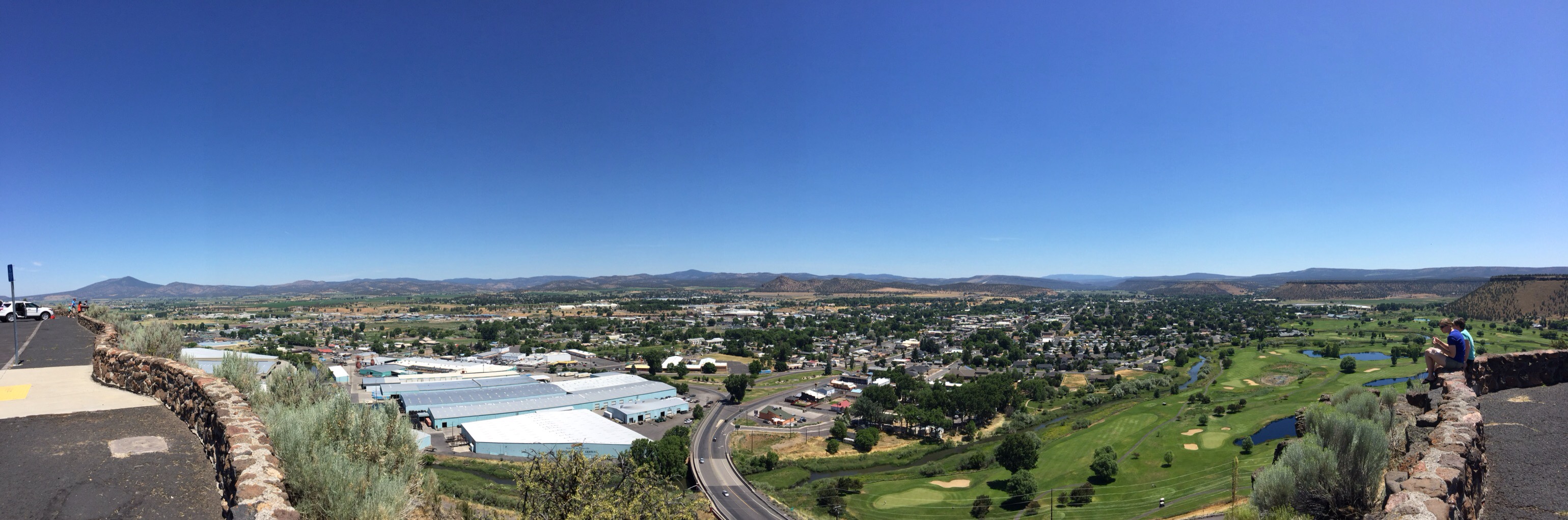
Once we crossed the Cascades and dropped into Sisters, the air dried out and the landscape changed.  The area around Redmond was somewhat flat, and there were a fair amount of sagebrush and juniper trees.  Heading into Prineville, we decided to stop at the Ochoco Wayside to use the facilities in our rig.

Wow!  The town of Prineville spread out before us in a giant basin.  We would later find out that the lowland is actually a giant 25 mile wide caldera from an long-extinct volcano.  The town is home to Les Schwab Tire Centers, Facebook’s first data center, and a large Apple data center.  Still, the town is a laid back western community, with the school mascot being the Cowboys.  Beyond the city, the Ochoco Mountains stretched as far as the eye could see.  Google Maps didn’t show that!

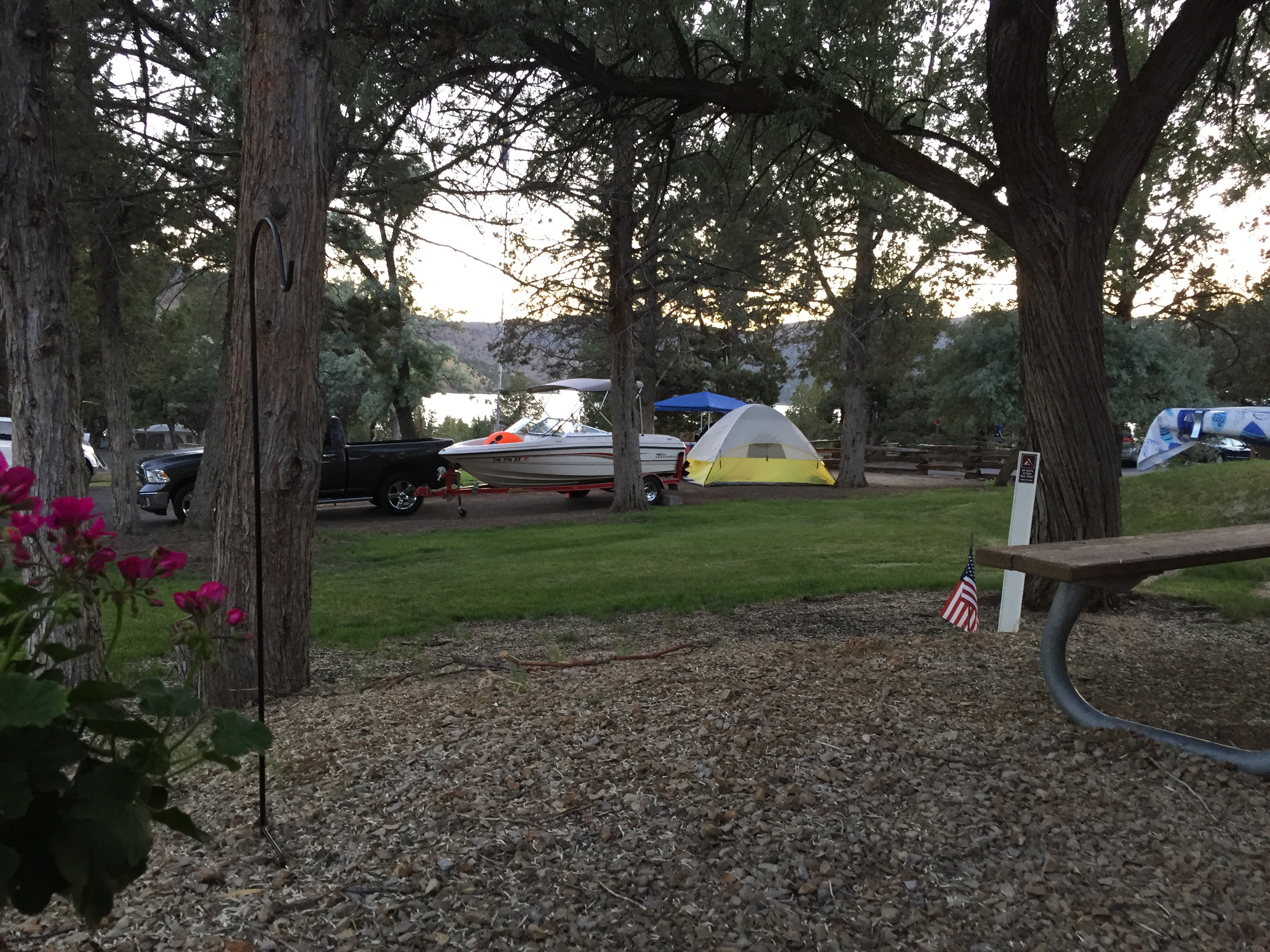
Driving 17 miles southeast of town, we came to Prineville Reservoir State Park.  What we thought was going to be a dusty campground was actually quite green.

What a delightful campsite!  Before too long, the park’s interpretive ranger, Mariah, came springing down the hill from her office and introduced herself.  She was very enthusiastic and fun, and we were pretty sure by her greeting that this was going to be a good experience. 

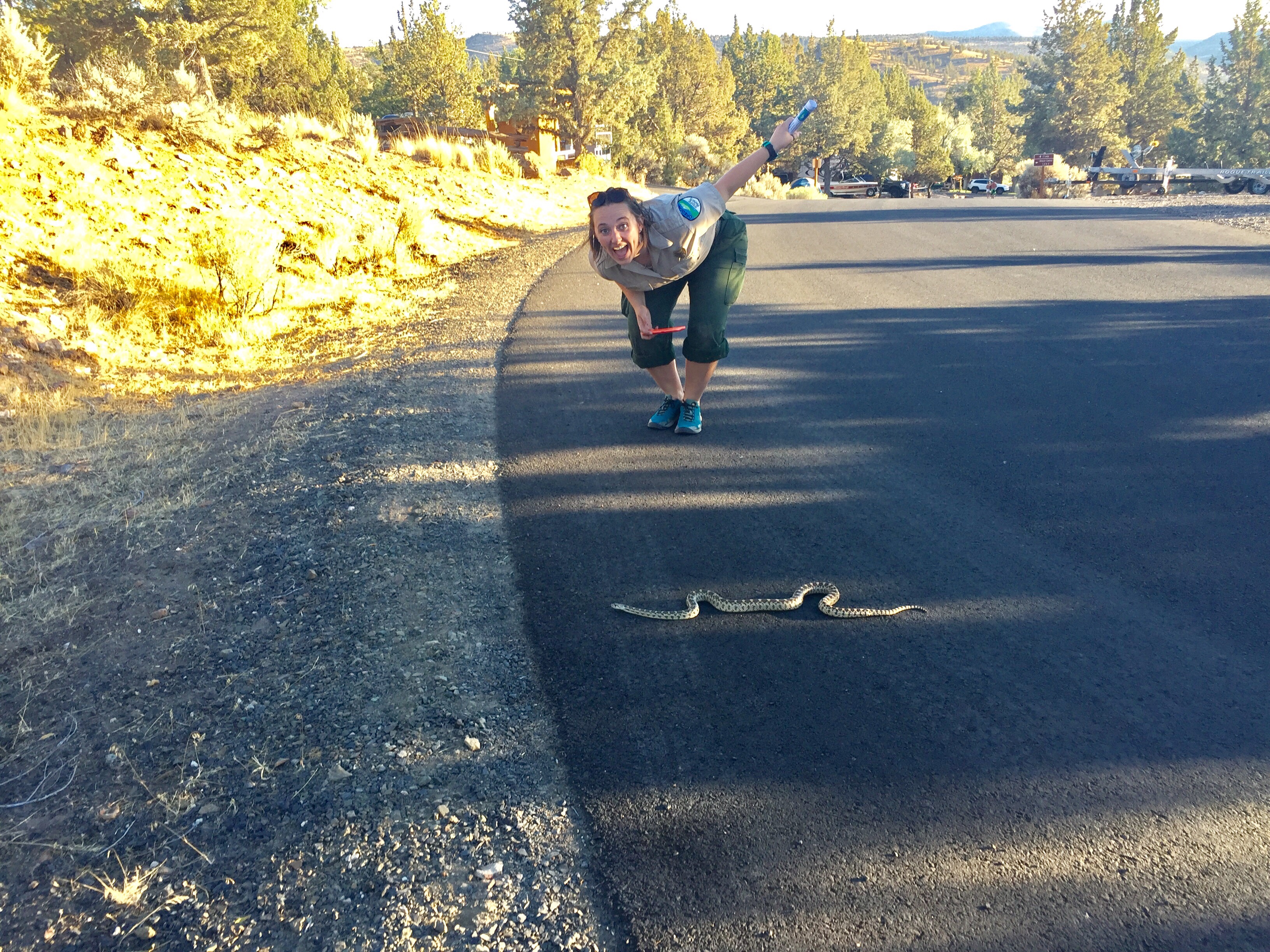
Well, the experience has been outstanding.  😊 Mariah is an absolute hoot…and not just because she thinks owls are “super cool”.  We have learned a lot of new things from her about birds, trees, fish, mammals, snakes, rocks….the list goes on and on.  That snake we were helping cross the road is a bull snake; non-venomous.  

She’s brought in several guest speakers, representatives from Search & Rescue, Wildland Firefighters, Crooked River Watershed Council, and an astronomer from Oregon Observatory.  As you can see, she’s always available to be example. 🙂

She even had the Redmond Smoke Jumpers visit a couple of times.  Here she is in her gear, ready to jump! Take note of the fact that it was over 100 degrees when this photo was taken! 

We had the pleasure of running the stargazing program, and using the park’s 16″ telescope.  The campers really enjoyed seeing Saturn, Jupiter, the Moon, Andromeda Galaxy, and Ring Nebula…and we enjoyed hearing their reactions.

The new park manager, Mike, has been extremely supportive and helpful. The park staff, including our supervising ranger Nate, has been fantastic to work with.  We are definitely going to miss them.

And what about Prineville itself?  Well it tuned out to be just super.  We used the library many times ($15 got us a three month membership!), we shopped at Ray’s Supermarket almost exclusively, fueled up at Union 76, ate at the Sandwich Factory and Crooked River Brewery several times, and visited the Bowman Museum…one of the coolest little community museums we’ve ever seen.

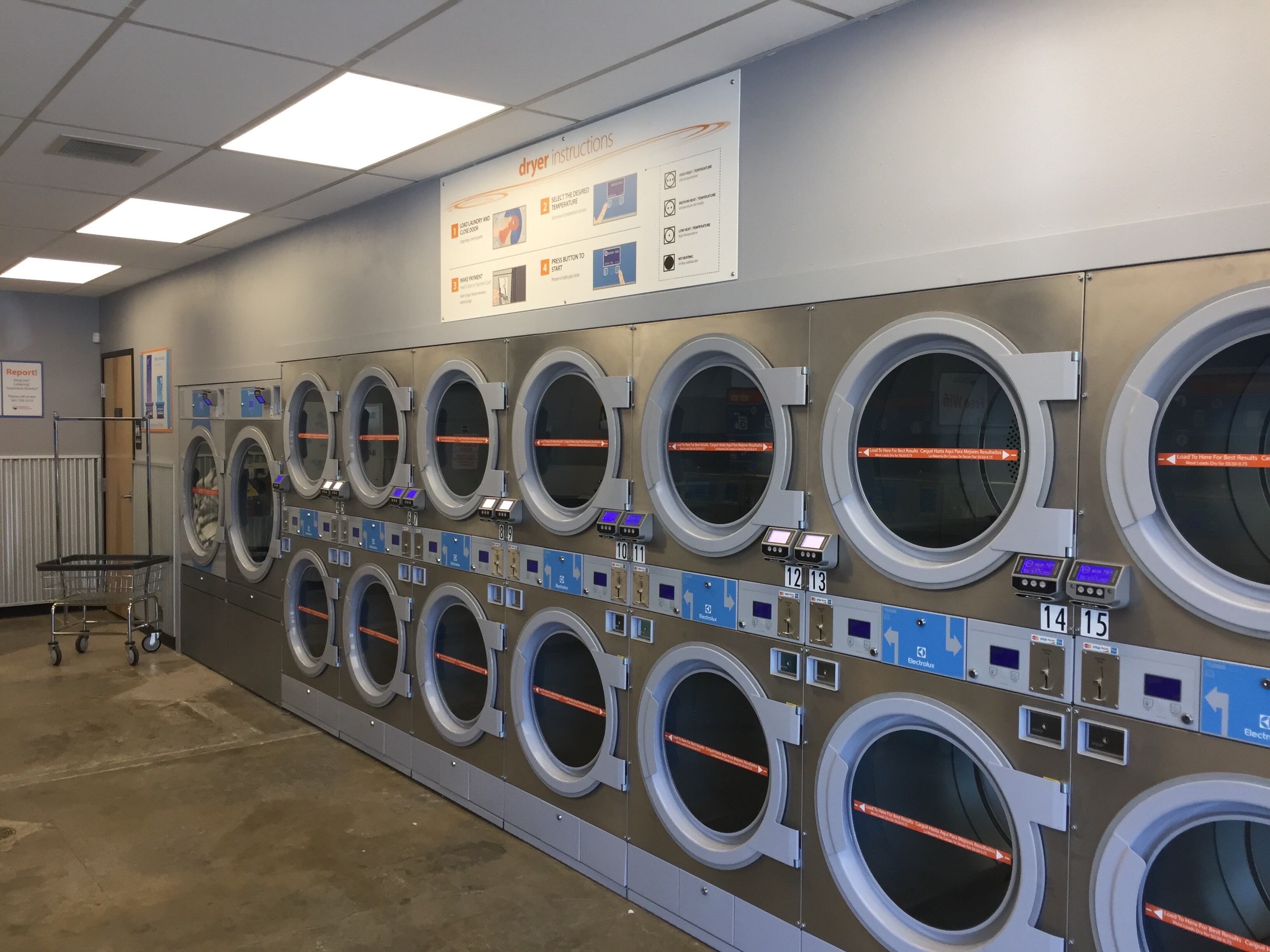
We found the brand new Express Eco Laundromat, which was amazing.  Turns out they have them all over Oregon.  Clean laundromats are hard to find; be sure to take note, fellow full time RVers.

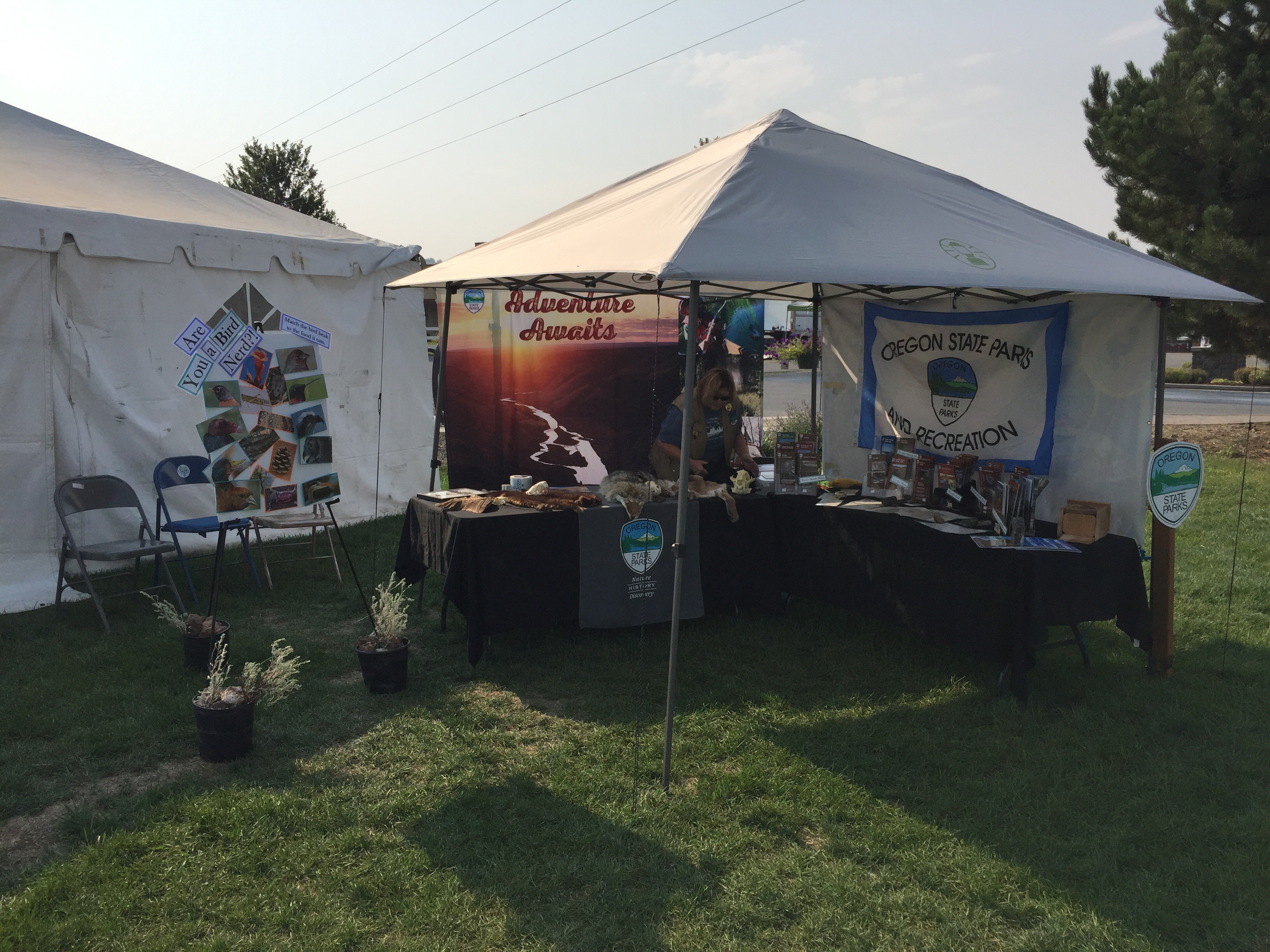
We were also able to represent the state parks at the Crook County Fair, which allowed us to interact with the community even more.  There are a lot of good, hard working people in Central Oregon, and it was fun to be a part of their neighborhood for a few months. 😊

We also had visits from Rick, Bob & Kathrun, and…

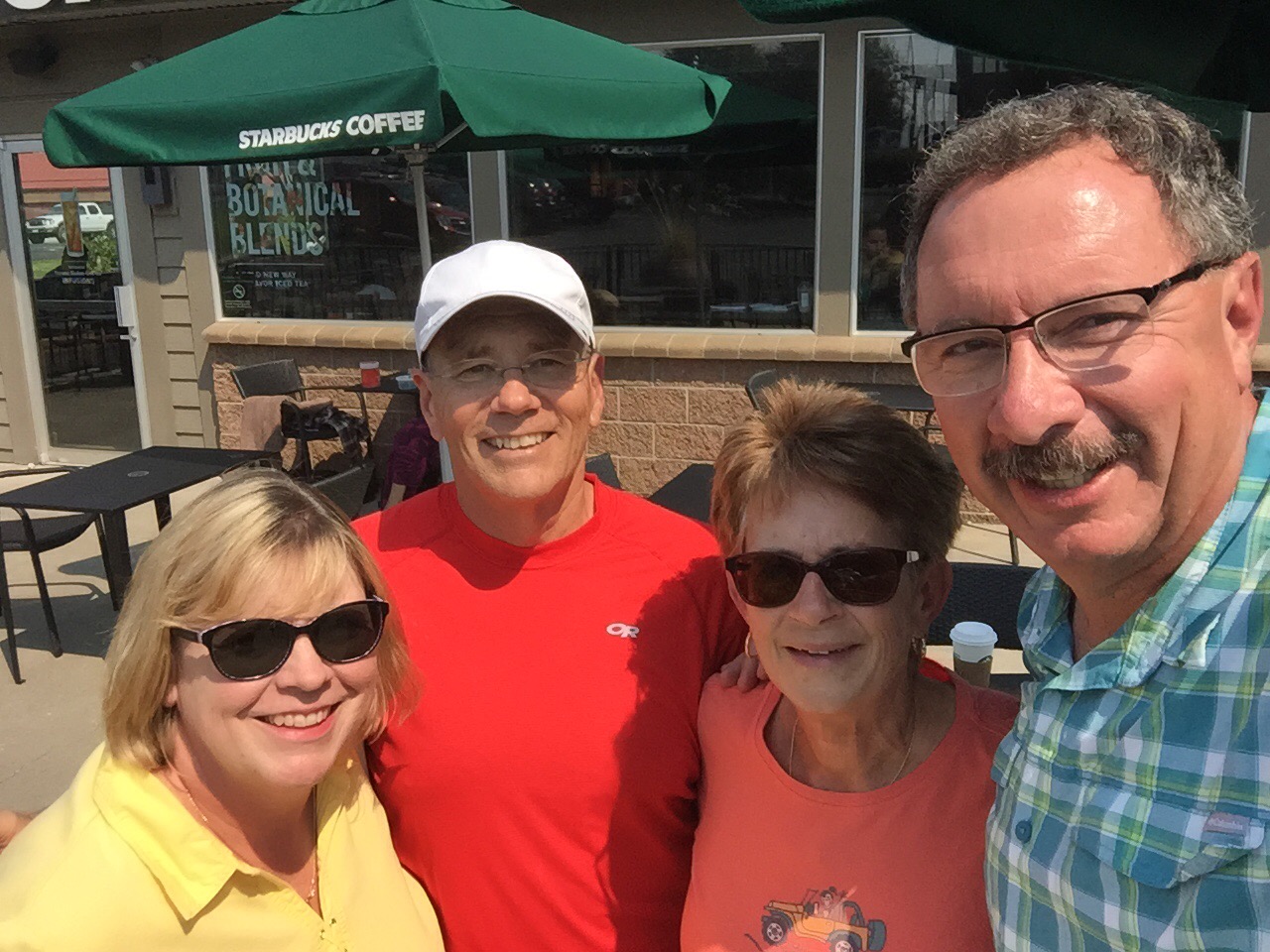
…we finally were able to meet up with John and Pam from Oh the Places They Go when our paths converged in Bend!  😊

Where does exploRVistas head next?  Well, we are hooking up and heading east across the northern states towards Michigan to see family, friends, and our doctors.  From there, we mosey south to winter in Florida.   We plan on taking our time along the entire route, so be sure to follow us to see what we find along the way! 
———-

Smokejumper: A Memoir by One of America’s Most Select Airborne Firefighters and other cool stuff on our exploRVistas Amazon link by clicking HERE.

———-

John Day Fossil Beds National Monument

The past couple of months could be labeled as ‘the summer of really old stuff’ for us.  Whether it’s looking at galaxies or nebulae through Prineville Reservoir’s telescope that are thousands of light years away or hiking among rocks that are even older, we’ve seen things that are downright ancient!  Even being the history and science buffs we are, some of what we’ve seen has been hard to wrap our minds around.  One place in central Oregon that examines this prehistoric strata is John Day Fossil Beds National Monument.  Spread out over a wide portion of the area in three locations, this park is home to fossils that date back 40 million years!  It also is fortunate to have some of the most stunning scenery in the state.

During our time in Prineville, we made three separate visits to John Day Fossil Beds.  Our first two were to the Sheep Rock and the Painted Hills units.  One of those visits was with our friends Bob and Kathrun, on our way home from our day trip to Kam Wah Chung.  Our last visit to the park this past week was to the Clarno Unit, so we could get out to see some actual fossils embedded in the exposed rocks.

The Sheep Rock unit is where the Thomas Condon Visitor Center is located.  This was our first stop.

Mr. Condon was a minister/scientist in the 1800’s who believed that the church had nothing to fear from the concept of evolution, as it was simply God’s way of working.  During his time at The Dalles, Oregon, he was intrigued by the fossils that gold miners would bring him.  That led him to Oregon’s interior and the area surrounding John Day.

img_3032-2

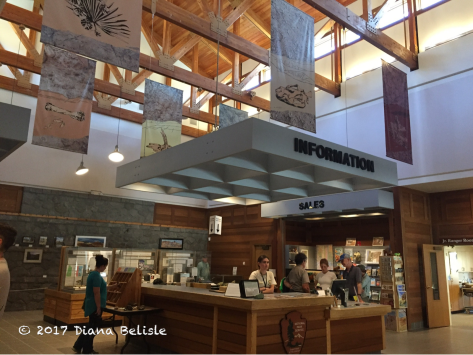
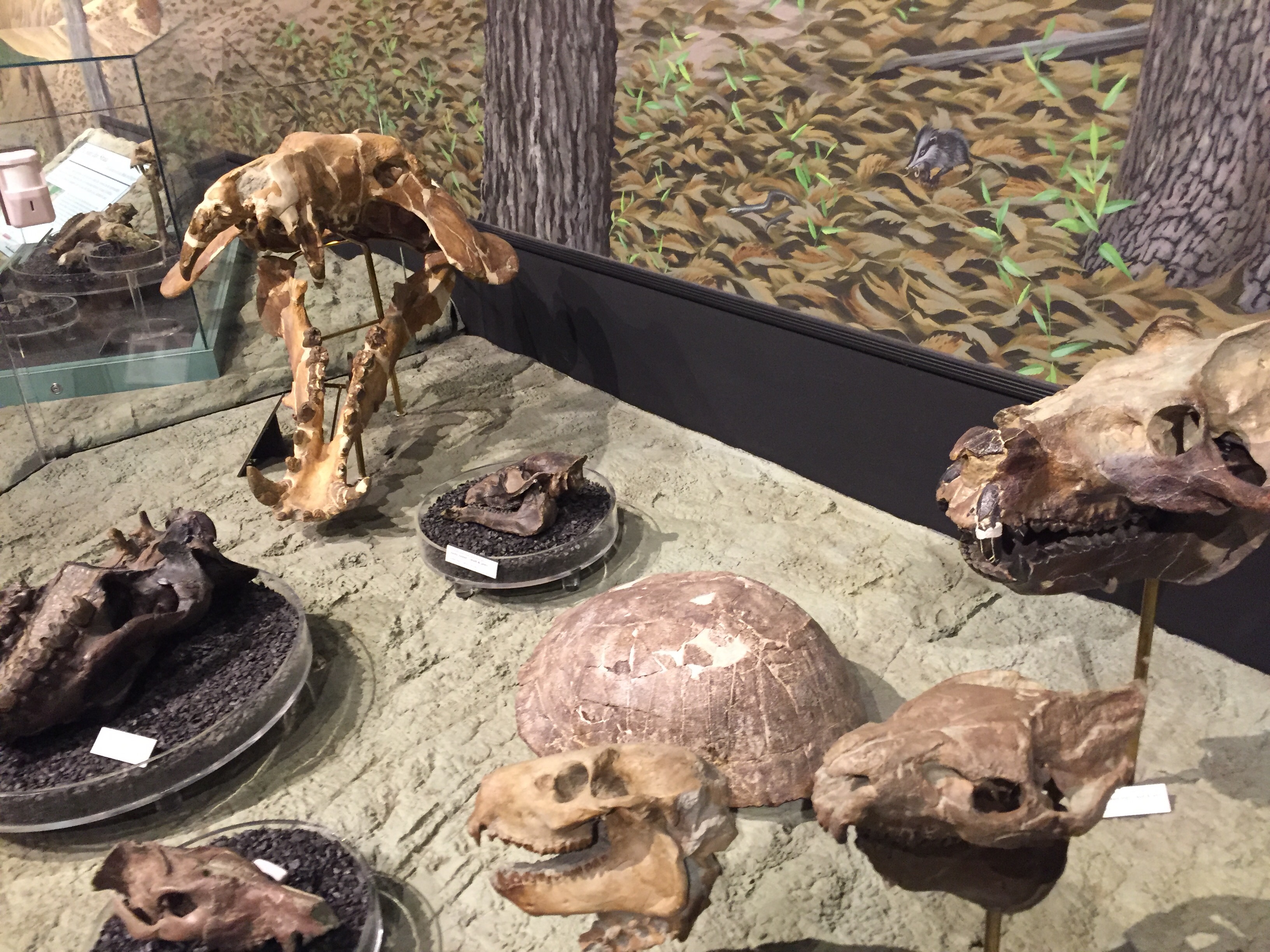
The visitor center named after him is outstanding!   The first thing we did upon arrival was to get our Junior Ranger books.  Looking through them, we knew this was going to be a difficult subject to grasp, as it spans so many millions of years.  We started through the gallery, which goes from the oldest fossils to the newest.  The floor is painted different colors to show what era or age you are in, which we found helpful.

To fully understand what happened to make this area such a treasure trove of fossils, you have to first know that this land was once the coastal area of Oregon.  The Cascade Mountains had yet to rise to the west, and the area around John Day was itself a volcanic region.  In fact, it was tropical, featuring versions of many of the creatures found in our current southern climates such as: giraffes, crocodiles, and hippopotamus.  Each volcanic eruption would bury more and more plants and animals, building layer upon layer in giant time capsules.  Over time, the volcanoes became extinct and the volcanic activity moved west.  As the current Cascades rose, the moisture from the ocean was somewhat cut off from the John Day region and the area became the high desert it is today.  Wind, rivers and rain eventually eroded the land, creating the massive valleys in the area and exposing millions of years worth of fossils, all stacked up like a giant birthday cake.  The lower the paleontologists looked on the hills, the older the fossils were!

As we worked through the Junior Ranger book, we began to understand how large of an area the fossil beds covered.  One of the ages actually extended all the way down to Prineville over 100 miles away, which we know is part of an extinct volcano.  The other thing we found extremely interesting was the timeline of the modern day horse.  They began as very small animals, evolving over time to nearly the size of today’s equines.  They were prevalent in both North America and Eurasia, but became extinct here around 11,000 years ago.  When the Spanish explorers came here in the late 1400’s, they unknowingly reintroduced them to the continent.

We completed the books and were sworn in as… Senior Rangers!  Wait a minute….what’s up with that???  Must be because my head was too big for the hat!

Once we left the visitor center, we explored the surrounding Sheep Rock area a bit.

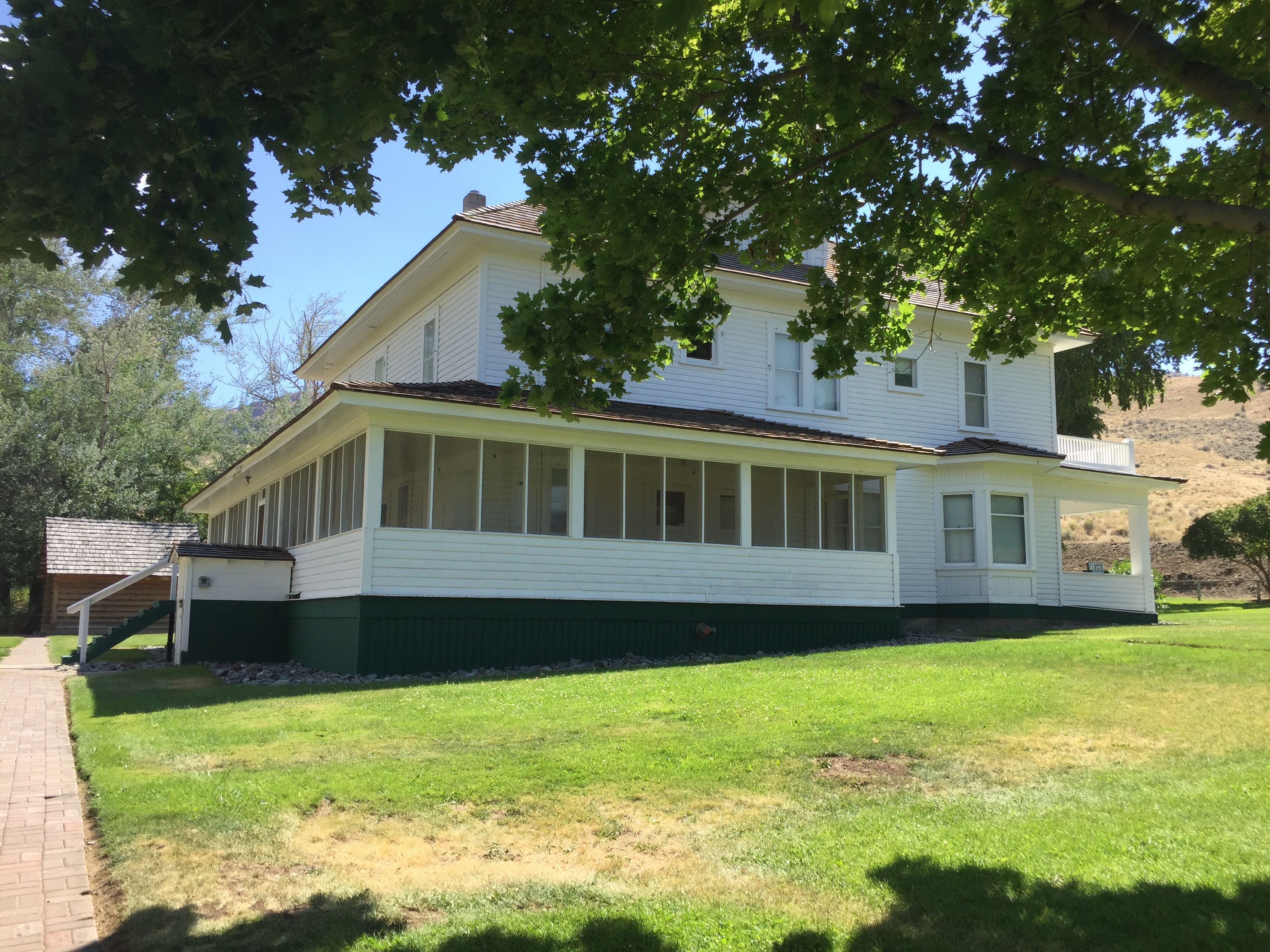
The Cant Ranch is just up the road, and is an interpretive site run by the National Park Service.  It was closed the day we were there, so we walked around the grounds.

How’s that for a view from your back porch?

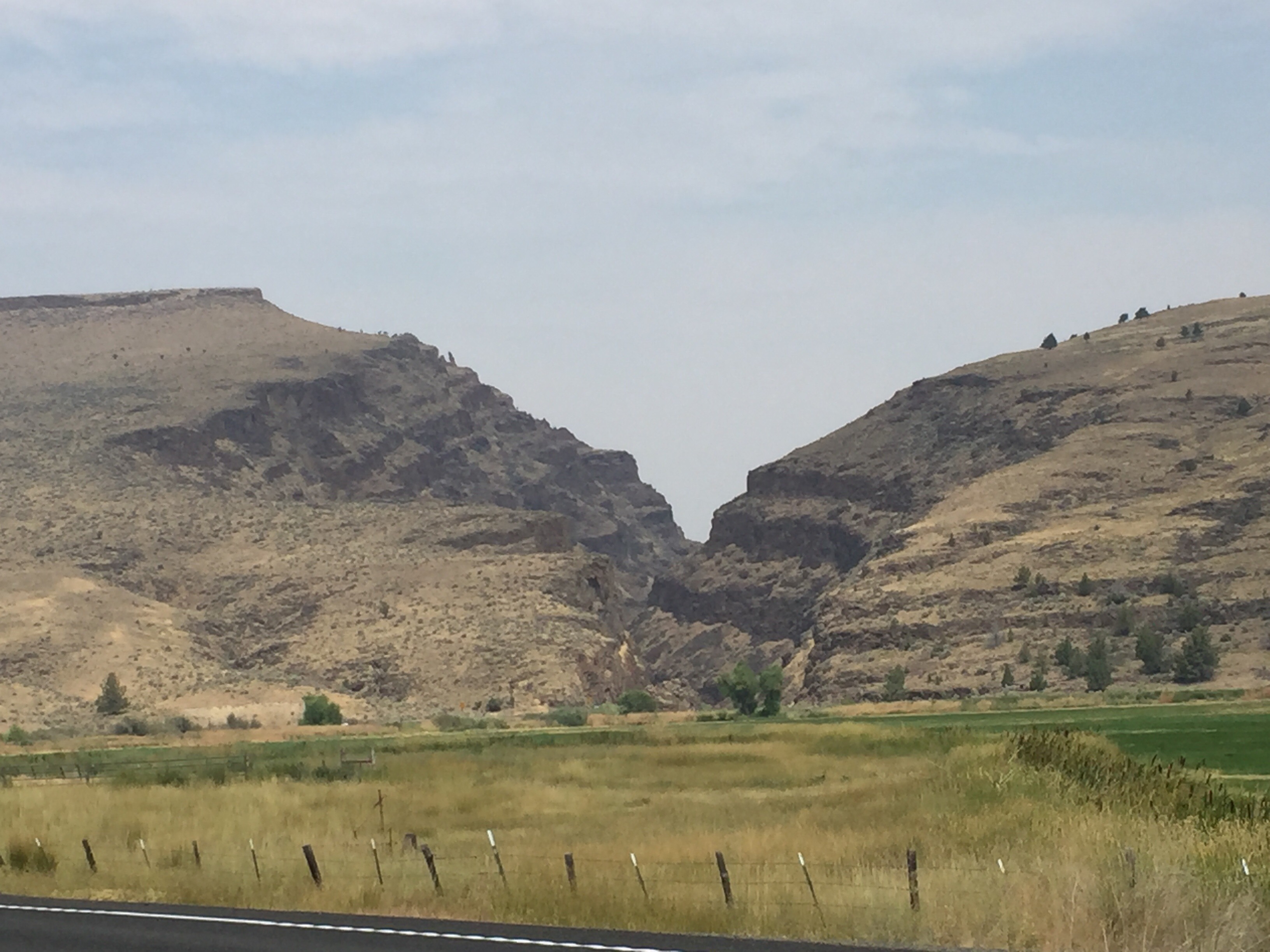
Just south of the visitor center is Picture Gorge.  Named after petroglyphs high on the gorge walls, this cut through the hills was created by the John Day River.  We drove through this with Bob and Kat, and it’s a great example of the layering in the area.

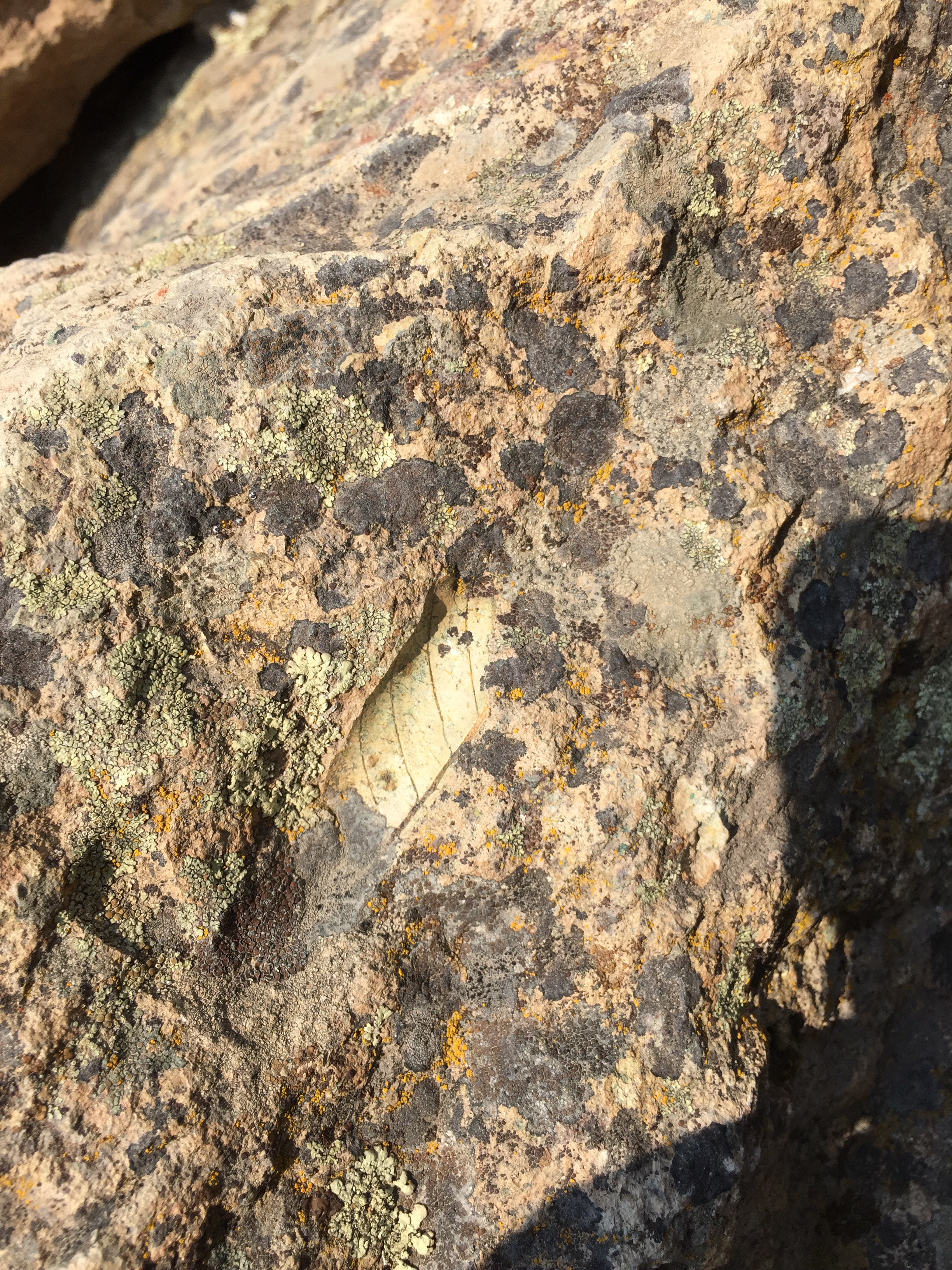
On our visit to the Clarno Unit, we took the 1/4 mile Fossil Trail and examined the plant fossils embedded in the rock.

download (3)

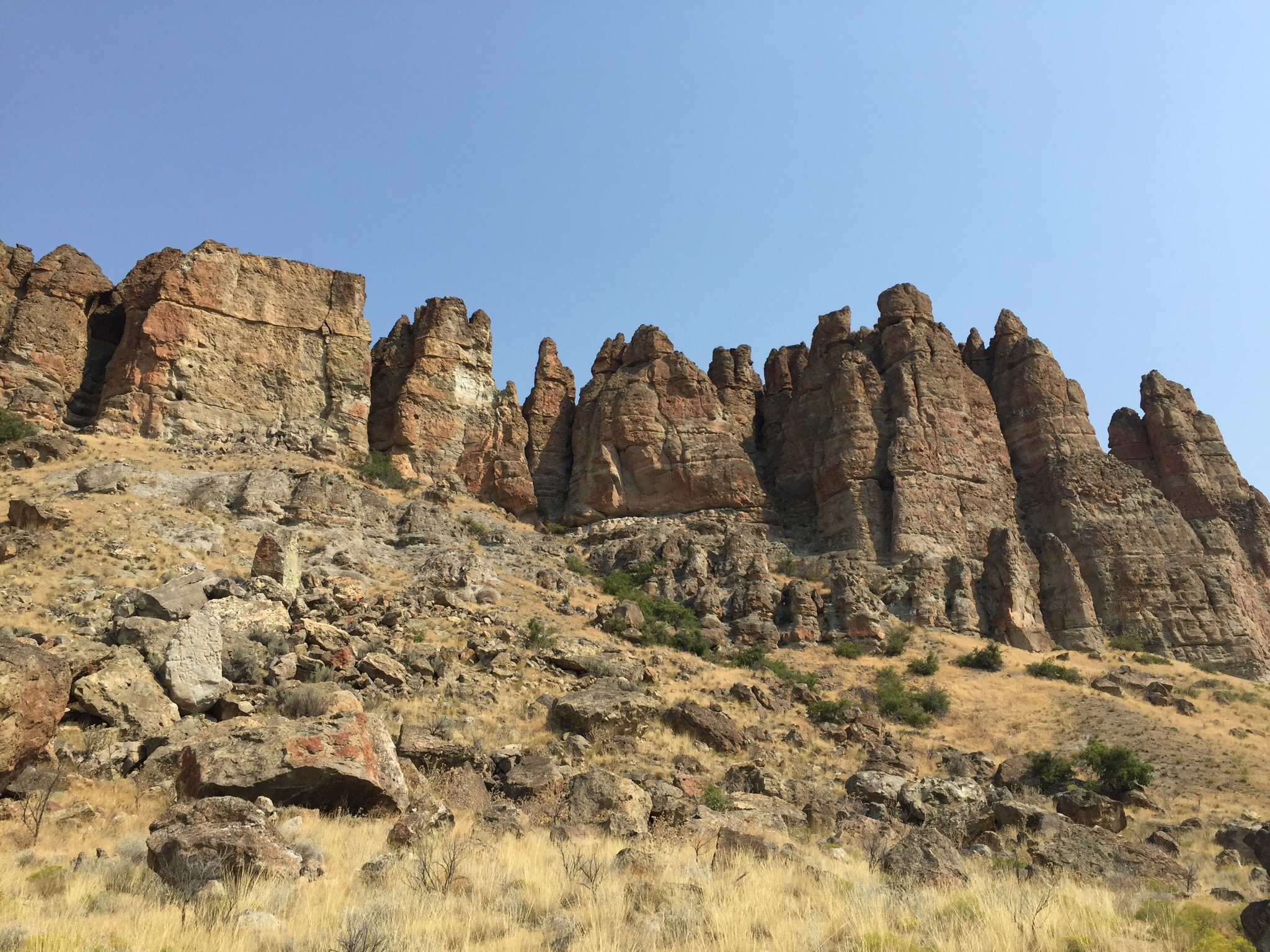
The hills across the road are all that’s left of the ancient volcano that created the palisades at Clarno.  Imagine that someday giants like Mt. Hood will be whittled down to this size.  Also note the evidence of the recent wildfires on the hills.  We saw miles and miles of charred land.

We saw fossilized leaves and sticks….

…a very-much-alive Western Fence Lizard…

…and a rabbit.  Good thing the volcano isn’t active, Mr. Bunny, or you could end up a fossil!

download (2)

With us examining every book and cranny of the rocks on the trail, that quarter mile took a long time!  The palesaides faced south, so the sun reflected off of them and the temperatures soared quickly.  We decided to save the other trails for another time.

The other place we visited, both with Bob and Kat and by ourselves, was the Painted Hills.

These hills were actually part of an ancient riverbed, with the alternating colors coming from different climactic periods.  As forces beneath the surface uplifted the soil, erosion exposed the layers we see today.

We really enjoyed exploring John Day Fossil Beds over the time we were in Central Oregon!  We just scratched the surface, that’s for sure. 😉

———-

A Closer Look at John Day Fossil Beds National Monument and other cool stuff by shopping our exploRVistas Amazon link HERE.

———-

explorRVistas is a participant in the Amazon Services LLC Associates Program, an affiliate advertising program designed to provide a means for sites to earn advertising fees by advertising and linking to Amazon .com. Shopping through our link does not add anything to your cost, but it does help support this blog. Thank you for shopping through exploRVistas!
The Great American Eclipse

Whether we were ready or not, the Great American Eclipse sped across the United States on Monday like a rocket. Astronomers knew for years that it was coming, and information was widely available as to when and where the moon’s shadow would be, right down to the second.  Our location at Prineville Reservoir State Park was 8 miles south of the edge of the path of totality, so we knew we were going to need to get north.  The further towards the centerline of the path we were, the longer our experience would be.  Diana and I used Xavier Jubier’s interactive Google Maps overlay from eclipse2017.org to scout out numerous locations to view it, which turned out to be an invaluable tool.  Predictions of massive crowds had us wondering where we be able to get to, along with the unknown of the smoke from wildfires possibly blocking our view.  It would all need to be decided at the last minute.  We would have to accept and live with our choice, as the eclipse waited for no one.

The first indication of concern for us came last Wednesday morning.  We drove north from the state park into Prineville to do laundry and to grab a few last minute items from the grocery store.  The parking lots were packed with out-of-state cars and RVs, and US-26 was jammed heading towards the festival east of town.

Over 30,000 people were expected at that gathering, and that prediction appeared to be coming true.  Later that afternoon, the road had to be closed at the east edge of the city, and traffic was rerouted nearly 100 miles out of the way to get the festival site.  With that being said, Google Maps was still showing Madras…ground zero for the best possible weather, according to NASA…to be traffic free.  As the weekend approached and the folks at the festival settled in, traffic in Prineville subsided.  We decided to stop back into town on Friday, and the supermarket was eerily quiet.  Shelves were full and the extra employees were being sent home.  No one knew what to expect, and it was interesting to see how everything was playing out.  

Back at the state park, things became really strange. Tuesday night we went to bed in a nearly empty campground, only to awaken Wednesday morning to it being completely full.  By noon, it was empty again, only to refill again that night.  Thursday morning, almost our entire loop packed up and headed out at 5 AM to move to locations in the path of totality. Over the rest of the weekend, the fully reserved park slowly began to see guests come in, although it never completely filled.  Many people who had made camping reservations months ago stayed home, perhaps fearful of the expected hoards of visitors. The people who did show were here for the eclipse….

…and were dressed to prove it!  On Saturday night, we had around 100 guests show up at the stargazing program at the observatory, and we treated them to views of Jupiter, Saturn, Ring Nebula, and the Andromeda Galaxy.  Nothing more fun than hearing “Whoooaaah” when a person looks through the eyepiece to actually see something they’ve only heard about in the past. 

Finally, the big day arrived.  Diana set the alarm for 4 AM, and we were on the road at 5.  From our campsite, Diana spotted Orion’s Belt, something we had not seen since last winter.  The skies looked clear, so we were hopeful.  Google Maps was showing  clear roads across Oregon, so we headed north.  As we crested the ridge between the state park and town, the breaking dawn revealed smoke plumes from wildfires in the Cascades, so we stopped to consider our options.  Smoke appeared to be in the direction of both Madras and Mitchell, so we continued into Prineville to re-evaluate the situation.  Once in town, we made the decision to go to a new subdivision perched above the city, a spot that would give us an unobstructed view and 70 seconds of totality.  We parked along a curb and watched as Prineville woke up.  We were plenty early, but that was just fine.

Slowly, cars pulled in and local residents walked from their homes and gathered near the school.   The higher the sun rose, the more confident we were that the smoke would not be an issue at our location.

While there were several groups of people scattered around the area, it never became crowded.

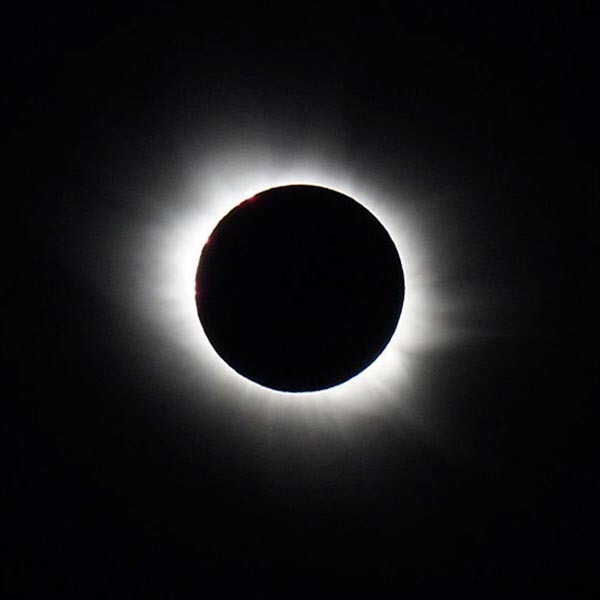
I set our camera on a tripod pointed west, in hopes of catching a video of the incoming shadow.  With our eclipse glasses, we noticed First Contact at 9:06 AM.  Over the next hour, we watched as the moon slowly nibbled away at more and more of the sun.  We set an alarm for 10:17 on my iPad, giving us a three minute warning before the beginning of totality.  It was shortly after that point I started the video.  A few notes/apologies prior to viewing:  I inadvertently had the camera set to autofocus, so the image comes in and out of focus ever so slightly.  You will hear me mention “the waves”, a reference to the wavy shadow bands on the sidewalk.  I tried to record them with my iPhone…unfortunately, they didn’t show up in the video. Just prior to totality, notice the bird fly away from the incoming shadow, along with the street light coming on.  Also, you will hear our reactions, along with the others around us.  Despite all of the predictions of what we were going to see, nothing could possibly prepare us for the emotions we felt.  After months of planning, for us to be able to witness our moon and our closest star align was, quite simply, mind blowing.  So without further adieu, we present our video:  Click HERE.

It happened fast and was over before we knew it. To hear the others in the distance just added to the joy of the event.  😎   One other thing we noticed afterwards was the birds were chattering like crazy all afternoon.  It’s as if they were all talking to each other about what they had just seen.  Just amazing!

The Great American Eclipse of 2017 is something that will be long remembered.  If anyone missed being in the path of totality, don’t fret.  We all get another chance in 2024.  Do whatever you have to do to get in the path of that one, as it will be worth any amount of effort required to do so.  Here’s hoping our lives align with the moon and sun so we can all see it next time!

———-

Check out Tracy and Lee’s post showing a video of the shadow bands, along with some great photos!

———-

Free Prime video “Totality: The American Eclipse” and other great items available on our exploRVistas’ Amazon link by clicking HERE.

———-

explorRVistas is a participant in the Amazon Services LLC Associates Program, an affiliate advertising program designed to provide a means for sites to earn advertising fees by advertising and linking to Amazon .com. Shopping through our link does not add anything to your cost, but it does help support this blog. Thank you for shopping through exploRVistas!

Kam Wah Chung

If there is anywhere that Diana and I gravitate towards in our travels, it’s places with historical significance.  We recently found such a place a couple hours east of Prineville.  On August 7, our friends Bob and Kathrun accompanied us to the town of John Day, Oregon and a little building in a city park called Kam Wah Chung.

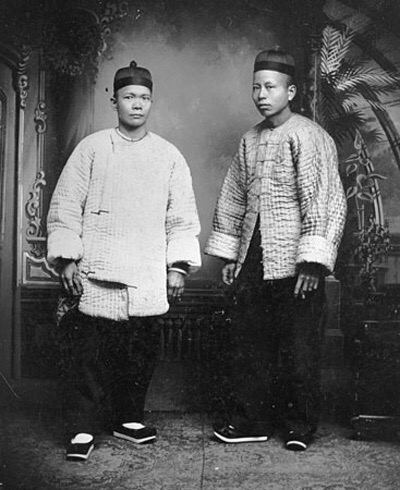
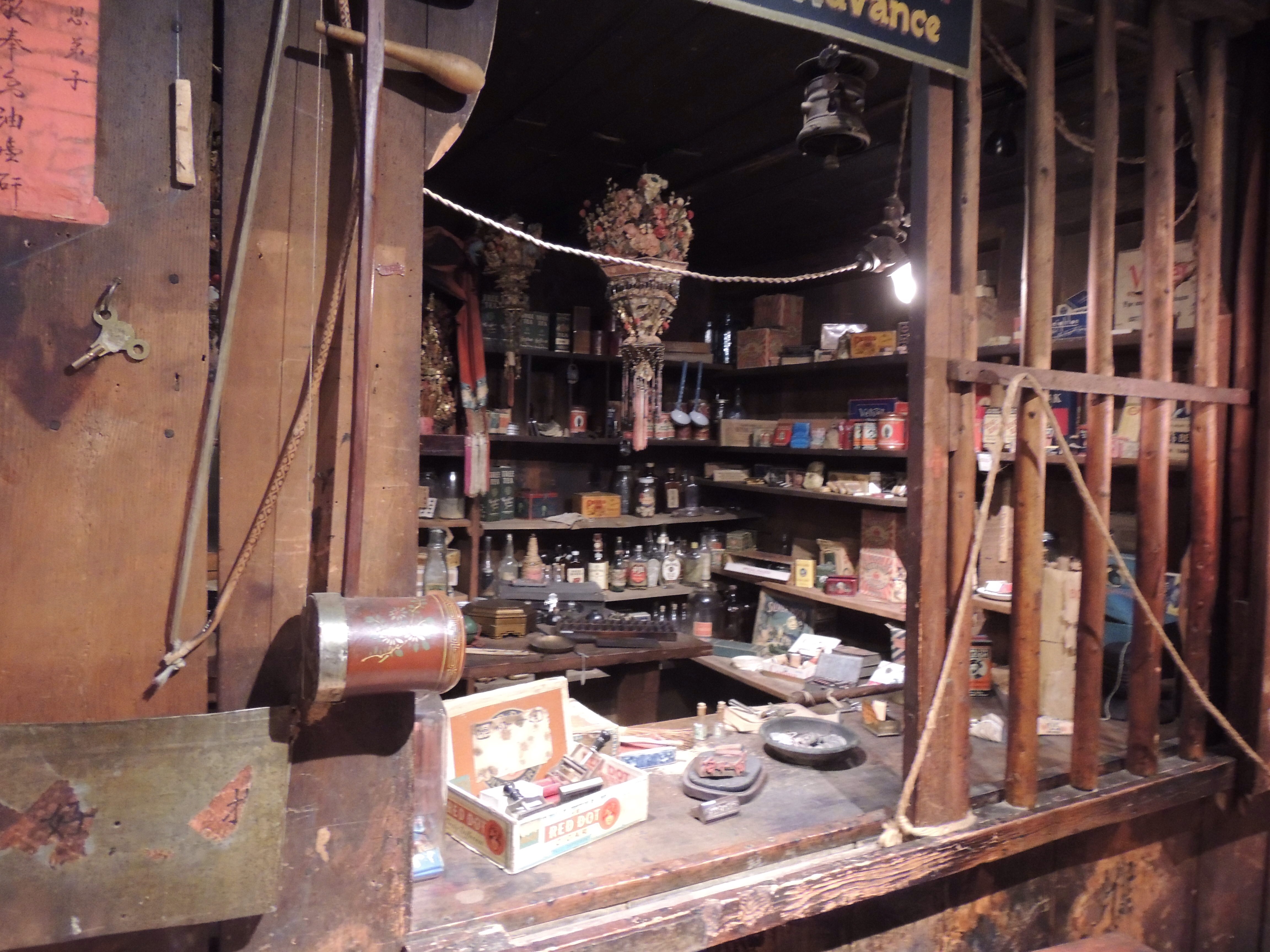
Back in the 1880’s, the town of John Day had a bustling community of Chinese laborers who worked in the local mines.  Kam Wah Chung & Co. was the gathering place in that area of town, serving as both a general store and medical clinic.  

The owners, Lung On (the outgoing entrepreneur) and Ing Hay (the more reserved doctor) survived racism and the loss of their Chinese clientele, as the mines closed and the workers moved elsewhere. They were eventually accepted as a part of the surrounding Anglo-Saxon community.  Towards the end of their lives, their customers and patients were mostly white.  Doc Hay was the last to go.  He locked the door in 1948 after breaking his hip, fully intending to return.  He ended up in a nursing home in Portland and passed away 4 years later from pneumonia.  Along the way, he had deeded the building to the city to be preserved as a museum, but the town somehow lost track of those details.  They planned on expanding a city park that surrounds it in 1967 and were considering having the building torn down when they discovered the deed and Doc Hay’s wishes.  When they opened the door, they were transported back to the 1940’s, as everything from the day the doctor left had remained as it was.  The city realized that preserving it was too much of an undertaking for them, so they transferred ownership to the state.  Today it is an Oregon State Park Heritage Site.

The day we visited, the volunteer host opened the door for us and said “Welcome to the 1940’s!”  We stepped inside to a dimly lit, magical time capsule of a place that held pieces of the past that we could relate to.  Many of the items were things we had seen in either our grandparent’s homes, antique stores, or museums.  

The unique thing here was that all of the items were as Doc Hay had left them, right down to the oranges on one of  the little altars he had scattered around the store.  Yes, those are real oranges.

Lung On ran the general store portion of the operation.   Most of the items found here were U.S. made goods.

I found it interesting that Del Monte is still using the same basic label 70 years after this can was placed on this shelf.

While Doc Hay used mostly Chinese herbs for his medicines, he also incorporated local items.  Here is Kathrun’s photo of a bear paw in his apothecary, exactly as he left it.  Behind it are over 500 herbs from China, many of which are still being identified today.  The week we visited, a delegation from China was coming to help with that process.  Also note the mid-sized milk bottle on the shelf with the black contents.  That’s a dried up rattlesnake.

Note how his prescriptions used beer bottles for measurement.  Remember, his clientele in the 40’s were mostly local working men.  Most of them didn’t have measuring cups, but they all had beer bottles!

And check out this 1942 calendar from an importer in San Francisco.  It’s interesting to see the Chinese version of a pin-up!

Speaking of calendars, you just have to love this one Diana noticed from a local bank.  They are very straightforward as to their thoughts about money!

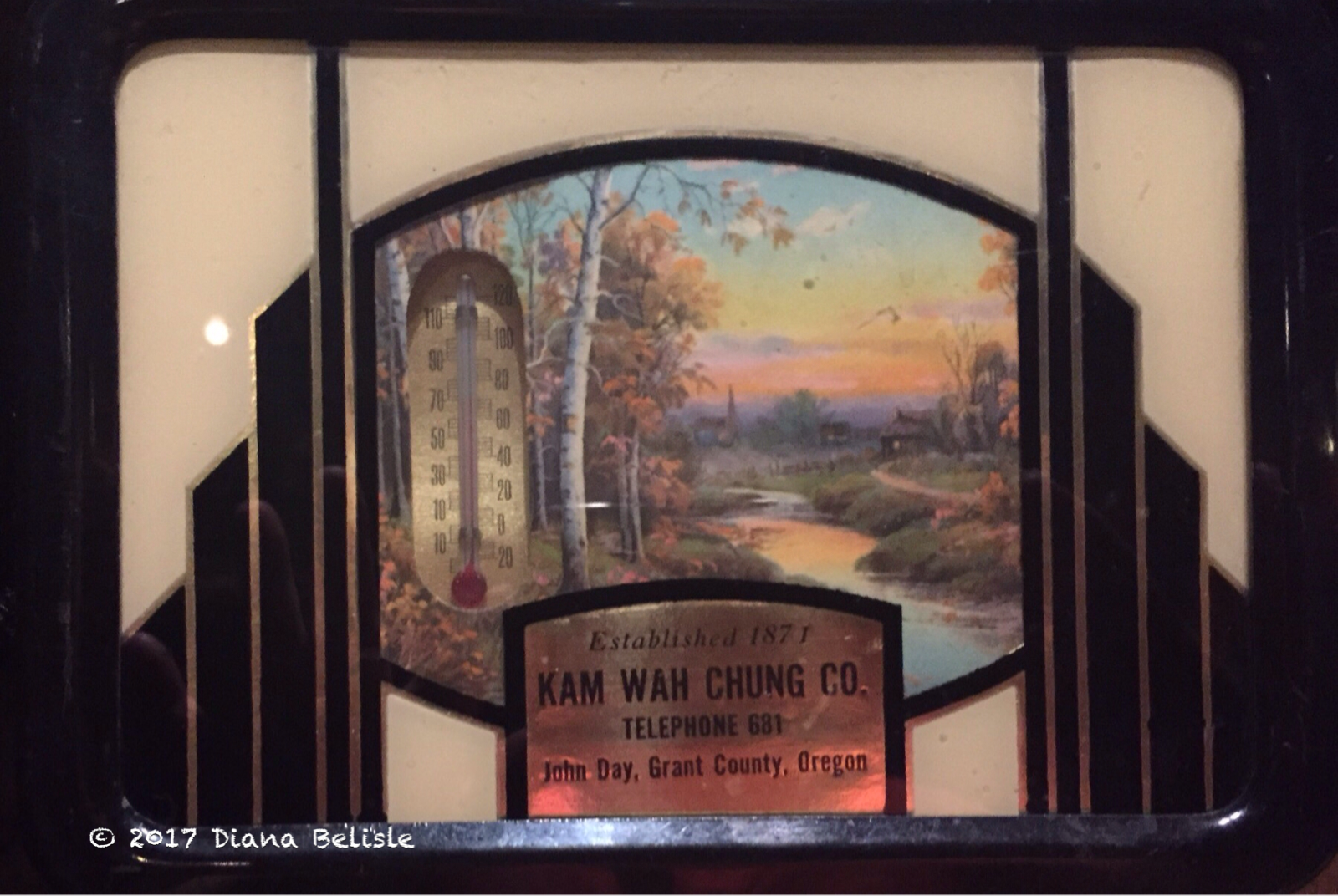
She also saw this thermometer.  Note the telephone number….no area code back then, and only three digits long.  The scene in the background almost looks like a work of Thomas Kinkade, except he wasn’t born yet when this was produced.

Check out the label on this 3 in 1 Oil.  The current bottle proclaims that it cleans, lubricates and prevents rust, just as it did back then. The unique thing about this label is the listing of all of the things it can be used on.  Also note how the solids in the oil have settled to the bottom of the container.  Oh, and the price…fifteen cents.  😊

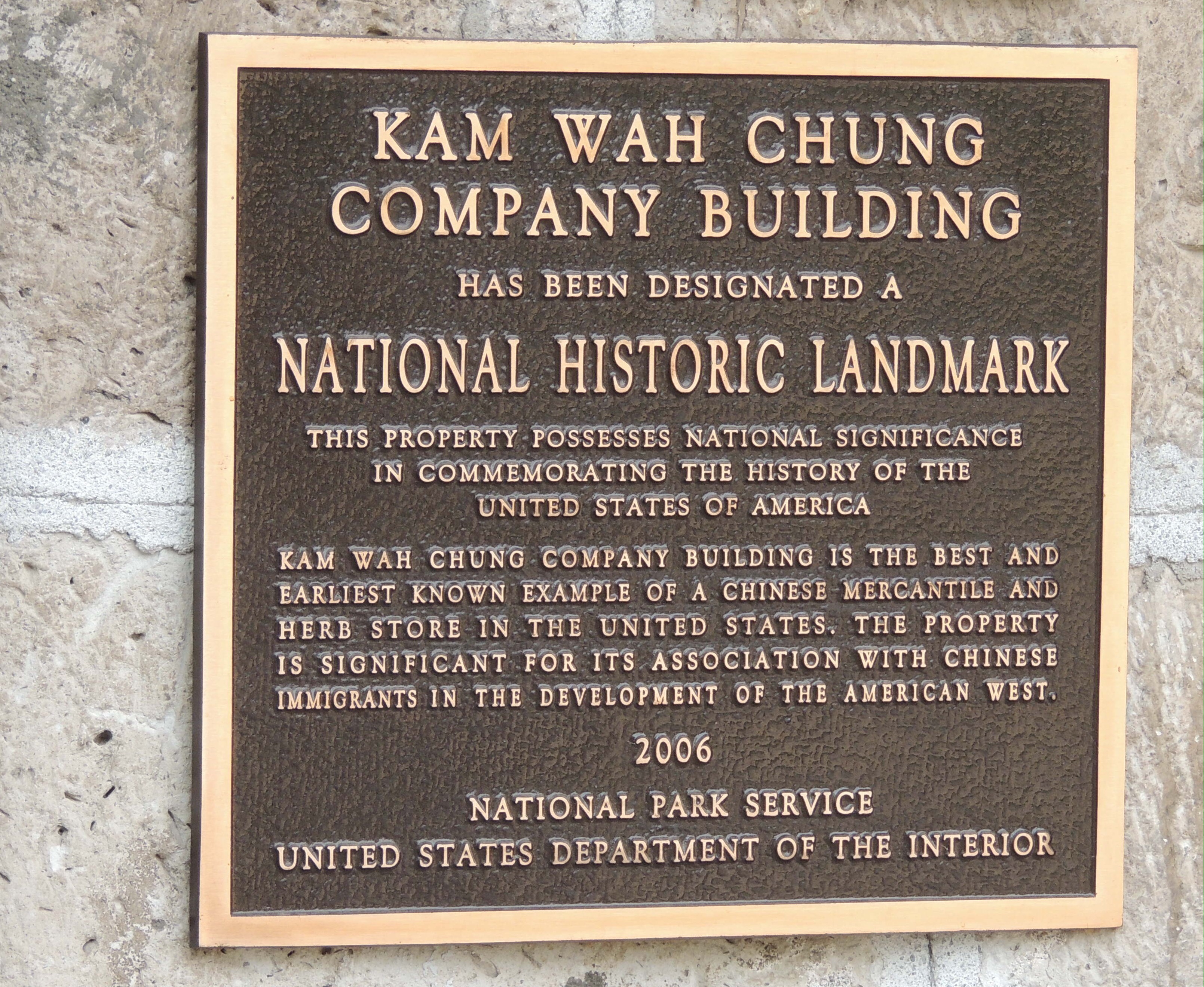
Kam Wah Chung is listed on the National Register of Historic Places.  The Oregon State Park website for the location boldly proclaims “If you haven’t seen this place, you need to go”…and we couldn’t agree more.  If you are in eastern or central Oregon, this gem is a must to put on your list of places to visit.

———-

Free Kindle edition of Anecdotes and Antidotes: 25 years at Kam Wah Chung and many other items available on our exploRVistas Amazon link by clicking HERE.

———-

explorRVistas is a participant in the Amazon Services LLC Associates Program, an affiliate advertising program designed to provide a means for sites to earn advertising fees by advertising and linking to Amazon .com. Shopping through our link does not add anything to your cost, but it does help support this blog. Thank you for shopping through exploRVistas!

.

Mount St. Helens

“Vancouver, Vancouver…this is it!”

Those were USGS volcanologist David Johnston’s last words from a ridge overlooking Mount St. Helens when it erupted on May 18, 1980.  He was a mere 6 miles from the crater.  The pyroclastic flow….hot gases and rock…took less than a minute to overtake his position and sweep him away.  He was never found, although pieces of his trailer and backpack were.

Besides him, 56 other people died…but thousands others were saved by Johnston’s warnings of an impending eruption.  

Harry R. Truman was another of the volcanos’ victims.  He had owned the Spirit Lake Lodge since 1928, which was located just 1 mile from the base of the mountain. He refused to heed the evacuation warnings, choosing to believe that the increasing earthquakes would settle down. The building, lake and him are buried beneath 150 feet of rock from the blast, and a new Spirit Lake formed at a higher elevation above the location.

Diana and I had visited Mount St. Helens back in 1996, just 16 years after the 1980 eruption.  At that time, thousands of acres of surrounding landscape laid barren.  The closest approach we could make by road was the Coldwater Ridge Visitor Center, a good two miles back from Johnston’s campsite.  We had heard that they had built a new visitor center since then, so we definitely wanted to get back and see it while we were here in Oregon.  We also wanted to see our friends Lee and Tracy, who are work camping a few hours away from there.  The four of us made plans to head to Mount St. Helens on Tuesday, August 2nd.

Coming in from the west, there are several viewpoints along the way.  With the top 2000 feet of the mountain removed by the eruption, it looks less than spectacular from this angle.  The land outside the park boundaries is owned by Weyerhaeuser Corporation, and was replanted three years before we were last here.  Those trees have grown a lot in the time since.

Upon arriving at the new visitor center, the view of the crater and the surrounding landscape opens up dramatically.  At this point, we are a full mile closer to the mountain than David Johnston was when it erupted.  The lava dome in the crater has grown dramatically since we visited in 1996.  It won’t be too many more years before it is higher than the edge of the crater rim.

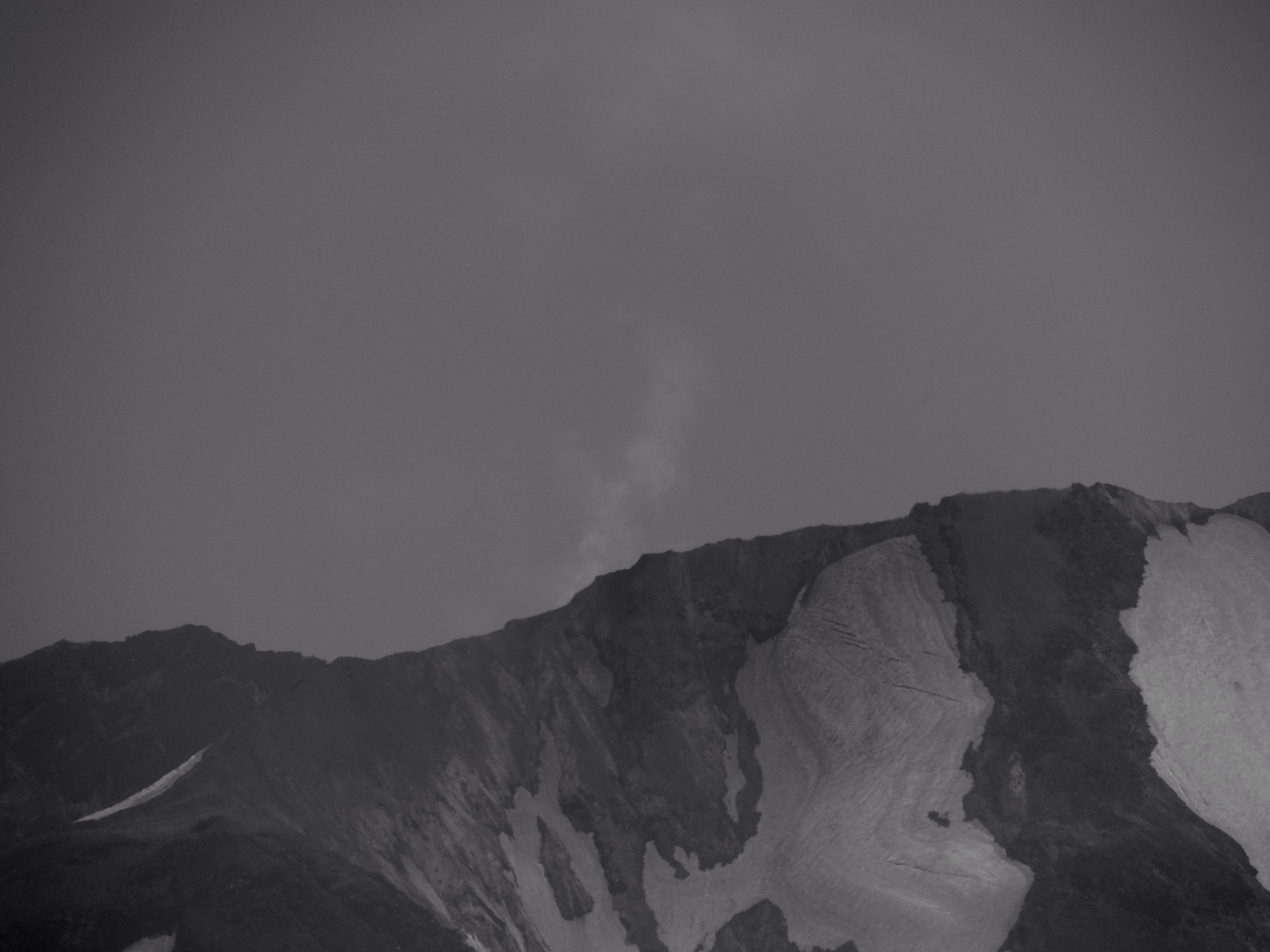
Mount St. Helens has a major eruption every 125 years, so we were in the presence of a very active volcano.  While the steam rising out of the mountain was slightly unnerving, it also made being there very exciting!  

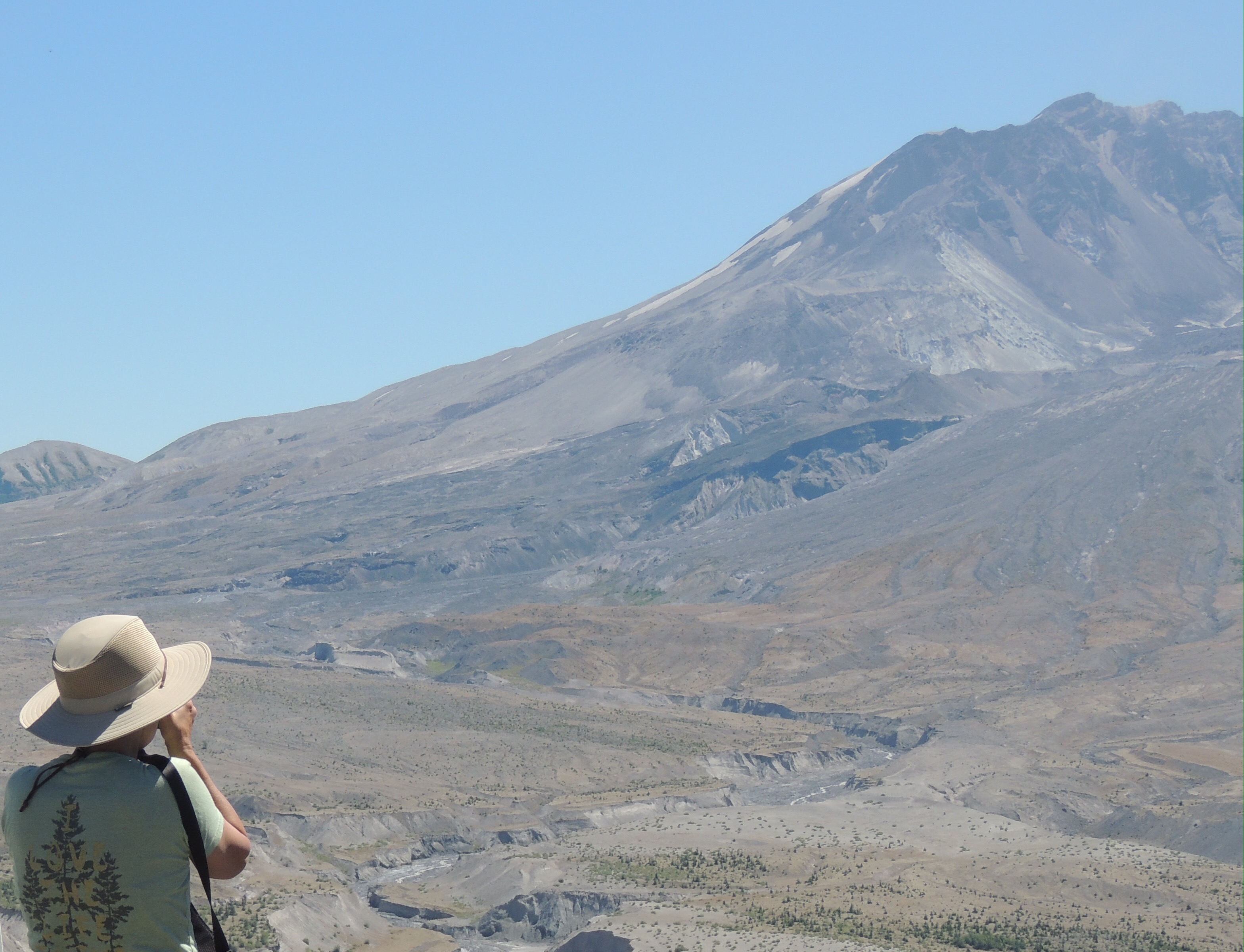
Here is Tracy taking in the view.  Her standing there really puts it into perspective how close we were to the crater.

We took a trail that heads out above the Johnston Visitor Center and towards a straight-on view of the volcano.  Looking back down, you can see how the building is built into the hillside.

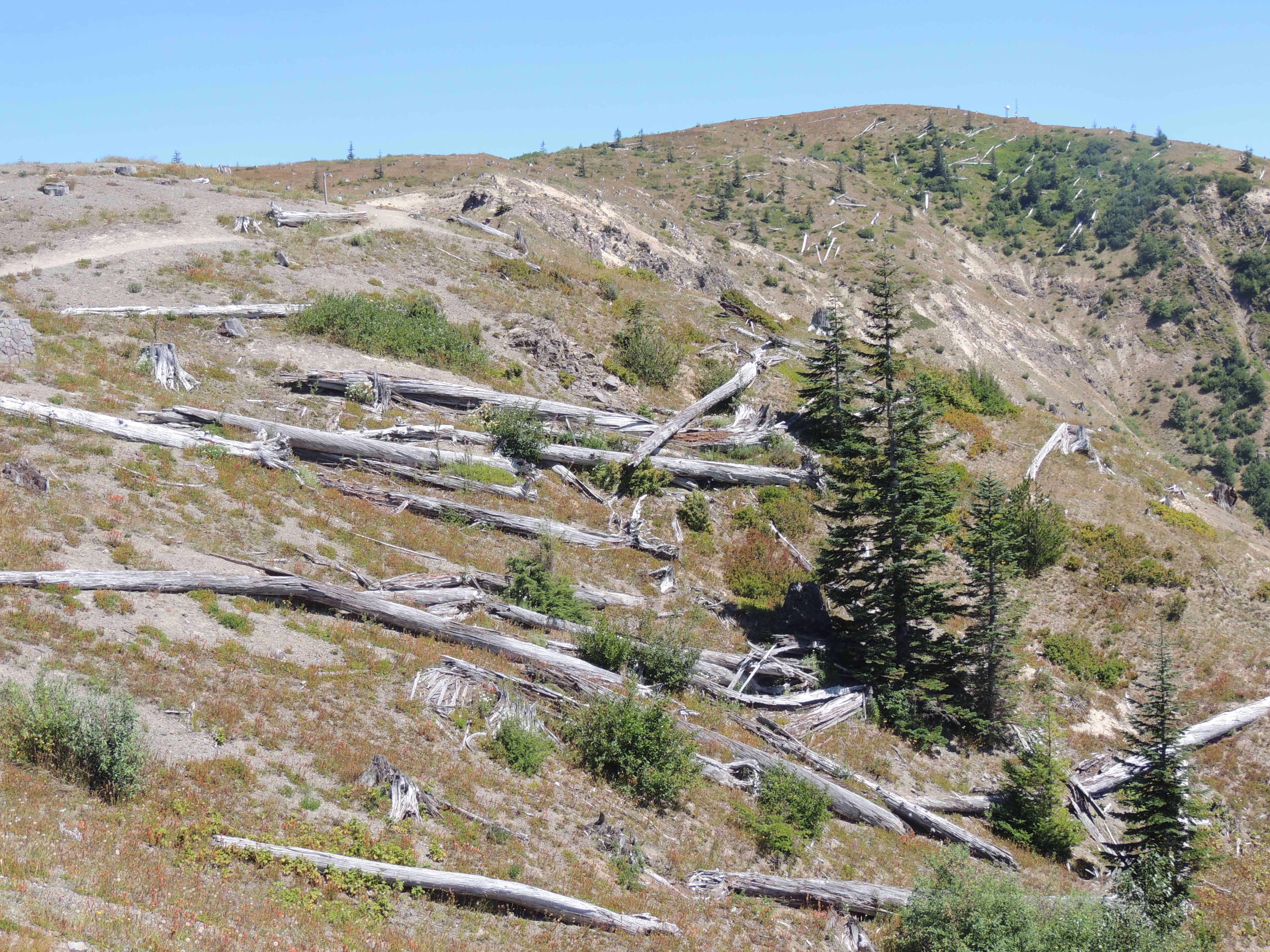
And off to the north…the direction the mountain blew…an entire forest of trees still lays over from 37 years ago.  This area within the boundaries of the national monument is being allowed to regrow naturally, and it is amazing thing to see how quickly that is taking place.  

Still, it’s going to take a long time for a complete forest to return, only to possibly be blown over again by future volcanic activity.  

Diana and I remember the vivid red sunsets in Michigan during the summer of 1980 that were caused by the volcanic particles in the air.  That doesn’t seem like it was all that long ago.  Heck, had David Johnston survived, he’d only be 67 years old today.  To see how much things have changed in such a short period of time definitely make Mount St. Helens a place we want to come back to in the future!

Be sure to CLICK HERE to see Tracy and Lee’s excellent post about our trip!
———-

A Mount St. Helens day hiking guide, plus anything else imaginable by searching our exploRVistas Amazon link by clicking HERE.

———-

explorRVistas is a participant in the Amazon Services LLC Associates Program, an affiliate advertising program designed to provide a means for sites to earn advertising fees by advertising and linking to Amazon .com. Shopping through our link does not add anything to your cost, but it does help support this blog. Thank you for shopping through exploRVistas!
.

 Are You Ready For the Eclipse?

Ready or not….here it comes!

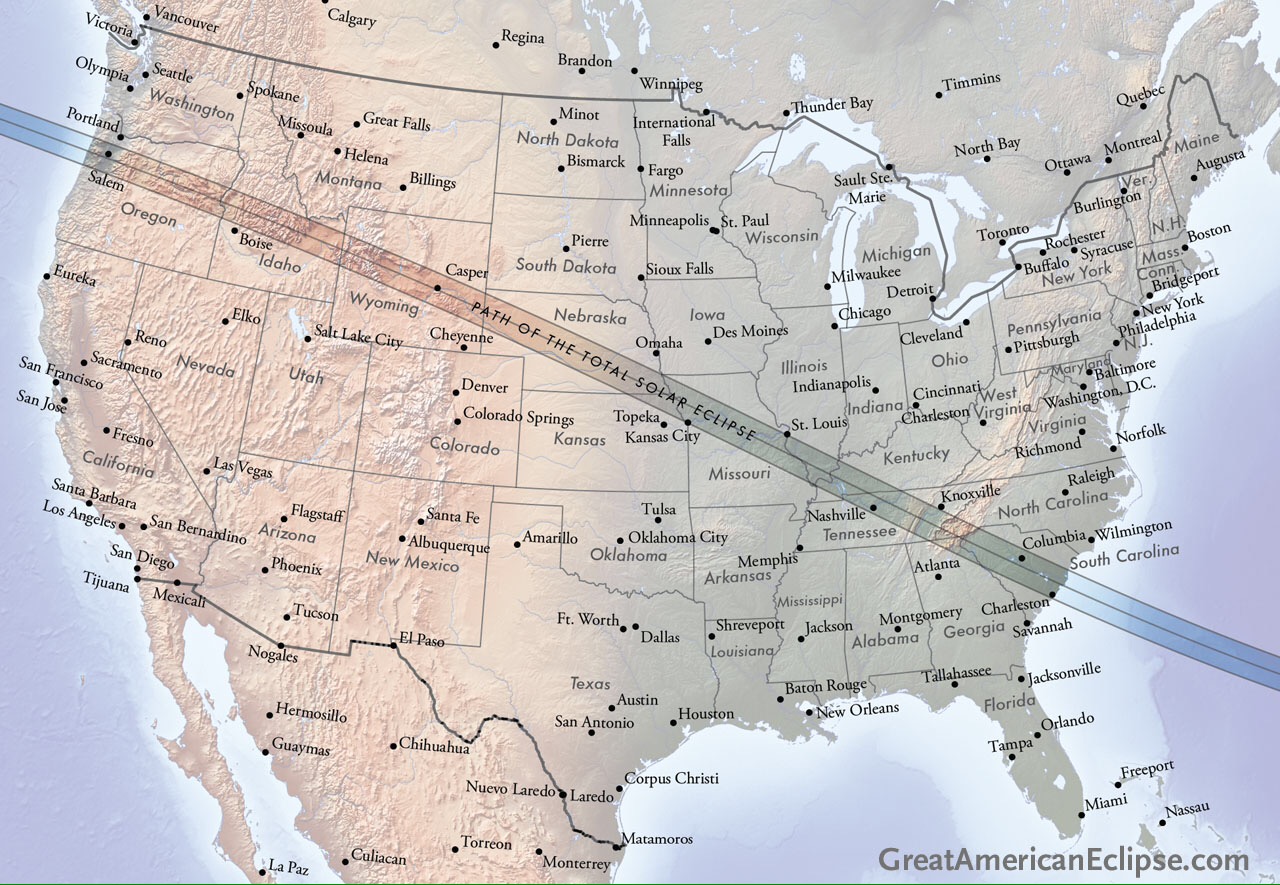
A lot has been written about the upcoming Great American Eclipse, coming up on August 21.  A seventy mile wide swath centered on a line starting at Depoe Bay, Oregon and exiting at McClellanville, South Carolina will see the sun totally blocked by the moon.  

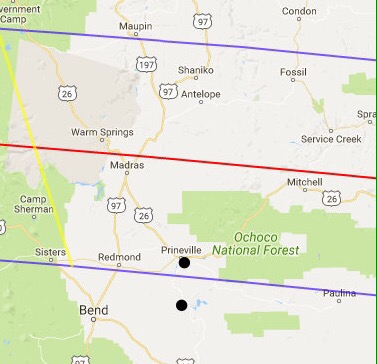
The entire journey of the shadow across our nation will take a mere 90 minutes.  Day will become night in the path of totality, with stars appearing when they normally wouldn’t.  Here at Prineville Reservoir, we are outside of the path of totality, but the city of Prineville to our north is within the path…as shown by the dots on the map below.

We plan on positioning ourselves in the path of totality and are still weighing our options. We’ll let you know how it all works out. The purpose of this post is to alert those of you who may not be aware of a few tips about the event, so as to prepare if you plan on trying to see it.  Experiencing this from Oregon, we will address it from that perspective. We completely understand that some people may have little interest in dealing with these crowds.

Our first awareness of the eclipse was when I read an online piece about it last year.  In it, I remember the author mentioning that NASA said the best chance in the nation at a cloudless sky was in the high dessert town of Madras, Oregon, about 20 or so miles up the road from Prineville.  The town of 6,000 has a nice airport with a 5000 foot and 2700 foot set of runways, a Safeway and a Thriftway, a KFC, McDonalds, and a Dairy Queen.  

Toss in four or five gas stations and a bevy of small businesses and that about sums it up.  US-97 runs north and south through the town, with a few smaller highways coming in from other directions.  Well, as awareness of the eclipse has grown, Madras began to prepare for the onslaught of visitors…as far back as 2015.  Estimates are for 100,000 people to descend on the town, but that number could be conservative.  The FAA has capped the airport at 400 planes, and those spots are long spoken for.  Many are reported to be famous folks flying up from LA. The normally uncontrolled field is even bringing in a portable control tower.  

Farmers are mowing their fields and have reserved camping spots for well over $100 a night.  Prineville will be home to a festival that officials are capping at 30,000 people….and that’s just the festival.  Many more will be pouring into town from all over the world.  It’s going to be fun, crazy, scary, all rolled up in a few amazing days.  And once the sun comes back out, everyone is going to want to leave at the same time!

If you attempt to show up the day of the eclipse, you stand a good chance of ending up in a traffic jam and missing it. Campsites and lodging sites have been sold out for years.  Also, just pulling off the roads here is easier said than done.  

ODOT has trained workers in push, pull, drag training; meaning if someone is blocking the road, the road crew will move it by any method needed, so emergency vehicles can get through.  The roads around central Oregon have steep shoulders and drop offs, so pulling over isn’t a great option.  Parking in dry grass could start a wildfire, which is a huge concern in these parts.  Not only that, smoke from a wildfire could obscure the eclipse!  And watch where you step, as there are rattlesnakes here. Also, remember that services such as restrooms, groceries, gasoline, drinking water, and cell service will be overloaded, as will the power grid.  Self contained RV’s hold an advantage in this regard, so be sure to stock up your supplies and top off your fuel and water tanks way ahead of time.  Prineville officials are expecting people to start coming in on the 15th, but we’ve talked to one camper who is already here for the event.  The state is gearing up as if this will be a natural disaster, and for all intents and purposes, it could be!

Ok, so enough with the doomsday dialogue.  😎

If the majority of people are patient and respectful of others, the Great American Eclipse promises to be an unforgettable experience.  Many of you will want to be as far away from this as possible…and that is perfectly ok and understandable.  But if this interests you and there is any way for you to get into the path of totality, by all means, do it. Veteran eclipse watchers say that close is not close enough!  If you are wondering what you could possibly see that would be worth all of the trouble, Eclipse2017.org explains it as being much more than the moon covering the sun.  It’s the veil of blackness that hits you at 3000 miles an hour, the 360 degree orange glow on the horizon, the air cooling, the stars and planets appearing, and the adrenaline rush of being a part of it all.  Many people who have seen one in the past say it is the most beautiful thing they have ever experienced.

Above all, have fun and if you’re up for an adventure, give it your best effort to get yourself into the path of totality!  This is going to be an amazing event…one you will remember for the rest of your life.

Where will  you be during the Great American Eclipse?

———-

ISO certified eclipse glasses and so much more on our exploRVistas Amazon link HERE!
———-
explorRVistas is a participant in the Amazon Services LLC Associates Program, an affiliate advertising program designed to provide a means for sites to earn advertising fees by advertising and linking to Amazon .com. Shopping through our link does not add anything to your cost, but it does help support this blog. Thank you for shopping through exploRVistas!
The Unexpected Upside of Fulltime RVing

The biggest surprise to us about fulltime RVing has to be the social aspect of it.  When we prepared to hit the road, we thought we might feel distanced from friends and family.  Social media, this blog, work camping positions, and being members of the RV-Dreams family have helped alleviate that concern and have greatly expanded our circle of friends.  And while the places we visit are the focus of our journey, it’s the people we meet in each locale that end up standing out in our minds!

On July 15, our RV-Dreaming buddy and fellow lighthouse host Rick and his dog Maxine came to visit us at Prineville Reservoir.  He will be beginning his journey east soon and wanted to see us again before he left Oregon.  Since we were working, we brought him along to the programs we were helping out with.

It was great to spend more time with these two!

Maxine felt totally at ease here.  She looked right at home perched outside Mariah’s office.  🙂   It was sad to see them go Sunday morning, but we will definitely see them again down the road!

On Monday morning, we took the rig north to Parkdale to see our friends Bob and Kat.  You may recall that we met at the Fall 2014 RV-Dreams rally, and we met up again in San Antonio and in Lake Leelanau.  They are working at Toll Bridge County Park as hosts.

They suggested this beautiful site, just feet off the east fork of the Hood River.  😊  They made us a yummy dinner, which was appreciated after a day on the road!

On Tuesday, we took a tour of the Columbia River from the Bridge of the Gods up to Maryhill and back.

Our first stop was Stonehenge, a World War I memorial put in place by Samuel Hill.  He was the person responsible for the beautiful Columbia River Scenic Highway on the Oregon side of the waterway.  He first tried to get the State of Washington to build it and when they refused, he approached Oregon with the idea.  Thankfully, they approved construction.

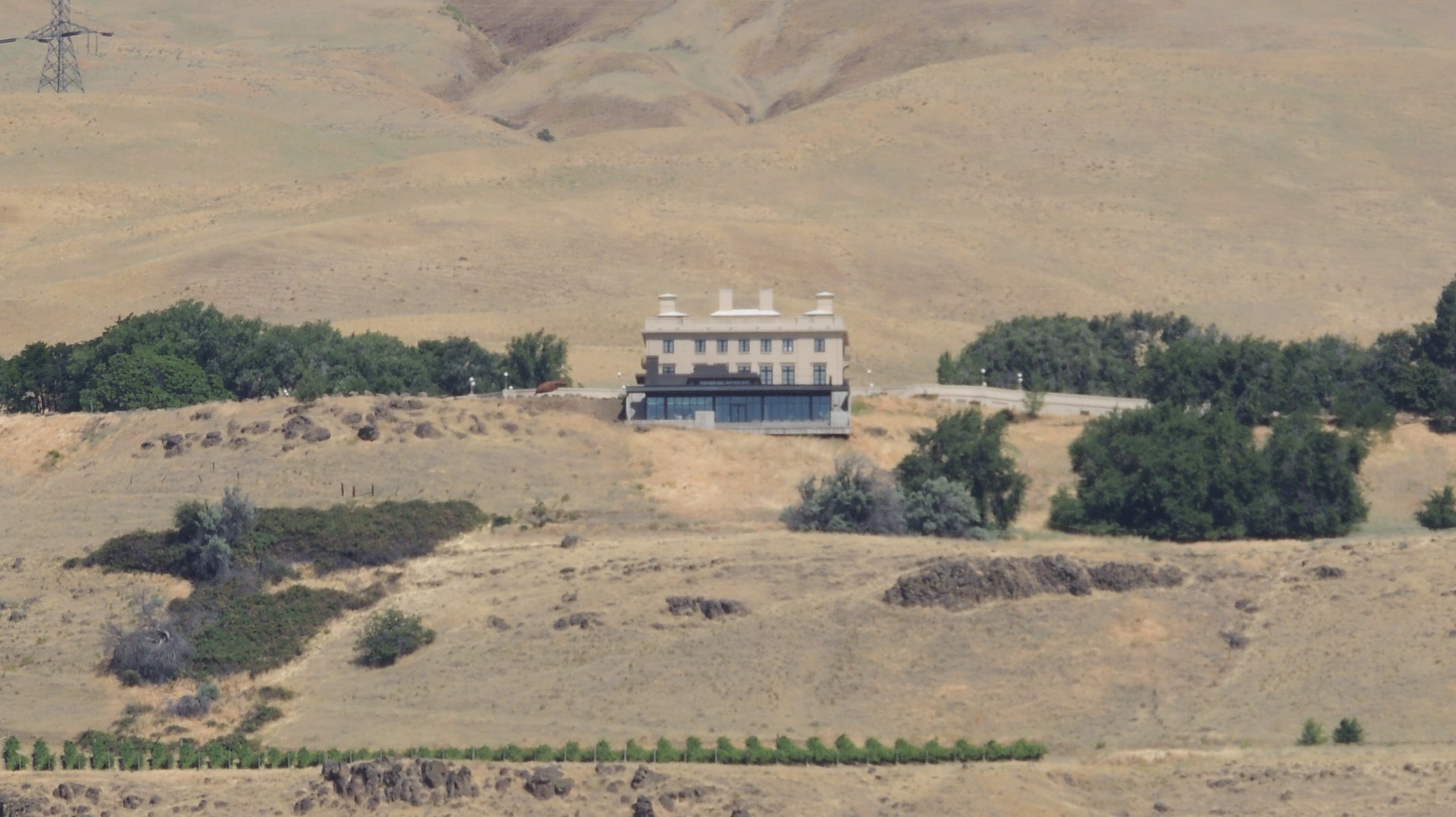
From there, we visited Hill’s Maryhill estate.  This grand structure was built using forms and poured concrete, employing the same methods that would be used in building a highway overpass.  It now houses an art gallery.

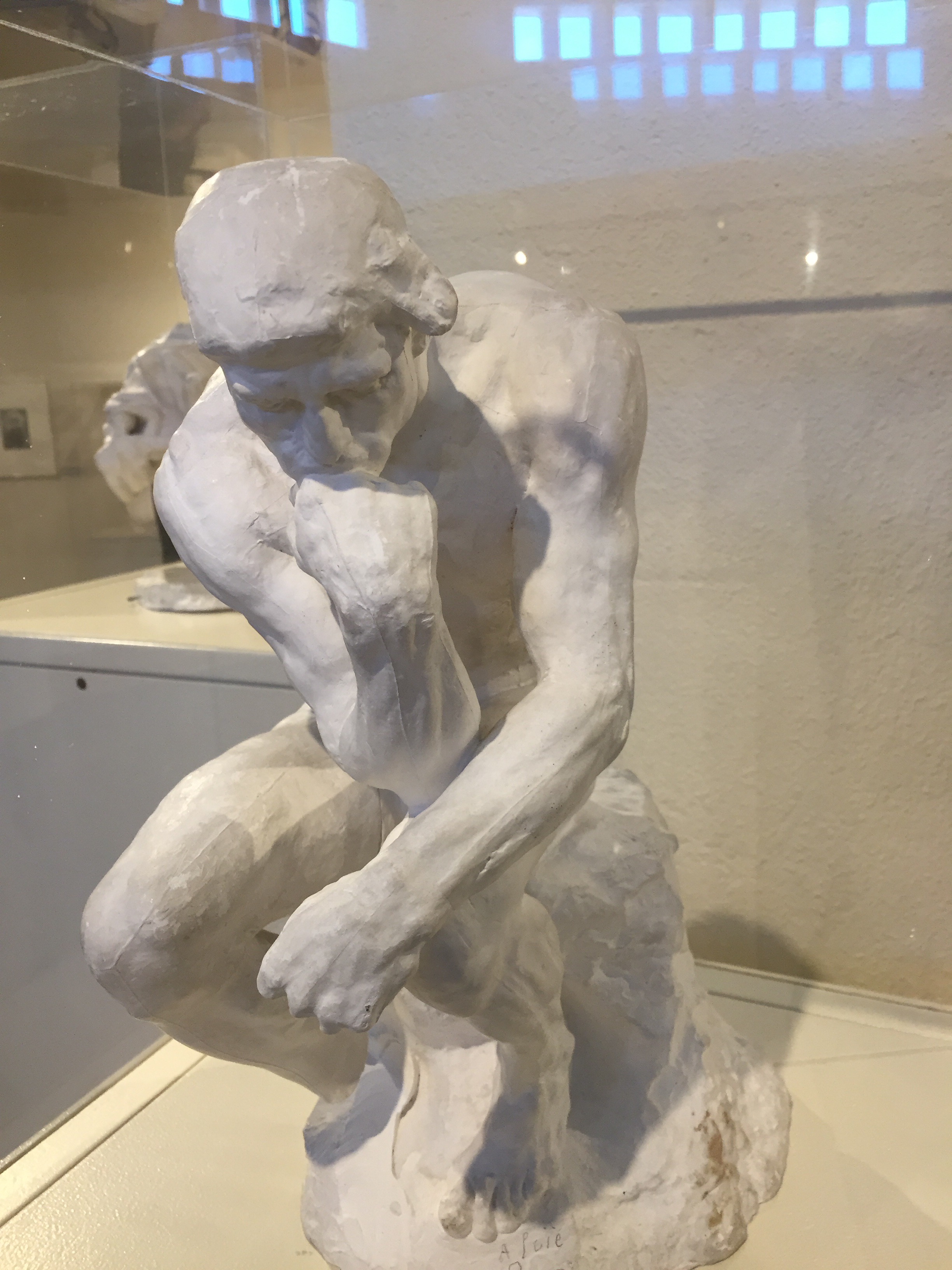
The museum houses more than 80 works by Auguste Rodin, including The Thinker.

After that, we ate lunch at Everybody’s Brewing in White Salmon, Washington.  

An outstanding meal with a beautiful view of Mt. Hood in the background!

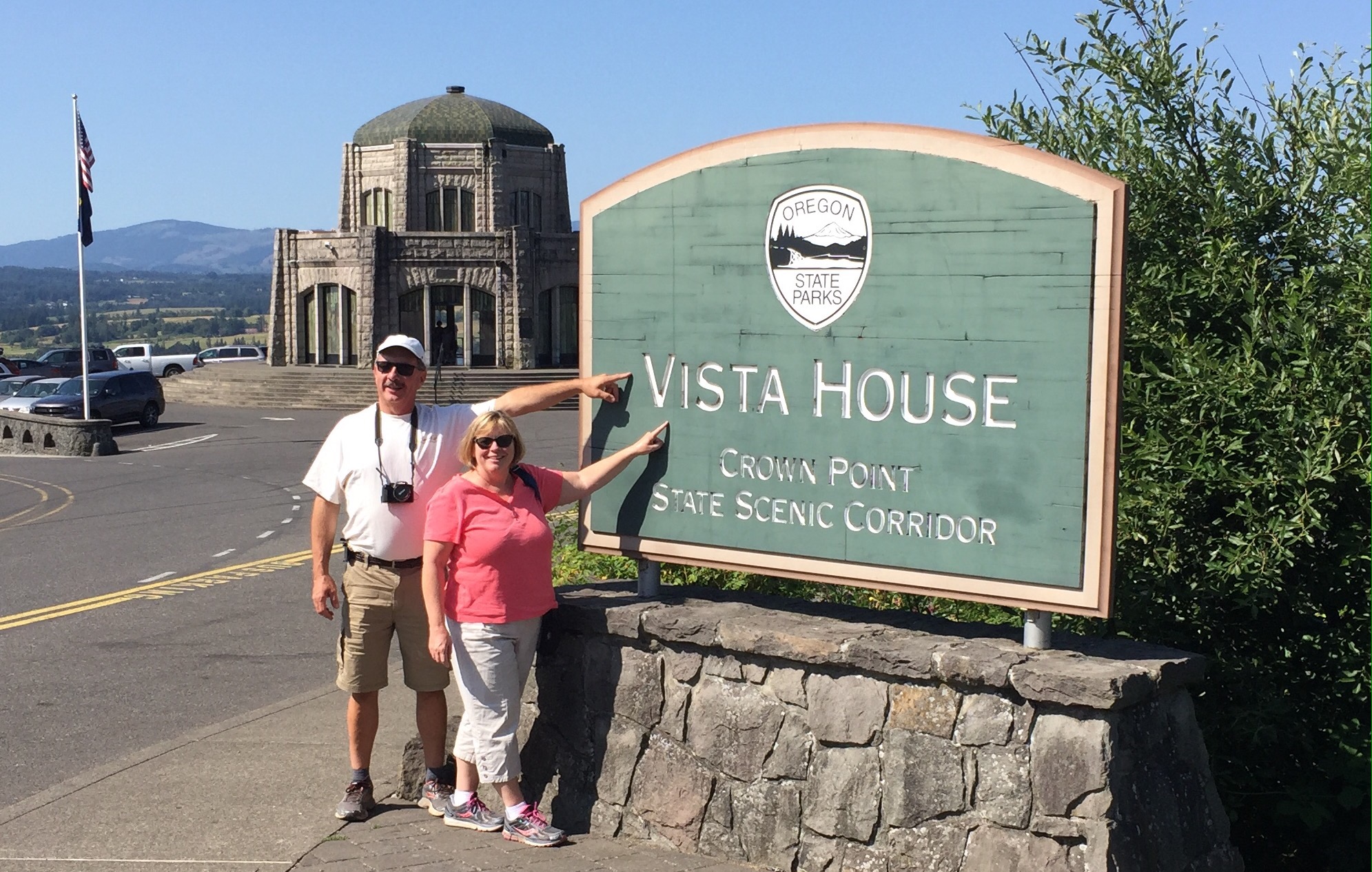
We then crossed back into Oregon and checked out Vista House.

Looks like a good place to explore some vistas!  😎

From its’ perch high on the cliff, the building offers a commanding view of the gorge!

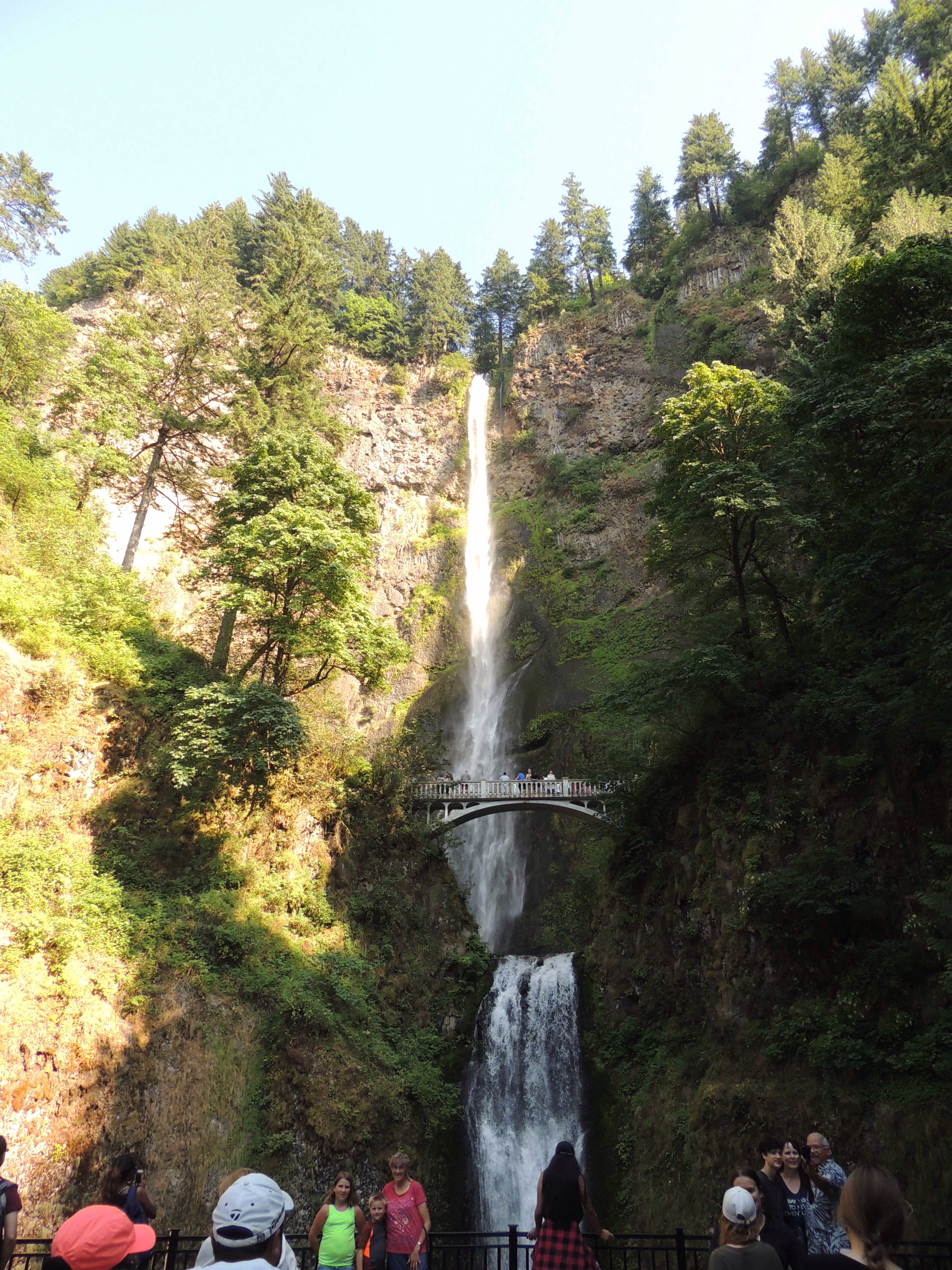
Our last stop was Multnomah Falls.

We had seen this beautiful set of waterfalls back in 1996, and they were just as pretty as we remembered them. It was a great way to cap off a really fun day with friends!

So whether it is family, old friends or new, this life on the road has been anything but solitary for us.  August 11 will be three years since we moved into our RV fulltime, and what a wonderful time it has been.  Here’s hoping we have many more roadiversaries and opportunities to spend time with others along the way!
———-

Our favorite ‘Friends’ sign and many more items available by clicking HERE on our exploRVistas Amazon link!
———-

explorRVistas is a participant in the Amazon Services LLC Associates Program, an affiliate advertising program designed to provide a means for sites to earn advertising fees by advertising and linking to Amazon .com. Shopping through our link does not add anything to your cost, but it does help support this blog. Thank you for shopping through exploRVistas!
Smith Rock State Park

On Tuesday, July 11th, we decided to take a little day trip to Smith Rock State Park, north of Redmond, Oregon, as we heard that people liked to hang out there….

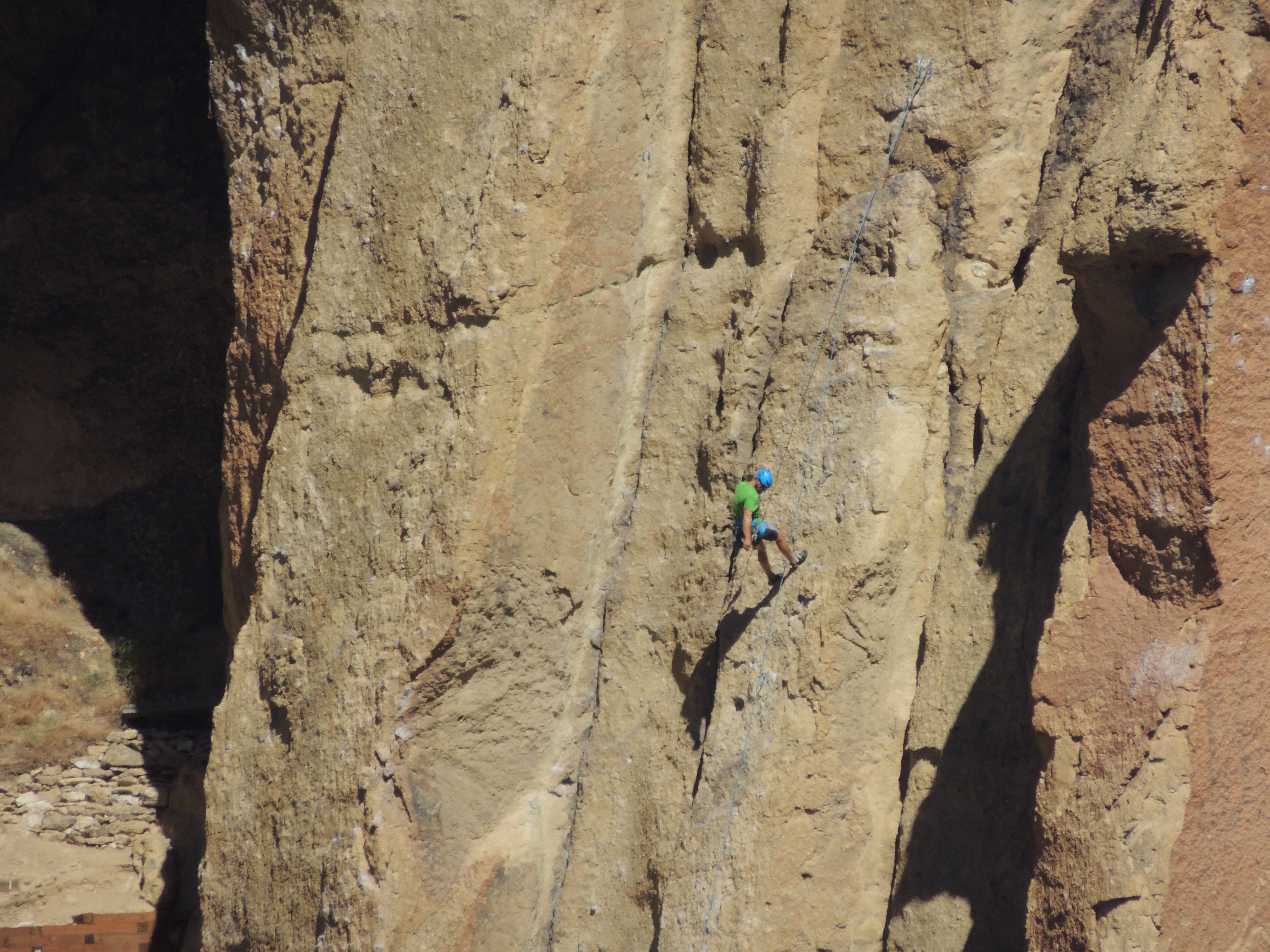
….and we mean that quite literally! 😃   And while this outcropping is internationally known for its tremendous rock climbing opportunities, we also wanted to see the geology and the hiking trails available to those of us who prefer to keep our feet on terra firma. In addition we wanted to check out the volunteer opportunities available, as our friend Lisa and her late husband Hugh had worked at the visitor center a while back.

This volcanic gem sits on the northwest rim of the Crooked River Caldera….a recently discovered supervolcano that last erupted 29 million years ago and is considered extinct.  For reference, Prineville sits smack dab in the middle of that caldera, 19 miles south east of Smith Rock….so we are talking a very large crater.  The makeup of Smith Rock is volcanic tuff and basalt, and the geologic features are quite varied in their structure, which makes for good rock climbing.

We enjoyed watching the many people on the sheer rock faces that day…

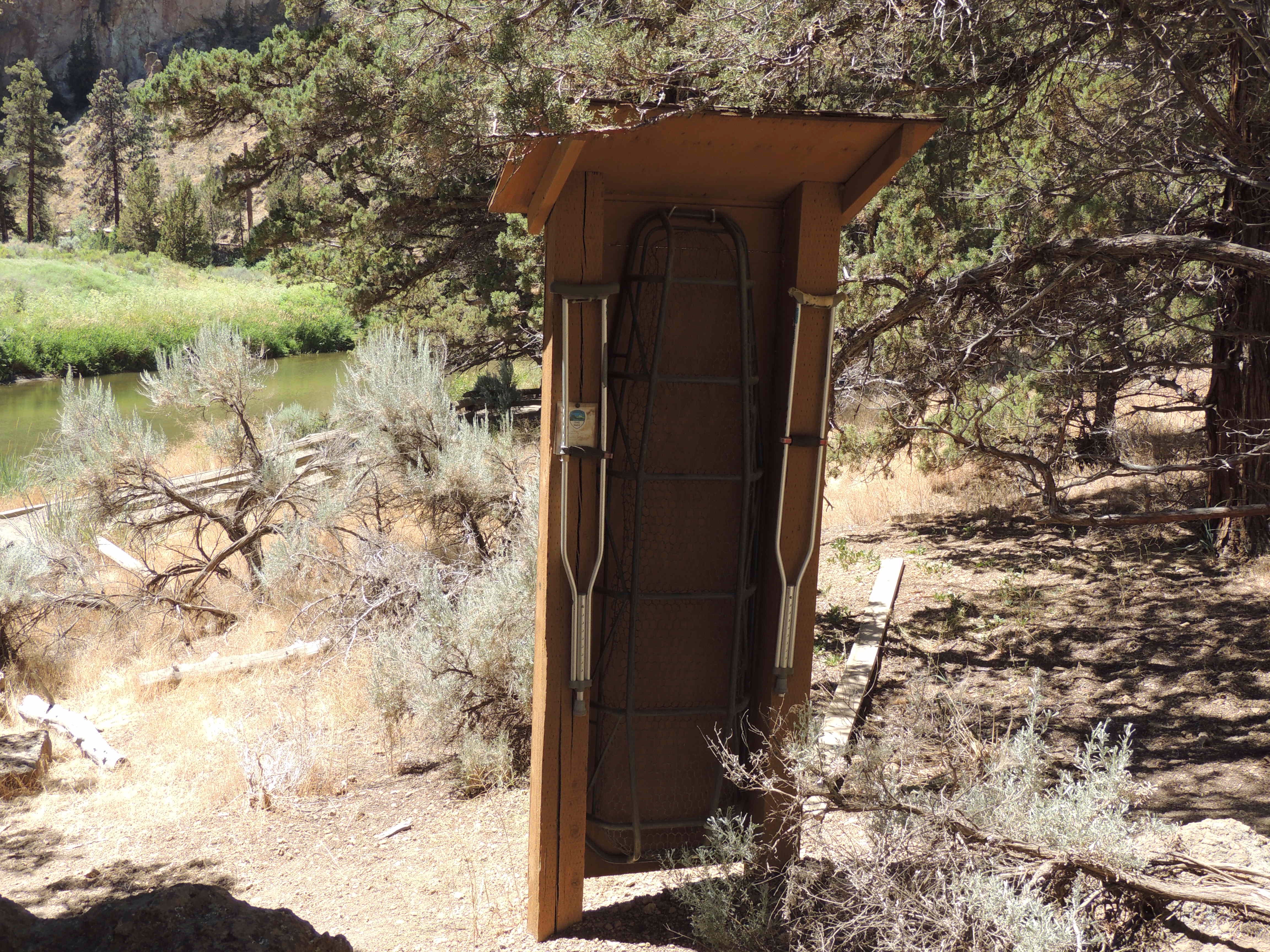
…and we were glad that none of them had to use the equipment seen here that is provided by the state park!

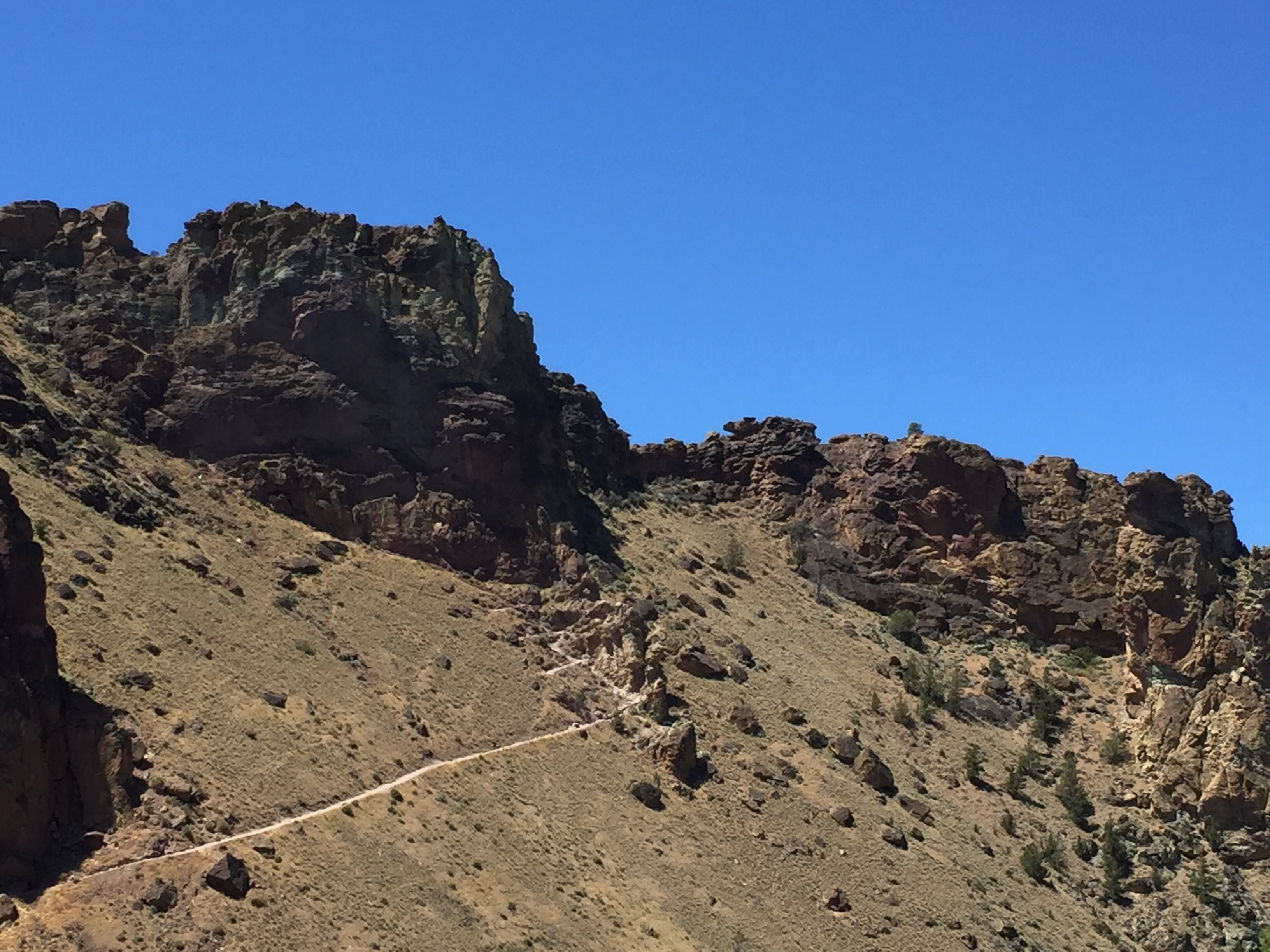
We hiked a little ways on the Canyon Trail, then decided to cross the footbridge and check out the River Trail, which skirts the base of the mountain.  

It was too late in the day to attempt the four mile Misery Ridge Loop trail, but it certainly looks intriguing!  We talked to a Ranger at our park afterwards and he said, “It’s named Misery Ridge for a reason.”  We will have to think about this one.  😎

One thing is for certain:  the scenery was outstanding!  This photo shows Mt. Jefferson peeking through Asterisk Pass.  We never get tired of seeing the line of snow-capped stratovolcanoes hovering above the high desert landscape we are in.

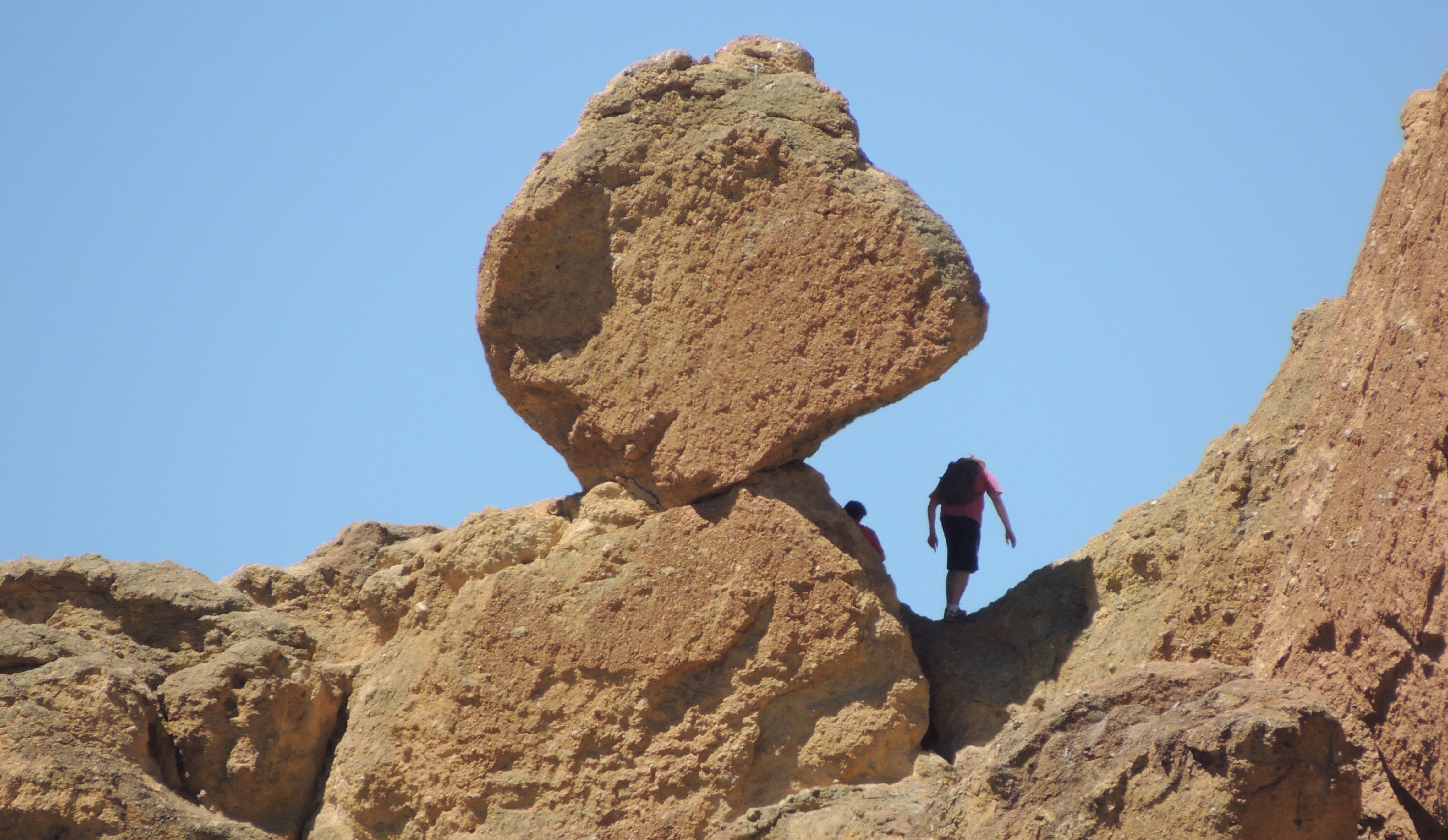
Zooming in on the ‘asterisk’, we saw this hiker contemplating his next move.  It makes you wonder what is on the other side. 😊

We definitely enjoyed our afternoon at Smith Rock State Park.  With it being so close to our base at Prineville Reservoir, we would love to come back and do more hiking.  Stay tuned for that and more, as we continue to explore this beautiful slice of Oregon!

———-

Smith Rock Climbing Guide and anything else imaginable on our exploRVistas Amazon link HERE  😃

———-

explorRVistas is a participant in the Amazon Services LLC Associates Program, an affiliate advertising program designed to provide a means for sites to earn advertising fees by advertising and linking to Amazon .com. Shopping through our link does not add anything to your cost, but it does help support this blog. Thank you for shopping through exploRVistas

Newberry National Volcanic Monument

On Monday, July 10, we took a day trip southwest of Prineville to Newberry National Volcanic Monument.

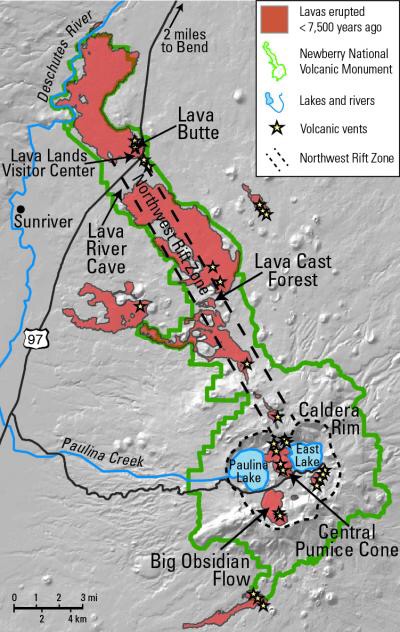
At 1200 square miles, Newberry is the largest volcano in Oregon.  It is unusual in the fact that it sits east of the line of peaks that make up the Cascade Mountains, although it is very much a part of that chain.  Newberry Volcano is considered active, and with its proximity to the growing towns of Central Oregon, it is constantly monitored for geological changes.  Where most of the volcanos in the region are made up of one dominant mountain, this one is unique in the fact that it has over 400 smaller cones scattered around its main crater.  The main peak collapsed into its magma chamber, similar to what Mt Mazama (now Crater Lake) did.  Although both craters now contain bodies of water, they are very different from each other.  Newberry’s lakes are much shallower and are separated by a volcanic cone and rock that completely span the larger crater.  The national monument encompasses 54,000 acres and is administered by the U.S. Forest Service.

Since this was a day trip, it would have been a rush to hit every feature of this park.  We opted to skip Lava Cast Forest and the Lava River Cave on this visit, hoping to catch them later in the summer.  This allowed us to spend quality time at the other points of interest.

Our first stop was at Lava Butte.

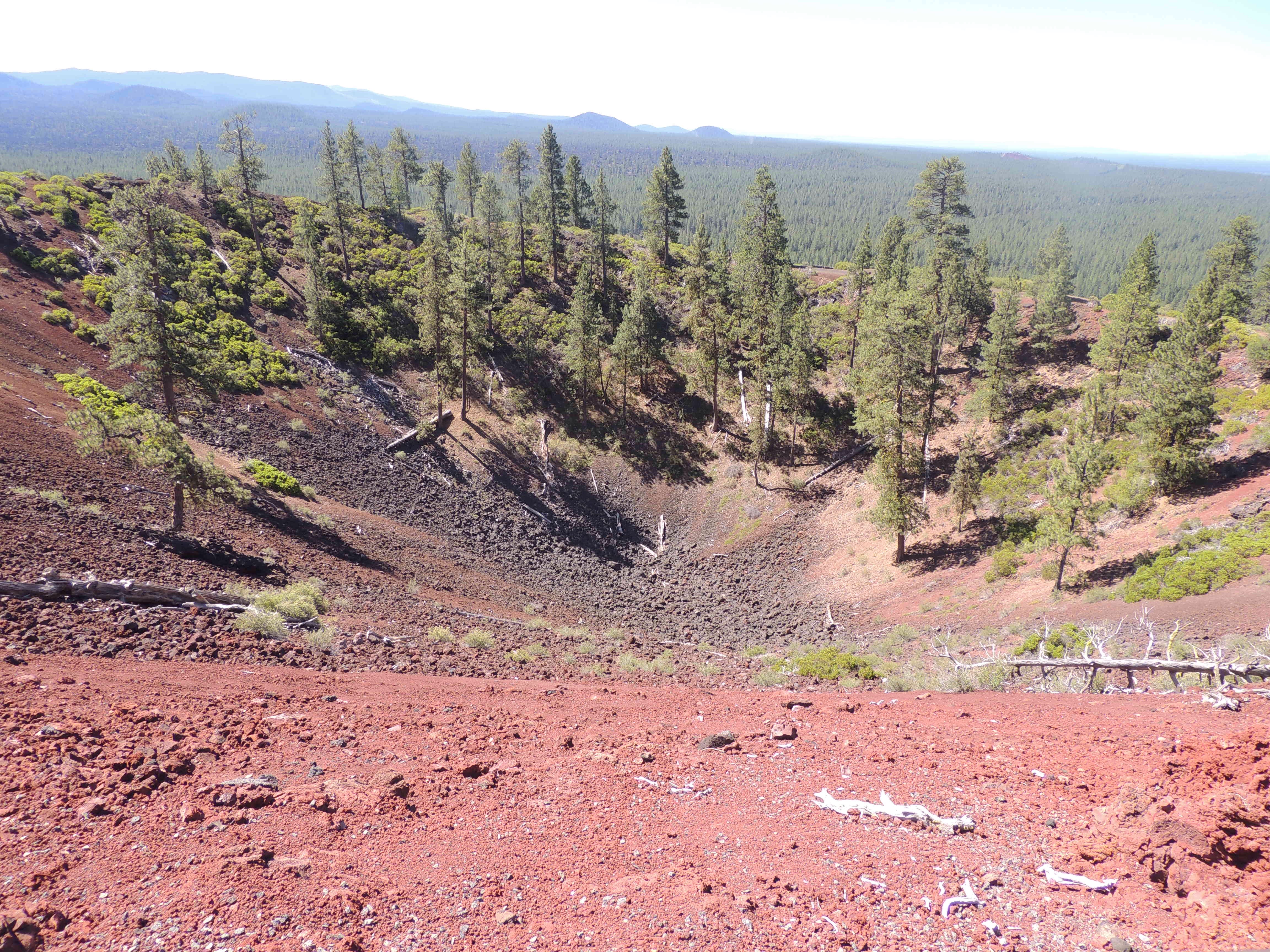
This is a photo looking into the crater.  Lava Butte is a fairly symmetrical cinder cone that sits out on somewhat of a flat plain.  It erupted only once around 7000 years ago, spewing lava to the west. 

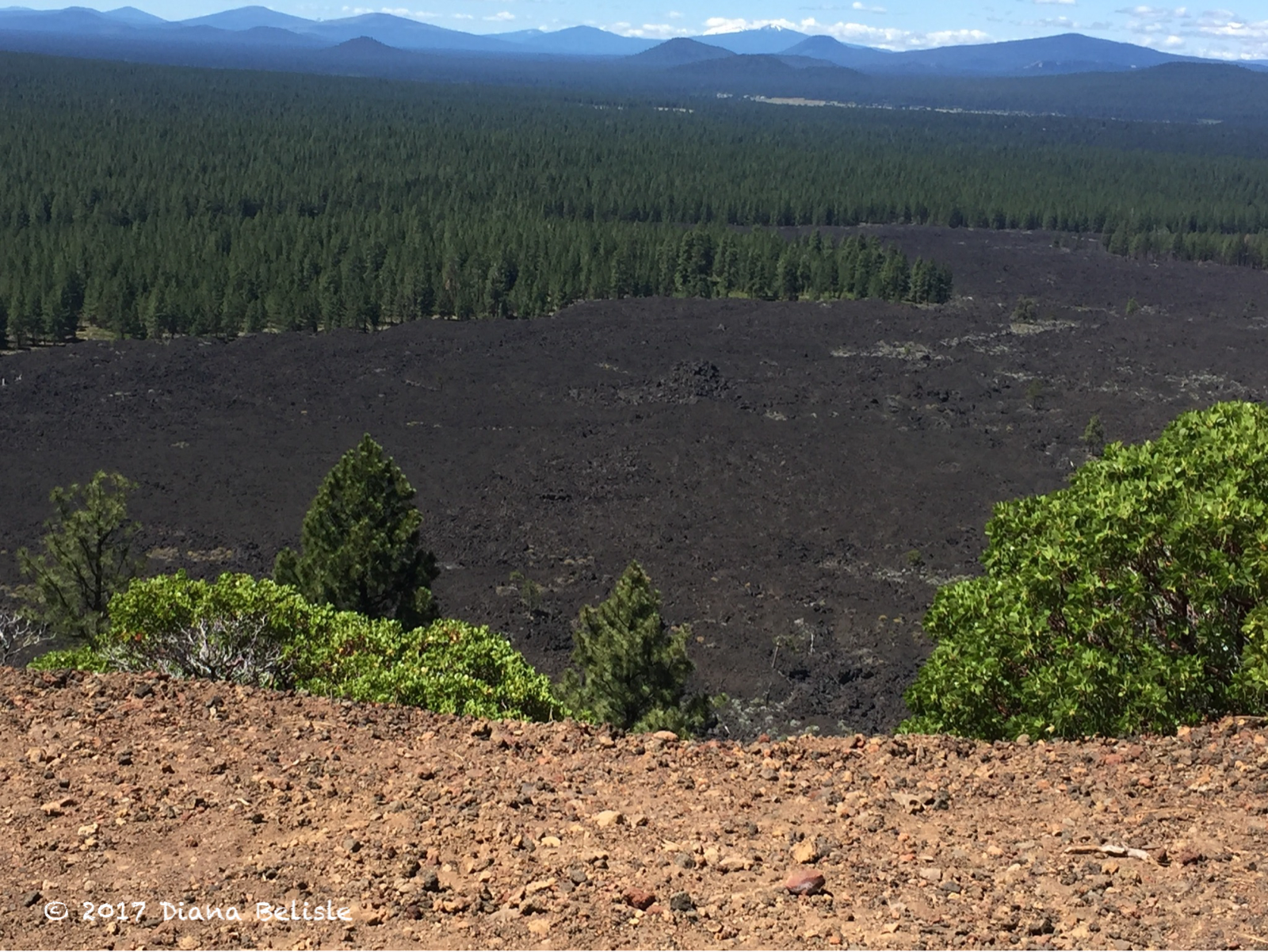
 That lava field remains free of vegetation, which really gives a clear view of the footprint of this small volcano.  Towards the end of the eruption, cinders built up around the vent and formed the 500 foot tall butte we see today.

The next spot we visited was the Big Obsidian Flow.

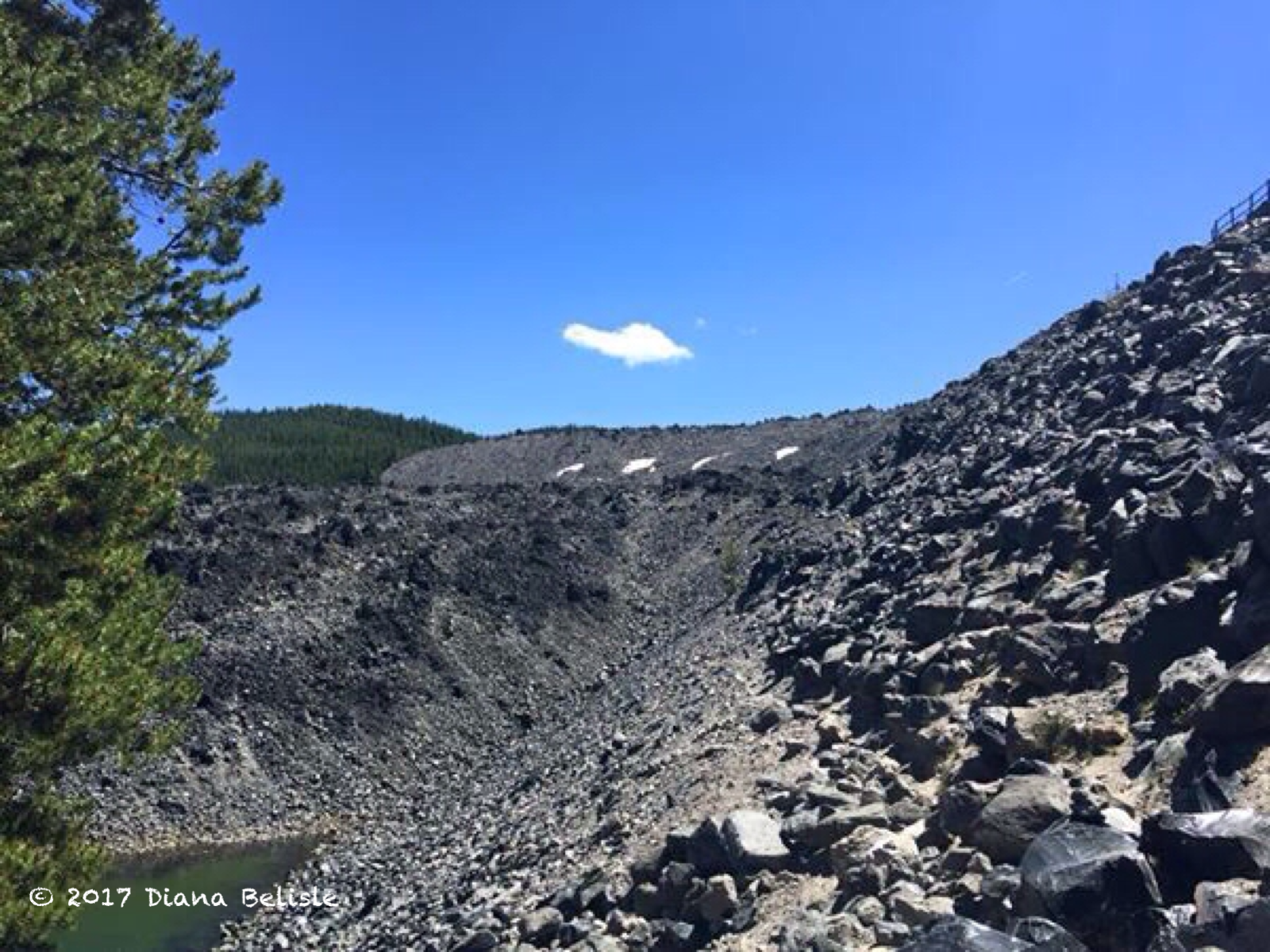
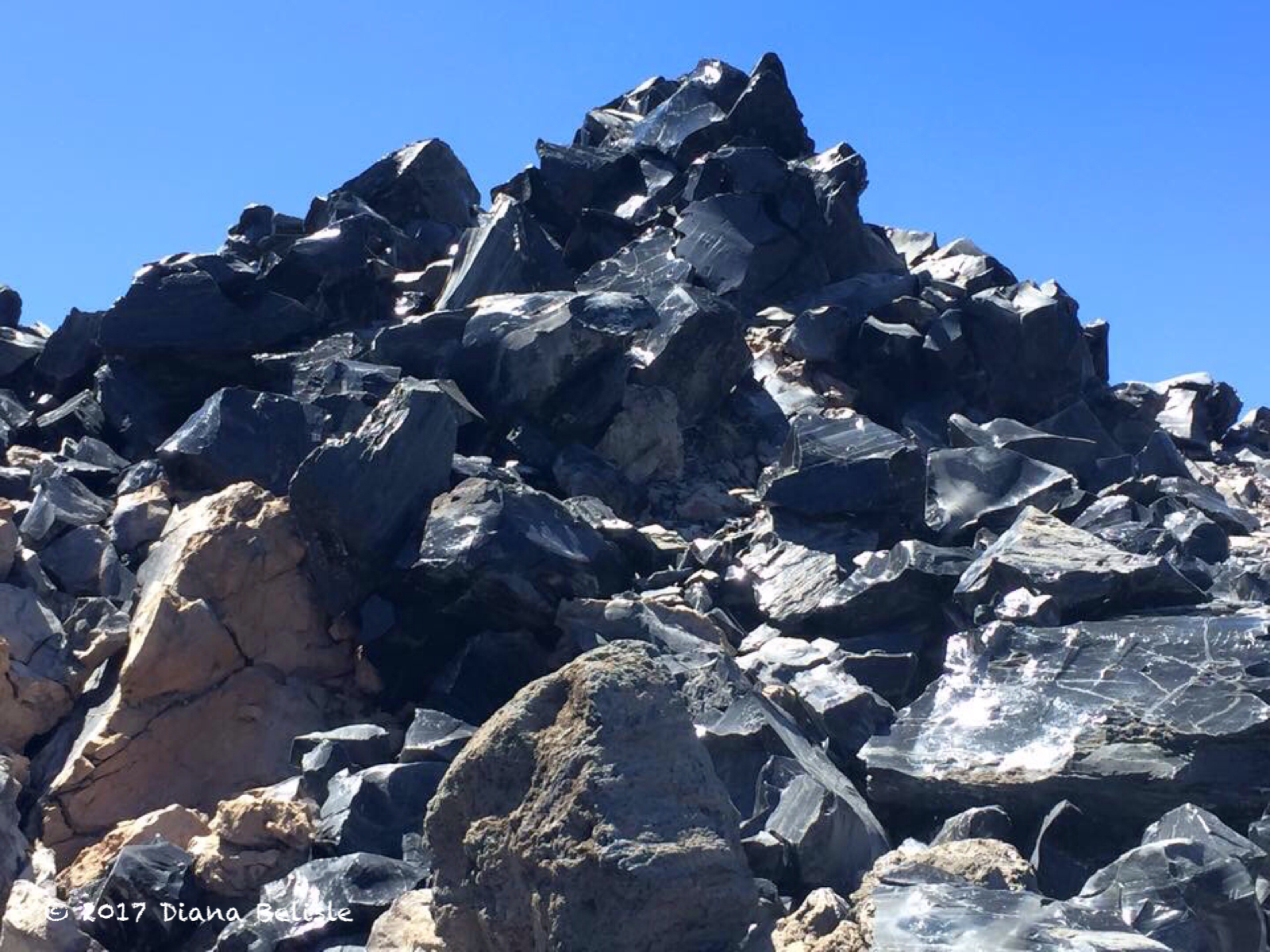
Talk about awesome!  This is a giant wall of black glass that oozed from Newberry Volcano just 1300 years ago.  We climbed the trail that ascends to the top of this geological wonder, being careful not to fall…as it would surely result in sliced skin!  

The hillside glistened in the afternoon sun.  Absolutely beautiful!

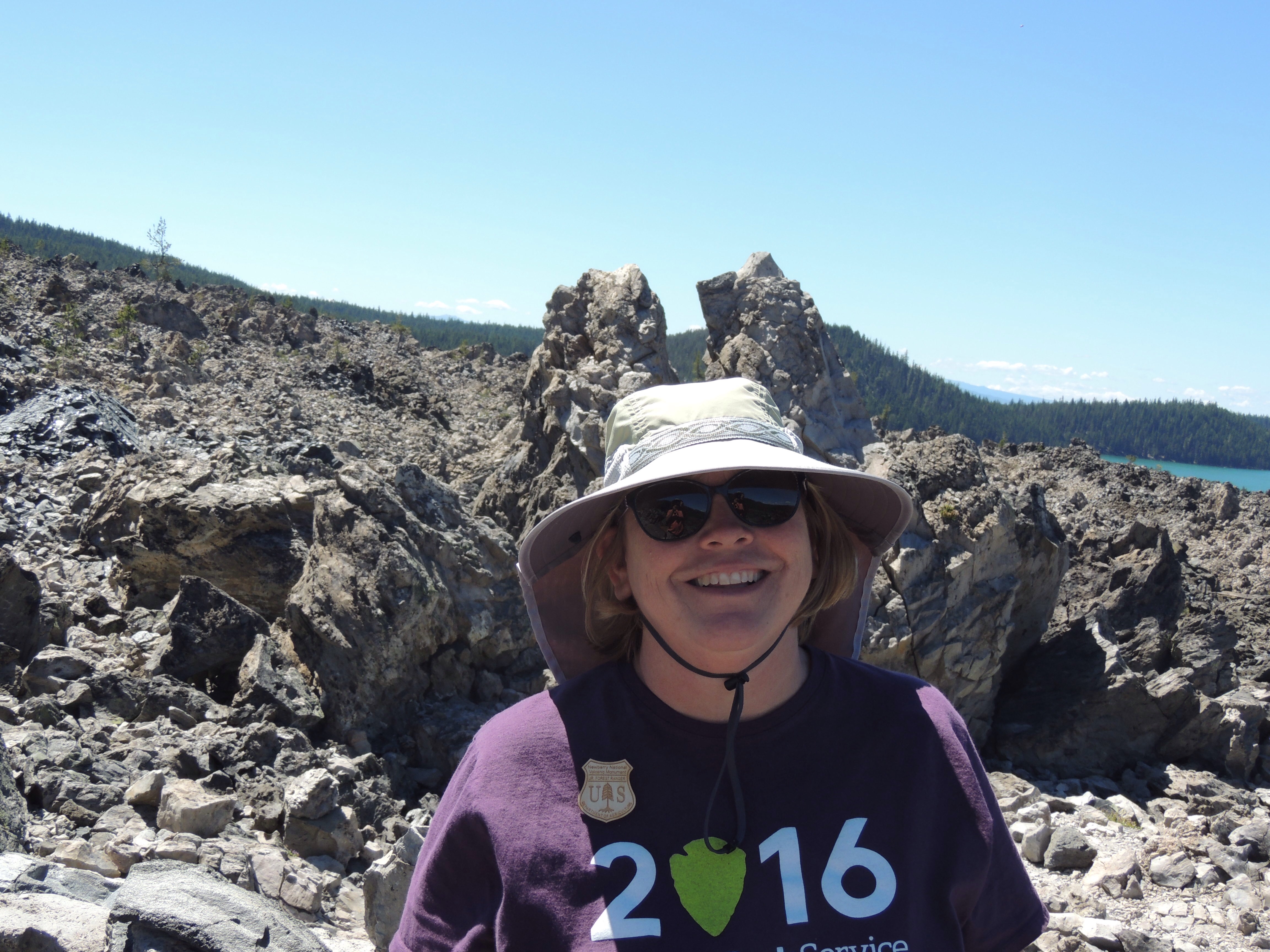
Here’s my sweetie with her Junior Ranger badge and obsidian ears!

While we were in that area, we checked out the two lakes in the caldera.  They were both very pretty with plenty of trees surrounding them.  Lots of people boating, fishing and swimming.

The last place we visited was Paulina Peak.  Named after Chief Paulina, the fierce Paiute warrior who defended these lands from settler encroachment, the 7940 foot mountain is the highest remaining point of the Newberry Volcano.

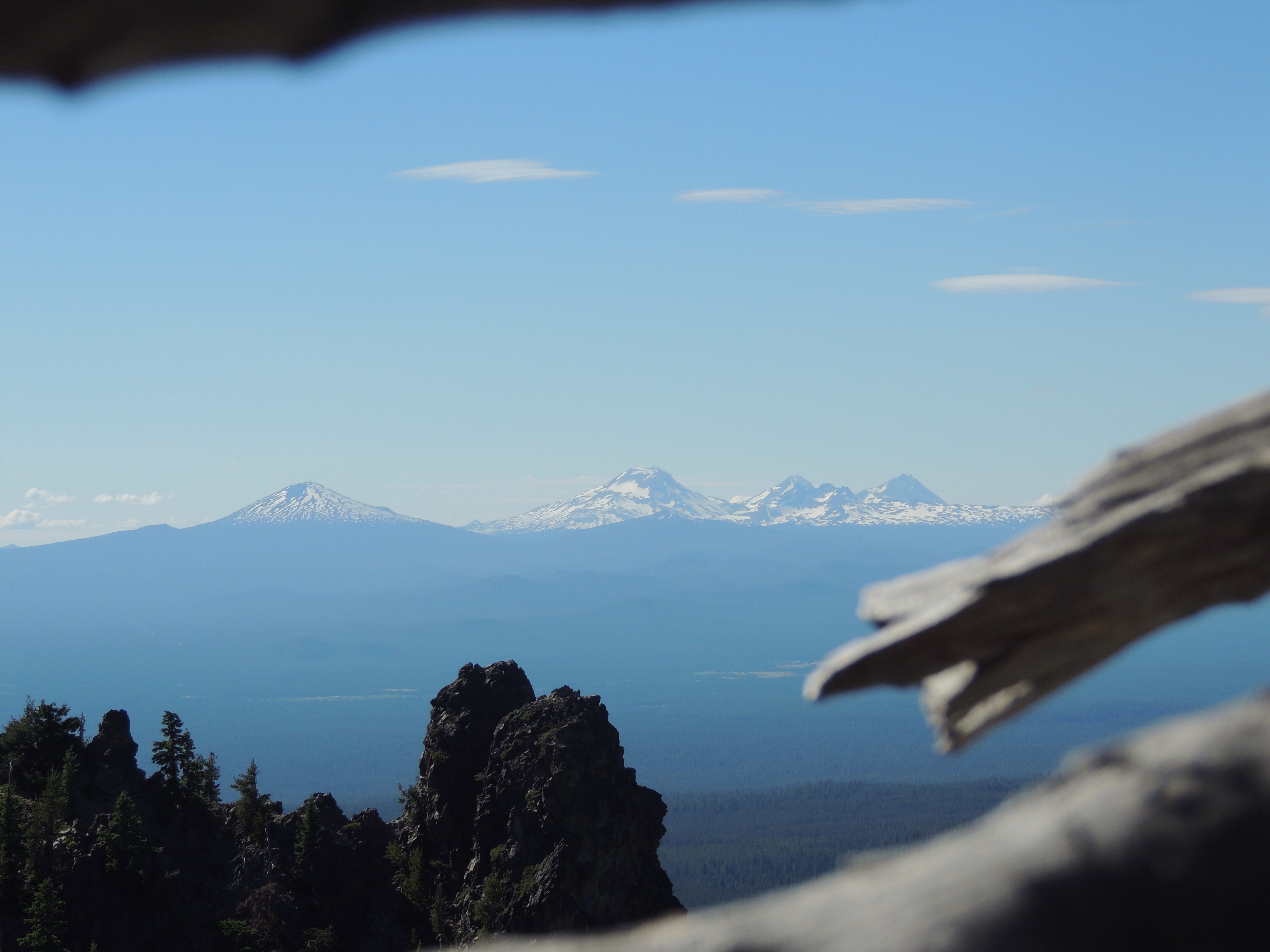
From the top, we had a 360 degree view of the area.  To the west, we could see everything in the Cascades from Crater Lake up to Mt. Adams in Washington. To the east, we could see Idaho and Nevada.  Now that’s exploring vistas!
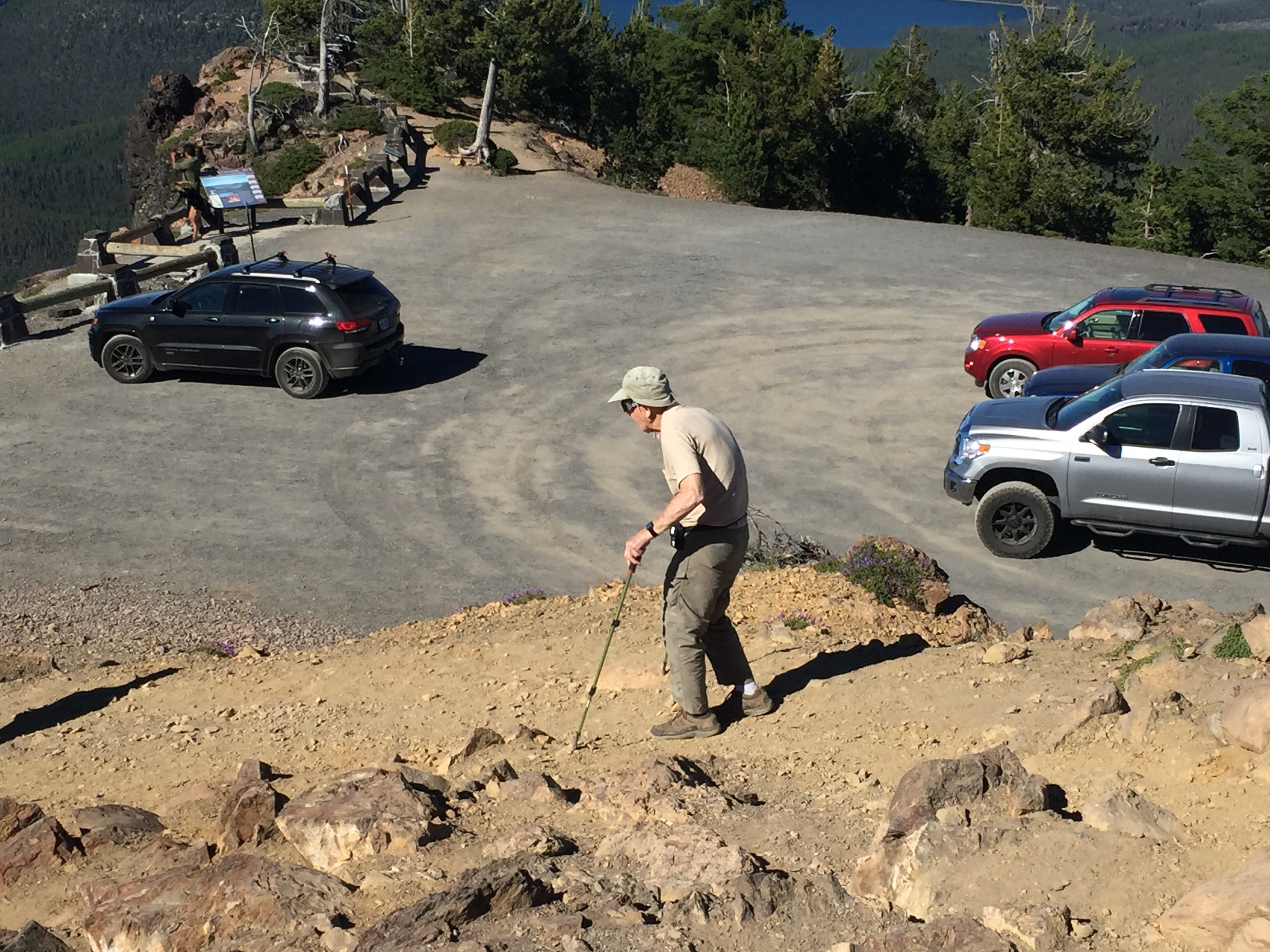
While we were there, we spoke with this elderly gentleman. 

If you ever feel like you might be getting too old to hike, refer back to this post and this photo. The view from the parking lot wasn’t good enough for him…no, he needed to climb the extra 40 feet to the summit.  You just have to love this guy.   He had a sense of humor also, as Diana asked him what the large sandy area was in the woods off to our northwest.  His reply?  “Alien landing site.”  😉

We really enjoyed our day at Newberry National Volcanic Monument.  If you ever are near Bend, Oregon, be sure to check it out!

———-

Obsidian jewelry and other great items on our exploRVistas Amazon link HERE
———-

explorRVistas is a participant in the Amazon Services LLC Associates Program, an affiliate advertising program designed to provide a means for sites to earn advertising fees by advertising and linking to Amazon .com. Shopping through our link does not add anything to your cost, but it does help support this blog. Thank you for shopping through exploRVistas!