Shipwrecks and Lifesaving on the Manitou Passage

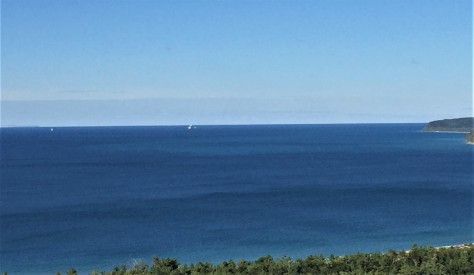
One of the consistent statements we hear from visitors to Sleeping Bear Dunes National Lakeshore is that Lake Michigan’s Manitou Passage looks like the Caribbean.  When the sun shines on these crystal clear waters, the deep blue and turquoise colors are breathtaking.
IMG_0972

Peaceful scenes such as the 1000 foot freighter American Spirit steaming past the North Manitou Shoal Lighthouse in the distance are common here in Leelanau County.  Looking at this, it’s difficult to imagine the fury the lake can unleash…often within a matter of minutes.  Many a mariner has been caught unaware in these waters, and their ships have been wrecked near these shores.
manitou-passage-chart

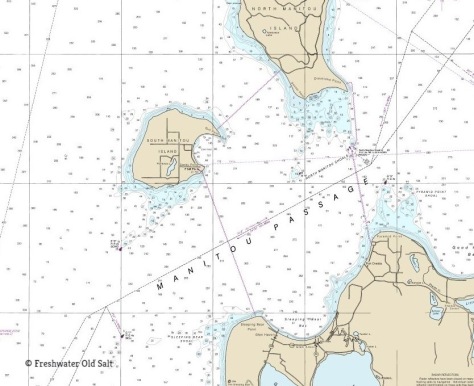
This chart shows the ideal route that ships aim for as a dotted line.  By going this direction a vessel can shave 60 miles off of their trip between Mackinac and Chicago, as opposed to going west of the islands.  This archipelago can also act as protection from strong westerly winds.  During a fierce gale in 1913, the steamer Illinois found refuge in South Manitou Island’s crescent-shaped harbor by nosing into the beach and keeping the engines running forward for 50 continuous hours.  It was at that point that the wind subsided enough for a crewman to go ashore and secure the ship to a large tree, so they could power down the ship.

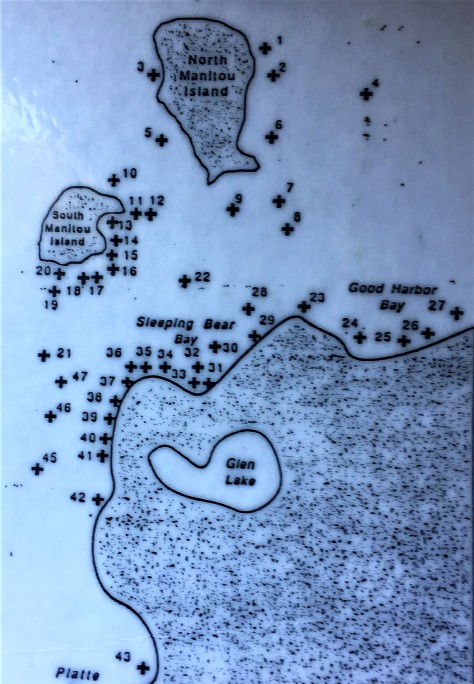
Back in late 1800’s and early 1900’s, there weren’t any decent roads in northern Michigan and the lakes were considered a highway.  It wasn’t unusual for 100 vessels to be in the Manitou Passage on a given day, as it was also a major fueling station.  Wood was the fuel of choice back then for steamships, and these shores had plenty of it.  All of that traffic, combined with the occasional storm, brought about many shipwrecks. Over 100 vessels were known to have run aground, with many of them being refloated and saved.
IMG_0684

Over 50 were left in place to be dismantled by the power of Lake Michigan’s waves.
CwbWSDbXUAA8qhs (2)

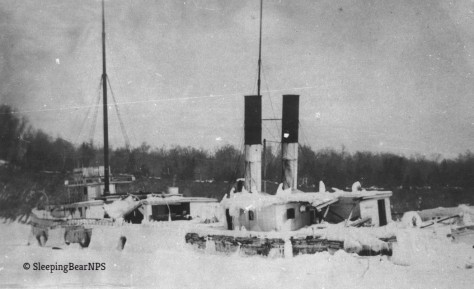
One such ship was the Walter L. Frost, which ran aground along South Manitou Island’s shore in 1903.  It wasn’t too many years until nothing remained above the lake’s surface.
IMG_0101 (1)_LI

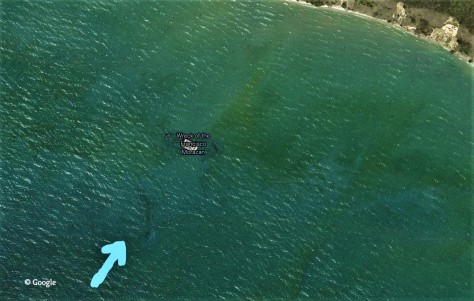
In 1960, the Liberian freighter Francisco Morazan grounded on South Manitou Island after losing power, running over the subsurface remains of the Frost (blue arrow) in the process.
IMG_0751

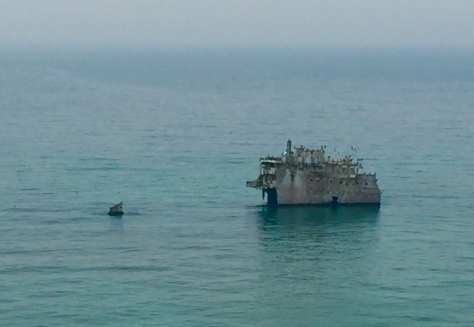
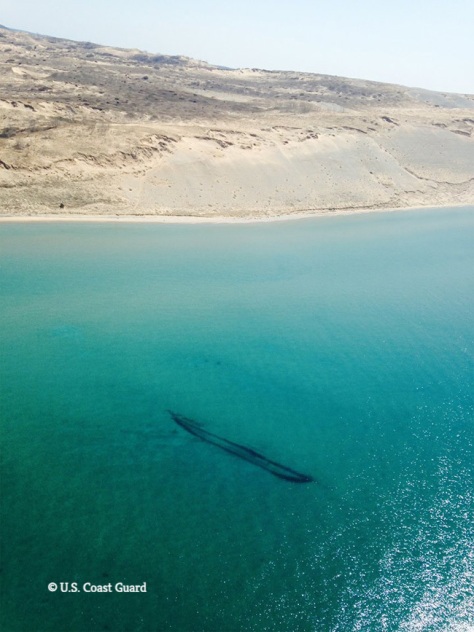
Today, the remains of the Morazan are a visible reminder of just how brutal this lake can be to a ship….
1176 (1)

…and a flyover will reveal many of the other wrecks in the passage.

We had an excellent example of the moodiness of Lake Michigan this past week.
IMG_0930

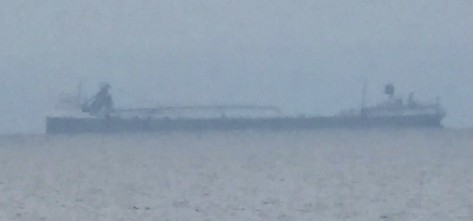
This is a photo of the 620 foot long Mississagi, heading south through the fog towards Muskegon on Thursday.
IMG_0959

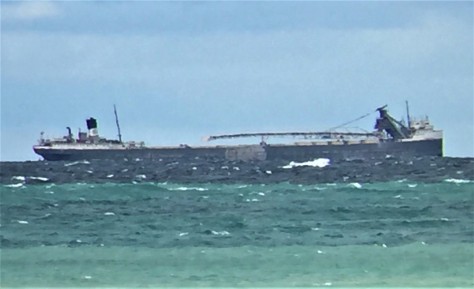
On the ship’s return northward on Friday, it was met with 50 + MPH gusts coming from the northwest.  As a reference, this photo was taken on the east side of the Manitou Islands, so the ship was not experiencing the high waves that were occurring out in the open lake on the west side.
IMG_0098

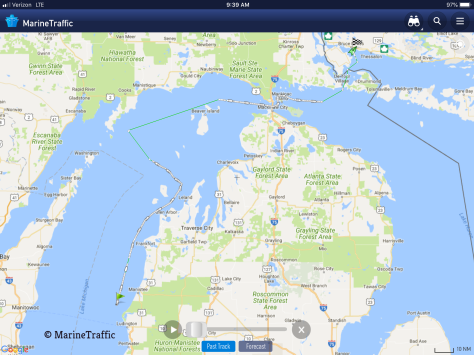
But look what the captain did once he was past Leland and North Manitou Island.  With the full brunt of the gale hitting them broadside, he choose to turn the bow northwestward and head across the lake to calmer waters along the Upper Peninsula shore.  Once there, he turned northeastward and headed towards the Straits of Mackinac.  As he passed Mackinac Island, he witnessed the only shipping casualty of that day’s storm. The tug and barge Defiance/Ashtabula had run aground.  Once the gale subsided, that ship was able to be freed from the clay bottom with little damage.  The storm was strong enough to not only close the Mackinac Bridge to high profile vehicles but also the Soo Locks.  That rarely happens.

Nowadays, rescues are performed by the Coast Guard with helicopters and enclosed motor lifeboats.  Back when the Illinois sought shelter in South Manitou Harbor in 1913, the U.S. Life Saving Service (USLSS) had other equipment at their disposal.
IMG_0477 (1)

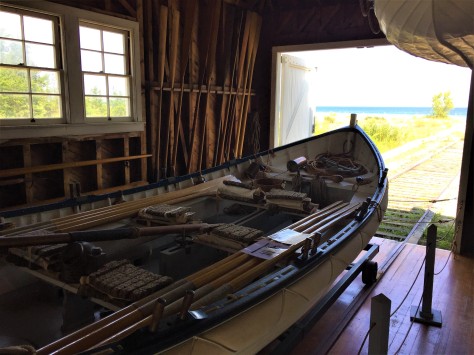
For the wrecks that were farther than 500 yards from shore, the USLSS would use an open surfboat to rescue stranded sailors.  The Sleeping Bear Point Life Saving Station performed 5% of their rescues in this manner.  But since most wrecks occurred along the shore, a beach apparatus was employed to bring the crew to safety.
g01aRESIZE

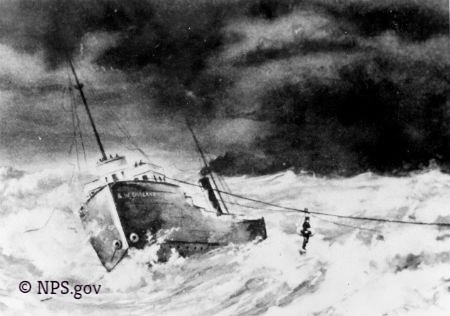
That consisted of several lines, a breeches buoy, and a cannon (called a Lyle Gun) to fire the initial line over the ship.  The breeches buoy was nothing more than a pair of pants (britches) attached to a life ring.  What this apparatus amounted to was similar to a modern day zip line.

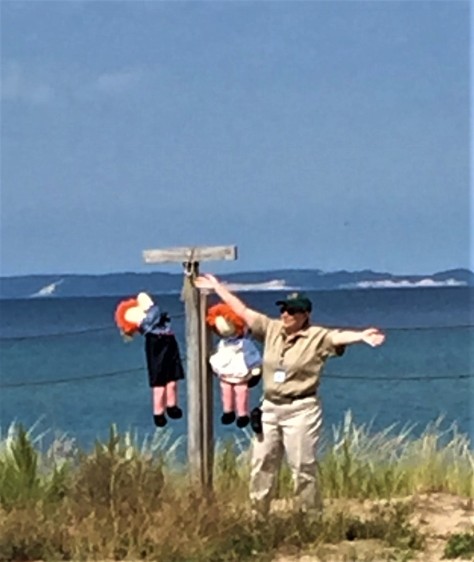
Here at Sleeping Bear Dunes National Lakeshore, we perform a daily demonstration (summer months only) of the beach apparatus using young volunteers from the audience as surfmen.  This program is called Heroes of the Storm.
IMG_2834

Here is Captain Diana with her crew, Raggedy Ann and Andy, calling for help from her stranded ship.  A simulated Lyle Gun fires a projectile with a line out to the ship, which allows the captain to drag out the heavier rescue lines.
temp (24)

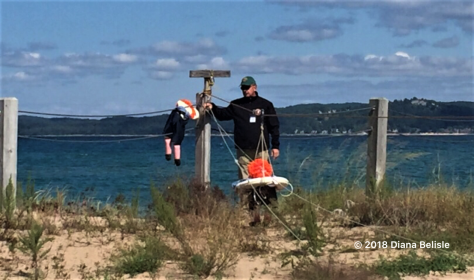
Here is Captain Jim on another occasion sending Ann towards the shore in the breeches buoy.

A special treat occurs on Thursdays, right after the Heroes program.  That is the day an actual Lyle Gun is fired.  This cannon is the only gun invented by the U.S. Army to save lives instead of take them.
temp (25)

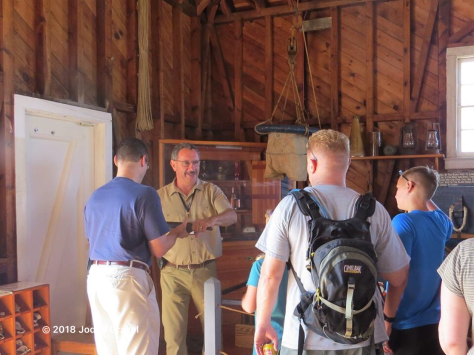
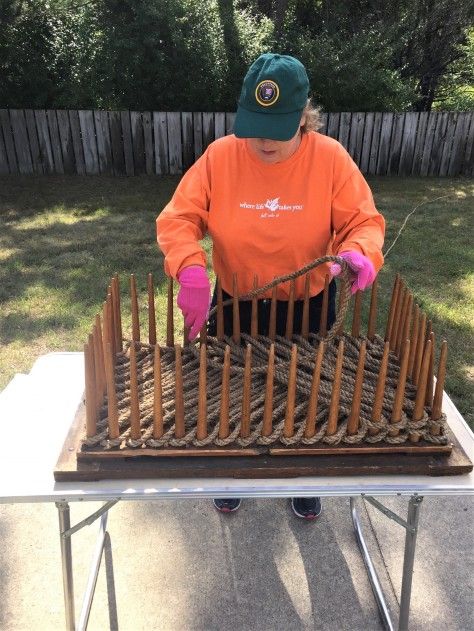
An 18-pound projectile, similar to the one I am holding here, is loaded into the Lyle gun.  A 200-yard long shot line is tied to the end of it.  That is fired out into Sleeping Bear Bay each week.  Once the line is hauled back in, it is hung along the station’s picket fence to dry.  Once dried out, it is the park volunteer’s job to ‘fake’ the line into what is called the faking box.
IMG_2833 (1)

Here is Diana winding the rope around the faking box pegs.
IMG_2832 (1)

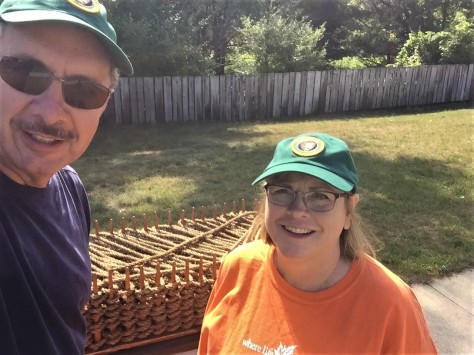
And here we are with 200 yards of faked rope.  There is a lid that is put over this afterwards. Once at the beach, the whole thing is turned over and the rope is slid off the pegs and into the lid.  Hopefully it doesn’t tangle when they fire the gun!  Let’s find out in this slo-mo video.  This took place the day we faked the rope:

Lyle Gun video: CLICK HERE

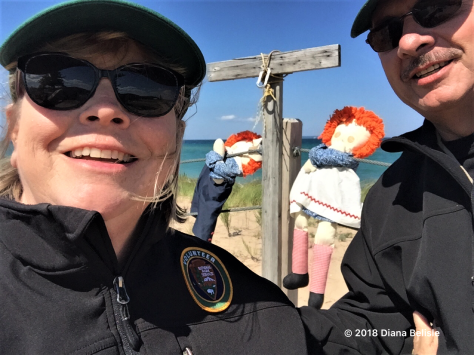
So there you have it.  That brought a smile to our faces!
temp (22)

Until next time, safe and happy travels to all!
 

The Finest Hours

“You have to go out; you don’t have to come back” 

Unofficial Coast Guard motto


September 8, 2018

A few months back, you may recall that we stopped into the Old Harbor Lifesaving Station while we were visiting the Cape Cod National Seashore.  One of the reasons for that visit was to see how a tour of a maritime museum is conducted.  Our tour guide, a National Park Service volunteer named David, inspired us with his ability to portray what life in the U.S. Life Saving Service was like.  While we were there, he gave us a tip to go see a famous Coast Guard boat that was docked in Rock Harbor, some 30 miles to the south.  It was the subject of a movie called The Finest Hours.

This turned out to be a case where history stared us right in the face and we didn’t catch it.

The next day, we set off to explore Cape Cod’s elbow, first visiting Chatham, and then Rock Harbor.  At Chatham, we parked in front of the Coast Guard station and lighthouse. This complex overlooks the Chatham Bars, a series of sandbars that extend out into the ocean.

DSCN5270

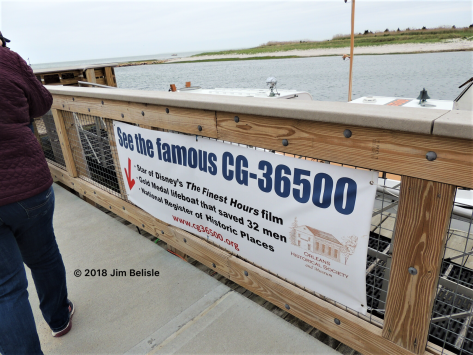
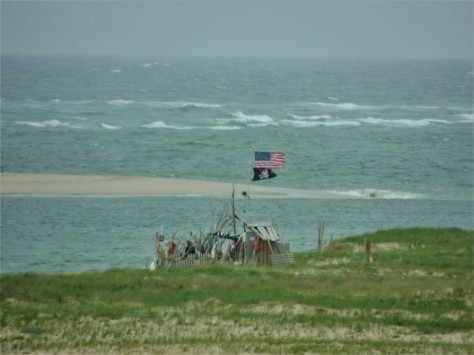
We were a bit more focused on this shack constructed along the shore, but we did note how far out the waves were breaking on the ever-changing sand bars.  Shortly after taking this photo, a driving rain came in off of the ocean, so we failed to photograph the station and lighthouse.  Instead, we headed up to Rock Harbor to see the boat that David had mentioned.  Once at the dock, we were greeted by this sign:

temp (18)

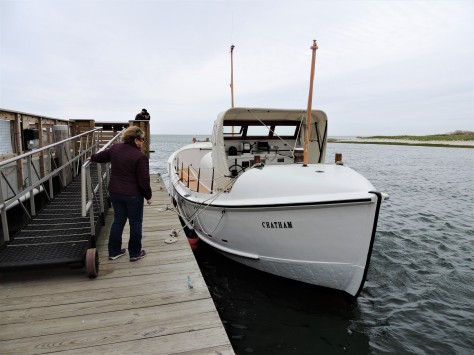
Still not familiar with the story or the film The Finest Hours, we descended to the lower dock to examine the boat.

DSCN5263 (1)

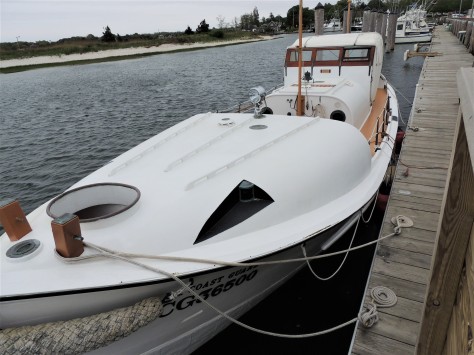
Obviously well restored and impressive to look at, the CG-36500 was tied up with little explanation to it’s storied past, short of the fact that it was a gold medal boat that had saved 32 men.  Not knowing much about Coast Guard history, we focused on how impeccable this boat was and not much else.

DSCN5264

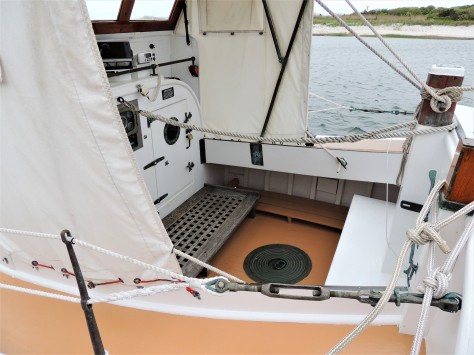
The fittings on the craft were impressive.  Still, we were somewhat more interested in the U.S. Life Saving Service on this trip than the Coast Guard, so this small beauty’s story didn’t fully grab our attention.  We left the dock with the intention to see the movie and to research the boat’s story.  One thing led to another, and that didn’t happen.

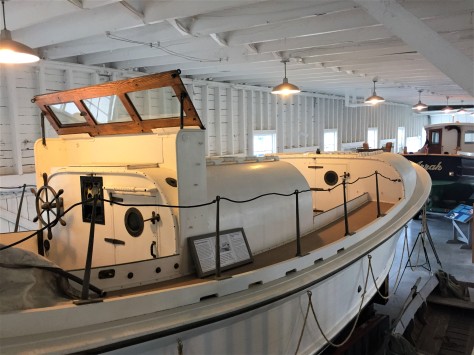
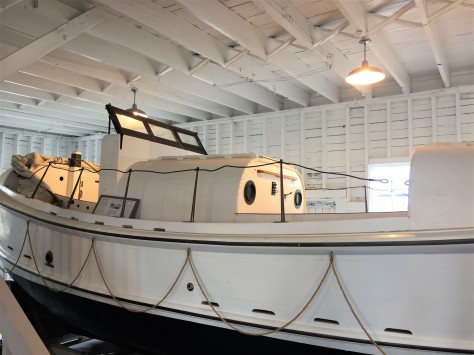
Fast forward to our boat museum in the former Glen Haven Canning Company building at Sleeping Bear Dunes National Lakeshore.   When we started our stint as volunteers here at the beginning of August, it was hard not to notice the largest boat in the museum as being similar to the CG-36500 we saw in Massachusetts back in May.

IMG_0725

Turns out it was not only similar, but built from the same blueprint.  Our boat, the CG-36527, had been stationed at Duluth, Minnesota.

IMG_0068

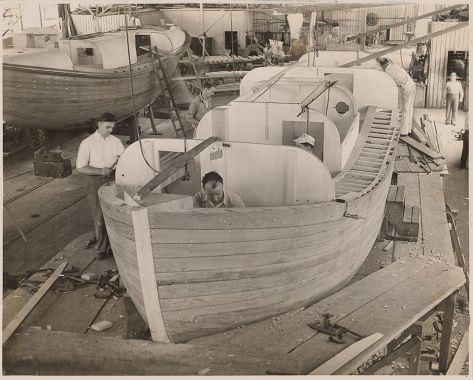
Both crafts, along with the 128 sister TRS 36-foot motor lifeboats, were built by hand at the Curtis Bay Yard in Maryland.

IMG_0724

Not being in the water, it appeared much larger than it’s fleetmate out on Cape Cod.  The boat is self-bailing, self-righting, 10 tons and its motor will run upside down.  Solid as a stone and virtually unsinkable.  It is rated to carry a crew of four and up to twelve survivors.

IMG_0827

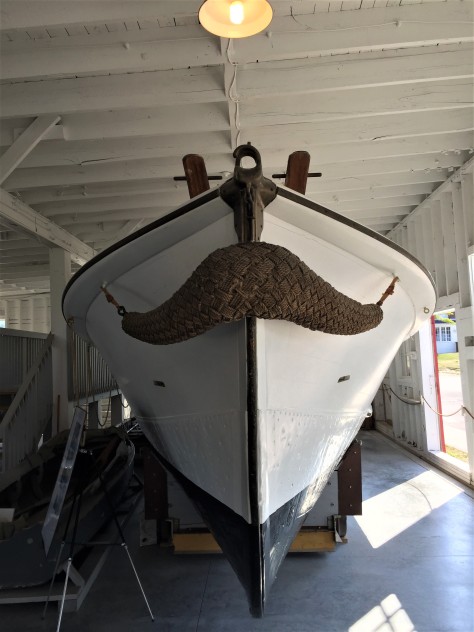
The ‘pudding’ bumper on the front is a work of art.  Visitors comment that it resembles a mustache.

IMG_0378

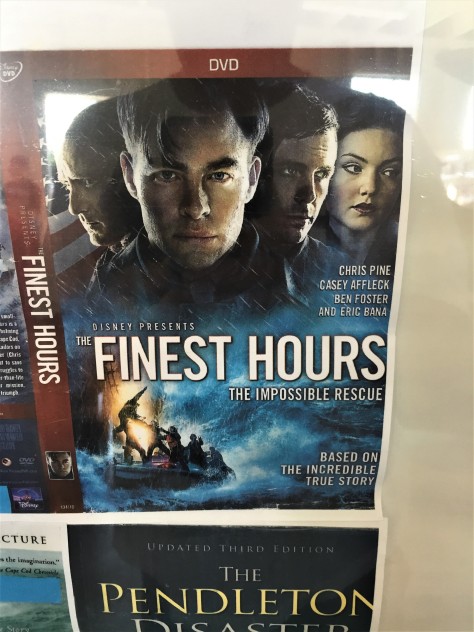
Standing on an easel by the front of the craft, this poster is displayed.

There’s that movie we failed to see…

So we watched the movie, then read the book of the same title.  The story goes like this:  A ferocious winter storm off the coast of Cape Cod in February of 1952 caught two World War II era tankers in its grip.  Both ships split in two between their bows and sterns.  The Fort Mercer was able to get a distress call off, and the Coast Guard sent most of their boats to assist in rescuing that ship’s crew.  The Pendleton wasn’t able to get an SOS off before it broke up, and it wasn’t until they were noticed on radar that the Chatham stationmaster Daniel Cluff went into action.  He ordered Boatswain’s Mate Bernie Webber to gather three other men and head out in the CG-36500 to see if there were any survivors.  Doing so meant they had to cross the dangerous Chatham Bars that we mentioned earlier.  Those sandbars have been known to rip boats to pieces in mild seas, and the waves that afternoon were upwards of 60 feet high!  Most of the locals considered it impossible.

“You have to go out; you don’t have to come back.”

Crossing the bar meant timing the waves, gunning the throttle on the upside and switching to full reverse throttle down the backside…so as to keep from driving the bow into the sand.  The ship’s compass was ripped loose and lost overboard almost immediately and the windshield was shattered.  Miraculously, they made it past the bars, but they were now running purely on Webber’s knowledge of the currents and the winds.  They somehow found the stern of the Pendleton, which was still afloat.  On deck were 33 men, anxious to get off.  (It was discovered later that the bow section had partially sank, killing the captain and crew that were in it.)

Remember, the CG-36500 is rated to carry a crew of four and up to twelve survivors.

Suddenly, a Jacob’s ladder was thrown over Pendleton’s stern and the men started down.  Webber brought the little lifeboat in close to get each man, backing away in between to keep from smashing into the tanker’s side.  Men were packed into the survivor’s cabin and onto every available space on deck.  The only man that didn’t make it was Tiny Myers, the ship’s 300 pound cook.  He fell into the sea and a wave threw the lifeboat into him, killing him.  Once everyone was on board, Webber pointed the CG-36500 back towards shore, hoping to beach it somewhere.  The tide had risen and they were able to cross the bars rather quickly.  As luck would have it, they ended up at the mouth of Chatham Harbor and were able to come directly into the dock with their soaked and freezing survivors.

IMG_0066 (1)

All four crew members were awarded the Gold Lifesaving Medal for their efforts.  They tested CG-36500’s limits, which in turn performed beyond its intended purpose for them.  The mission is considered to be the Coast Guard’s greatest small boat rescue ever.  The craft continued to serve until it was decommissioned in 1968.  It was donated to the Cape Cod National Seashore with the intention that it would be displayed in a museum.  Funds never materialized, and the boat was left to rot in a storage yard, totally exposed to the elements.  The Orleans Historical Society acquired it in 1981 and restored it to the operational beauty it is today.

PENDLETON RESCUE (FOR RELEASE)

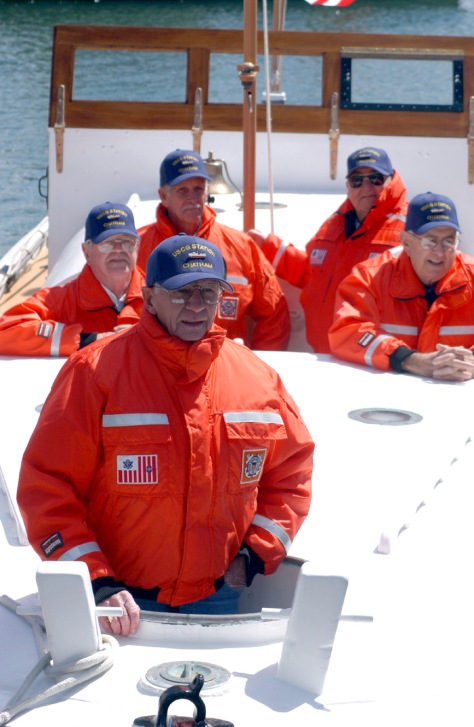
In 2002, the crew was reassembled for the 50th anniversary of the rescue, and they were able to take the CG-36500 out for a tour of the harbor with Webber at the helm..  That would have been a sight to see. Clockwise from the front:  Andy Fitzgerald, Richard Livesey, Charles Bridges (Pendleton crewmember who later joined the Coast Guard), Ervin Maske and Bernie Webber.

DSCN5261 (1)

If you find yourself on Cape Cod, be sure to stop in Rock Harbor and view this wonderful piece of history.  Maybe rent the movie or read the book. Or if you find one of the 15 or so remaining 36 footers that grace our nation’s maritime museums, take a moment to imagine that night in 1952 when the Coast Guard witnessed their finest hours.

Until next time, safe and happy travels to all!