Photographs and Memories

July 6 – 28, 2018

“Photographs and memories
Christmas cards you sent to me
All that I have are these
To remember you”

Jim Croce

Sometimes our lives move so fast, we forget to look back and see where we’ve been.  And while our 4 month rambling trip from Florida to Michigan was anything but quick, we had a tendency to focus on the road ahead to our next destination.  That all changed when we left Cooperstown, NY.  It was about then that our plans completely turned to Jello.  We knew we had several people we wanted to visit in Michigan and Indiana, but nothing spoke to us as what route to take or what order to do it in.  We had several options to choose from.  Day by day, the next stopping point was chosen, but the overall route continued to elude us.  What we didn’t realize was that a single event was going to end up choosing our path for us.  And once we were here, it turned out that each location held a period of reflection for us, filled with boxes of photographs and memories.

Our first stop beyond Cooperstown was Seneca Lake, NY.

Rig at White Springs Winery

We had wanted to spend some time at one of the several Harvest Hosts locations that our friends Linda and Steven (The Chouters) had stayed at last year.  We chose this dandy spot at White Springs Winery, just south of Geneva.

Jim at White Springs Winery

It was a great place to not only share a bottle of Pinot Grigio, but to enjoy a fabulous view!  Our original plans had us staying at two separate wineries, but we opted to move further down the road after a two night stay.

From that point, we had to decide whether to route through Canada or the United States.  We chose the latter, as we were thinking we would want to visit my aunt and uncle in Indiana first.  We spent a few nights at Westfield, NY on the southern shore of Lake Erie.

Barcelona Lighthouse

This charming little community is home to the Barcelona Lighthouse, which was built in 1829.  It has the distinction as being the first lighthouse to be lit using natural gas.  A concrete dome was built over a spring a half mile away to trap escaping gases, and a pipe was laid between the two structures.  Pretty fancy technology for the early 1800’s.  We also discovered that the area is a major grape-growing region, and was home to Welch’s near the end of the 19th century.

It was at this location that our route became clearer.  Diana received a call that her aunt wasn’t doing well.  We’ve always been close to Aunt Marion and Uncle Bob, so we made tracks for Flint, Michigan without haste.  We stopped at Cabela’s in Dundee, Michigan for the night, close to 300 miles from our starting point that morning.

Cabelas Dundee display

If there is one thing that Cabela’s does well, it’s how they showcase the mounts in each store.  The displays in this 225,000 square foot location are spectacular.  Instead of one musk ox, they show an entire herd of them facing off against a pack of wolves.

By the time we reached Flint the next day, Aunt Marion had passed.  We were fortunate to get a camping spot at the Flushing Moose Lodge just a few miles from Bob and Marion’s home, which ended up working very well for us.  We spent the next days with family, sorting through photographs and remembering happier times.

Bob and Marion

Here is a photo of Bob and Marion, looking their usual dapper selves.  🙂  They were quite a duo.  Marion was Diana’s mother’s sister.

During our stay, we took the opportunity to drive by Diana’s childhood home and to visit the cemetery where her parents are buried.  On the way back to Flushing, we drove by the house where Diana’s mother grew up in Goodrich.  This also was the spot where Uncle Bob met Aunt Marion over 70 years ago.  The current owners were outside, so Diana mentioned to them that her grandparents used to live there.  They graciously invited us in!

Diana at Grandma's house

Needless to say, Diana was overjoyed to be able to show me the home.  Many memories were shared, and several of the owners questions were answered as to how the house used to be. The woodwork on the stairs to the basement survived several remodels.

After the funeral, we headed north to visit my sister Judy and brother-in-law Dale in Harrison, Michigan.  We attended a benefit concert for the local library and visited the local veteran’s museum that Dale helps out with.

Grandpa Belisle

One of the displays was of Judy’s and my paternal grandfather, a veteran of World War I.  He was a Canadian citizen at the time, fighting as a U.S. Army soldier.

Jim paddleboarding

While we were there, I even had the opportunity to try out Judy and Dale’s paddle board.  I never fell off, but I sure felt it the next day!  🙂  Judy and I also pulled out a box of family photos, as I was looking for a particular photograph.  I never found it, but I did come upon this gem:

GG Schmitt

This is my Great Grandpa and Great Grandma Schmitt.  He’s the one who built Old Mackinac Point Lighthouse, among other things.  This photograph is probably from the 1870’s.  We are only three generations apart, despite the many years.  Do you think we look a bit like each other?

From Harrison, we headed south towards Indiana.  We stopped along the way at the Moose Lodge in Otsego, just north of Kalamazoo.  We used that as a base to travel down to see my aunt and uncle.  We also went to dinner with our friends Mike and Cindy, and then the next night with Paul and Sheryl.

Vennix's and us

We completely forgot to get a photo with Paul and Sheryl, but here we are with Mike and Cindy.  There was lots of catching up on what we’ve all been doing.  Two great evenings with two sets of wonderful friends.  🙂

And in Indiana, we were able to catch up with Uncle Ed and Aunt Marge, two of my mom’s siblings.  Uncle Ed wasn’t feeling the best, so we didn’t pester him with a photo.  While we were at Aunt Marge’s, we took a look through her photos to see if I could find the family photo I was looking for.  No luck again, but I did find these beauties:

Grandpa and me

Here I am with my maternal grandfather in 1976.  He was 92 and I was 18 at the time.  For the record, I loved Detroit back then and I still do today.

Grandma and Grandpa K

And here are my maternal grandparents, just before World War II.  Grandma is the daughter of the Schmitts in the earlier photo.

Mom and siblings

And here is my mom with my aunt and uncles.  Uncle Ed is in front, with (left to right) John, Mom, Marge and Fritz behind him.  All three boys would soon be in the war and Aunt Marge in the convent.

Aunt Marge and me

And that is where she is today, as sharp as ever at 94 years young.  It was great to be able to spend time with her and Uncle Ed.  🙂

We’ve spent the past few days taking care of doctor and dentist visits, and the general things we like to take care of around Grand Rapids.  We visited my parents’ graves and even found my buddy Richie’s crypt in a mausoleum in the same cemetery.  That kind of knocked the stuffing out of us for a bit.  You might recall him from our post, Reflections in the Rear View Mirror.

So after a bit of a pause while sorting through old photographs and memories, we are ready to move forward and make some new ones.  This week we head north to Leelanau to start a new adventure for us.  Be sure to stay tuned for our next post, as we describe what that entails.  Until then, safe and happy travels to all!


Cooperstown and the Baseball Hall of Fame

“The one constant through all the years has been baseball. America has rolled by like an army of steamrollers. It has been erased like a blackboard, rebuilt and erased again. But baseball has marked the time. This field, this game: it’s a part of our past. It reminds us of all that once was good and it could be again.”

James Earl Jones as Terence Mann, Field of Dreams  – 1989

July 2-6, 2018 – Cooperstown, New York

After leaving Lake George, we decided to head to Cooperstown, NY.  This is a place that celebrates so much of what my early years were about: the game of baseball.

Growing up in suburban Detroit, my world centered around the Detroit Tigers.  That was passed down from my dad. As a teenager, he would jump on a streetcar in River Rouge and head to what was then known as Briggs Stadium to see the legends of the 1930’s play.  Stories of the Tigers greats were a given, but they were also peppered with other heroes like Babe Ruth and Lou Gehrig.  Detroit was the only team in the majors to top 1 million a year in attendance during the Great Depression (in 1935 and 1937), which shows the depth of the love of the game in the Motor City.  On many occasions in the late 1960’s and early 70’s, Dad would come home from work and say “Jimmer, want to go to a game?”  Within half an hour, we were in the bleachers cheering on our Tigs.  Quite often, those excursions would include my sister and my mom.  Judy could have become a baseball statistician, as she was awesome at filling out a scorecard. Mom loved the game also, and was one of those gals who would come ten feet out of her seat when the Tigers scored a run.  It didn’t matter that Detroit itself was falling apart at the seams, as baseball seemed to transcend the tensions of that era.

So coming to Cooperstown is like returning to Tiger Stadium for me.  Diana and I were here one other time in the 1980’s, and we were awestruck by the quaint charm of the town and beauty of the area.  At that time, we had dropped down along Lake Otsego from the New York Thruway.

I88 in NY

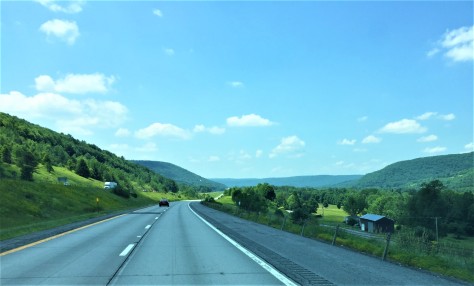
This time, we came in from the south.  We were amazed how beautiful the scenery was on the southern route along Interstate 88.  If there is one thing that has become apparent to us on this trip, it’s that the State of New York is an absolutely gorgeous place. 🙂

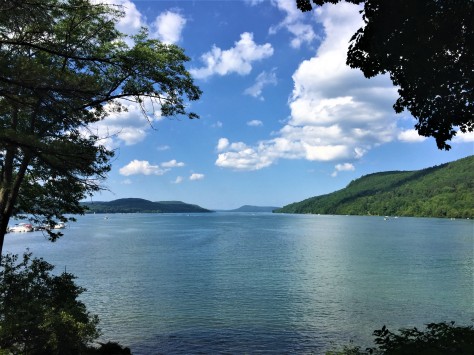
Lake Otsego

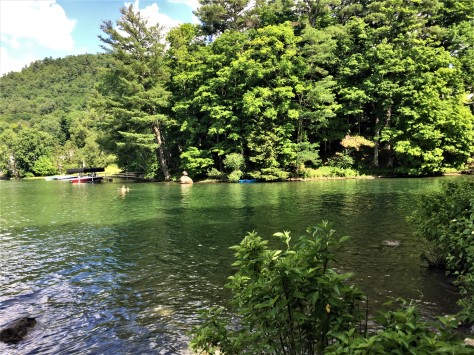
Cooperstown itself is a cozy little hamlet, nestled along the southern shore of Lake Otsego.

Mouth of Susquehana

It is here that the Susquehanna River begins it’s long journey to Chesapeake Bay.

While most of the stores on Main Street are baseball themed, there are a few that are normal, small-town America establishments.

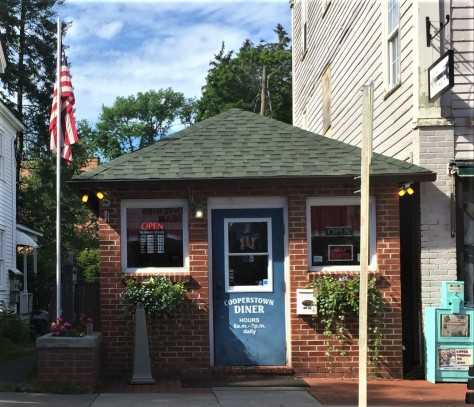
Cooperstown DIner

One of those is the Cooperstown Diner.  Strictly a short-order type of place, you practically have to back out after eating, as there is no room to turn around.  We ate there on our first visit and enjoyed it.

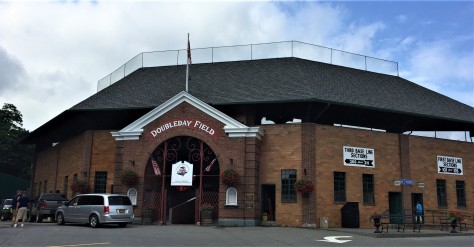
Doubleday Field

Tucked behind Main Street is Doubleday Field.  This is the ‘home’ of baseball, as lore has that Abner Doubleday and friends first played the game on this spot in 1839.  Back then, it was a cow pasture.  During baseball’s centennial year of 1939, the first All Star game was played here.  That was also the year the Hall of Fame opened its doors.  Since then, there has been an annual Hall of Fame game played here between two major league teams, along with 350 other baseball contests of some sort.

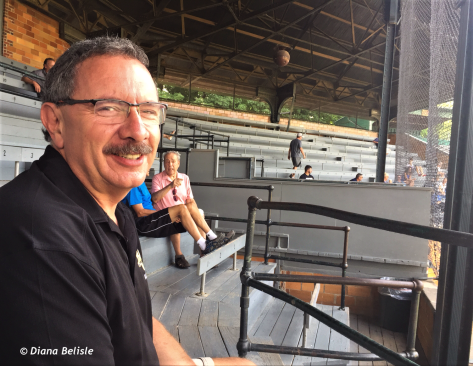
Jim at Doublday Field

Watching a game here is a treat, as is evident by the smile on my face.   Sitting on the wooden benches brought new meaning to the term ‘box seats’.  🙂

The Hall of Fame itself is tucked into a series of storefronts at the east end of Main Street.  One of the first things seen upon entering the building are a series of 30 lockers, each one representing a major league team.

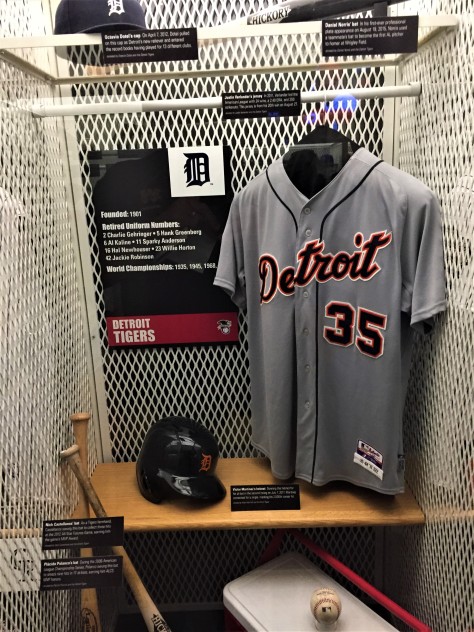
Tigers locker

Here is the Detroit Tigers locker, which contains a few items that relate to the team.  In case you are wondering, Jackie Robinson didn’t play for the Tigers; the commissioner retired his number league-wide on April 15, 1997.  That was the 50th anniversary of Robinson breaking the color barrier in the majors.  Also, since no one wore a number in the early days of the game, Tiger great Ty Cobb didn’t have a number to retire.

Many other Tiger items were scattered throughout the building.

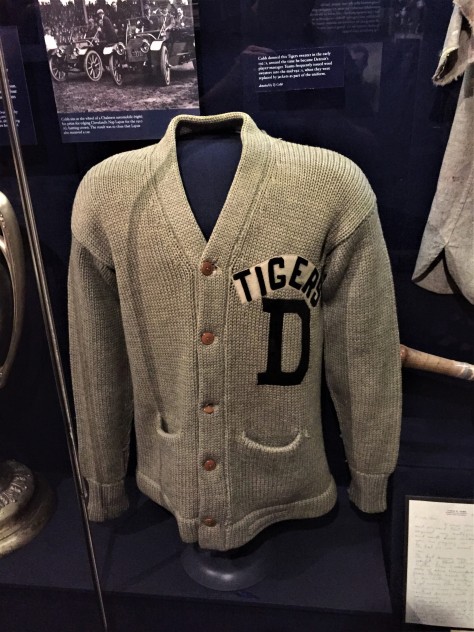
Ty Cobb sweater

This is Ty Cobb’s warm-up sweater.  Teams now wear jackets during chilly games.

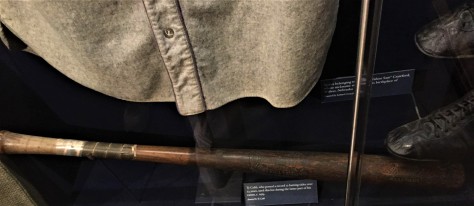
Ty Cobb bat and spikes

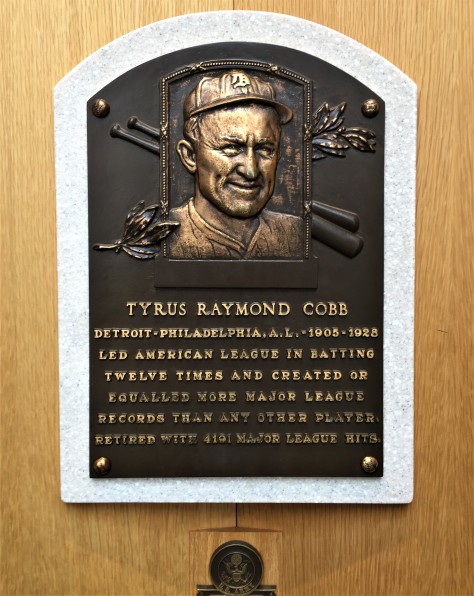
They also had one of his bats and his spikes.  Legend has him portrayed as a dirty player, born from his take-no-prisoners style on the base paths and his aggressive style of play.  By the time his career ended in 1928, he has amassed 90 major league records.  Many of those still stand today.  After his baseball career, he became a successful businessman and was a generous philanthropist.

Another larger than life player from that era was Babe Ruth.  The Hall of Fame has an entire section devoted to him.  George Herman ‘Babe’ Ruth was born and raised in Baltimore, where he had a reputation as a hell-raiser.  He was sent to a Catholic reformatory at age 7, and was eventually taken under the wing of Brother Matthias.  During his twelve years at the school he became proficient at stickball and baseball, eventually being noticed by the then-minor league Baltimore Orioles.  From there, his contract was purchased by the major league Boston Red Sox.

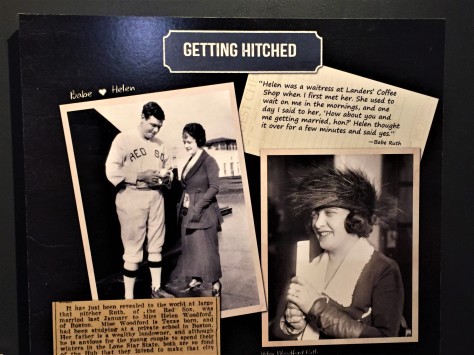
Babe and Helen Ruth

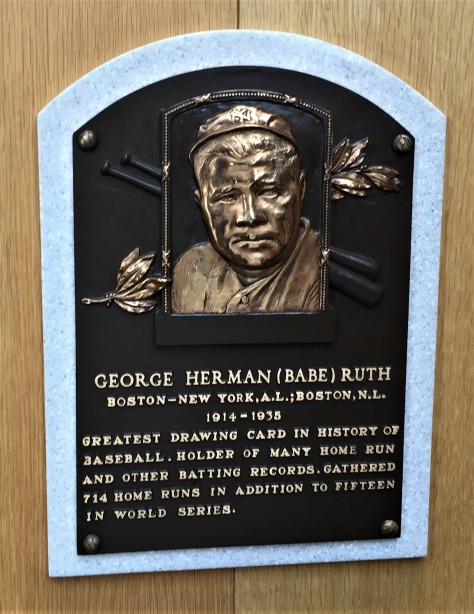
The day he arrived in Boston, he met a waitress at a coffee shop named Helen Woodford.  Before long he proposed to her with the line, “How about you and me getting married, hon?” I chuckled at this, as everyone is “hon’ in Baltimore.  🙂  She said yes, and the teenagers were married three months after that first meeting.  Babe went on to become one of the greatest players the game has ever seen.  His 575 foot home run at Navin Field (later Briggs Stadium and then Tiger Stadium) in Detroit still stands as the longest home run in major league history.  His career 714 home runs stood from 1935 until 1974.  Sadly, Ruth died from esophageal cancer at age 53.

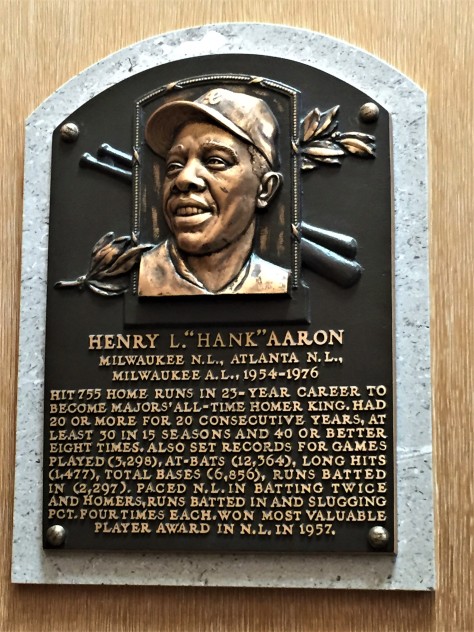
The person who broke Babe’s home run record in 1974 was Henry Aaron.  Hammerin’ Hank, an African-American, received hate mail and death threats at the prospect of him breaking Ruth’s record.  After finishing the 1973 season with 713 homers, his biggest fear was that he wouldn’t live to break the record the following year.  He did, and he ended up finishing his career with 755 home runs.  A home run that didn’t count towards that total was one he hit in the 1971 All-Star Game in Detroit.  I was one seat behind the guy who caught it in the upper deck of right-center field.  The ball had a dent in it, resulting in it not flying straight (and me ducking).  My dad so wanted to catch it for me, but the guy in front gave it to his boy, and the kid was overjoyed.  I told Dad, ” That’s ok, Dad…look how happy he is!”

Hank Aaron medals

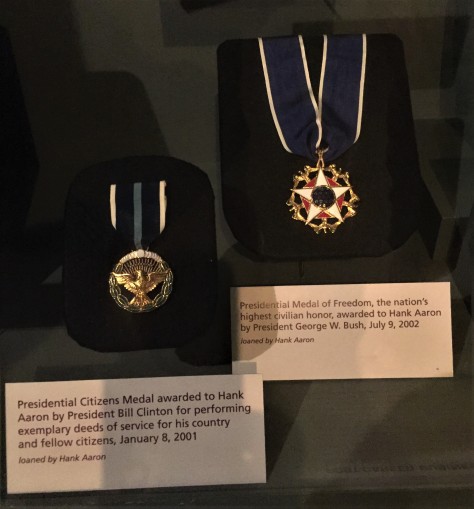
Aaron was awarded the Presidential Citizens Medal and the Presidential Medal of Freedom by Presidents Bill Clinton and George W. Bush for his contributions to the United States.

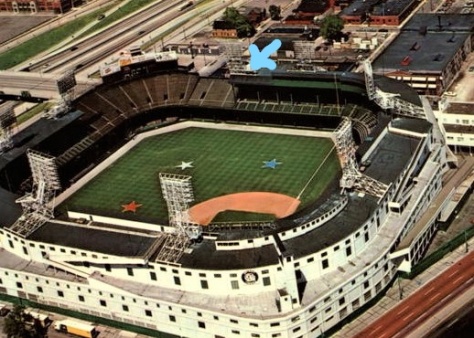
Another story from the 1971 All Star Game was the home run that Reggie Jackson hit.  We were sitting in the upper deck below the light tower in right-center, which was hidden from our view by the roof above us.  The ball jumped off of Jackson’s bat and he stood in awe (as did the rest of us) as the ball rose high in the Detroit sky and over our heads.  When the ball fell back to the field, we assumed it had hit the roof.  We found out after the game that it actually hit a transformer on the light tower, a whopping 400 feet from home plate.  Had that tower not been there it could have easily surpassed Ruth’s record homer on the same piece of real estate, as the ball was still rising when it hit.

Tiger Stadium at All Star Time Detroit

Because it struck the transformer (see the blue arrow in the photo above), it technically was not hit out of the park.  Diana and I were fortunate enough to witness him finally clear that roof to the right of that arrow in 1984 when he played for the Angels.

There are so many memories for me in that stadium.  With two complete decks circling the field there was a constant level of sound from the crowd, even when nothing exciting was happening.  At the point when something did happen, the place erupted.  When Mom, Dad, Diana and I saw our last game there in 1999, I stopped Dad as he started to walk down the tunnel to leave the stands.  I wanted to get one last glimpse of the field with him, knowing the Tigers were moving across town the next season.  He reluctantly turned, revealing tears in his eyes.  Neither one of us said a word.  We didn’t need to.

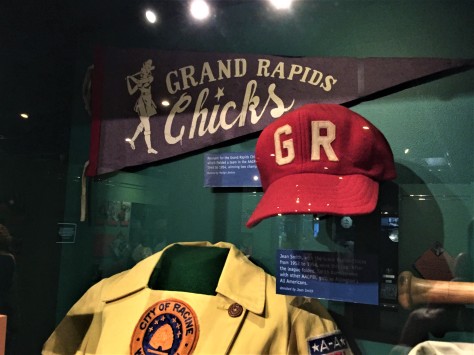
Back to Cooperstown.  The Hall of Fame covers all aspects of the game, including the Negro Leagues, the Latin connection. and the All-American Girls Professional Baseball League.  The latter was founded during World War II to keep baseball in the public eye, as there was a fear that the majors would cease play due to a lack of players.

Grand Rapids Chicks

Teams such as the Grand Rapids Chicks, the Rockford Peaches, and the Kalamazoo Lassies were highlighted in this exhibit and in the movie A League of Their Own.

San DIego Chicken

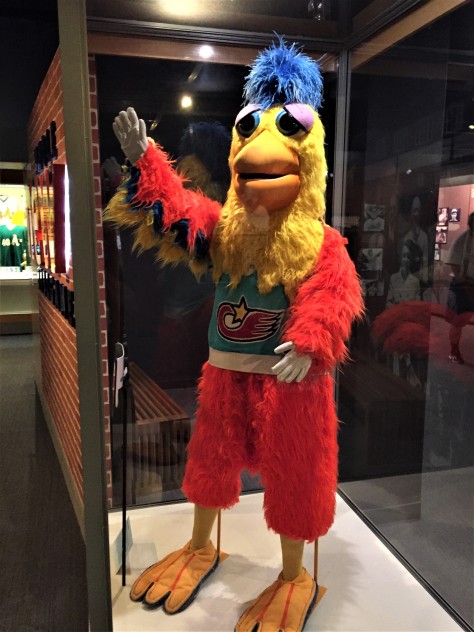
And who can forget the San Diego Chicken?  🙂

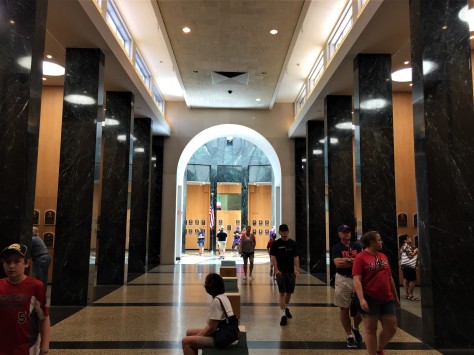
The actual Hall of Fame is the place where the plaques of baseball’s greats are showcased.

Baseball Hall of Fame

It extends to a central point where the original 5 inductees are displayed.

Ty Cobb

Right in the middle of those 5 is Ty Cobb, sporting the Tiger’s Olde English D on his cap. 🙂

Babe Ruth

Next to him is Yankee great Babe Ruth, one of the most beloved players ever.

Hank Aaron

And here is Hammerin’ Hank Aaron, who holds that spot in my heart from 1971.

A couple of the many Tigers in the Hall that are special to me are…

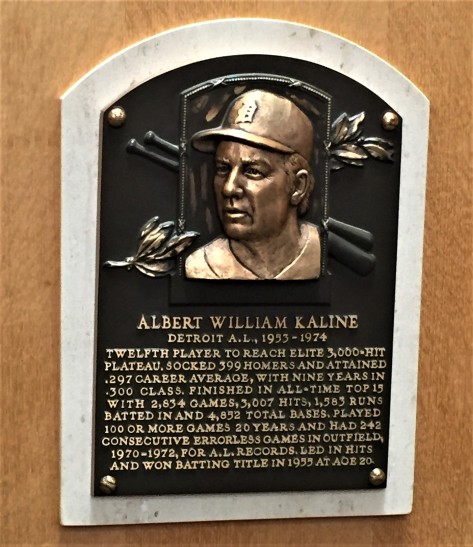
Al Kaline

…another Baltimore native, Al Kaline.  One of the greatest Tigers ever, he started with the team at 18 years old and is still employed by the team at the age of 83.  You may recall our post Al Kaline and a Day with Family that included a giant photo of him that we delivered to Diana’s brother in Florida.  Dan had won a Detroit Free Press contest as a child after he wrote to explain why his school should get the photo, and was dubbed the World’s Greatest Al Kaline Fan.  His school displayed the photo for awhile, then offered it back to Dan.

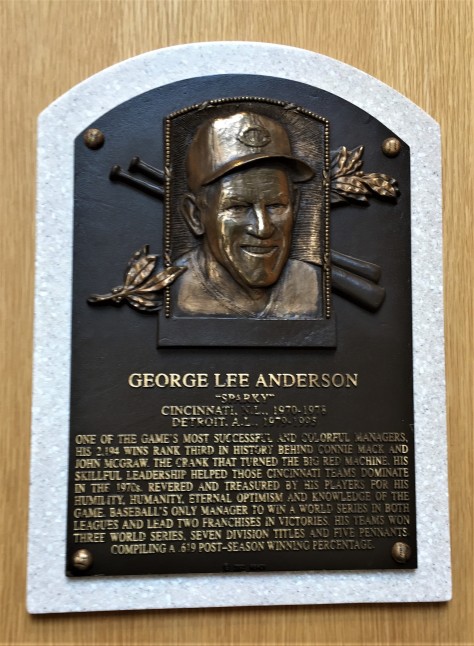
Sparky Anderson

And a fan favorite, long-time Tiger Manager Sparky Anderson.  Even though he managed many more years with the Tigers than he did with the Reds, he wanted his plaque to have him in a Cincinnati cap, as they were the ones who first took a chance with him.  A classic exchange between him and Kirk Gibson during the 1984 World Series can be seen at the end of this post.

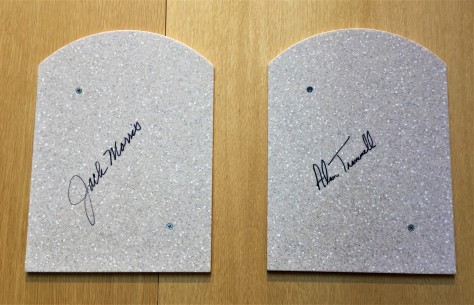
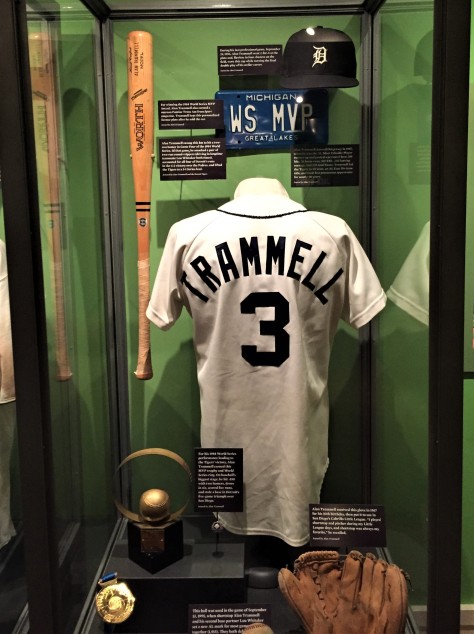
The 1984 Tiger team has two members being inducted into the Hall this year: Jack Morris and Alan Trammell.

Trammel and Morris

The backing plates with their signatures stand ready for their plaques.

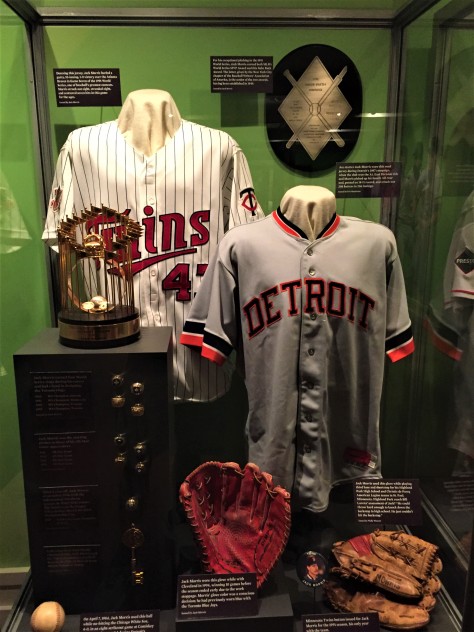
Jack Morris

Just outside the Hall is a display with some of Morris’ memorabilia…

Alan Trammel

…along with some of Trammell’s treasures.

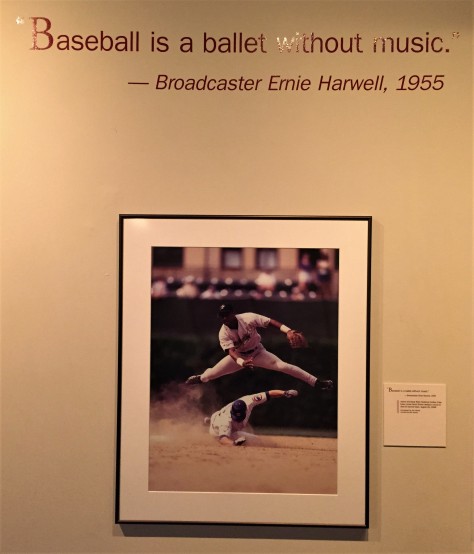
Ernie quote

And my all-time favorite Tiger was the guy who penned this quote:  Ernie Harwell.  He was the radio announcer for most of my life.  To most Detroiters, his voice was the music of the game the city loved so much.  Many summer nights were spent listening to him on my transistor radio next to my bed.  His easy Georgia accent was very soothing to listen to.  When a batter took a called third strike, Ernie would say, “He stood there like a house by the side of the road,” and a Tiger home run would result in, “That ball is LOOOOOOONG gone!”  On a foul ball into the stands he would say, “A man from (insert a name of a Michigan town) got that one,” as a way to acknowledge listeners from the region.  As a kid, it took me many years before I realized he really didn’t know where the person who caught the ball was from.  🙂

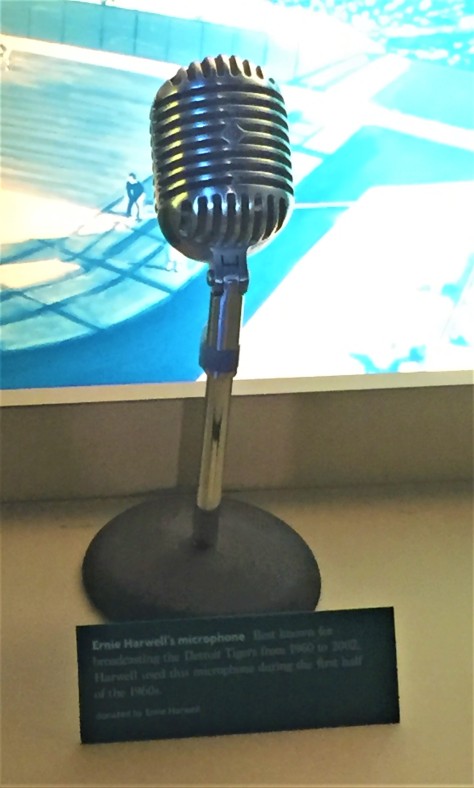
Ernies mic

Ernie’s microphone is displayed in the Hall of Fame, along with an audio recording of him calling the first inning of the last game ever played at Memorial Stadium in Baltimore.  I actually remember listening to that game.

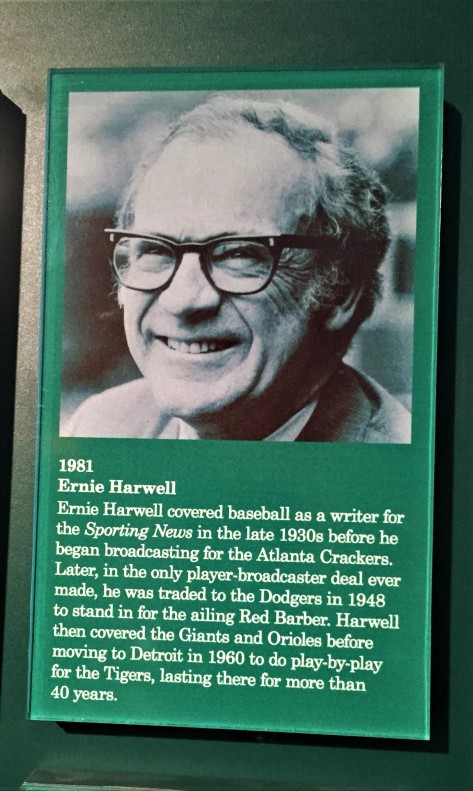
Ernie Harwell

He is enshrined at Cooperstown as a Ford C. Frick Award winner, given to broadcasters for their major contributions to the sport.  A recording of some of his calls can be heard by clicking HERE.

And the Sparky Anderson video can be seen HERE.

Be sure to listen carefully to Sparky’s voice after Gibby’s home run.  It’s classic. 🙂

That wraps up our time in Cooperstown.  Be sure to stay tuned as we head back to Michigan to spend time with family and friends.  Until then, safe and happy travels to all!


Lake Placid and the Adirondacks

June 25 – July 1, 2018 – Adirondack Park, New York

One of our first vacations as a married couple was a 1985 trip to Lake Placid and the Adirondacks in upstate New York.  This was before we started our series of trips to Maine, which began a year later.  Since it had been so long, one of our goals this year was to return to the Adirondack region to reacquaint ourselves with the area.

Adirondack Park covers 9,375 square miles, about 1/5 of the entire state of New York.  It was created in the late 1800’s to keep the wilderness from being over developed.  The preserve includes over 100 towns, making it different than a traditional state park.  It is overseen by the Adirondack Park Agency, which puts limits on what can and can’t be built within the park boundaries.  The state’s highest peak, Mt. Marcy, is found here along with a number of other tall mountains.

One of the most popular communities is Lake Placid.  Home to both the 1932 and 1980 Winter Olympic Games, this village has established itself as a training mecca for Olympic athletes. It is also a tourist destination, as the outdoor recreational possibilities seem endless.

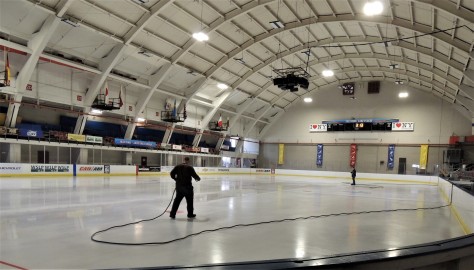
1932 Rink

This is the 1932 Olympic rink.  Not a lot of room for spectators!  We were enjoying watching the workers prepare for an upcoming figure skating event.  That brought back a lot of memories for me, as I worked as a Zamboni driver while I was in college.

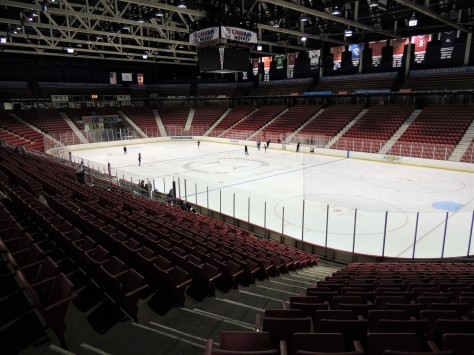
1980 Rink 1

Next door is the 1980 rink, now known as Herb Brooks Arena.  This is where the US hockey team beat the Russians, then went on to win the gold medal by defeating Finland.  As you enter the rink, the sign above the door states “Home of the Miracle on Ice – Site of the Greatest Sporting Event of the 20th Century”.  Some may debate that last part, but it certainly was right up there.  A personal side story to that: The night the US team beat the Russians, our Western Michigan University hockey team was also hosting a game.  My friend and fellow Zamboni driver, Mike, and myself were watching the college game from the stands. You have to remember, this was during the Cold War and although hopes were high, no one thought the US stood much of a chance against the Russian team.  Our pro shop manager came up in the stands to tell the public address announcer that the US team had won, but stopped to tell us first. After a little quick thinking, we instead returned to the pro shop and grabbed a piece of poster board and wrote “FINAL – USA 4, USSR 3” on it.  We rolled it up, grabbed some hockey tape and headed to the Zamboni.  Our lead driver, John, didn’t see us sneak into the Zamboni room and tape it on the front of the machine.  After the period ended he backed onto the ice and started circling the rink, and the place went absolutely wild!  It was like a wave as the crowd saw the sign as he went around and rose to their feet, roaring far louder than they had for Western scoring a goal. The look on his face was priceless, as he never had been cheered for doing his job.  As he stopped by the guy pulling the net pins from the ice, he was told to look at the front of the machine.  He climbed down, looked at the front and thrust both arms in the air.  The crowd lost it.  🙂

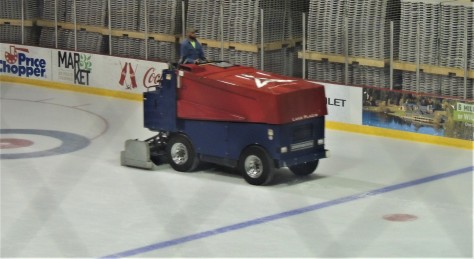
Zamboni at Lake Placid Olympic Ice Center

Attached to the back of the 1980 Olympic arena is a third rink.  This is where the curling events took place.  It was interesting to see that it wasn’t a dedicated facility, in that it also could be used for hockey and figure skating.  It sure would be fun to be up in that Zamboni driver’s seat again!

Inside the arena complex, we toured the Lake Placid Olympic Museum.

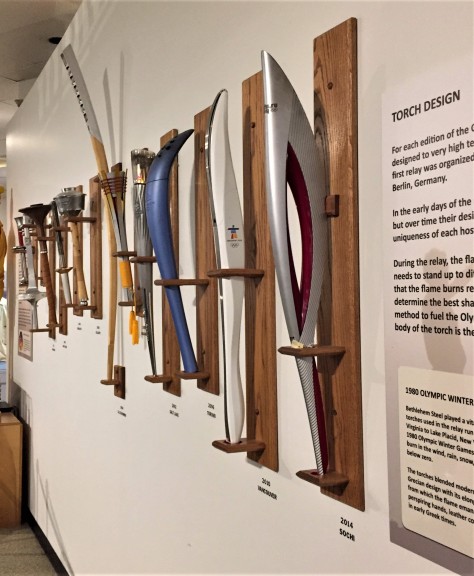
Torches from several Olympic games over the years.

We found this collection of Olympic torches to be interesting…

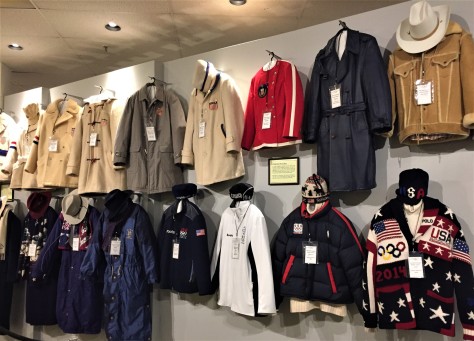
Uniforms from the US Olympic teams from the Winter Olympics over the years.

…as were the uniforms worn through the years by the US athletes at the opening and closing ceremonies.  There were other items that had to do mostly with the two Olympics that took place in Lake Placid.

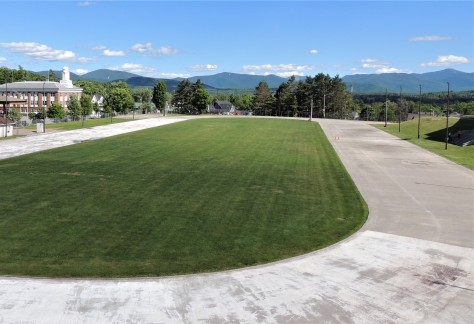
Lake Placid Olympic Speed Skating Oval

Across the street from the arena complex is the outdoor speed skating oval.  This is where Eric Heiden won his five gold medals in 1980.  We were surprised that it was outdoors, as the newer Olympic venues are all inside.  What a view!

Just down the road in the town of North Elba is the Ski Jumping Complex.

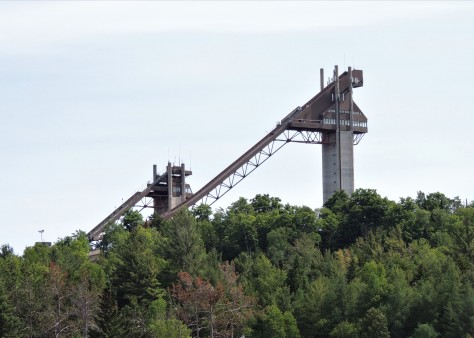
Lake Placid Olympic ski jumps

The 90 and 120 meter hills are easily seen from most places in the Lake Placid area.

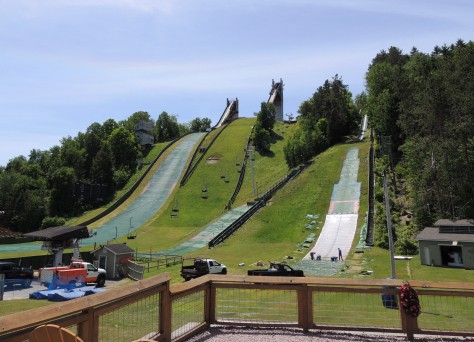
Lake Placid ski jumps from the new event center at the bottom

This is the view from the deck of the new Intervale Lodge at the base of the jumps.  This entire complex is being constantly updated and is used year round.

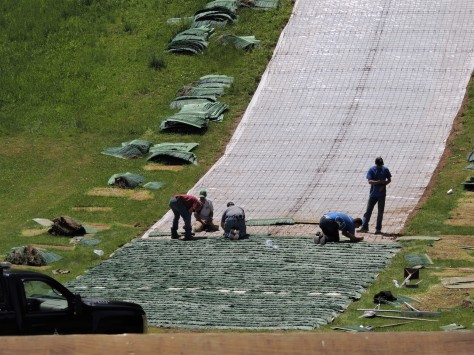
Installing the summer jumping surface on the ski jumps

In the summer months, jumpers use an artificial surface to ski on.  In the photo above, workers can be seen attaching the plastic material to the hill, similar to the method shingles are attached to a roof.

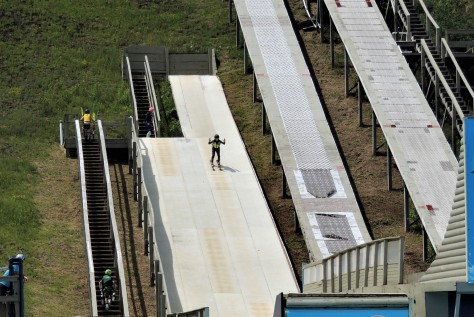
Immediately to the left of the ski jumps is the summer freestyle training facility.

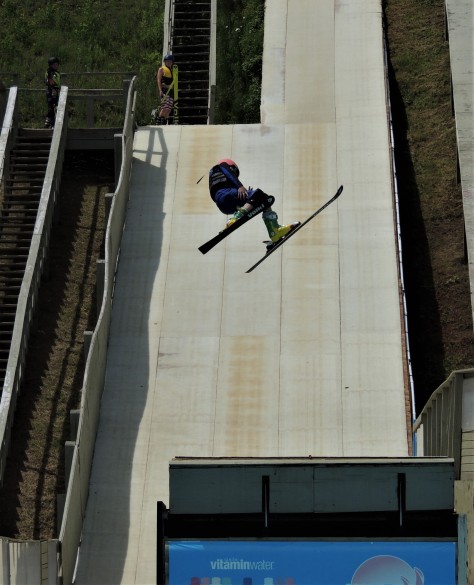
Freestyle skier coming down the ramp

Here is a young man headed down the hill now!

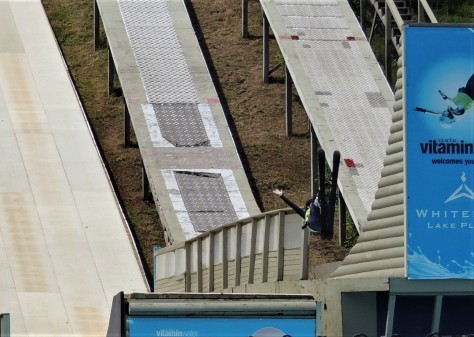
Freestyle skier doing a backflip

Look at that….a back flip!  But where is he going to land in the summer, you ask???

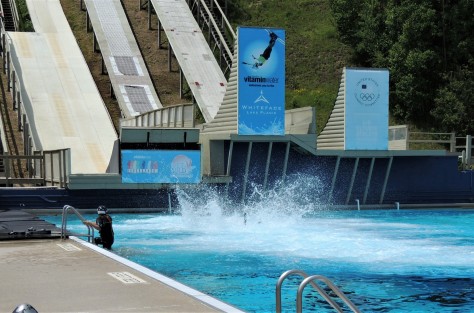
Freestyle skier entering the pool

Why that would be into a 750,000 gallon pool!  Bet that feels good on a hot day.  🙂
Freestyle skier twisting off the jump

We watched from the stands for quite awhile as these daredevils twisted and flipped off the takeoff ramps into the water.  For all we know, we could have been looking at future Olympians.  It was very entertaining, to say the least.

Just across the road from the jumping complex is the place where the opening ceremonies for the 1980 Games was held.  It is now the home of the Lake Placid Horse Show.  Seeing that there appeared to be a big event going on, we decided to check it out!
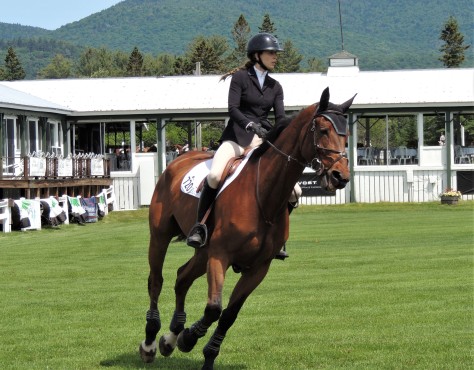
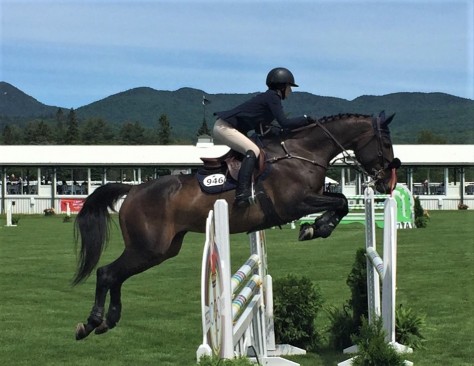
Horse entering a jump at the Lake Placid Horse Show

What a treat to be able to see the horses and rider as they navigated the series of jumps.

Horse airborne at the Lake Placid Horse Show

It was a thrill to see them airborne!  Pretty remarkable to see an animal as big as this leap that far.

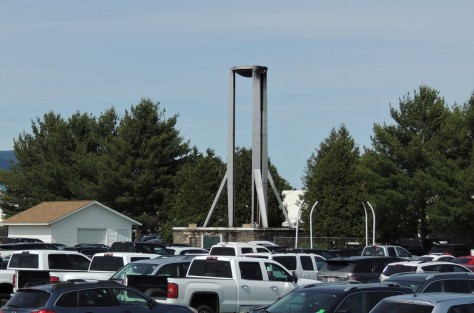
While we walked the grounds, we noticed this:

Cauldron from the 1980 Winter Olympics, Lake Placid

There’s the cauldron from the 1980 Winter Olympics!  It looked so much bigger on TV.  🙂

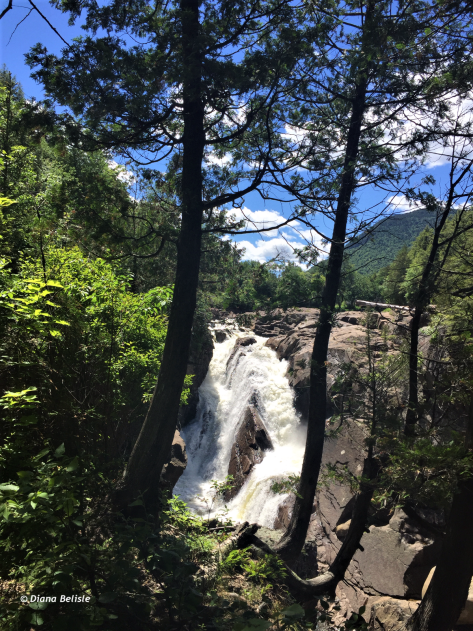
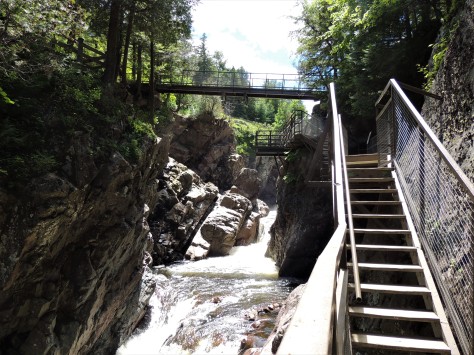
Another place we visited in the area was High Falls Gorge.  This 22 acre privately-owned attraction deserves a mention not only for its beauty, but also for what can happen when a natural feature ends up in private hands.

High Falls Gorge

Here is upper part of the cataract on the Au Sable River that appears in it’s pristine state.

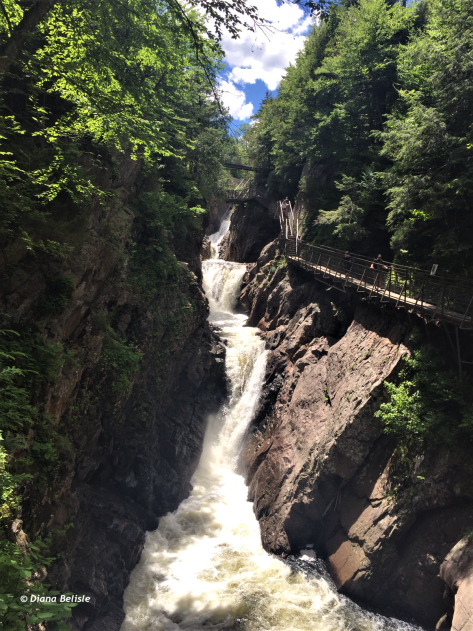
High Falls Gorge with ramps

To reach the lower portion, the company has built ramps, platforms and bridges within the gorge.  To us, this tarnished the beauty of the falls.

Ramps at High Falls Gorge

And with it being private, the admission fee is right up there.  It seemed a bit odd that this was in the middle of the Adirondack State Preserve, but it’s been a private attraction since the 1890’s.  Nature’s creations deserve better stewardship, in our opinion.  While the falls themselves were beautiful, we felt that a state or national agency would have provided a more natural visitor experience.  In a much broader sense, this is why we feel that our public lands should not be allowed to fall into private hands. It cost us $11.95 each, plus 8% New York state sales tax for a total of $25.81. In comparison, our annual National Park Pass, which covers over 400 sites, is a bargain at $80.00.

Another thing we found in the area was the John Brown Farm.  You may recall us talking about him in our post from Harpers Ferry, where he led a raid that resulted in his being executed. At the time we noticed his farm was in North Elba, NY, but we had no idea where that actually was.

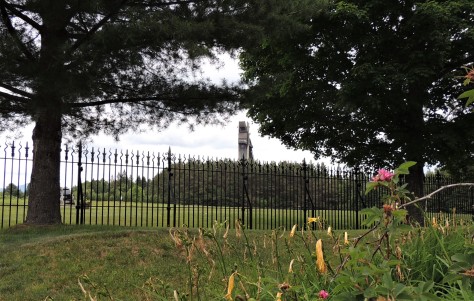
Ski jump from John Brown's grave

Well, standing next to his grave, the back of the 120 meter ski jump is easily seen.  Now we know where North Elba is.  🙂

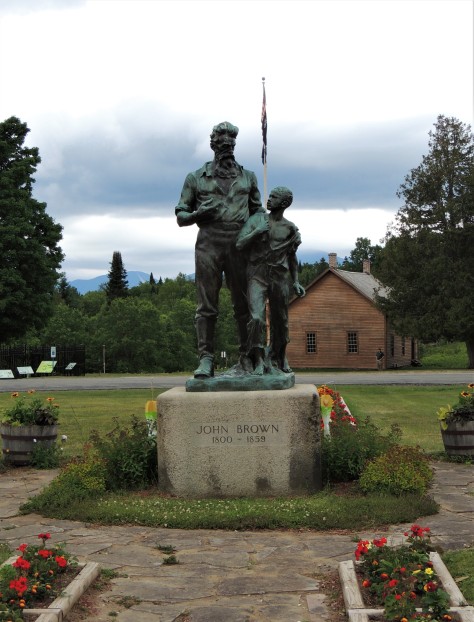
John Brown statue

John Brown, who used violence to further the efforts to abolish slavery, is a controversial figure in US history.  Some travel here each year to show their respects on his birthday, others feel he was a bit of a zealot. The building behind the statue is his farmhouse.  The inscription under the figures’ feet says, “His soul goes marching on”.  That is a reference to the Civil War era song, John Brown’s Body, which was rewritten at a later date to become The Battle Hymn of the Republic.  In the former version, the lyrics start out “John Brown’s body lies a moulderin’ in the grave.”

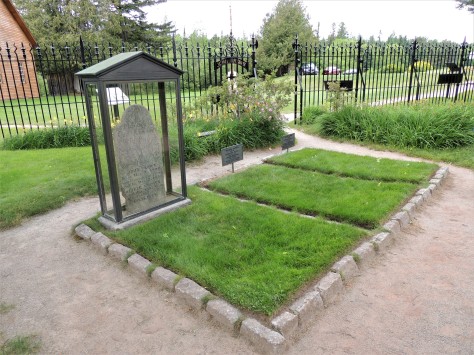
John Brown's grave

Well, here is that grave he is a moulderin’ in, along with several of his followers who fought with him at Harpers Ferry.  That event is seen as one of the sparks that led to the Civil War.

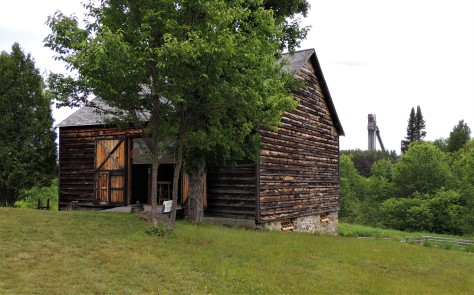
John Brown Barn

Behind the house and grave is the barn.

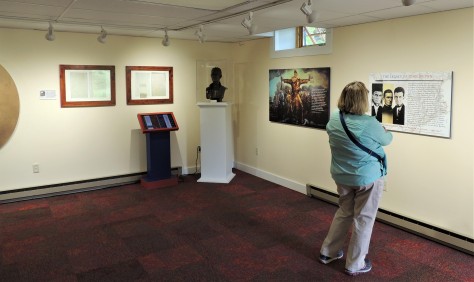
John Brown Barn Basement

The lower level houses a nice display dedicated to the story of John Brown as an abolitionist.

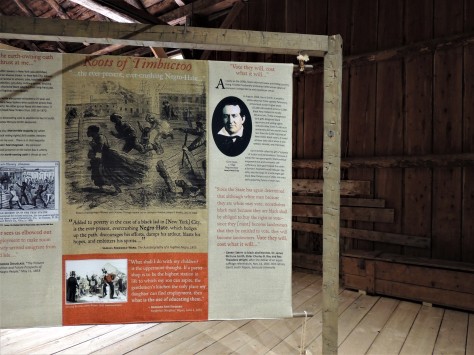
John Brown Barn Main Level

The upper level speaks to the area’s role in the Underground Railroad.  Gerrit Smith, a wealthy landowner and politician who was a leader in the abolitionist movement, gave away 120,000 acres of North Elba land in 50 acre parcels to black families from the south. Being a property owner gave them a right to vote, as well as a means to becoming self-sufficient.  John Brown had purchased some of that acreage to help teach the former slaves how to work the land.  Unfortunately the area conditions weren’t conducive to farming, and the experiment failed. We found the entire farm to be fascinating, and it really tied in well with our visit to Harpers Ferry.

The other place we visited in the area was the top of Whiteface Mountain.

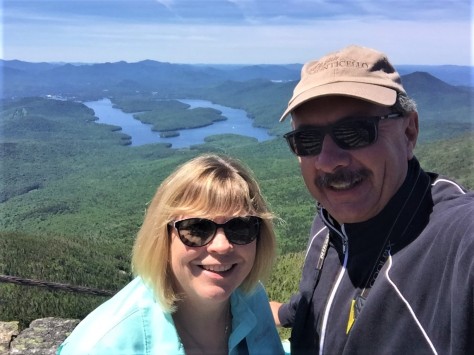
Diana and Jim on Whiteface Mountain, with Lake Placid in the background

Our last trip here was in a 1981 Chevette.  I remember that well, as we had to turn the air conditioning off to make it up the hill.  🙂  This is a great place to view Lake Placid from.

Leaving Lake Placid, we spent a few days in the Lake George area, at the southern end of Adirondack Park.  The weather turned hot, so we limited our activities to taking care of errands and celebrating my 60th birthday!  Our friends and fellow RV-Dreamers, Bonnie and Fred, have their home base in the area so the four of us met for a wonderful steak dinner at the Log Jam Restaurant.  We hadn’t seen them since March of 2017, so we had a lot of catching up to do.  As a result, we completely forgot to take photos.  They are going to spend the winter just down the road from us in Melbourne Beach, so I’m sure we will get some photos then.  🙂

That wraps up our time in the Adirondacks!  Next up, we move west through New York State to visit some of my childhood idols.  Be sure to check back here to see what that is all about.  Until then, safe and happy travels to all!